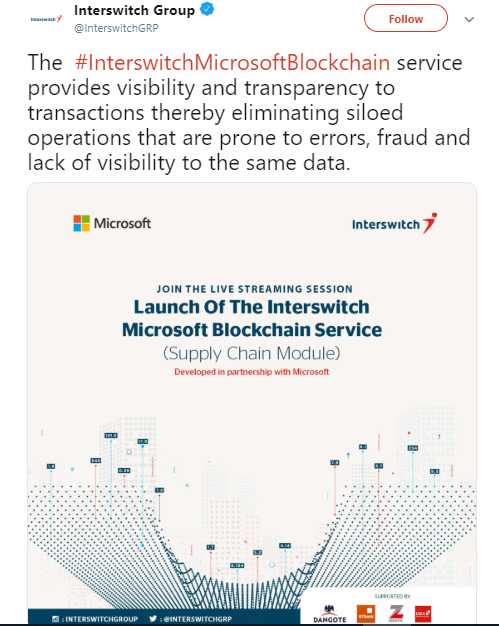
It seems it is (nearly) here – Interswitch with Microsoft is unveiling blockchain banking in Nigeria. And three key banks (GTBank, UBA and Zenith Bank) and the alpha conglomerate (Dangote) are part of the party. Sure, they did not mention banking; it remains a blockchain service. But when you have the leading banks supporting the initiative, it is safe to extrapolate that banking would be part of the applications.
According to CNBC Africa, the focus at the moment is improving processes for supply chain. But I promise you that it would move from supply chain to payment and more. When you provide a service for trade services and financing, you are supporting one of the most critical elements in banking. Over time, there would be more integration and just like that, we would have blockchain banking in Nigeria. (Personally, it will not do much as the challenges we face in Nigerian banking cannot be fixed by technology alone. So, whether blockchain or not, for a very long time, it is going to be all the same.) Certainly, Interswitch has gotten over its hangover and innovating at scale.
Interswitch is exploring a blockchain-based supply chain financing service in partnership with Microsoft Azure that aims to digitise the process between corporates and banks when providing trade financing to entrepreneurs and business owners in the Supply Chain sector. Akeem Lawal, Divisional Chief Executive Officer, Payment Processing at Interswitch, joins CNBC Africa for more insight on this platform.
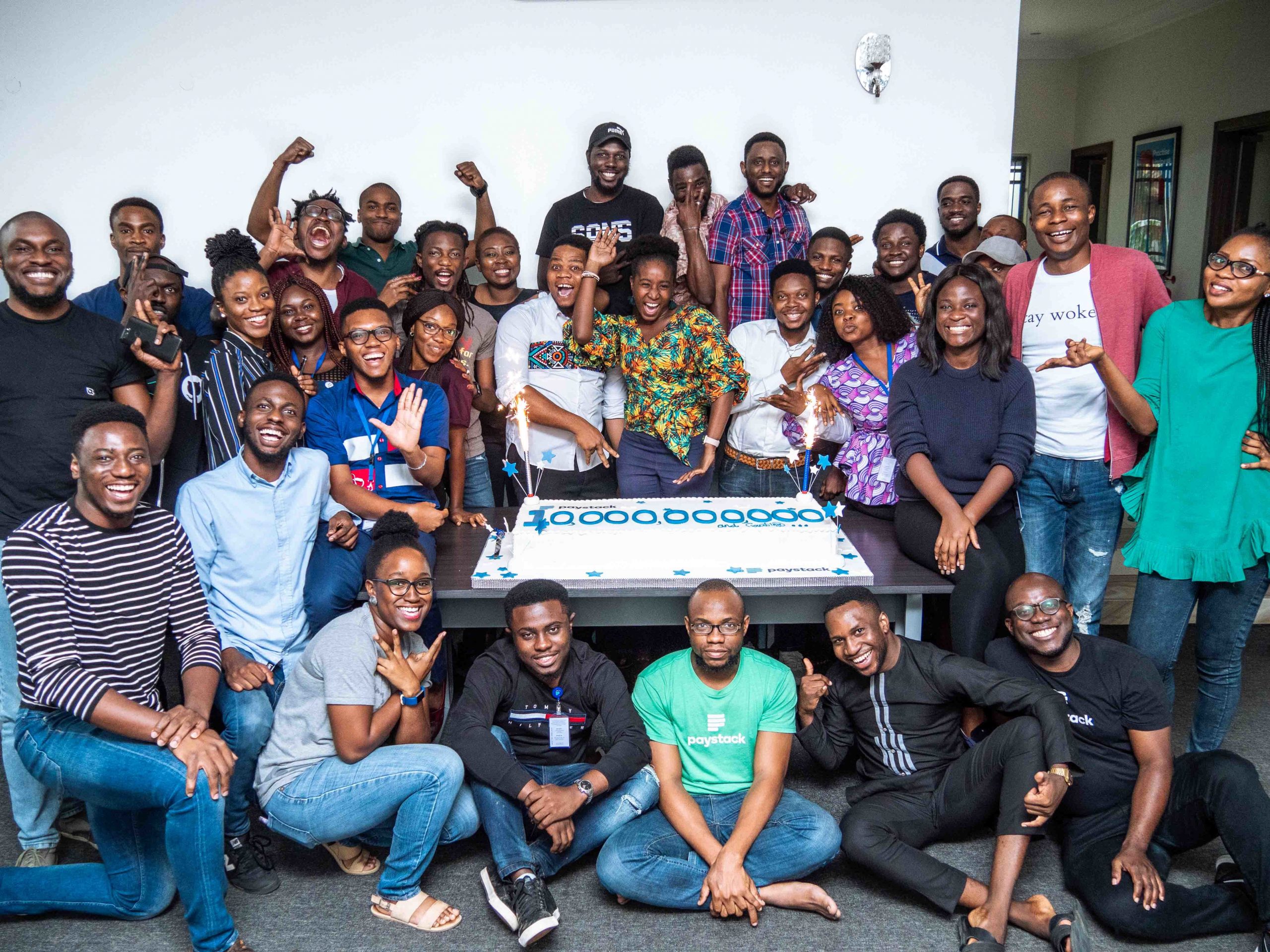
It surely needs to do that because companies like Paystack are coming: the startup just hit $28 million monthly transaction volume in Nigeria.
In mid-2017, we shared that for the first time, customers were using Paystack to pay over N1 billion in monthly transaction value to Paystack merchants. …
A year and three months later, we’re thrilled to announce that we’ve hit our next transaction milestone: customers are now using Paystack to pay over N10 billion naira (~$27.5 million) to Nigerian merchants, every month.
Thanks for the great comments and questions on the piece on the future of advertising business. I wish I can share my slide but that will not happen, unfortunately. To help understand my thesis, on ad business, one has to look at tangential competitors and not just the typical industrial peers.
Yes, I had explained that the biggest competitor to Google is Amazon and not Facebook, Twitter or Baidu (as most posit). Why? Google makes most of its money from digital advertising and the industry that dominates digital advertising is retail. Today, Amazon controls about 49% of that market (ecommerce sales). So, as Amazon expands, natural ad customers to Google would struggle and that would imply deteriorating revenue, for Google, from that category. For every Sears that dies because of Amazon’s competition, Google loses (potential) revenue to Amazon. For Google to thrive, it has to find ways to slow Amazon in that trajectory.
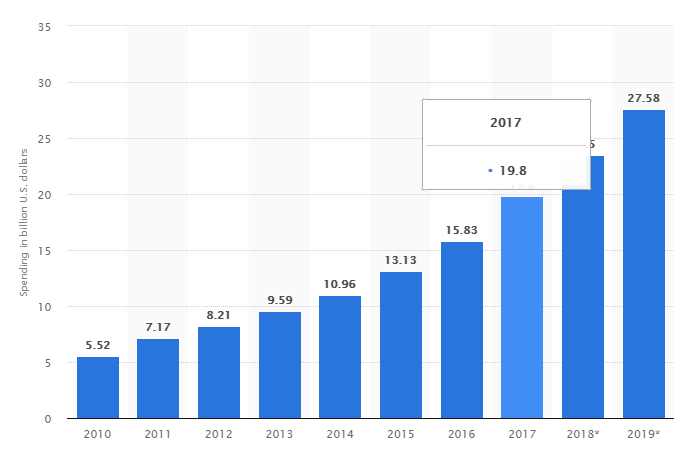
The timeline presents U.S. retail industry advertising spending from 2010 to 2019. The source projected that the spending would amount to 23.5 billion U.S. dollars in 2018 and further grow to exceed 23 billion in 2019. Retail is the industry with largest digital ad spend in the U.S., followed by automotive and financial services. Across industries, digital ad spending is going to amount to nearly 83 billion U.S. dollars in 2017 and 113.2 billion in 2020.Amazon controls 49% of U.S. ecommerce sales (source: TechCrunch)
Amazon is really a very formidable company as it remains one of the few companies in the world with a product where all stacks and elements are controlled by one firm. I have recognized Amazon Echo as the zenith of all products as from browser, OS, computing device, retail shop, etc, Amazon controls all to the doorstep of the customer. Yes, Amazon does not share any level of stack with any other entity; all is in-house and under its care. If that product scales, every other technology firm is imperiled. (Microsoft makes OS and browser but it needs Dell and HP for the computers; Facebook needs browsers and OS; Google needs a retail platform despite all investments in many areas. But Amazon Echo needs no other entity to the doorstep of customers!)
Amazon runs ads for merchants in its platform
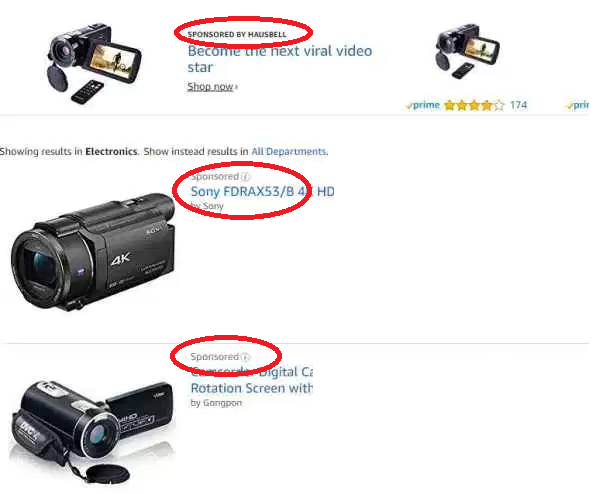
Besides, Amazon has built one of the best retail advertising businesses in the world where it is now collecting billions of dollars yearly from merchants. Google gives you web visits; Amazon delivers sales because advertising on Amazon means you are reaching people already in the mode to BUY unlike Google where ads are shown to people not in shopping mood (think of showing toothpaste ads to a student researching on chemicals in toothpastes). Largely, on Amazon, the chance is that searching toothpaste has a higher chance the person wants to buy one. So, merchants see more sales conversions for ad money spent on Amazon search. That is a huge challenge for Google.
Facebook has walled off the partying and events communities, and if Amazon takes care of the merchandise, I do not know what will remain for Google. Yes, we put adverts for two major things: events and products. If Google becomes a second-platform for both, there is a problem for Larry Page and his lieutenants in Alphabet, the parent to Google.
This may explain why Google is not showing friendly handshake to Amazon these days. Amazon is not just attacking Google, it is going to the heart of its business which is advertisement. As Sun Tzu put it in The Art of War: you must defend your flanks to win. Indeed, Google has a war to fight.
All Together
Industry competition will continue to evolve. In ten years, how many merchants will spend money for TV when they can put that money in Jumia and Konga to reach customers more efficiently? There would be massive shifts; to thrive, companies must adapt. Yes, Microsoft made about $1.7 billion from Bing, its search engine, last year. But Google will likely pay Apple $9 billion this year (to expand to $12 billion later) to have Google as the default search engine in Apple products. Yet, Apple has no search business but making multiples ahead of what Microsoft makes. For Google to pay that to own that space on Apple products is a testament on the tenacious nature of modern ad business: no one is safe!
LinkedIn Summary of this Piece
Great comments and questions on the piece on advertising business evolution. To help understand my thesis, on ad business, one has to look at tangential competitors and not just the typical industrial peers.
Yes, I had explained that the biggest competitor to Google is Amazon and not Facebook, Twitter or Baidu (as most posit). Why? Google makes most of its money from digital advertising and the industry that dominates digital advertising is retail. Today, Amazon controls about 49% of that market (ecommerce sales).
So, as Amazon expands, natural ad customers to Google would struggle and that would imply deteriorating revenue, for Google, from that category. For every Sears that dies because of Amazon’s competition, Google loses (potential) revenue to Amazon. For Google to thrive, it has to find ways to slow Amazon in that trajectory.
Besides, Amazon has the best search, created and engineered for buying things. Google gives you web visits; Amazon delivers sales because advertising on Amazon means you are reaching people already in the mode to BUY unlike in Google where a researcher (not in shopping spirit) may see ads . Plus, the Amazon Echo, the first end-to-end stack product, ever, by one firm!
The following three factors determine a company’s financial performance more than any other thing: customer insights, talent and processes. I explain in this video. Also, the amount of money you spend on R&D does not necessarily mean that you would thrive financially. The key is having a balance in all these rituals of business decision making.
I can greet very well in Hausa up to five exchanges (you know, it can keep cascading). When I do that, I make sure you understand that it had taken me real efforts to master those greetings. Then, we will smile, and my host would ask me how I learnt those. Magically, I have neutralized any tension that may possibly exist. I have never greeted any host while in the northern part of our nation with English! Language is the most native element to connect with clients and partners.
In my teachings with startups in our advisory business, I have called that Nativity Design Construct. It is a way of looking at business from the angle of the customers by making sure that you deliver solutions and services within the natural nexus of the users, eliminating any possible assimilation friction.
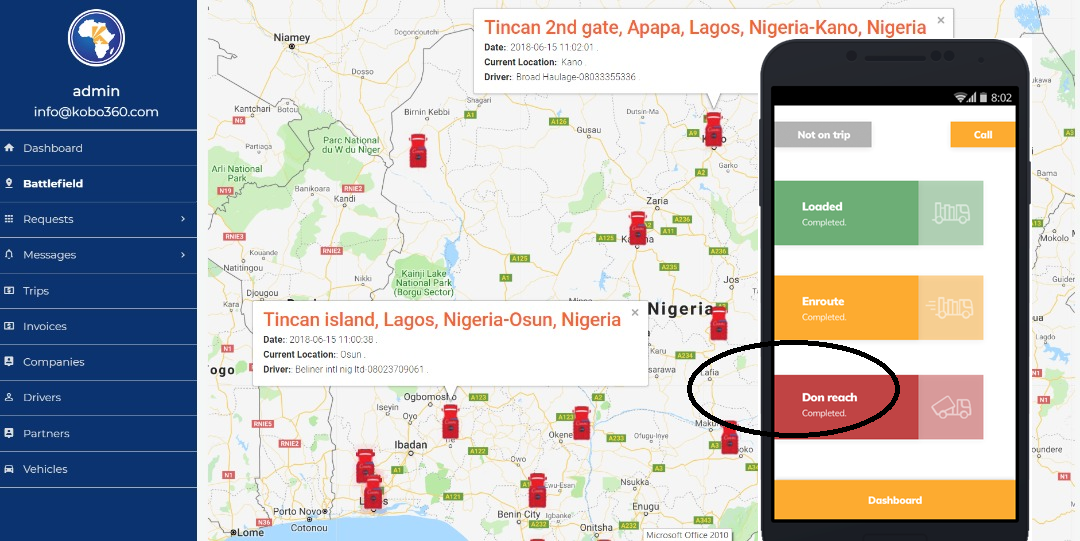
Kobo360 adds pidgin in its app for driver section
As I wrote in a piece many years in Harvard Business Review, best global leaders are typically best local leaders because all businesses are local.
Future global leaders must be those who can develop local leaders with the ability to execute company-wide plans, across nations and regions, at the local level. Commerce is still communal in nature, regardless of the sophistication of the product or service. Intangibles like local fashion, language, and cultural norms must not be taken for granted at the physical interface where brands connect with customers.
Interestingly with the unbounded and unconstrained Internet distribution capabilities, every web business is global even when local. Largely, being a small web company in Lagos does not hide you from the competitive challenge from premier digital companies in Silicon Valley, Tokyo and London. So, to win, you must accelerate your GloCalization: ‘Glocal, an adjective, by definition, is “reflecting or characterized by both local and global considerations”’.
What Smart Nigerian Companies are Doing
Winning and thriving on the web will require new game plans because of the winner-takes-all philosophy. The domination from Google and Facebook will be existential if any indigenous company combats those firms frontally. As I noted in this Harvard Business Review article, the key is looking for ways to “gain a competitive edge over global companies”. Yes, you must differentiate in ways that no foreign ICT utility can automate out your business processes and models. And they cannot scale without hitting a roadblock as they plot to take you out.
Indeed, you have built moats by design and no company can easily overcome the relationships you have with customers and partners via software alone. No foreign software can “eat” that business model. For them to win, the competitors must have natives to compete if they expect to thrive.
Two Cases on Nativity Design Construct
Kobo360 is a digital trucking aggregator. It has a platform which links cargo owners and truckers together. There are many things in the ways Kobo360 engineered its mobile app which is totally fresh, and native. Truck drivers see Pidgin English as most of them speak pidgin. You see “U don reach”, “We dey wait”, etc for the app. But at the same time, Kobo360 institutional partners like blue chip Olam, Flour Mills and Dangote see the typical Queen’s English.
Largely, if you are competing against Kobo and you think it has an app alone, you are wrong. This company has built intricate linguistic innovations which make drivers, partners etc natively communicate in the natural ways they have done business without forcing anyone to change style because it has an app! This is why the firm is growing; World Bank’s IFC had called.
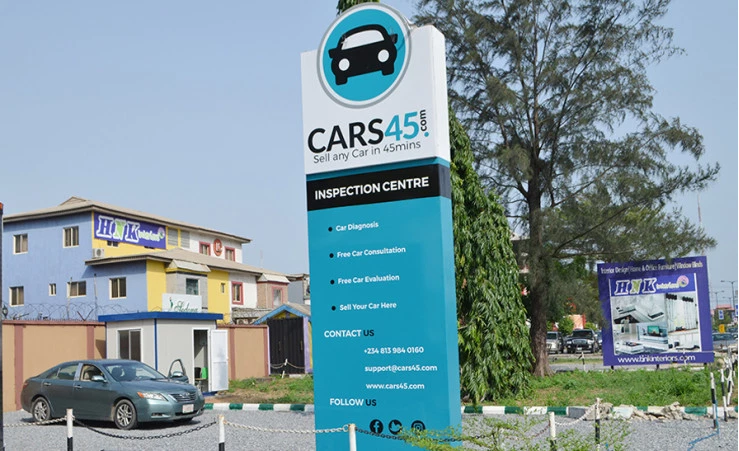
Cars45: What this company does is simply indigenous. It has hybridized car buying in ways no company can take it without doing what it has done. How many times do you see websites selling cars in Nigeria? Its business model has provided a solid moat for survival. Cars45 promises to buy, sell, rate or price your used car within 45 minutes. Innovation is not just about technology. Cars45 is innovating on business model. Hybrid is in the gene and Cars45 is a category-king company.
Visit last month to Cars45
All Together
Winning as a local company in a globalized world will require doing many things differently. You must discover your nativity design which is necessarily going to provide the moats you need to “avoid” global ICT utilities like Google and Facebook. Those elements could be simple things like how Kobo app works, mixing languages in ways that a truck driver will not have to learn Queen’s English but can continue with pidgin which most truckers speak.
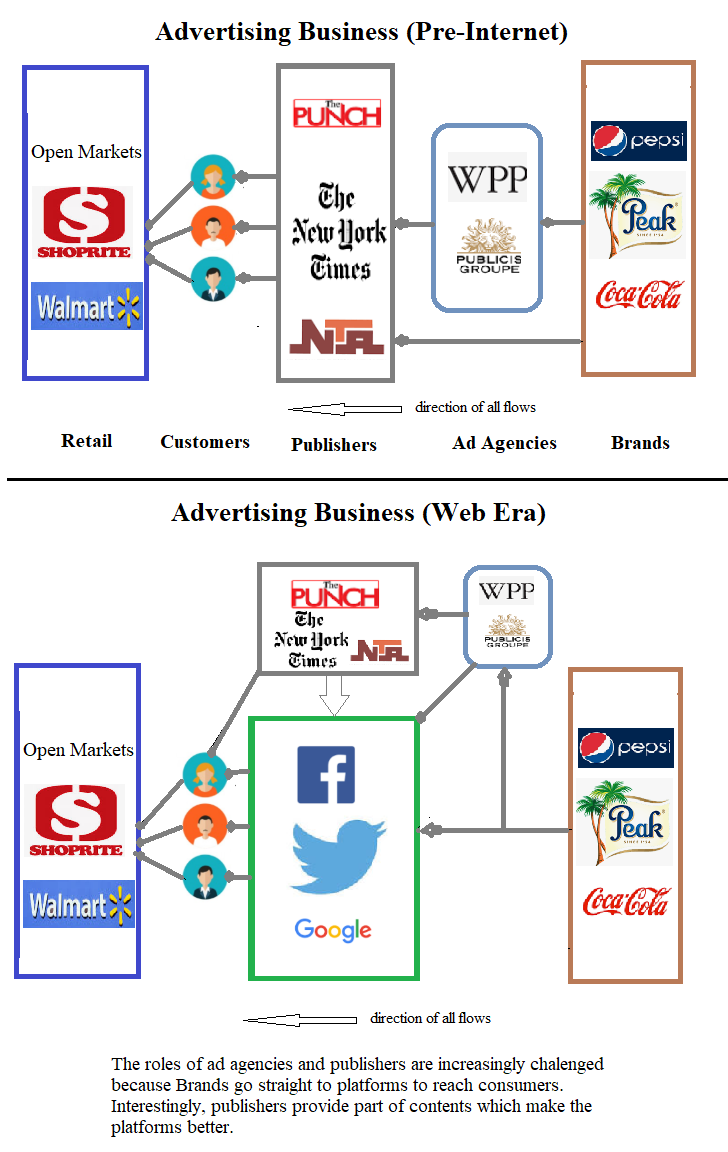
Today, I used this plot below to explain to CEO of a top advertising powerhouse in Africa on the challenges before his industry. Before the dawn of ICT utilities like Facebook and Google, ad agencies and publishers were the gatekeepers of news. People need news for different reasons. And to reach people (the consumers), brands went to the publishers and ad agencies. The ad agencies have always worked as feeders to the publishers.
But with the arrival of the ICT utilities, a massive dislocation is happening: brands are now reaching customers without going through ad agencies and publishers. Power has shifted, and the most powerful entities are not the creators of the news, but those that organize and make sense of them, in a world with largely unlimited distribution channels, anchored by the web. If news breaks in Nigeria, everyone goes to Google and not the individual websites like Guardian and Punch. Even though Google ends up taking us to the most useful site, it does so (largely) without regard to legacies. Yes, my blog and Guardian will compete for attention before Google!
Simply, publishers and ad agencies are challenged as the monies brands used to pay move to Google and Facebook. This disintermediation is just beginning. Yes, as Google tests algorithmic contents where outdoor billboards will show contents based on what Android phones indicate are preferences of the majority of people seeing the ads, massive shifts await in the business.
Yes, a group of 30 football fans are returning from a game in a bus. There are other passengers in other cars. The algorithm has real data on coordinates of the phones as well as the location of the billboard. It can estimate how many people are seeing the contents displayed on the billboards. Once it can make a call that out of say 45 people watching, 25 are football fans, it will show ads that target football fans. Doing that will be the unification of meatspace and cyberspace advertisement; it will deliver unprecedented dislocation to ad agencies that do not evolve.
These are some fundamental videos you can watch to have deeper insights on this digital redesign.
The dislocation or disintermediation isn’t just happening to ad agencies and publishers alone, individuals can now build their own brands the way they like; without any gatekeeper ‘diluting’ them on their behalf. Trump has maximised it, with his constant ‘battle’ with the mainstream media, most of his messages would have remained in the newsrooms, but with Twitter, you cannot ‘cage’ him.
Again, the presence of ICT utilities haven’t really led to loss of jobs on the side of publishers and ad agencies, rather the jobs SHIFTED. Currently, we have more people performing one digital ad function or the other, including analytics and algorithm development. It means that technology doesn’t actually lead to loss of jobs, rather it brings about changes in the nature of jobs. Only those who fail to understand trends and upgrade accordingly are left to rue their losses.
Humans have an unmatched level of dynamism, and therefore never expected to be obsolete like technologies. When you become redundant, it means that you are now being viewed as outdated technology. You must never allow yourself to get to that pitiable state.