DD
MM
YYYY

PAGES

DD
MM
YYYY

spot_img

PAGES

Home Blog Page 7039

Learn How to Fish Early – Diamond Bank Prepared Me For All Moments

44
hire

I have received many emails since I shared a post on UN in LinkedIn. Many have asked me to share guidance on career planning. Largely, it is very hard to write about yourself in this way. Nonetheless, to help young graduates who asked, I am sharing some decisions I made earlier.

Getting ready to leave FUTO (Federal University of Technology, Owerri, Nigeria), my undergraduate university, I committed to focus on accumulating capabilities over just making money early. My thesis was that by building capability, I could transition to the top level in the world. For me, it was irrelevant where I was beginning: the most important thing was really what lies ahead.


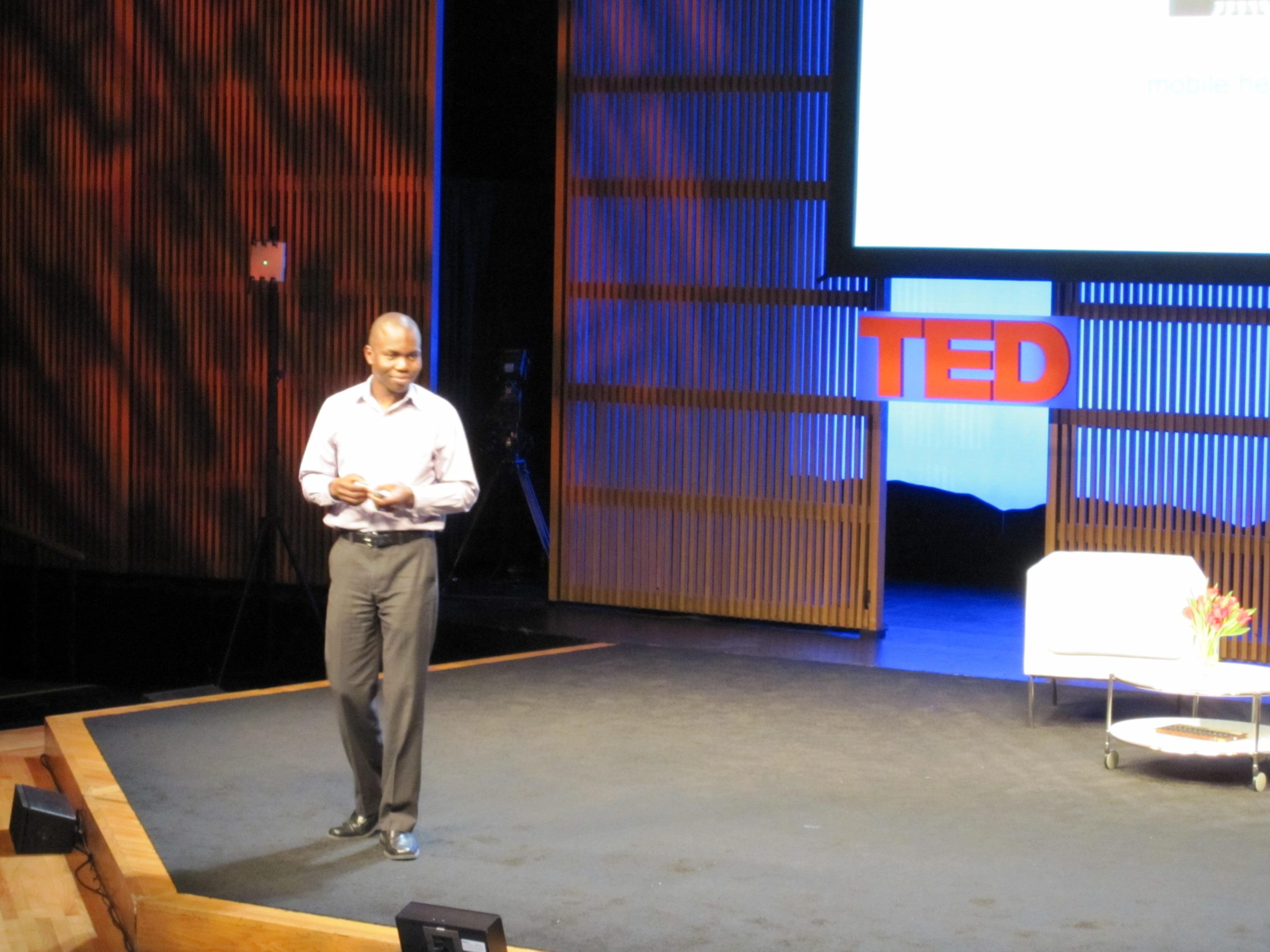
Ndubuisi Ekekwe receives award from Richard Branson

I defended my undergrad thesis on Friday. On the following Monday I started work. I went straight from hostel to the new job without reaching home. There was no need; I had only a bag to school as I was a squatter. Though usually getting official accommodations on academic awards, the usual temptation to sell, and then squat with willing friends won many times.

My Department Chair (Prof SOE Ogbogu) had accepted a job for me nine months earlier. For this job, I did not interview the employer; it also did not interview me. The week the firm came to FUTO, I was out of school to get advertisers in Aba and Onitsha for my campus newsmagazine – FUTO Bubbles.
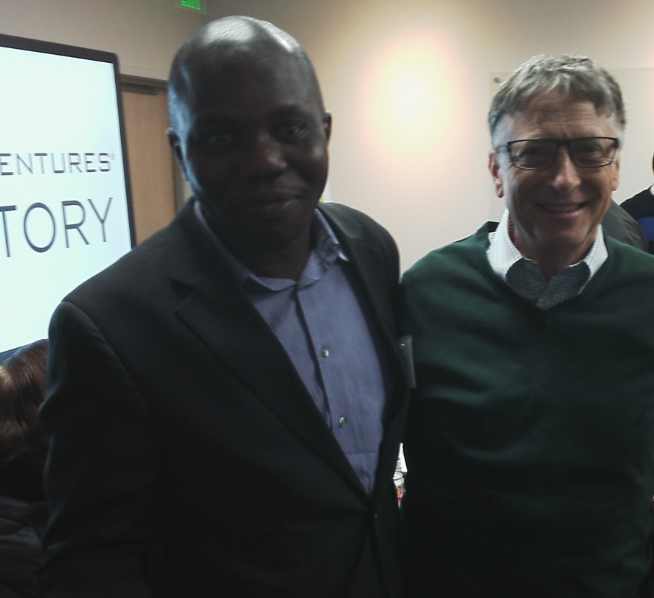
Ndubuisi Ekekwe with Bill Gates

I began work in that firm – a pioneer CDMA company. They gave me a flat, a car with driver, and good salary. Then on second day, I asked to meet the Founder, and the CEO. I spoke with them, and they failed my “interview”: they presented a roadmap on how to make money but none to develop the person making that money. I saw a total dislocation on how life could be about money that early with no strategy on acquiring skills (my desire to start master’s program immediately was not permissible). On 3rd day, I resigned. It was easy to do that; I had options – I could return to FUTO as a graduate assistant teacher which the department had already offered. Also, there were other jobs on pipelines.
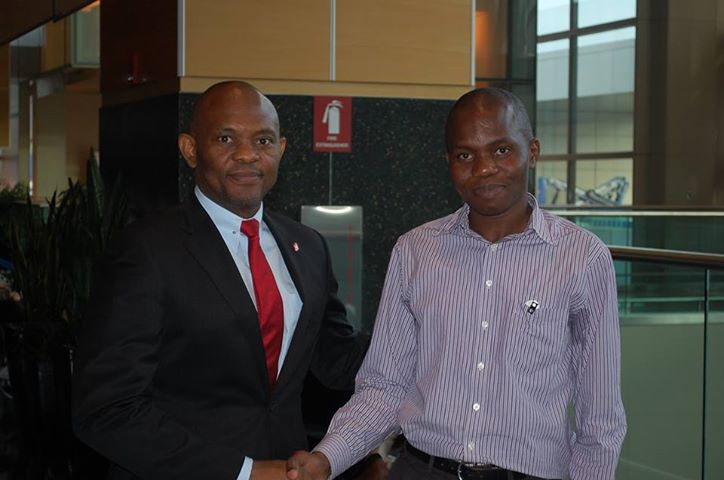
The first day I met Mr. Tony Elumelu. He became a mentor; I remain thankful for his supports.

One of those jobs was to work in a local IT company doing structured office wiring in Shell. I joined that firm for no specific formal wage even though the owner was always giving me money. But I did enjoy the job – I was learning common sense skills which could be easily monetized. Also, I knew that it was temporary since NYSC was coming; the CDMA job was structured that I would serve there. (My suggestion remains to choose where you could make more money in Nigeria provided it can give you space to use that money to develop yourself in a case where the firm has no clear strategy on staff development. But if getting that more money is all you get, if you have other options, re-consider.)

Then NYSC came, and opportunities opened. NYSC Plateau State secretariat needed a contractor to do structured office wiring in the state secretariat. I had registered a company a day out of camp. I applied and won the contract. I bought my first car from that NYSC contract. It was the first time Federal Government of Nigeria was to pay me.

Ndubuisi Ekekwe with former UN Sec Gen

Post NYSC

I did all possible to stay in Jos after NYSC but without a university offering engineering master’s degree (then), it was not possible. Attempt to visit ATBU Bauchi did not work out as I went on a Friday without any deep knowledge that schools largely close on Fridays for prayers. So, I had to leave Jos. And I left.

Immediately, the plan was to find a Nigerian firm that could support my plan – provide a good job and allow me to study! I was lucky – I found Diamond Bank. My secondary school classmate who was working as an office assistant had made a case that the bank was great on supporting human development. Yes, even though Diamond Bank paid well, the greatest value was the absolute commitment to develop people. As I had written here, there was no training or certification invoice the bank did not pay.

I enjoyed Diamond Bank; it was a bank with limitless opportunities. They paid every training invoice I sent to them and the bank was awesome. There was no boss; we were all comrades serving Nigerians. In short, I never saw my supervisors as bosses; they were colleagues and they made spending 48 hours at work normal.
When I joined Diamond Bank, a multinational oil company through FUTO wanted me. I explained to my Department Chair that I was not interested. By then, I was already in training school in Apapa branch of the bank. But somehow to avoid burning the bridges with FUTO, I was asked to honor the invitation. The oil company flew me to Trans Amadi (my first time of entering a plane); I went and politely declined the job. The job was to pay more than what Diamond Bank was paying. By then, I had figured out that knowing about finance would be helping in my path in future (I had wanted to own my firm). Also, the banking job was more tradable in future than working in a big oil firm where trading the skills acquired could see more barriers. Besides, the problem was not money as the NYSC contract money was still intact. I later took 6,000 pounds sterling to pay for correspondence doctoral program in UK.

All Together

I am still working on this career. But I have known one thing: while making money is nice, do all necessary to work in a place you can learn. Giving you a fish is great, but teaching you how to fish is PRICELESS.

Finally, always assume that only 10% of Nigerian professionals will stay in their fields after 15 years. Our economy is very small when compared to those jockeying for opportunities at the top. So, as companies begin to weed, triggering career paralyses, it is what you know that will see you through. So, developing skills early will help you instead of packing money only to see that you are out with no tradable skills. A job that gives you skills which can be monetized in a Nigerian economy should always be preferable as you can “sell” those skills later. And then, always pray for favor, because no matter what, grace is all you need.

Zenvus >> Farmers Wanted

0

A customer has a special need: longer Zenvus to deal with the specific conditions in the terrain. Doing that would involve few re-calibrations requiring updated models in the Zenvus engine. Few hours ago, we sent a note “Chairman, everything required has been achieved and more”.

Zenvus is a pioneering precision farming technology company that uses computational algorithm and electronics to transform farms. Zenvus collects soil fertility and crop vegetative health data to deliver precision agriculture at scale. It then uses the aggregated and anonymized data to deliver financial services to farmers.

In our lab, we are moving into customization of technologies by co-creating with our major clients. Our APIs are engineered to meet you at that specific point of friction, delivering solutions beyond needs, expectations but perceptions with catalytic impacts where farmers become businesspeople.

Zenvus >> Farmers Wanted

How To Assess What Your IT Team Members Do

0

This report presents how to measure and evaluate your IT team members. The key is using the elements noted to make them more productive in your business. It is about IT Employee Assessment in a data driven way. Download the report here (PDF). Here are the core nexus in this report: Communicate & Justify IT’s […]

This post is only available to members.

International Company Settles Gold Mine Licence Dispute

0

London-based Red Rock Resources Plc, a natural resources development company, is set to resume the production of gold in Migori as soon as possible. The update comes following the recent settlement of a court case with the Kenyan Ministry of Mining, who had previously terminated their mining licence in May 2015. The gold production project carries an estimated worth of over Ksh 100 billion. Red Rock Resources have a 15% stake in Mid Migori Mining Company Ltd, who in turn controls a 1.2Moz JORC gold resource in Kenya with the use of Special Prospecting Licenses 122 and 202.

Settlement details

The two parties have agreed to settle the case, leaving Red Rock Resources free to make a new license application. Why the Ministry of Mining initially cancelled the company’s license remains a mystery to the public. In a recent statement, the multinational company explained they’ve signed a consent along with the Attorney General which is currently being filed with the court. Red Rock Resources have agreed to drop the case without compensation — an outcome similar to the recent business legal case concerning American CEO Erik Gordon.

New licenses to mine

As part of the settlement, Red Rock Resources will be able to apply for new licences under Section 225(6) of the Mining Act 2016. Previous decisions made will not hinder or prejudice their new application. These licenses allow the international company access to mining in South West Kenya near the Tanzanian border, which isn’t far from the North Mara mine operated by Acacia Mining plc.

Plans for the future

Red Rock Resources are eager to resume their exploration and production of gold in the Migori belt —  which spans a whopping 243 square kilometres. It’s an important area with a long history of both colonial and artisanal mining. “This settlement we hope will open the way to renewed progress towards our aim, which is to have a producing gold mine. Our desire, and that of the authorities and local communities, is to see work towards this recommence without delay,” Andrew Bell, the chairman of Red Rock Resources plc announced.

Additionally, Red Rock Resources are expected to raise their stake in Mid Migori Mining Company Ltd from 15% to 75%. It’s currently majority owned by Kansai Mining Corporation. “We shall make further announcements as the applications progress,” Bell added. Watch this space.

Nigeria 2019: Hinge of a Remarkable Past and Future 20 years

2
The coat of arm of Nigeria

The last 20 years have not been a great period for this country. If you disagree, take a look at what some emerging market peers have been up to in the same period; especially some of the Next Eleven (N-11) countries. In 2018 for example, GDP growth in N-eleven peers such as Indonesia was 5.1%, Pakistan, 5.8%, Egypt 5.3% but Nigeria 1.9%. Given the scale of the challenge and the collective failure of governance in Nigerian for decades; whoever emerges from the fort coming presidential election among President Buhari, Alhaji. Abubakar, Prof. Moghalu and the many other notable Presidential aspirants, will have to understand and embrace the unique and hinge nature of that year.  Standing in the 2019 spot with both hindsight and foresight, it’s exigent that this country be steered towards business and away from politics. The next 20 years could either be totally eventful from an economic and development perspective or totally unremarkable and catastrophic. Growing market integration in Africa and unrestrained population growth in Nigeria, coupled with stagnancy, if not retardation in Infrastructure, technology and human capital can permanently rewrite the history of this country in this time frame. How exactly?

One great way to visualize Nigeria’s future as a populous but struggling and inefficient economy is to visualize what might have been the implication of a present day poor China, both for the Chinese, the Asia Pacific region and the globe; which is unthinkable, if that nation with 1.386 billion people was to be living in extreme poverty. In lifting hundreds of millions of people out of poverty in the last forty years – one of the greatest economic development feats in recent time – China has averted the greatest all time global economic and security crises and saved the world from tens of other very ugly situations that would have been the alternative.  What would have been the case, if the four decades of transformation that began in China in 1978 had been unsuccessful?

Nigeria is sure not as populous as China yet, but it is a nation with a disproportionate amount of poor people.  Nigeria’s 2019 general election is remarkable in several ways. It marks 20 years, since the democratic journey that began in 1999 and heralds the forward journey to our scary 400 million population by 2050. It’s unavoidable therefore, that the Nigerian electorate should ask for business and not politics in 2019. Modern infrastructure, production technology and human capital development, which are mostly undeveloped, are the business of the electorate. These three elements should form the core of the electioneering conversation, the bedrock of any meaningful step to create a desirable next 20 years for the country. Peer economies and even junior states in Africa (by all measure) are stealing the glory in the region, at Nigeria’s expense. While the needed competitive edge is not there, it can still be built, if only we will talk business in 2019 and not politics. Should the electorate ask for business (and they rarely do) in 2019, politicians will have no option but to give just that.  As the most populous country in Africa the rest of Africa should be our market; where Nigerian products and services from different sectors should be holding sway in a bullish manner. That’s still a far ambition today and that ambition requires but lacks the technology, infrastructure and human capacity needed to actualize it.

Thank you Nigeria
Nigerian flag

Relatedly, when Nigeria joins the Africa Continental Free Trade Area (AfCFTA) beyond 2019, the current inferior competitive state of the economy may deliver yet some surprises, unless meaningful business/entrepreneurial capacity midwifed through optimal infrastructure, technological capability and human capacity is guaranteed through better governance.

The scale of the challenges facing Nigeria is under reported for several reasons. Several communities and cities in Nigeria are largely outside the radius of any accurate economic monitoring radar, data gathering or reporting mechanism. This provides a superficial perspective to several problems. However, like all latent problems which pass through a seemingly harmless incubation period before bursting to reveal unanticipated levels of damage; this nation may have to deal with very serious unpleasant scenarios, if business continues as usual. In that scenario, those who are hoping to run for office in 2023 and 2027 may have one but one promise to make to the electorate; cubing migration!

Nigeria is one of three countries – along with India and China – projected to account for 35 percent of global growth in urban population between 2018 and 2050. Without a radically transformed economy, what presents today as a mild but rapidly growing exodus of people – through legal and illegal migration – may expand to colossal economic problems of previously unseen proportions. And from an economic and development point of view; we may create for ourselves and for the world– in the next 20 years – the problem that China averted for its people and the world, forty years ago.