London-based Financial Times ran a piece on precision farming last week. Zenvus, our agtech subsidiary, and yours truly were mentioned in the piece. FT had spoken with me few weeks ago as part of a major report sponsored by Rabobank on global agriculture.
Zenvus, a start-up based in Owerri, the capital of the Nigerian state of Imo, collects and analyses vast amounts of soil data across Nigeria, offering tailored advice to farmers on what, when and how to plant. Its digital services allow smallholders to view real-time crop prices, raise capital and crowdfund on their computers and smart devices.
“This will have a tangible effect on poverty in Africa because most households and families are going to see higher incomes,” says Ndubuisi Ekekwe, the company’s founder.
You need FT subscription for other parts of the piece.
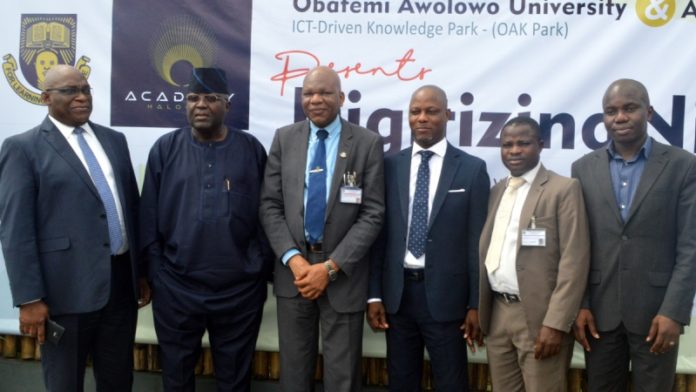
Vanguard reported on my speech during the Digitizing Nigeria. It was a Knowledge Sharing Session on Cyber Security held in Lagos on Thursday (Oct 4th) with the theme ‘Digitizing Nigeria, A Meeting of Town and Gown’ organised by Halogen Academy and Obafemi Awolowo University, Ile-Ife Osun State.
In his presentation on competencies and requirements in addressing cyber security, Professor Ndubuisi Ekekwe, a Micro Electronics and Medical Robotic Engineering expert added his scholarly perspective to the cyber security discussion and the need for a robust digital policy direction.
“The world is made up of numbers. Everything we do as humans is about numbers. We can reduce frictions in business by deploying right technology. Companies are moving from the physical to the digital realm. Digitizing Nigeria will bring about a new nexus of opportunities. Our nation will only be bounded by the limitation of the mind”, Professor Ekekwe analysed.
From left Mr Jimi Awosika, Vice Chairman/GMD, Troyka Group; Dr Yemi Ogunbiyi,Pro-Chancellor & Chairman of the Council, Obafemi Awolowo University, Ile-Ife; Professor Eyitope Ogunbodede, Vice-Chancellor, OAU, Ile-Ife; Dr Wale Adeagbo, Chief Operating Officer, Academy Halogen; Professor G A Aderounmu, Co-Centre Leader, ACE, OAU, Ile-Ife and Professor Ndubuisi Ekekwe, Chairman, FASMICRO Group, USA
If Katsina has only 4% BVN penetration and Lagos has already recorded more than 50%. If Kano is struggling with 6% and most parts of Northern Nigeria have on average 5.5% BVN penetration, why then do we have all fintechs killing themselves in Lagos and southern Nigeria?
This old video provides the distribution by state when the total BVN number was around 30 million BVN enrollees (numbers as at 2017 Kantar Fintech Summit, Aug 2017). There was also a case study on MMM, the ponzi scheme. Mr. Adebisi Shonubi, the Managing Director of the Nigeria Interbank Settlement System (NIBSS), the organization that makes it possible for Nigerian banks to cross-serve customers (think of using ATM of another bank), provided the numbers including the distribution by states. Kano has about 6% bank penetration rate while Katsina is at 4%. But Lagos has already hit 50%.
You can find growth in Nigeria in a non-disruptive way. Yes, in fintechs, even the banks would not be disrupted because they do not exist in most parts of Northern Nigeria. I know the stereotypes and the security challenges. I am not saying there are no risks. Yet, you have to deal with them –yes, in the midst of the challenges, you can use them to build a separation.
Treasured monopoly comes by becoming a category-king company through pure open market system. My free-range chicken teaches us how to win by finding our paths in uncontested markets (some have called it the Blue Ocean strategy). Study my free-range chicken analogy and see if it is time to move that fintech to Kaduna. Or even better, move that business to Northern Nigeria where many things come easier.
free range chicken
In business, we can be like chickens. That means we can find new markets and opportunities that may not have to compete with the present ones. In other words, we can find virgin areas where we can operate as monopolies because we have pioneered them. When such happens, you are not disrupting anyone even though you are growing revenue. It means that you do not need any disruption to grow your business. All you need is to find a market with needs but yet latent. Just like chickens, you do not have to compete with dogs and cats for the attentions of the owners. You leave the competition and create your own growth model, away from others.
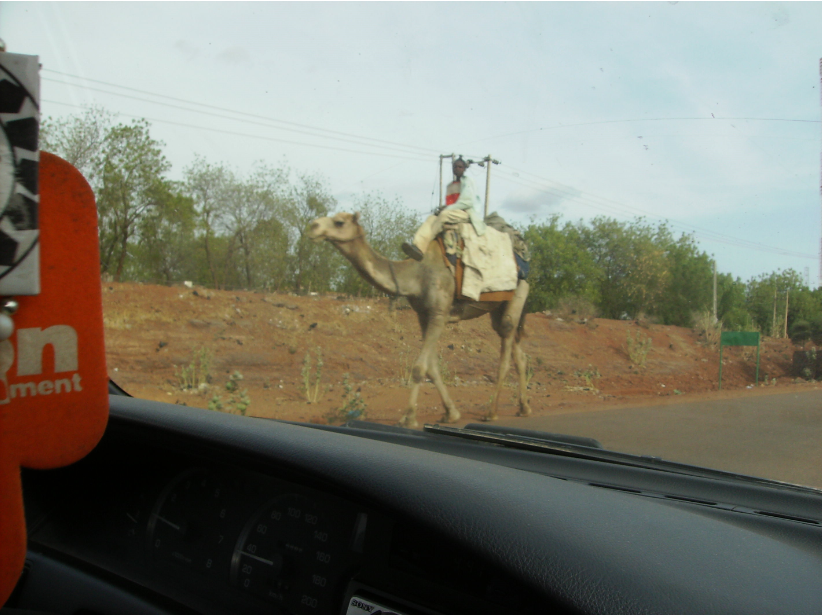
The Northern Nigerian market is largely uncontested across many sectors. A strategy that focuses on it will deliver huge value if sustained. And there is culture – drive from the main gate of Usman Danfodio University Sokoto to the campus, count the number of camels journeying along. Those men and women are possibly classified as extremely poor (by governments) but before me are citizens who though informal are potential great customers. But you have to approach them in ways they understand; that is what you have to innovate on. Go beyond Lagos – Nigeria has other acres of diamond.
The major issue with running this type of business in the north isn’t really about security, but that of understanding the people there. The illiteracy level there is very high, and therefore, anything that appears ‘cumbersome’ or ‘complicated’ is not going to sell. I have spent a considerable time in the north, the people aren’t difficult, as long as a perceived ‘authority’ endorses the products. But you have to speak in the language they understand, wearing suit and tie, and appearing sophisticated won’t get you a buy in.
Mobile money will sell there, but the way the current licencing is structured will continue to make the financial inclusion swan song only a noise. We have to throw the space open and remove many of the bottlenecks that are there. Many people there have mobile phones and listen to radio a lot, any product that is going to scale there must have semblance of those two things.
Again, you need a good capital base, with a good dose of patience; because you gonna practically nurture, groom and educate your potential customers, before the good returns start pouring in.
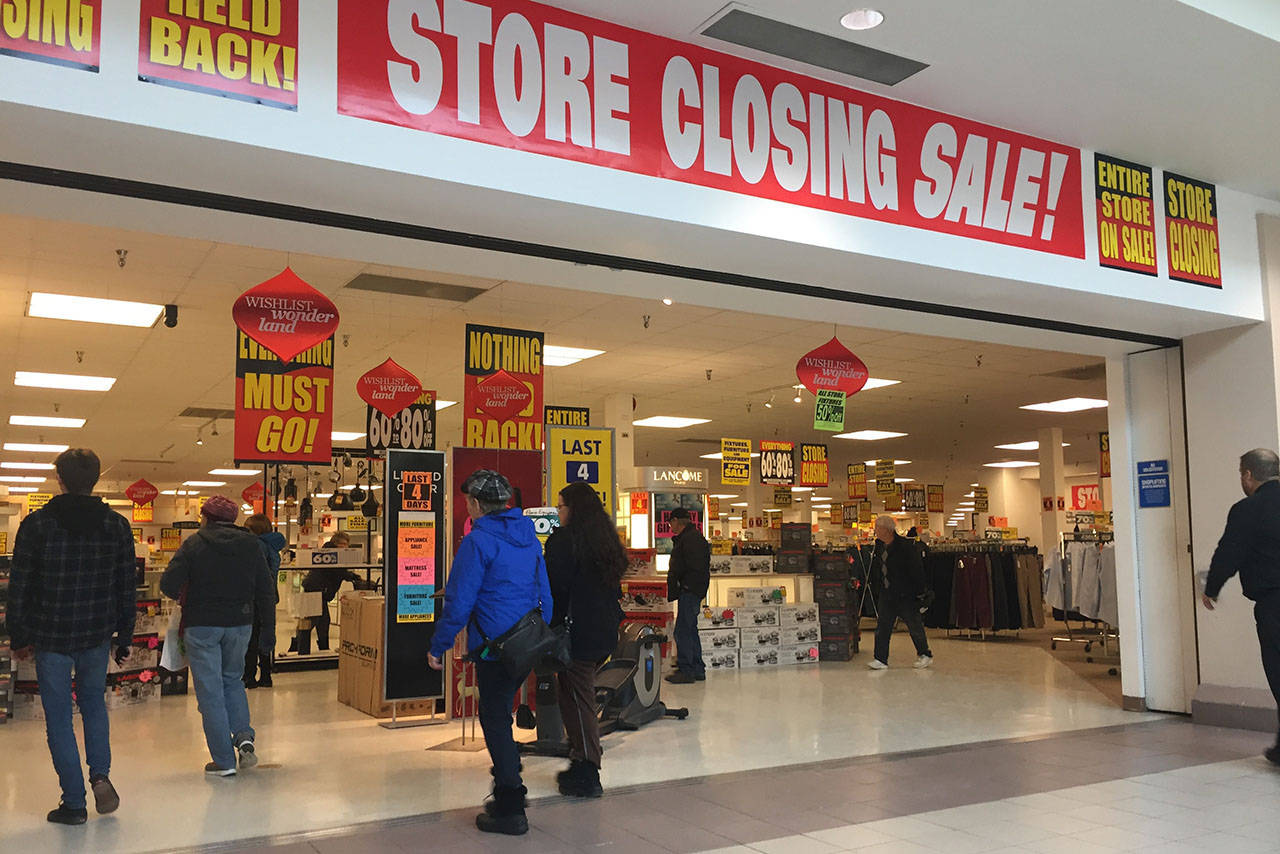
Sears, a bankrupt American retail chain, was built on catalog – a fangled technology of its time. It was typical of industrial age business model: send the customers options on what they might need with no certainty on what they actually want. The discovery process was weak, defining the retailer with no sense to get insights at scale, quickly.
On Monday, Sears filed for bankruptcy—a long-expected development in the retailer’s long decline. Sears was once the Amazon of its day: the first “everything store.” Today it’s not worth much more than the real estate its stores sit on.
Like Amazon, Sears started with a single product—watches, in its case—and grew to offer virtually all the goods a growing consumer culture could ever need. In perhaps the one way Amazon hasn’t (yet) caught up, Sears even sold the homes to put those goods in, which have since become quite trendy. (QZ Newsletter)
Amazon is built on search – a modern technology which is unconstrained and unbounded, only limited by the imaginations of the consumers. Search provides a window into possibilities, making it even possible that Amazon can see patterns on things it does not have in stock, and quickly respond to add them.
Sears catalog
Search has velocity, catalog has only speed; no antenna for direction. Search enables Perception Demand which enables the acceleration of consumerism by rewiring the mindsets of users to a new domain which they might have never imagined. As customer tastes move, your business must adapt. You need the antenna to move in the right direction to make that happen. Yes, in the 21st century, you win with Perception Demand.
Yes, no matter what you do, you cannot catalog your customers. You need to find a way to help them discover the future in your ecosystem, and you must respond to WIN with them.