If you are looking for work especially in the technology sector, calibrate the emphasis on your working experience. While experience is valuable, the 21st century knowledge-driven business is one where hiring managers cannot just focus on assembling experiences. The key is inherent capabilities, and that means ability to learn and relearn. For some companies, they do not need doses of experiences – they need people who can understand big picture of things, and quickly learn to fix market fictions – the very essence of firms.
OFFERING employees a rewarding career used to be easy: You’d hire a bright young person out of college, plug him into an entry-level role, and then watch him climb the corporate ladder over the years as he progressed toward retirement. The company could plan for this continuous process—hire people based on their degrees, help them develop slowly and steadily, and expect some to become leaders, some to become specialists, and some to plateau.
Today this model is being shattered. As research suggests, and as I’ve seen in my own career, the days of a steady, stable career are over. Organizations have become flatter1 and less ladder-like, making upward progression less common (often replaced by team or project leadership). Young, newly hired employees often have skills not found in experienced hires, leaving many older people to work for young leaders. And the rapid pace of technology makes many jobs, crafts, and skills go out of date in only a few years.
So, when you attend interviews in those Lagos startups which are raising tons of millions of dollars, do not play the cards of the many years of working experiences unless you are interviewing for a top management job. Possibly, what they are doing may not even need your experiences, directly. They are looking for people who can quickly understand emerging patterns and adapt to provide solutions in the markets.
Key components of work of the future (source: Deloitte)
That is why in the interview, the hiring manager is not focusing on the past, asking you to explain how you ran a bank branch. Rather, she is focusing on how you can make it easier for a woman to pay the son’s school fees in Ghana from Lagos at the cheapest and fastest means legally possible. They are examining your thinking process to see what you can contribute over merely reviewing what you have done in the past.
But remember that your prior experience matters. Without it, they might not have invited you for an interview. But when you are before them, they want to talk about the future. Allow that flow to progress over drawing them back to the past. For most of these firms, it is not likely they need exact capabilities you deployed in your old industrial-age themed company.
So if you are not careful, too much experience can become a hindrance as you have known many things which cannot readily “work”. They may not even need people biased with those experiences which could possibly cage the mentality of breaking things and innovating at scale.
Experience matters but your capabilities for the future should be the main selling point for you as you interview before the hiring manager. For inviting you for an interview, they already know you are largely qualified. But you need to give them something extra as they make that call on the best person to join the MISSION. Discussing the past instead of what you can bring for the future will not help in that Call.
The biggest mistake in life is to be in a state of constant self-pity. I get emails from people asking me to share their CVs but quickly reminding me that they graduated with 2.2 or 3rd class (from undergraduate university education). For them, 2.2 or 3rd class has become a little god, and because they finished with them, nothing can happen.
People, 2.2 or 3rd class or even Pass is nothing but a mark/grade. The biggest grade in life is your PROCESS. How good is it? How efficient is it if it is graded?
If you made 2.2 after working hard, you would be fine in your career. But if you made 3rd class because you did not have discipline or work hard, nothing will change in your life until you fix that process issue. Your problem is not the grade but the Process that resulted to the grade.
Until the process is changed, in your life, nothing will likely work. So, 2.2, 3rd Class or Pass, is not your main problem. The problem is you have NOT fixed what resulted to them where you think they are bad.
In coming hours, Osun State will vote to elect a governor. One of the contestants received great victory when WAEC said he attempted WAEC exam. Yes, having WAEC attempted was a victory for a serving Senator.
In your Senate, for another serving Senator, the biggest moment came when his alma mater, ABU Zaria, confirmed that he graduated with 3rd class. The next day, the senator wore academic gown to the Senate Plenary. By doing that he demonstrated that even though he came out with 3rd class, it was not because he was lazy. Rather, he possibly gave his best, and he accepted the outcome and has been genuinely proud of it. Or he might have made mistakes in school to have finished with 3rd class but along the way, he changed his Process, improving on it for better things in life. That Process has worked for him, and he was not going to be intimidated by any 1st class or whatever graduate. This man, under many metrics, is successful.
Do not make grade to be your god irrespective of what the banks, telcos, and oil firms will tell you when you apply for a job. The key success will come when you begin to fix systemic problems that resulted to those poor grades where you think you could have done better. But self-pity instead of focusing on fixing unproductive processes in your career will not yield anything.
Grades cannot be you – only you can be you!
Offer your best in any scenario and accept the outcome, building on it and do not dwell on self-pity if you did not hit all the goalposts. Success comes when you take action to move into new domains if one had closed. That only works if you are optimistic about the future – that the world can only get better, for you and others. But where you think 3rd class has closed it for you, then, you can retire in a miry clay. I hope that would not be your choice.
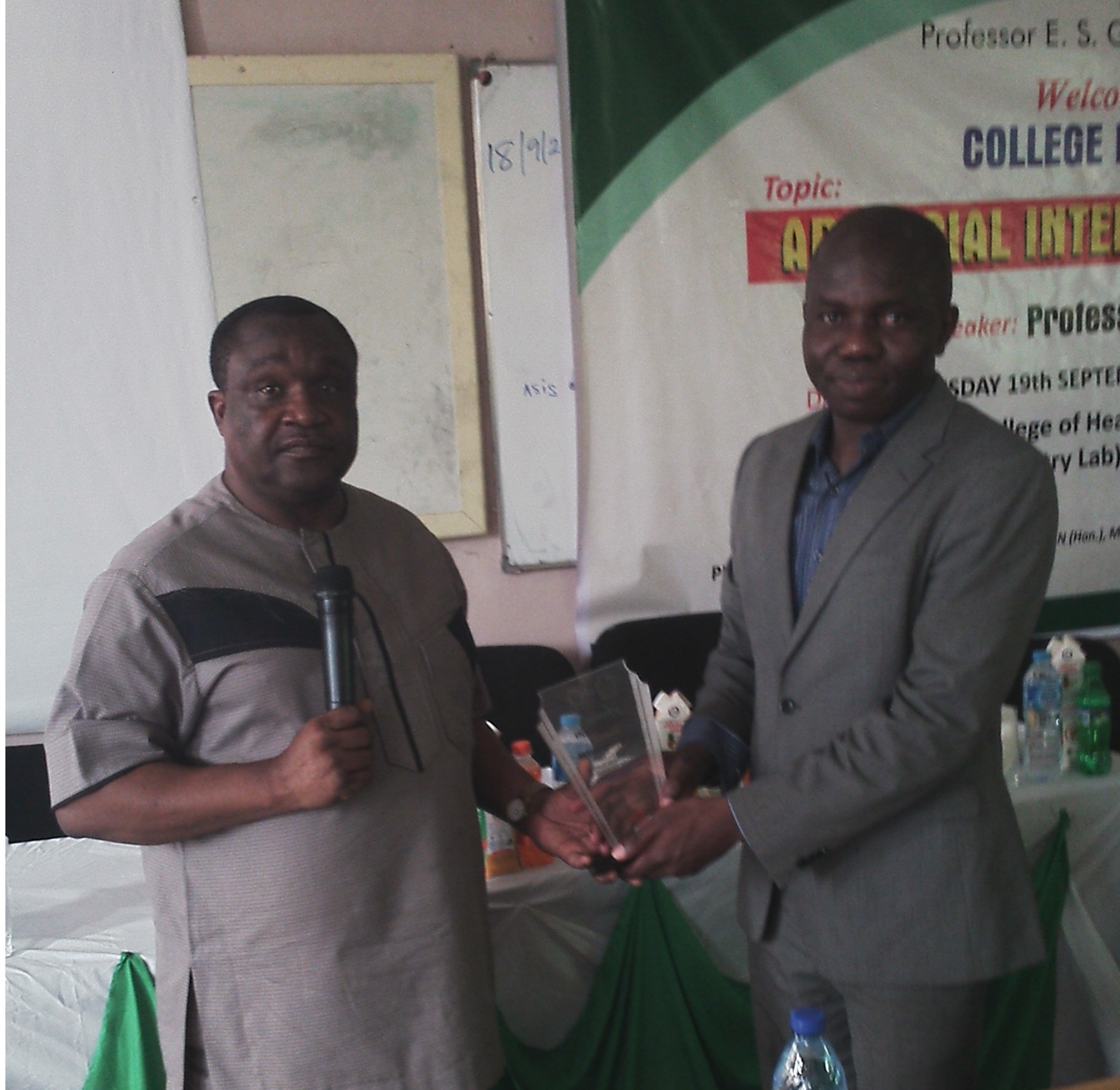
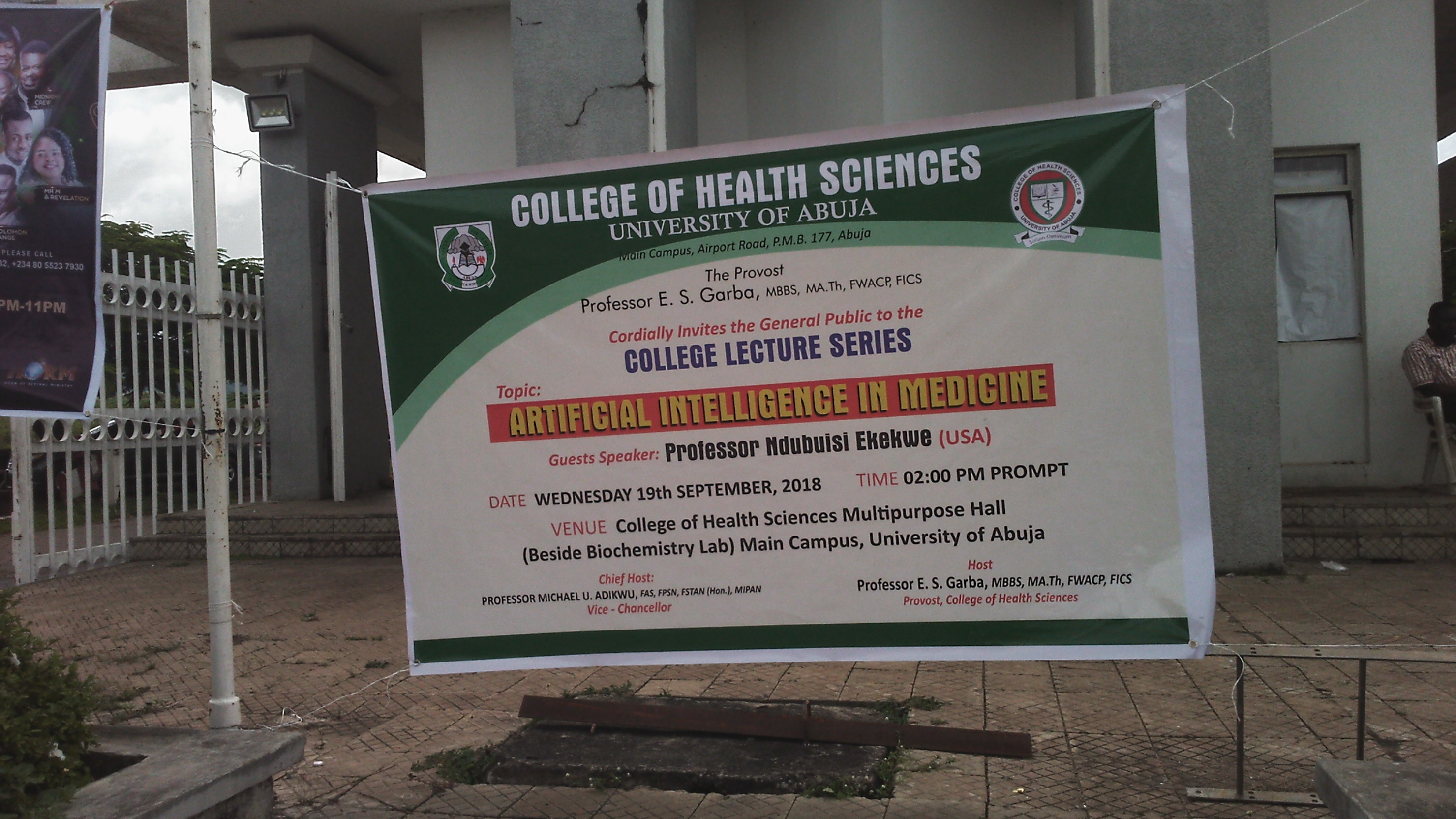
Yesterday, the Vice Chancellor of the University of Abuja, Prof M.U. Adikwu and the Provost of the College of Health Sciences, Pro E. S. Garba, honored me before the medical students and the medical faculty and staff. Today, I will be spending time in the University of Abuja Teaching Hospital as we continue the quest of using technologies to redesign the healthcare sector in Nigeria. Medcera, my healthcare startup, will power a new AI project in the capital city of Nigeria.
We received an email yesterday from Strategy&, a unit in PwC, a global consulting giant, informing us that it has categorized Zenvus as one of the “leading startups in Africa operating in the Ag-Tech sector”. They ended with this phrase “[Zenvus]…at the forefront on agricultural technology in the continent”.
I travel to deep northern Nigeria to meet some of my customers in coming days – we remain committed to reduce the frictions which exist in the agriculture sector in Africa.
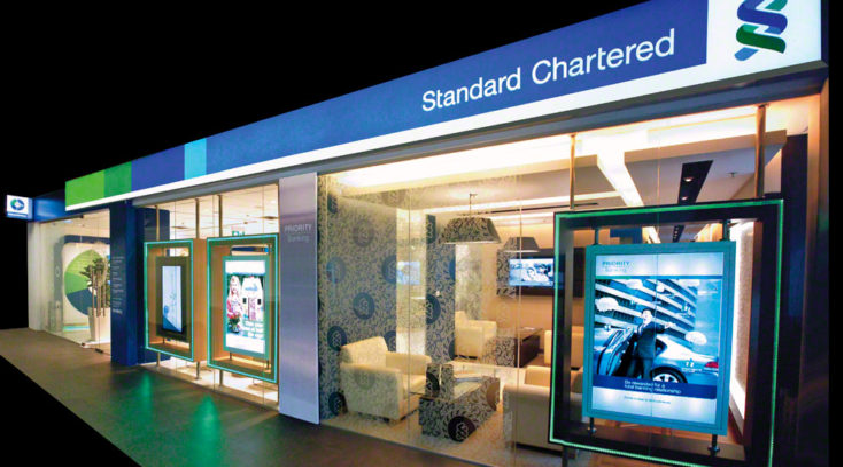
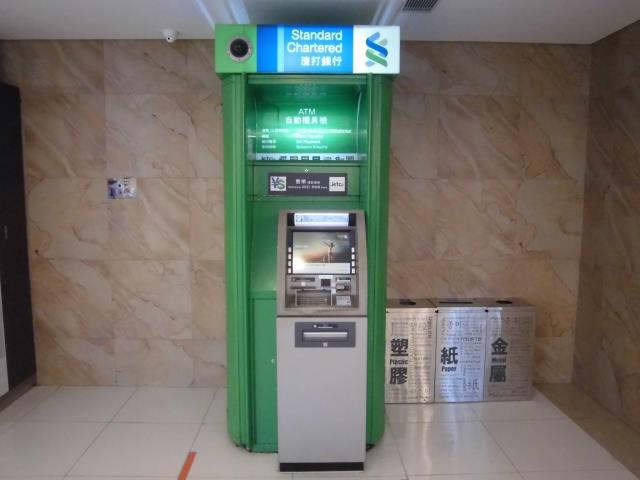
Standard Chartered Bank Nigeria has one of the most advanced ATM machines in the nation: the ATM uses facial recognition technology which is linked to BVN (bank verification number) to authenticate users in its ATM systems. But that early-adoption decision may be costing the bank business opportunities. It is a huge problem and the bank may not know.
At Ajao Estate (Lagos), along Airport Road, I visited one of the ATM branches. It was drizzling and everyone was rushing in with pockets of water on our faces – the new Airport-Oshodi road construction did not help issues. As we took turns to collect cash, none was successful from the bank’s ATM machines. The problem: ATM could not authenticate our faces with the water having messed up what was stored in BVN, and what the machine was seeing.
Out of frustration, we left and went to the nearby Access Bank to get cash. Access Bank uses the PIN-based ATM machines which do not require any facial capture. Once you type the PIN, it is largely irrelevant if you are wet or not.
The Challenge
I do not think Standard Chartered has clearly communicated the purpose of the facial recognition technology. One woman in front of me thought the bank wanted to take photos of her face. Apparently, in Nigerian banks, when you take large amount of money, they record the transactions on camera. So, going to ATM, many customers may be thinking it was all photo taking. After all the special poses and nothing happened, the woman shouted “Yeye bank, after taking my photos, you no even allow me collect my money.”
The woman was certainly not the typical Standard Chartered customer segment but ATM systems in Nigeria are classless as they are fully interoperable. If you have a valid card in one, you have access to all ATM machines (fees apply after the third non-network transaction). For the woman, she saw ATM to collect money, and they wanted her to take a photo, and after the photos, they still refused to release cash.
ATM Machine (source: Guardina)
The Problem of Early Adoption
Certainly, Standard Chartered is industry-leading here on the adoption of facial recognition ATM systems. Even in U.S., these machines are not popular. I have never used any in U.S. or Europe and none of my banks have my photo. So, it is very interesting that Standard Chartered decided to deploy this in Nigeria. They have simply created another level of friction in the transaction process and it was not funny.
My understanding is that after you have facilitated your face, you need to still use PIN to collect the money. So, they did not remove the PIN entirely – facial is simply a step to get there. Here are issues with using facial recognition this way:
Most bank accounts are tied to one BVN even for multiple accounts. If a couple shares a bank account , one cannot access the money via ATM depending on the one used in the BVN even though the other partner has released the debit card with PIN.
Company accounts will struggle here. That the main accountant whose ID or the owner whose BVN was used did not come to work should not stop the company accounts with legal use of the PIN to withdraw cash in places where there is no bank branch.
I personally believe that Standard Chartered is over-thinking this process. There is already a clear global standard that customers are responsible for protecting their debit cards and the PIN numbers. Standard Chartered is saying here that it does not think you can do both, so, it wants to help the customer by using the face to further authenticate. A critical analysis of this will not happen if one does not know the number of ATM thefts in Nigeria. Also, we need to know the form and structure before a total evaluation of the necessity of this facial technology.
Why this Idea Will Struggle
Standard Chartered ATM machines may lose leverage over time since not all industry players will follow that path. I will tell my bank clients not to adopt facial recognition-based ATM machines. I do not think the value is huge: it is very marginal. For a crime to happen on ATM, in Nigeria, the PIN must have been disclosed or stolen. So, even if fraudsters clone a card that does not mean that they have the PIN. The chance of getting the PIN right in 3 trials in a 4-PIN system is low (one out of 10,000 possible outcomes, over three trials). So, the risk is very low for fraudsters without the PIN to commit crime since I expect any bank to block any ATM use after the third PIN attempt.
Yes, the bank’s desire to over-secure its customers is excessive because the risk is very low if it can block any debit card after three failed PIN attempts. The facial recognition will certainly increase friction and hurt volume in Standard Chartered machines.
But for this to work, Standard Chartered has to consider that ATMs in Nigeria are not in some cozy typical environments like they have in U.S. and Europe. You can join a train and arrive in a station without any rain touching you in U.S. You can connect to your car easily and drive home. Right there, there are ATMs and it is unlikely rain would have beaten you before hitting to the facial recognition ATM. But in Nigeria, market women are soaked on water as they run to ATMs. You do not expect them to use a towel before they can get their monies. If you keep asking for those photos, you would be out of luck on growing volume.
The Starbucks Model
Starbucks, a global coffee chain, runs a loyalty program. The security in the mobile app is terrible. It is always hacked and all the points zapped out. But when you call Starbucks, they “investigate” and within days they will return the points. Over time, I have come to understand one thing: Starbucks does not really want to stop the fraud. Why? It is cost of doing business. If the company loses $500,000 to fraud but the simplicity and user-experience (#1 in the industry) makes it possible to rake in extra $1 billion where $100 million is profit, Starbucks will go for it. Yes, to save that $500,000, it can lose $100M and that will not happen.
All Together
Customers have responsibilities on how they use their cards and those include safeguarding them and also keeping the PIN secure. Security strategy is never designed to eliminate all security vulnerabilities. You have to consider the balance between too much friction and customers abandoning the service. I recalled how I struggled to open AOL email account many years ago because in the bid to have the best security, it made a product no one could sign-up.
Even Google has explained that if it has to adopt the best security, most people would give up on some of its services. For Standard Chartered, it needs to educate customers that the facial recognition is not for photo taking, but for authentication. Also, I do think the bank needs adaptive lens which can adjust its position. Getting my face was hard since I was above average-height. The same goes for shorter people – the system does not need to be a burden. But if it wants to showcase this ATM, it needs to focus on places like schools, NNPC and National Assembly. It is not ready for markets and other crowded areas in Nigeria. I do think it is ahead by more than 6 years on this in Nigeria.