DD
MM
YYYY

PAGES

DD
MM
YYYY

spot_img

PAGES

Home Blog Page 7089

Nigeria – “The national grid is now our second backup”

0
generators Nigeria

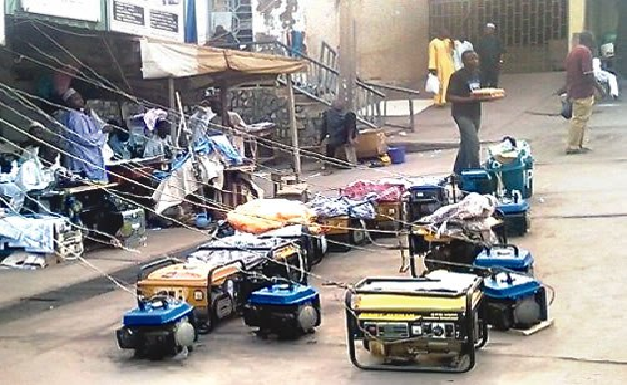
I just finished reviewing monthly updates on our business. One line was humbling from one of our offices: “The national grid is now our second backup”. That is from my Owerri (Nigeria) office. They added a second generator as it was evident that national grid had gone. I looked at the fuel cost; I sobbed.

Mr. President: you need to give Nigeria, Nigerians and Nigerian businesses constant electricity. We cannot continue this way. It is not your fault but you promised to get this done. Mr. President, declare a state of emergency on electricity and do all necessary to provide power to our economy. Power is a catalyst Nigeria needs. If you just get it done, you will see an exponential impact in whatever policy the nation is working upon.

Yes, farmers will move into farming some crops knowing that they have cold rooms to preserve produce. Bricklayers will work in the day instead of praying for light to come. Mechanics, shoemakers, engineers, doctors, accountants, etc will be working for Nigeria and you (our President).

The problems are huge because the paralysis has taken years to morph. I have explained some of the components but we can only write. You knew about these issues, and you did promise to get the job done. Please do. We desperately need your help. I do not want to see generator as an asset in my financials!

The SMEs need power to run the economy. But discos would need the help of some of the big manufacturers who typically are the cheapest to serve and usually most profitable to link into the network. But for this to happen, those major players would expect the discos to demonstrate reliability before they commit to national grid. If we do not manage this interface, what would happen is to expect discos to become profitable by serving the masses (typically expensive due to higher marginal cost). Most times, that does not happen. The business of power utilities is hard: only two utilities are profitable in Africa.

Yes, market forces can re-balance this when other companies that can tap into a reliable national grid to offer competitive products which are obviously cheaper due to lower power costs arise. When that happens, the companies which generate their own power may be challenged to abandon that practice and then connect to national grid. They would make those decisions based on market forces and nothing more.

Nigeria Leapfrogs Electricity As Customs Service Adopts Oracle Blockchain!

0

People, it happened – Nigeria has leapfrogged electricity! Yes, the Nigeria Customs Service has adopted blockchain from Oracle. Why not, blockchain is the latest thing in town. The government is also working on smart city framework so that some of our major cities will be smart-ready. Do not ask me about electricity… and water to make those plans meaningful.

As I keep saying here – there is nothing that could not be sold in Nigeria. Few days ago we read how government imported many equipments, tools, etc and forgot them in the ports for more than a decade. Possibly, with blockchain, Customs did a great service by auctioning some of the items. If Oracle could sell blockchain to Nigeria at this time, our entrepreneurs need to improve their games – there is nothing you cannot sell.

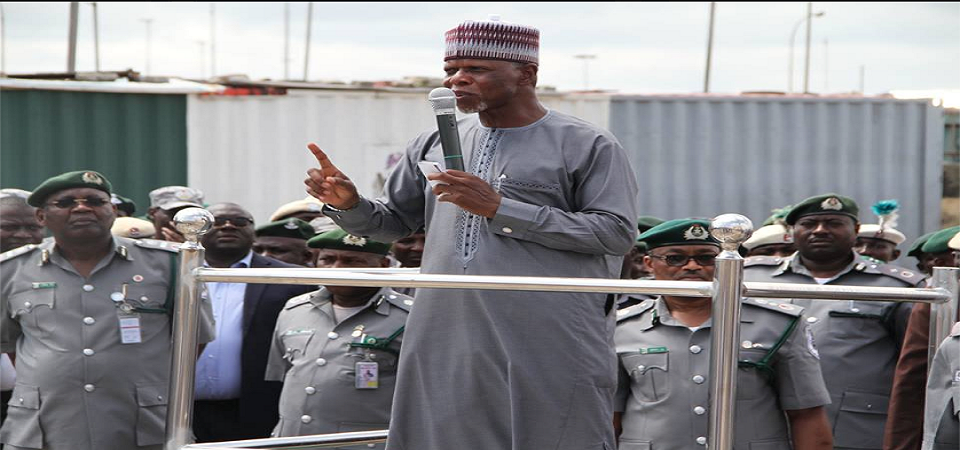
Nigeria Customs Service has adopted the Oracle Blockchain Cloud Service which has recently just been introduced. The service enables organizations to easily build blockchain networks to allow more secure and efficient transactions and to track goods through supply chains.

“We used Oracle’s blockchain to build a trusted platform for the automation of Customs Excise Trade business processes and procedures,” said Aber T Benjamin, Assistant Comptroller General Modernization, Nigeria Customs Service. “Using this technology, we found the entire business environment can be migrated to blockchain to automate processes and create transparency and predictability. Once the transition to blockchain is completed, NCS expects revenue growth increase of about 50 percent. This technology helps our organization to build global trust for Nigerian businesses through irrefutable data on goods manufactured in the country.

It is all magical as Nigeria remains dark with no clear roadmap in the foreseeable future.

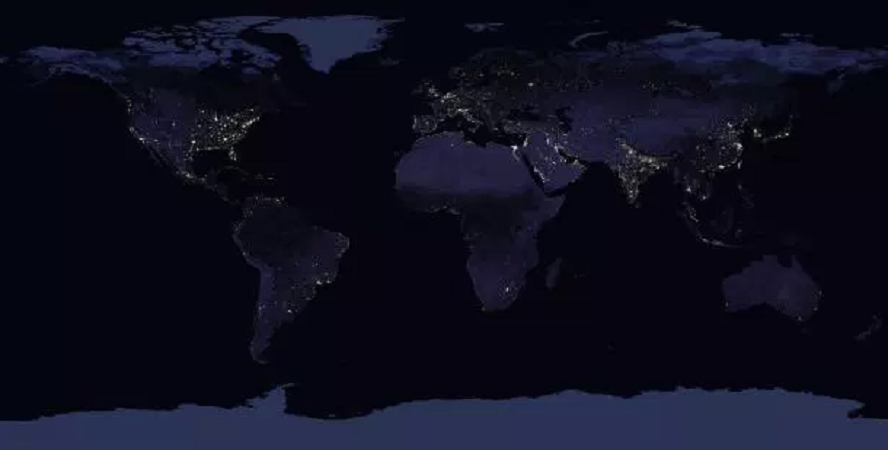
Africa is dark with no power

Turn African Energy Utilities into Grid Marketplaces, Only 2 out of 39 Utilities Profitable

0

In a state in Nigeria, water rates were last reviewed in 1987. Yet, the same state is looking for investors. When I explained that it was impossible to find one without updating water rates since projects must be structured to be investment-appealing, the politicians put the projects in a cooler. Simply, no politician would want consumers in Nigeria to pay more under his regime. You need votes and you do not mess up with the free stuff.

Yet, they want investors even when they do not have the boldness to allow market prices to rule. Investors then ask for (loan) guarantees to cover themselves. That is why when a government does not have the capacity to offer guarantees to investors, projects die. Interestingly, government guarantees are not scalable: if you guarantee $1 million to build a water plant, and I have additional water demands, and you are unable to offer more guarantees, nothing happens. That lack of scalability is why we do not have electricity and clean water across African communities.

Africa at Night (Source: NASA)

The broad argument across sectors in Africa is that keeping costs (of services from utilities) low is one way of helping poor people. Unfortunately, that is a very faulty argument because the people that benefit from cheap water rates are usually the people living in cities [the middle class and rich people]. The poorest citizens in villages do not have any access to government-funded water systems. The same goes in electricity where those in cities have access whereas government is still making a case that affordability is necessary to help the poor citizens. The poorest Africans do not have access to grid-provided electricity as where they live there is no grid infrastructure to start with. So, at the end, we are left with low-pricing of the services (mandated by regulation), creating underperforming utilities: only two out of 39 African utilities studied by World Bank are profitable.

The problem is that across Africa, the vast majority of the power utilities are effectively bankrupt. Another World Bank study (pdf) on African Utilities shows that only two of the 39 African utilities surveyed, in the Seychelles and Uganda, were able to generate enough cash to cover both their operating costs and capital expenditures necessary to invest in the maintenance and expansion of the grid. In fact, only 19 of the 39 companies were able to generate enough cash to cover their day-to-day operating costs. It means the rest were not even able to pay everyday costs, like salaries, in full.

It is very unfortunate when you visit places like Ikenegbu Layout (Owerri) and see people waste water because water is largely free. Yet, people living there are some of the most affluent in Imo State. But government wants to give them “poor” people water rates. The poorer citizens who live outside Owerri do not have water systems in any form.  The Ikenegbu experience is how it is across Nigeria and African continent: rich people’s lives are subsidized by governments on the pretence of helping the poor who do not even have access to those subsidized services.

Any government that tells you that electricity and water rates have to be affordable because they have to support the poorer citizens is not telling the whole truth: the poor people do not live where water boards and grid-infrastructures function. Largely, government is subsidizing the lifestyles of middle-class and rich citizens at scale.

These points are articulated in a nice piece by former African Finance Corporation CEO on Quartz where he concluded thus: make the utilities marketplaces so that any solution provider can connect and help in fixing energy and water frictions.

Perhaps, grids will one day become marketplaces allowing people to sell excess power from their solar installations to those who have a need for power at that time. Prices can be set dynamically to allow supply to match demand.


Nigeria’s Cyber Regulations Are Fair Enough, It’s Time for Building Tech Capabilities

0
Godwin Emefiele (CBN governor)

LinkedIn Summary: Every year, Nigeria has been improving its cybersecurity laws and regulations. From NITDA to CBN, NSA to you name them, the laws keep evolving. In this piece, I argue, as I did when I spoke to the Senate last year that Nigeria does not have a cybersecurity law problem.

The thesis of my point is that cyber-criminals are lawless and no matter all the efforts to improve the laws, if you do not develop technical capabilities to stop them, nothing will change. Sure, you need good laws in the books to prosecute them, if you are lucky to lay hands on them. But the present laws are fair enough. 

Nigeria needs to focus on deepening our technical cybersecurity resilience and capabilities instead of spending all the efforts on writing regulations.


Since 2010, Nigeria has created all kinds of cybersecurity regulations as the nation continues to find ways to curtail cyber-related attacks. President Jonathan government formulated some under the former National Security Adviser (Col. Sambo Dasuki, rtd) (download it here). The Buhari Administration has also created its own versions. From NITDA (National Information Technology & Development Agency) to Central Bank of Nigeria (CBN), all the way to the National Assembly, cybersecurity regulations have become amorphous ordinances in Nigeria.  Last year, the Senate invited me to one of the sessions where I made a presentation.

The President of the Nigerian Senate, Senator Bukola Saraki, presented a paper during the National Conference on ICT and Cybersecurity which was held early this week in Abuja. He spoke eloquently on the challenges of cybersecurity in our nation, and the need for government to engineer effective policies to curtail their impacts.

In my presentation, I did explain that Nigeria does not have a severe problem of law. Rather, the challenge is technical resilience. Cybersecurity is a trade perpetuated by lawless people. That means, formulating laws will not fix the problem if you do not develop resilience and capabilities to prevent them from happening. The actors know their works are illegal.

Yes, most Nigerian laws are already decent enough to deal with them, if you can be lucky to lay hands on them. So, the focus should be developing homegrown capabilities over importing one-size-fits-all foreign equipment which adds no value. Recall, few years ago, the $10 million equipment installed in one room to secure Nigerian cyberspace!

In my talk, I made some proposals including harnessing talents across the nation to build organic pipelines of cyber-geeks with capabilities to secure Nigeria’s cyberspace. Ambiguously, Nigeria needs capabilities as we are losing huge money to cyber-criminals.

According to the 2017 Nigeria Cyber Security Report, the country was losing about N127 billion yearly due to cybercrimes.

Sure, our nation must continue to update our legal systems and frameworks. CBN has just noted that it would update its cybersecurity frameworks for the banking sector. That is important because we need a secure financial system.

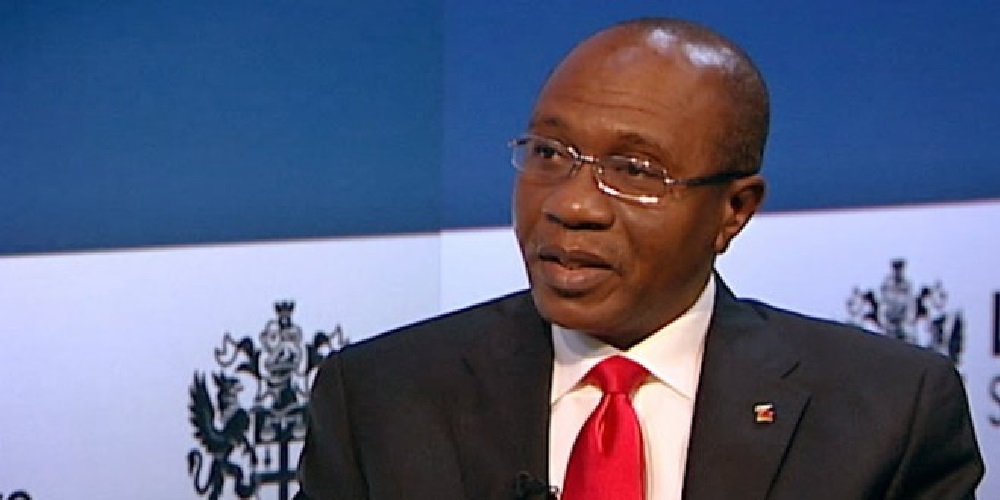
The Central Bank of Nigeria said it was developing a Risk Based Cyber Security Framework for banks and payment service providers to combat internet fraud in the country. The Central Bank Governor, Mr Godwin Emefiele, said this on Thursday in Abuja at the 2018 Nigeria-JP Morgan Chase Cyber Security Conference.

Yes, despite all these frameworks and regulations, Nigeria needs to invest in technical capabilities on cybersecurity.

African Telcos’ Innovation Dilemma

1

I remember the first time I made a phone call; it was 2002. Mom handed me the phone after speaking with Dad; I was so excited. I was all smiles that day. I had seen phones before then. One was in the landlord’s sitting room – a land phone with lots of outside wires all over the electric pole. Each passing year saw diminishing number of wires on that pole until the land phone in our landlord’s sitting room became part of the decoration. So, I came to understand that those wires belonged to a certain company – NITEL – and they were actually disrupted by those companies that made my 2002 phone call possible. Those companies are the mobile operators, the modern telcos.

Today, the table seems to have turned on the telcos. Here’s Prof. Ndubuisi Ekekwe’s summary of the current reality:

It is looking increasingly challenging for telecom operators in Africa. I can predict that African telcos have past their best moments. Yes, MTN, Glo, Airtel Nigeria and 9Mobile will struggle as Nigerians are provided with these new options to connect to the web. It is not just Google; SpaceX is coming along with amalgam of satellite players. Add the pains from OTT solutions like WhatsApp, you would understand why the telcos will have sleepless nights.

Simply, the future will look increasingly challenging for terrestrial operators. Because from internet balloons to satellites, telcos will be under-serve competition and many of them will die. By 2025, I do expect the top four telcos in Nigeria to merge to become two. The four telcos are now more than necessary with all the evolving options.  If they do not merge, they will lose value and that will hurt investors. The world is changing rapidly and the competition will be extremely ferocious that telcos as we have them will continue to see massive loss in ARPU. These GSM players disrupted CDMA players. Now, they need to find ways to survive.

In this article, I will examine two possible solutions that the Telcos can combine in order to get out of this quagmire.
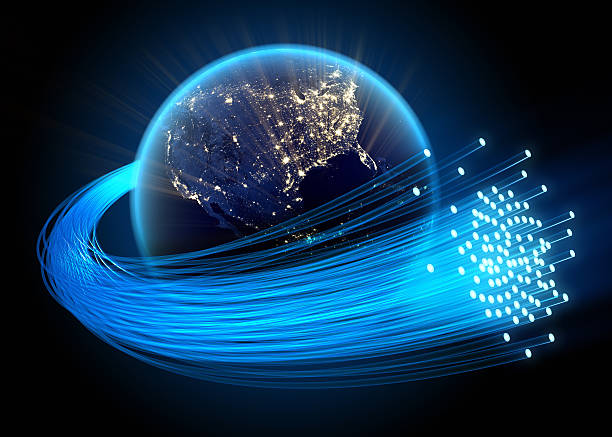
Image result for fiber optics images

The Opportunities /Threats/Challenges

Finding new paths to glory will depend on how telcos leverage two key enablers – 5G and potential MVN (mobile verification number) – in the next few years.

5G

5G is crucial to the future of the telecom industry. Its characteristics of possessing an extremely high speed with zero latency (no lag) positions it as the major enabler for IOT, Driverless Cars, Remote Surgery and other areas. The value here is that telcos can provide better service to internet users while also gaining access to a new broader market of smart systems and IOT.

My position is in view of the recent activity in this space. With precision farming technologies coming onboard and Google launching AI lab in Ghana, smart system innovations will become mainstream in years to come and 5G will be vital as it makes that transition.

The telcos are best positioned to exploit the 5G advantage because they have at scale the very fundamental infrastructure required for 5G connectivity, Fiber Optics! But deploying the other necessary 5G infrastructure is a high cost investment in an uncertain market. Indeed, not many investors will be too keen! To be able to make this upgrade will demand cost effectiveness. One way is to utilize a passive network sharing model; it has been successfully utilized in India. The choice of India’s model is informed by the many similarities that Africa and Nigeria share in common.

With Google building 200 Wi-Fi centers by the end of 2019, the short term impact will see a decrease in revenue for the telcos but may not be enough to be a real threat to their future survivals. This is because of the huge infrastructural cost associated with enabling 5G. Although, Google has the cash, the challenge is really if it will anchor such investments in Africa. If Google does view having 5G capabilities as integral to its future in Africa, it can form partnerships, lay its own fiber, buy an ailing telecom company or rely on the probable 5G-like service of Space X (Alphabet, Google parent, has invested about $1bn in Space X).

On the other hand, the Space X threat is more tangible. Nigeria’s internet penetration is about 47%. Space X may have a better positioning to increase this number but it is important to note the demographics of the unreached 53%. The demographics are usually rural dwellers, mostly uneducated, not financially-capable to own smartphones. In the cities, where the 47% penetration is concentrated, the competition is going to be tough, especially in the short term. The winning model for any of the players will be ‘better service at cheaper rate!’ Space X is more likely to win there in the short term, but still that doesn’t ensure its future in this space. Fiber optics is regarded as a fundamental infrastructure for 5G and future generations of networks. With the telcos’ ability to upgrade to 5G (and future G’s) with access to a new market of connecting smart systems, they possess the potential of gaining market advantage with a radical business model.

Elon Musk’s promise of delivering 5G-like service to billions around the world is still yet a promise. The policy bottleneck associated with fulfilling this promise is even more challenging. Whatever the case, SpaceX must find a scalable way to deploy not only 5G but future generations of networks. If it doesn’t, it may only end up as a good competitor, not really a disruptor!

MVN (Mobile Verification Number)

Fintechs in Nigeria have brought dynamism to the financial sector. But their current approach which depends on the bank Accounts of customers can only be marginally successful. With a unique customer base of about 30 million customers as verified with the BVN (Bank Verification number) for all the banks in Nigeria, the fintechs at their highest peak is only serving 16.7% of the market in a country of about 180 million people.

Telecom services have been crucial in the redesign of the financial sector in recent years. What’s interesting is that the telcos have all the necessary capabilities to be the model fintech that will disrupt the entire banking system in Nigeria. MTN alone had over 53 million active lines in 2017, with the total for all the telcos at over 142 million active lines. Let’s not forget that many of these telcos have presence in many countries; clearly, the telcos have a last mile advantage over the banks.

Just like the issues of transparency and credibility were addressed using the BVN, especially in managing multiple bank accounts, the telcos can make a similar provision using the MVN; Nigeria was reported as the country with the highest usage of multi-Sim phones in the World. The MVN will serve to authenticate the digital identity of the customer just like the BVN. The mobile phones of these customers is an ideal platform regardless of whether they have internet connectivity or not; it is on record that the number of transactions performed using the USSD service has more than doubled the number of transactions on mobile banking platforms for banks offering USSD.

As the telcos fights for their future, they must find new ways to unlock value using the capabilities that they already have. The trend of decreasing ARPU is most likely to continue for telcos as OTT applications continue to depress revenue even as they lose 10 million customers to Google’s Wi-Fi project. Also, SpaceX looms on the horizon! The financial services sector provides an exciting prospect that telcos should not fail to consider. The key challenge in exploring this opportunity is Policy. Exploring this opportunity isn’t all grey area for telcos; Safaricom has modeled how it can be done.

All together

The Telecom sector is definitely not going to be the same. For the Telcos to remain in the game, it will require a redesign that focuses on leveraging their capabilities to unlock value in other sectors, finding innovative ways of deploying better technologies while keeping cost down, and designing new roadmaps that position them for glory in the long term. I hope they succeed.