

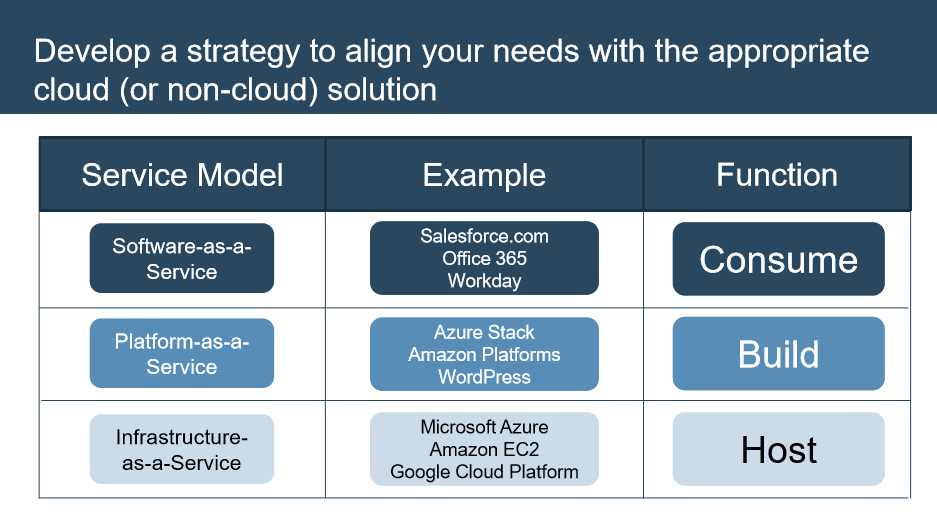
There are many things to consider when choosing cloud services. In this piece, I look at them, and then compare the different options: public, private, hybrid and community cloud solutions. Certainly, getting the best in cloud requires a strategy, communicating that strategy and executing a roadmap. Cloud is not as easy as many people make […]
ALTON’s Telco Challenge and Solution to Nigeria’s OTT (WhatsApp, Facebook, etc) Issue

Nigerian government should do all necessary to avoid the temptation of trying to regulate the OTT solutions like Facebook, WhatsApp, etc despite the agitations from the industry players. The fact remains that no person can effectively stop the trend of innovation which is global.
“For example, the likes of YouTube, Facebook,Twitter, WhatsApp, Blackberry Messenger and many others are called over-the-top services that are not part of the core services for which operators are licensed.
“These over-the-top services have social, economic and security implications.“If they are not licensed, it means they are not regulated, and in that case, there is no limit to the scope of what they can do.“There is also no control over services and content they may provide,” ] Gbenga Adebayo, Chairman, Association of Telecommunications Operators of Nigeria (ALTON)] said.
According to Adebayo, nowadays people send messages mostly on WhatsApp and some other social media platforms than they do on the conventional SMS services.He noted that telecom operators were only licensed to supply voice, data and text messages for which they were charged on annual basis.“Over-the-top services don’t have those types of attraction, which I believe is a loss of revenue for both regulators and the country,’’ Adebayo said.
While one can understand the challenges these solutions pose to the business models of telcos, the fact remains that telcos still have options available if they want to work harder. For the very fact that users must have internet access to use WhatsApp and Facebook, telcos can move from pay-as-you-go (PAYG) billing to subscription billing. Once the user has paid the monthly subscription, it is largely irrelevant what he/she does with it within a bounded bandwidth/data transfer capacity.
But the telcos do not want to invest in research to invent new business models. And that is why they are complaining. They have the customer biometric data with all demographic data. The industry can create an equivalent of BVN [I would prefer they merge them] to pioneer subscription contract-based billing. So, at the beginning of every month, people have to pay for subscription to enjoy internet on their phones. They would categorize the products based on data transfer/bandwidth tiers. Indeed, the credit system that doesn’t exist in Nigeria can be built. Telcos are well positioned to do just that if they partner with banks.
The problems of OTT are not unique to Nigeria. It is global. Most global telcos which have moved to subscription-based billing are handling the challenges better.
OTT players, are unregulated; they don’t have to have a licence, they don’t have to produce local content, they don’t have to employ anybody in any country, and they don’t have to pay any taxes. Everyone loses with OTT
Aggregation Construct
ALTON’s thinking that “telecom regulators should no longer be neutral to technology regulation” is unfortunate. The fact is this: any telco that blocks YouTube, Facebook, WhatsApp and Twitter in its network would go out of business. And any regulator that tries to do that would not be effective doing it. It is a very complicated challenge that no one can solve in Nigeria through regulation because you are dealing with aggregators who are largely sequestered from your domains.
Twitter does not have any physical presence [I am aware, I must note] in Nigeria but its services are used there. How do you police them? If you push Facebook too much, it can simply abandon Nigeria – we do not have the scale of China to make these companies bend. I am not sure YouTube would change its business model because of Nigeria.
All Together
Telcos should invest in business model research and find ways to move from PAYG to subscription-based billing. That way, they would care less on what people do with their phones on their networks as the subscription must have covered those expenses. Regulating technology would be extremely dangerous. If we allow Telcos to succeed, the newspapers can ask for the same consideration since Facebook and Google are decimating their business models also. When you are dealing with aggregators, you rarely win because aggregators operate with near-zero marginal cost. Yes, their products are extremely valuable to the users even when they pay absolutely nothing [sure, I get it – privacy of data]. If you hit them hard, you would lose the soul of your business.
Comment from LinkedIn
This is a comment on my LinkedIn feed on this piece. You would like this further insight.
Interesting piece Prof. OTT’s are disrupting business model globally like you clearly stated. Evolving their business model could come in as a succor to the Telco operators, which comes with some further investment to really thrive. I also think the Telco operators in Nigeria are not really keen towards further innovations in generating new revenues streams. Preserving their existing revenue stream seems to be their best alternative by seeking for regulations over the OTT. Apparently you get better call quality using the OTT services than some of the providers network, still perplexed at this. The demand for more data to utilize the OTT services led some operators in other developed country to focus on their data services by improving the speed of connections, data plans, expanding the network reach and upgrading their Network to be LTE capable to grow the demands for data. Since Data usage will overtake voice calls at some point, there are specific number of calls or chat I can have per day or data I can consume per month. Innovation towards other value added services, especially content aggregations via the Telco with flexible plans and affordable data bundles packaged can complement for the revenue short falls on Voice.
Three Pillars Driving Amazon and Facebook Growths – Flywheel, Synergy and Vision

The Flywheel model is very important business concept in modern digital businesses. Amazon is built on that. This video explains how Amazon has grown using that concept, integrating synergy and vision in the whole nexus. I have already noted the One Oasis strategy which captures all at the higher level. Simply, if you run a platform business, you essentially have one product which is a platform. By doing all necessary to keep that positive continuum growing, you would continue to do well. The best product in Facebook is that it has many people. Every other thing is largely irrelevant. So, for Facebook, provided it can continue to feed that platform, bringing more people and making the product better, it would continue to find success. Physical flywheels store rotational energy; digital businesses built on flywheel concept improve future customer experiences by using past understanding of the customers.
“The Flywheel” is a very useful analogy for implementing business strategy created by Jim Collins. It describes how driving a new strategy is like getting a huge flywheel into motion. Initially, there is no movement – many people think that the strategy is absurd – it is almost impossible to imagine the flywheel at speed.
UBA Unveils Facebook Banking as Nigerian Banks Become the Fintechs

The United Bank for Africa (UBA) has gone Facebook Banking. Yes, you can do your banking while on Facebook Messenger. As Nigeria’s most expansive bank in Africa [by footprint], UBA is taking this feature to many customers in about 20 African countries in the continent.
Pan African Financial institution, United Bank for Africa (UBA) has again disrupted the e-payment space with the introduction of Master Pass ‘Quick Response’ (QR) Bot. The revolutionary solution enables the micro, small and medium enterprises (MSMEs) in Nigeria and across Africa to receive digital payments from their customers through scanning, using their Facebook account.
Developed by MasterCard International in partnership with Facebook, Master Pass ‘Quick Response’ (QR), allows payment collection by SMEs through Facebook Messenger and delivers unified and instant self-service across a range of interconnected payment solutions.
Like LEO, the acclaimed artificial intelligence payment solution introduced by the Africa’s global bank, UBA, Master Pass ‘Quick Response’ (QR)is a a chat Bot, currently available via Facebook Messenger as Masterpass QR for Merchants.
Zenith Bank and other banks have already unveiled a similar product. Largely, the Nigerian banking sector, the most innovative in the economy, continues to redesign itself. That is why I do think no one is going to eat the banks’ lunches. They have proven to transmute and command their spaces when they need to. From Sterling Bank’s Specta to Wema Bank ALAT, we have seen these banks come up with products that would create envy in the eyes of the fintech entrepreneurs who dream to disrupt their businesses.
Today, I can say that Nigerian banks have evolved. They are indeed the best fintechs in the nation. If ALAT is a startup, it would be a category-king company. If the newly unveiled Specta is also one, we would debate the massive war chest of N10 billion for retail lending that takes less than 5 minutes. From UBA to GTBank all the way to Ecobank (yes, Togo), we are witnessing a total redesign in the banking sector. Here, I explain how these banks have moved form the centers of the smiling curves to the edges while retaining those center pipes
MasterCard is winning a huge market base with these partnerships with African banks. The great winner at the end would be Facebook. Facebook is the platform and I expect this path to be the natural trajectory as the ICT utilities take over the lands. Once Facebook perfects the integration with MasterCard on Messenger, it would do same on Instagram and WhatsApp. Then, it would be opened to any financial institution that wants. MasterCard is a natural payment aggregator, agnostic of banking institutions. Facebook would be the platform while MasterCard would act as the “interface institution”[payment processing] and banks the hosts [the accounts]. The implication is that over time few would bother to notice the hosts, focusing more on the platforms [once you have set up an account and put your bank details, there is no need to even remember the bank again as the transactions would happen on Facebook while MasterCard handles the underneath processing with the banks]. Simply, there is nothing anyone can do but to join the ecosystem. That is the elemental feature of the Aggregation Construct.

The Future Remains Voice Banking
Yet, Facebook Banking is not the disruptive product that would redesign the sector [it is an important product nevertheless, and certainly part of the future]. Largely. Facebook banking offers only marginal value. I do not believe that many Africans would join the Bot which many banks are unveiling because we are not traditionally good on writing [Bot does not solve the illiteracy challenge in the continent]. We are “talking people” and I do not expect that to change. So, as the banks unveil Bots, they have to do what they have to do to avoid the narratives that fintechs did it before them. The real value will come when they begin to unveil voice banking. Yes, we are Africans – we like to talk. Banks need to find ways to get us to talk our banking needs.
I expect voice computing to continue to advance. Voice banking will be one of the main enterprise level applications that will be built on top of it for Africa. The banking sector in Africa must explore the opportunities. In Nigeria, for example, the BVN can be expanded to also include the voice capture. Bringing more citizens into African banking sector will require delivering services in ways they can understand. In the 21st century, one does not need to be literate to do banking.
All Together
Google is going to become the main driver of social media banking with products like Tez and Duplex. The Duplex which is an AI system that offers actual natural human-level phone calling capabilities will be the Bot that would change markets in places like Nigeria. It would handle the illiteracy equation which Bot does not have an answer because it still takes someone to read and write to use Facebook. But getting voice to work for Africa would require efforts and research investments on voice technology. That would be the challenge and also the path to the opportunity.
Vatability or Otherwise of Commercial Road Transport Industry

By Simon Obasi
The road transport industry is huge. It is one of the most important industries in Nigeria. At the same time, it is one of the least coordinated industries that we have. This is due to excessive fragmentation and little to no regulation of industry players. Within this industry are structured and unstructured players. However, it appears that the unstructured players outnumber the structured ones. There are also big names covering most major cities of the country. It is almost impossible for a traveler not to find any of the major commercial road transport companies in the major cities. Truth be told, they have assisted the masses to get to their destinations at a fraction of airline tickets.
No doubt, you may have noticed that either at the front or side of each park of a major operator, there are over ten unstructured or unregistered operators who are loading for the same destination at significantly lower fare. Major operators complain of how much they lose to entities who they presume are not socially responsible and who pay almost nothing to the government in form of taxes. Interestingly, the existence of these other operators is a check on the excesses of the major operators as it is presumed that passengers are price-sensitive. And the reason the unstructured operators charge lower fare is not far-fetched; they carry a lot lower overhead cost, some are owner-driven while others are there for survival.
However, in my experience traversing different cities of the country from South to North, East to West, I am yet to see a single travel receipt from any of the commercial road-transport companies with VAT. My experience as an external auditor and financial adviser to one of the major players in the industry indicates that the existence of unstructured operators in this industry is a serious matter deserving attention. But this article is not to discuss the challenges of structured road transport companies but to address a critical issue of vatability or otherwise of the industry. Please note that this is solely a discussion around revenue from passengers (fares) and does not extend to haulage, carriage or courier services undertaken the industry players.
Yes, as noted earlier, I am yet to see a single travel receipt from any of the commercial road transport companies with VAT included in the fare. At the same time, I am yet to see a single unambiguous and/or unequivocal statement in the VAT Act granting exemption status to income from commercial road transport operation. In fact, in a recent reconciliation meeting with FIRS officials for one of my clients in this industry, the FIRS official stated that there is a challenge in determining the vatability or otherwise of this industry as the industry was not included in the list of vatable services as originally contemplated; at the same time, the act does not expressly include the industry as VAT-exempt or zero-rated service. More interesting about it is that most industry players do not remit VAT. While I discussed the vatability or otherwise of my client with this official, I challenged him to name even one player who pays VAT on passenger fares. The practice has been that for those who run haulage and courier services side-by-side with the regular passenger travels, they typically make returns on those other services (haulage and courier) and non for passenger fares. Unfortunately, my FIRS friend named the only publicly listed entity in this industry as compliant. Armed with 2015 and 2016 financial statements of this company, my team and I clearly demonstrated to the taxman that the company under question neither charges nor remits VAT on fares (the auditors of the company had made a statement pointing to this fact in the financial statements). And he got a whisper from his colleague when he asked that the file of that company be checked. Yea, my team concluded that he was informed that the said company is also in default (we might be wrong though). He also stated that he would surely be the last person to ask the public to pay VAT on fares if the practice has not been so.
As you may have observed, the taxman is using much illuminated torches in search of opportunities to shore up fiscal gap/deficit. And to be clear, they are going deep in this search.
While the scenario that I painted above shows the current situation, I want to make three points clear.
- First, there is need for clarity on some of our laws. In our discussion with the FIRS official, we noted that he had had discussions with his senior colleagues in Abuja, including a director. He stated that the director was not clear of the vatability or otherwise of the industry at first, but later informed him that after escalating to experts in his office, they concluded that passenger fare is vatable on the strength of the non-exemption status in the Act. As such, where the custodians of the law are oblivious of the law, who will then know what the law states/requires? Thus, if the tax authority finds any gap in the laws, it is their responsibility to address it either via an executive bill for amendment of via relevant circulars.
- Secondly, the commercial road transport industry needs some level of organization. As much as the fragmentation remains, structured entities in the industry will feel greater pains resulting from compliance with government policies than unstructured players. This in turn results in loss of revenue as they have to consistently price higher to keep afloat and meet government requirements. Additionally, collection of any form of taxes that is not evenly distributed among all industry participants will be considered as witch-hunting and might cripple those who comply in the long run.
- And finally, there is need for a viable and strong pressure group for this industry. The pressure group will see that legislations and circulars that appear not to be beneficial to its members are ditched. So they have to do a lot of lobbying. It is clear that unity is indeed strength. I suggest that in response to the quest by FIRS to trigger vat collection by this industry players, the pressure group approaches the minister of transportation, have a discussion with him on key areas of concern and request for clear and complete waiver of VAT for industry players. After that, the minister can have a discussion with the finance minister for approval to waive VAT on road passenger fare. This will serve them well.
The truth remains that this industry is as important as the agri-space. It is a critical industry that is assisting the government and the masses. But if for any reason the government plans to collect VAT, the government must find a way to ensure that VAT is collected from all industry players. Anything short of that will take a lot of operators out of business as passengers will switch to unstructured players where more losses will be sustained by the government. This will be a lose-lose for all parties (except for the unstructured operators who will smile home each day).
Simon Obasi is a chartered accountant and an Associate Director at Uche Chigbo & Co. (Chartered Accountants).