Typically, the response I get is unsatisfactory. In this post I will discuss what I expect startup founders to include in their answer.
To ensure we are on the same page about what a startup is, I will begin with a definition; A startup is a temporary organization built to search for the solution to a problem, and in the process to find a repeatable, scalable and profitable business model that is designed for incredibly fast growth. The defining characteristic of a startup is that of experimentation – in order to have a chance of survival every startup has to be good at performing the experiments that are necessary for the discovery of a successful business model.2 As an investor, I hope that each early stage startup in which I have made an investment matures into a company.
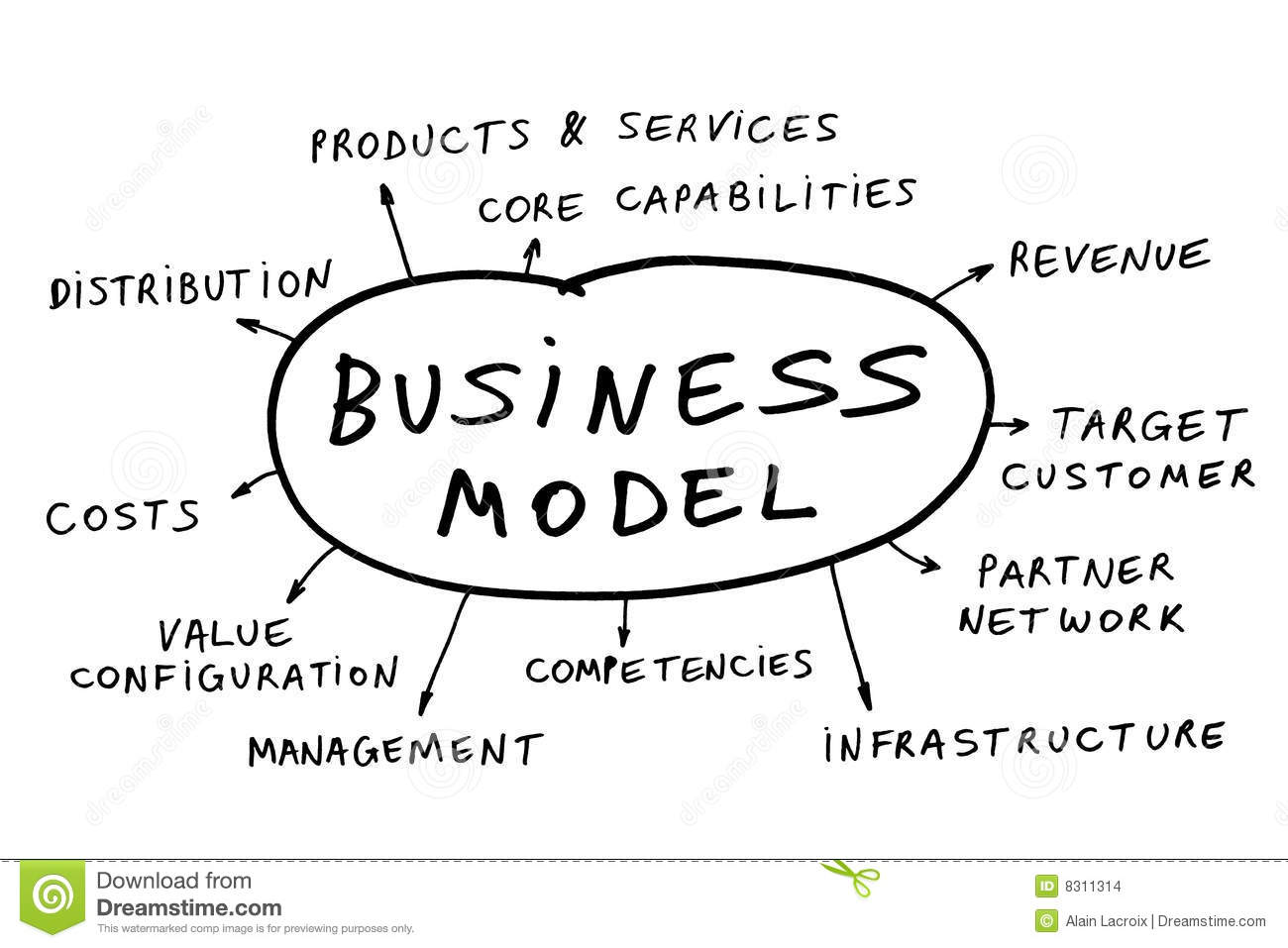
That leads to another question; What is a business model According to Michael Rappa; “In the most basic sense, a business model is the method of doing business by which a company can sustain itself – that is, generate revenue. The business model spells-out how a company makes money by specifying where it is positioned in the value chain.” Alex Osterwalder and Yves Pigneur say that; “A business model describes the rationale of how an organization creates, delivers and captures value.”
Other definitions exist, but taken together, these two statements provide us with enough basis for understanding what we should expect to learn from an adequately developed business model.
The business model should tell us how the entrepreneur expects to create value. To do this, the entrepreneur must decide what activities are core to the business the entrepreneur wishes to start. The question of how the entrepreneur creates value is also important because the answer to that question will often contribute to an understanding of the customer base that the business can expect to rely on. This might seem trivial at its face. It is not. Understanding the customer base for which the business expects to create value is central to many other decisions that the business will have to make as it matures and approaches the launch of its product or service on the market.
Our definition of a business model raises a second question; how does the startup deliver value? I expect the startup founders I meet with to have started thinking about the process by which the value that the startup creates will be delivered to its target customers.
Given a reasonably well defined customer value proposition, our entrepreneur must now decide how that value is going to “be put in the hands” of the people that will become customers of the startup. The process of delivering the product or service that the entrepreneur has developed involves several distinct phases; Learn, Buy, Get, Use, Pay and Support. Employees of AT&T are believed to have developed the acronym LBGUPS (pronounced ELBEEGUPS) as a means of remembering the phases of this process as it relates to AT&T’s products. It is most effective to think of LBGUPS as a continuous, circular, and repetitive process.
- Learn – when new customers first become aware of the product or service and acquire information and knowledge about how they may benefit from its use. Typically the startup accomplishes this through some sort of marketing, sales and public relations activity.
- Buy – when customers decide to make a purchase after having learned about the new offering and communicate the desire to act on their decision to someone in a position to initiate the next phase of the process.
- Get – when customers actually take delivery of the new product. This might happen in a physical or virtual store. It might involve shipping the product to the customer. If the customer is buying a service then this typically happens in person, or the service could be delivered remotely.
- Use – when customers actually use or consume the product, or benefit from the service.
- Pay – when customers pay for the product. This might happen simultaneously with buy. Sometimes there’s a time-lag between buy and pay – for example, in a fine dining restaurant a guest dines before before paying for the meal.
- Support – when customers are provided with additional information that is aimed at resolving any problems they may have encountered during any of the preceding phases. Support should serve as an opportunity to encourage customers to remain, or to come back the next time they need to purchase a similar product or service. This is the role of technical support, customer service and customer relations. Done well, support should lead right back to learn.

How will your startup deliver value?
Every startup must ask, and find answers to a number of questions while going through the process of delivering value to customers. What is the most effective channel for marketing, advertising, public relations, and sales? Where should we place our product or service in order to enable evaluation by potential customers as they make the buy decision? How do we put the product or service in a customer’s hands once that customer has made a purchase? What do we need to do to ensure that the customer uses our product after they have bought it and we have delivered it? How do we ensure that our customers are paying us, in full and on time? What is the mechanism by which we get paid by our customers? What problems might our customers encounter, and how should we help them resolve those problems in order to ensure that they come back to learn more about our other offerings and buy more from us in the future?
Often, each question that the startup seeks to answer will give rise to other questions that must be answered as well. This process requires trade-offs. It might be too costly to attempt to exploit every possible marketing channel and so the entrepreneur must choose only a few out of many. An over elaborate support structure might prove too expensive to maintain over the long term. Also, that might create bad-habits that the startup’s revenue structure has not been designed to carry without tipping the company into a position where it is experiencing difficulties, this touches on the issue of pricing.
Next, let’s examine the third question that our definition of a business model raises; How does the business capture value? A startup founder should be able to describe how the startup will create value, deliver that value to its customers and in-turn capture some value for itself and its investors.
Michael Rappa’s statement about business models emphasizes the importance of revenue streams. Revenues comprise the cash that a startup’s customers exchange for the product or service that the startup provides. In the process of this exchange, a transfer of ownership or usage rights takes place – in an outright sale, the customer assumes ownership. In a lease, licensing or rental agreement ownership remains with the seller, but the buyer is granted usage rights for a contractually agreed period. Revenue streams can be one-off or recurring.
I have no argument against the suggestion that startups should focus keenly on developing and growing revenue streams. However, my experience has taught me that startups must focus equal attention on profit, and on the related issue of costs.
Why?
In order to reach self-sustaining growth, a maturing start-up must quickly put itself in a position to invest in areas that are critical to its ability to create and deliver value to its customers – it has to invest in those assets that make its revenue streams possible. Costs represent the price the company pays to obtain the resources it must bring together in order to create and deliver value to its customers. A business earns a profit when its total revenues exceed its total costs. A successful business model should lead to an outcome in which customers perceive the entrepreneur as adding value. They demonstrate this by paying more for the product than it cost the entrepreneur to produce it – leading to a profit for the entrepreneur.
Earning a profit makes it possible for the startup to invest in the assets that are most critical to its ability to create and deliver value. Controlling and managing costs effectively while growing revenues will ensure that the startup maximizes its profit.
How will your startup capture value? You should be able to describe how your startup will grow revenues, manage costs, invest for growth, and maximize profits. This is not a static process. It should be dynamic and ongoing. Your startup will not be operating in a stagnant market. Therefore, your product and pricing strategies will need to adapt from time to time in response to competition as well as other market forces.
Also, depending on the stage at which KEC Ventures is considering an investment, it might not yet be clear which revenue model will work best for the startup. A seed stage startup might not yet have settled on a revenue model. A startup to which we are speaking about a series A financing should have some well formulated ideas about its revenue model, and in fact should be running some experiments to validate its hypotheses. An existing startup in our portfolio in which we are contemplating making a follow-on series B investment should most certainly have settled on a revenue model, and be in the process of scaling the business model in a repeatable, and profitable way.
I will end this discussion with some related observations;
First; It is often tempting to assume that one startup can simply copy or imitate the business model of one of its competitors. That may work in the short-term. In my opinion that is not an approach that confers a lasting competitive edge, certainly not in fledgling markets and industries, and often not in mature industries either. An important aspect of business model development is the deliberate and conscious selection among a number of alternative choices regarding product design, customer development, revenue models and cost structure; the wholesale copying of a business model simply because it has worked for another startup suggests the entrepreneur has abdicated responsibility for understanding the dynamics at play in each of those critical areas. That is a recipe for a failed startup adventure in which I am not eager participate.
While I oppose the wholesale copying of a business model that someone else has developed, I am a strong proponent of learning from the experience of other startups – the successes and the failures. There is real value in knowing what has ensured that some startups thrive. There is even more value in knowing what has proved fatal to others.
Second; It might take several attempts before a startup discovers the business model that works best – reflecting an industry in its earliest stage of development. Even then, the business model must evolve with the passage of time. Technology changes. Labor markets shift. National economies expand and contract. Opportunities not present in the past will present themselves in the future. Competitive threats that did not exist at the time the startup was formed appear as soon as other individuals notice a new chance to earn economic profits. Regulations emerge as a result of changes in political mood. A business model that does not adapt and evolve reflects a startup founder who does not grasp the nature, extent and complexity of the numerous challenges that lie ahead. Such founders, and the startups they are building, are bound to fail.
Third; The business model is not the business plan. Your business plan should certainly discuss your business model, yet the two are distinct and different. The business model is a framework within which the startup’s activities occur. The business plan is a document whose main purpose is to serve as a record of the startup’s goals, the reasons why those goals make sense and can be achieved, the manner in which the goals will be accomplished and the timeline within which the startup expects to implement its plan – presumably the plan is to become profitable as soon as possible within the tenets of the business model.
I am a fan of The Business Model Canvas. In fact, I use it each time I sit down to study a startup in which I believe KEC Ventures should invest. Using it ensures that I understand the business model, that I understand the risks that might lie ahead, and that I am comfortable that the startup indeed has found an opportunity to create, deliver, and capture value.
Like this:
Like Loading...