

DD
MM
YYYY

PAGES

DD
MM
YYYY

spot_img

PAGES

Home Blog Page 7599

Fasmicro Invited To MOBILE VAS World Summit In Singapore 12-13 September 2011

2

Dear Dr. Ekekwe,


We are pleased to invite you and your colleagues to attend this important Summit — MOBILE VAS World Summit in Singapore 12-13 September 2011. We hope this presents a good opportunity for you to connect and engage the industry decision makers present. I hope you will be able to make plans to sign up and attend. Here are some information for your review.


ABOUT THE SUMMIT:

·It’s Senior Executive, 2 day conference with case studies presentations by Mobile Operators. Participants represent APAC region & also globally. They include primarily:

¨Mobile Network Operators ** Mobile Advertisers and Marketers ** Mobile Apps Providers, Mobile Location Based Services *** Content Providers and Technology Platform Providers

¨Mobile VAS Developers ** Handset Vendors ** Content Developers & Aggregators


·EVENT WEBSITEhttp://www.symphonyglobal.com/index.php/event/page/mobile_vas_2011/overview

·Last year summit 2010, we had a good turnout with many senior level attendees from the region

http://www.symphonyglobal.com/index.php/event/page/mobile_value_added_services/overview (2010)

·Operators including– Aircel, Banglalink, Celcom, Bakrie Telecom, China Mobile, M1, Starhub, Banglalink, Grameenphone, Viettal, CSL HK, Chunghwa Taiwan, Axiata, SingTel, China Mobile, True Move Thailand, Smart Philippines, etc and many more representing the region mobile VAS community.

SPEAKERS:

¨Pradeep Rao,Senior VP – VAS, Aircel, India

¨Qauser Zaman, VAS Assoc. GM, Banglalink GSM, Bangladesh

¨Gunawan Zuardi, Managing Director, Bina Indonusa PT, Indonesia (A MVNO)

¨Antti Ohrling, Co-Founder & Chairman, BLYK, India and Honorary Board Member, Mobile Marketing Association, India

¨Thomas Clayton,CEO & President,BubbleMotion, Singapore

¨James Yang,Chief Scientist, China Mobile Research Institute, China

¨Laurence Lee, Senior Product Manager of Mobile VAS, Mobile Business Group, Chunghwa Telecom Co. Ltd, Taiwan

¨Mahendra Fernando, Heading Content Management and Mobile Advertising, Dialog Axiata, Sri Lanka

¨Sunzay Passari, Executive Vice President Telecom, VAS and Devices, Essar Telecom Group, India

¨A.S.M Rafiq Ullah, Head Of Entertainment, Deputy General Manager, Content & Application, Grameenphone, Bangladesh

¨SP Narayanan, Vice President & Head VAS and Long Distance, Idea Cellular, India

¨Emmanuel Allix, Founder and Managing Director, Isalis Asia & Board Member, Mobile Marketing Association, Singapore

¨Olaf Lohmann, Business Development, Mozat Pte Ltd,Singapore

¨Revie Sylviana, GM VAS New Product Initiative & VAS Business Operations,PT Bakrie Telecom, Indonesia

¨Mirza Ichsan B. Lubis, Division Head VAS Product Portfolio, PT Indosat, Indonesia

¨Winston Goh, Senior Product Manager – Telecommunications, Samsung Asia Pte Ltd, Singapore

¨Tom Wills, Managing Director, Secure Strategies Pte Ltd, Singapore

¨Kirana Cheewachuen, General Manager, Mobile Content Business, True Digital Content & Media, True Move,Thailand

¨Nitin Wali,Head of Business Development Asia Pacific, VeriSign, India

Many Case Studies from Mobile Operators covering:

? Mobile App Stores

? Messaging Services

? Mobile Broadband

? Mobile Entertainment

? Mobile Social Networks

? Mobile Marketing & Advertising

? Mobile Location-Based Services

? Mobile Enterprise Solution Services

Topics

vLatest market outlook and developmental trends in MVAS, Asia & beyond

vCase studies on Operator’s MVAS launches and key success factors

vKey strategies in expanding operators’ offerings to market and how to make MVAs offerings more competitive

vKey strategies in developing markets as well as matured markets

vDiscussing the best practices and best strategies for MVAS pricing and positioning

vPanel discussion on the most effective models for MVAS in market

vTaking user generated content to further scale

vHow to get your customers to spend more on your Vas offerings?

vWhat are the latest technological advancements that will boost MVAS offerings?

vCreating the distinctive product differentiation

vPartnerships with content providers and application providers to deliver great offerings and differentiation

vExploring partnership models for successful collaboration!

vIncrease customer loyalty and increase your market share

vStrategies in mobile marketing and mobile advertising

vLatest smart handset and devices for more exciting VAS!

vStrategy Alternatives in MVAS Rollouts

vNew Opportunities for Mobile Operators, Content Developers, Content Aggregators and Platform Enablers in Mobile

vVAS Markets

vBuilding Profitable and Sustainable Business Models Available for Mobile VAS

vStrategies to Capture the New Markets

vDoing Global Business with a Global Partner

vOptimising ROI and Increase ARPU in VAS Offerings

vCreating Differentiation by Offering Innovative VAS to Win in the Competition for Profit & Market Share

vDeveloping Strategic partnership with Content Developers, Content Aggregators, and Platform Enablers
 

Contact us:
Catherina Jessie Koh
Senior Manager

Microelectronics – When It Advances, The World Experiences A New Dawn In Commerce and Industry

0

The remarkable success of information and telecommunication technology within the last few decades has been facilitated by the phenomenal growth of the microelectronics technology. While nanotechnology has future prospects, microelectronics has already transformed global competition and commerce. It offers strategic advantages to firms, institutions and nations through its capacity to develop products and services cheaply and efficiently. It is the engine that drives present global commerce and industry.

The world has experienced many new dimensions in knowledge acquisition, creation, dissemination and usage courtesy of this technology. The advancement of Internet and digital photography could all be linked to better performance from microchips. When microelectronics technology advances, a dawn emerges in global economy in speed, efficiency and capacity.

Microelectronics is considered a very revolutionary technology noting the disruptions it has brought to the dynamics of the global economy via its different applications since its invention by Jack Kilby in the late 1950s. Of the gross world product (GWP), estimated (2007) at about $55 trillion (currency) (The Economist, 2008), microelectronics contributes more than 10%. Microelectronics is very pivotal to many emerging industries in the 21st century with a central position in the global economy. Because Internet, medicine, entertainment and many other industries cannot substantially advance without this technology, it has a vantage position in engineering education in many developed nations.

These nations invest heavily in microelectronics education as in the United States, Canada and Western Europe where the MOSIS, CMC and Europractice programs respectively enable students to fabricate and test their integrated circuits for full cycle design and learning experience on integrated circuits. On the other hand, developing nations increasingly lag behind in adopting and diffusing this technology in their economies owing to many factors, which include human capital and infrastructure. Absence of quality technical education has contributed to stall the transfer, diffusion and development of microelectronics in both the emerging and developing economies.

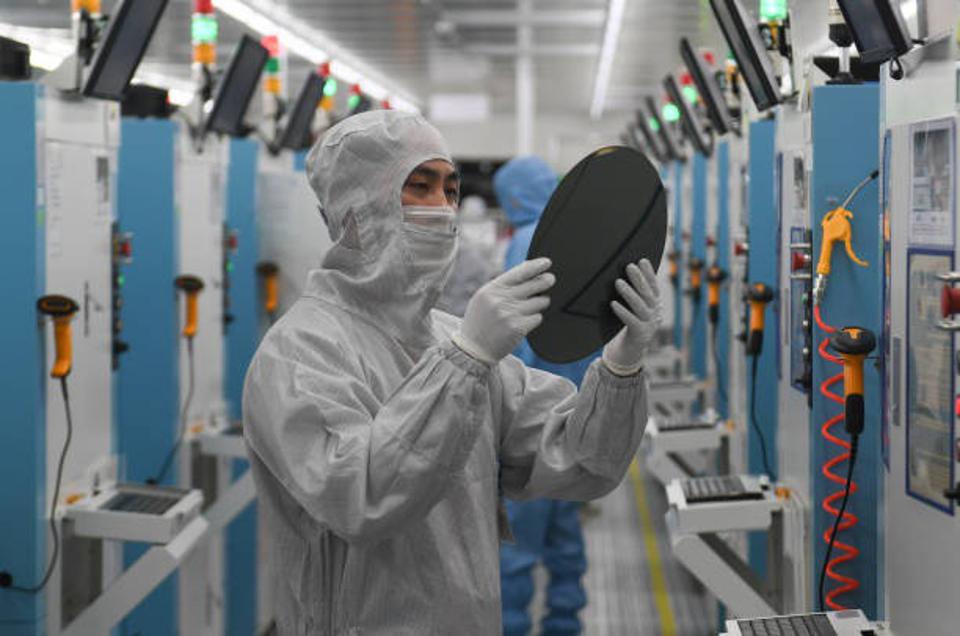
Microelectronics is a group of technologies that integrate multiple devices into a small physical area. The dimension is about 1000 larger than nanotechnology dimension; micrometer vs. nanometer. Usually, these devices are made from semiconductors like silicon and germanium using lithography, a process that involves the transfer of design patterns unto a silicon wafer. There are accompanying processes which include etching, oxidation, diffusion, etc. Several components are available in microelectronic scale such as transistors, capacitors, inductors, resistors, diodes, insulators and conductors.

The microelectronics can be divided to its subfields which in turn are connected to other micro related fields. These subfields are micro electromechanical systems (MEMS), nanoelectronics, optoelectronics and single electron devices. Integrated circuits or microchips are typical microelectronic devices, which can be found in computers, mobile phones, medical devices, toys and automobiles. There is a high level of convergence between nanotechnology and microelectronics. The major difference lies in the size of the materials; nonetheless, the techniques are very different.

Complementary metal oxide semiconductor (CMOS) transistor is the most common transistor used in the industry owing to its ease of integration and low static power dissipation. Bipolar junction transistor is another popular version. With the sizes of CMOS transistor in the nanometer range, the behaviors of the transistors are radically affected by parasitic noise and power dissipation. These problems pose potential challenges to the continuous progress of CMOS technology and microelectronics industry in general. The survivability of Moore’s Law, (after Gordon Moore, co-founder of Intel Corp) which states that the numbers of transistors in a semiconductor die double every 18 to 24 months, is presently challenged if engineers cannot downscale the transistor size any further efficiently.

This scaling has been the driver that has enabled microelectronics products to improve in speed, capacity and cost-efficiency. Many efforts have been geared to overcome the problems faced in the industry as transistors scale into the deep nanometer. They include improving the structure of the metals and polysilicon materials used in making the devices, more enhanced doping profile, new materials to keep the industry alive and well into the future.

Tekedia Broad Industrial Average (TBIA) Opens Today At 5,000

0

Precious Close: 5,000

One Day percentage change: 0%

Live Plots: Click here

What is TBIA? Click here


Tekedia Broad Industrial Average (TBIA) is a stock market index created by Tekedia Intelligence, a division of Fasmicro. It is an index that shows how twenty large, publicly owned companies, based in Nigeria have traded during a standard trading session in the stock market.

Airtel Presents Buses To Channel Partners To Improve Nigerians Access To Telecom Service

0

Airtel Nigeria, one of the leading telecommunication companies in the country last week presented brand new Toyota Hiace buses to its Channel Partners to improve access to telecoms products and services  to more Nigerian and help the partners in market activation.


Speaking at the ceremony and before handing over the vehicles’ documents to the partners at the company’s head office in Lagos, Executive Director and Chief Operating Officer of Airtel Nigeria, Deepak Srivastava said, the company understood the crucial role they were playing in bringing Airtel innovative products and services to the door stop of their value customers.


He described the buses as tools that would boost their business performance by expanding access to their customers, saying in the last one year, deliberate efforts and resources had been committed to aggrieve market development which included distribution that was second to none in Nigeria.


He disclosed that time and energy had been invested in building a sustainable and mutually rewarding relationship with business partners, especially Channel Partners, expressing satisfaction that the partners had reciprocated the gesture by responding positively through their efforts in market place.


“Airtel will continue to see ways to strengthen our mutually beneficiary relationship in our quest to become the most love brand by the people of Nigeria, indeed the people of Africa,” he said.


He stated that the buses would enable the partners to spread the brand across the country, stressing that telecommunication was not meant for only one part of the country, but for everybody, adding that the more people that uses telecoms the more businesses generated which in turn lead to economy growth.


In his response, the Managing Director of T.I.G communications Limited, Jude Ukachukwu described the gesture as positive and a wonderful reward for good service, saying since Airtel entered Nigeria about one year ago, there has been tremendous improvement in retail distribution  generally and in the rate of penetration and this has resulted in the brand awareness creation.


He said the company had come out with a better tariff structure and several offerings which the partners had leveraged on in driving the network to profitability, adding that the buses would improve retail penetration of the product and more awareness would be created.


Mrs. Ifeoma Agbas, one of the partners said the presentation of the buses to the Channel Partners will assist in improving their business, adding that the branded buses would find use in marketing and SIM activation and card registration activities.


She expressed hope that the company will do more to encourage them to move their businesses forward.

White Paper – Introduction, Component Stocks And Calculation Of Tekedia Broad Industrial Average (TBIA)

0

Preamble

The Nigerian Stock Exchange (NSE), established in 1960, has about 300 listed companies (283 companies as at March 9, 2007) with all listings included in only one index, the Nigerian Stock Exchange All Shares Index. The goal of TBIA is to use twenty stocks to represent the market dynamics and simplify things for analysts, economists, policy makers, investors, among others.


Introduction

Tekedia Broad Industrial Average (TBIA) is a stock market index created by Tekedia Intelligence, a division of Fasmicro. It is an index that shows how twenty large, publicly owned companies, based in Nigeria have traded during a standard trading session in the stock market. To emphasis that this index is not restricted to any particular industry such as technology, transportation or banking, we included the word “Broad”. The word, “industrial”, was used within the constructs of different markets. For example, we have the banking industry, hotel and tourism industry, and so one with no implied connotation to the industrial era. We understand that many of the companies in the index are knowledge driven, yet, they operate in an industry.


TBIA is not a mean or actual average of the prices of the component stocks. The average is price-weighted and tested over a period of six months to ascertain its correlation with the All Share Index of the Nigerian Stock Exchange.   We also included a scaled average model in case there are stock splits, stock dividends or similar adjustments in the future; we acknowledge that these are not common in the Nigerian Stock Exchange.  The scaled average will re-calibrate the index and ensure no historical distortion is introduced. Accordingly, we will update for any adjustment immediately the NSE makes that information public.


Our goal is to generate a reliable and consistent value of TBIA or TBIA 20 for investors, economists and the general public. Possibly, TBIA could become a benchmark index to track the Nigerian Stock Exchange (and futuristically Nigeria’s economy if it begins to correlate with the exchange performance) using 20 stocks instead of nearly 300 companies in the exchange’s All Share Index.


Because this index is price-weighed, it was very hard to choose the components since most of the large caps in the exchange, especially banks, are price-depressed. For instance, the total sum of all (individual) bank prices is about N85 while Nestle trades at N400, yet, most of the banks have solid capitalizations. Take UBA, for an example, it trades at N4.45. Any average with UBA and Nestle will be skewed. So, we had to more some statistical modeling to ensure we zero-out the skew. In other words, UBA will be inconsequential in an Index with a stock more than 90 times its value. To overcome this problem, we introduced a divisor, cap devisor, which helps us to capture the large caps, though price-depressed and statistically adjusted the index for relevance. A total of two divisors were used.


(On July 1 2011, originally planned debut day, the decision was to remove any stock with value of N200 or more in TBIA. But after more statistical data analyses, it was decided to find a novel way to accommodate the top market caps despite the depressed prices in the exchange. The extra time gave rise to using two divisors).


We understand that economies change and markets are disrupted with new players emerging and old ones dislodged.  When we notice that any of the components in the index has lost relevance, we will replace it. When that is done, we will adjust the scale factor which we have used in the calculation to ensure the value of the Index remains the same. That scale factor is the second divisor.


TBIA Calculation

As noted above, there are two divisors for TBIA calculation and it is by no means a simple mathematical average. To obtain the daily value of TBIA, the sum of the prices of all 30 stocks is divided by two divisors. The divisors are adjusted in case of stock adjustments like splits, spinoffs, etc. The goal is to ensure that none of such events distort or alter the numerical value of TBIA. We categorized the stocks into two groups:  A and B (more on the classification later). All chosen stocks in the index have fair market cap in the exchange. The equation for TBIA calculation is as follows:


 Tekedia Broad Industrial Average (TBIA)

In the equation above, p represents the prices of the component stocks and d is the divisor. Any stock with price of N85 was included in Category B. The value of da is 0.1343330 while db is 0.5064900. With these numbers, the Index will not be overly affected by one stock movement. It is also important to emphasis that for Category A, one Naira stock movement contributes N7.50 while for Category B, it will have an effect of about N2. Heavy hitters like Nestle and Guinness are in Category B and we have statistically adjusted for their influence in the index.


For TBIA to remain undistorted despite structural changes like splits, spinoffs, etc which ideally can change the sum of the component prices, it will be updated whenever Nigerian Stock Exchange announces a change. The optimization goal is for value of TBIA before and after the event to coincide:


 Tekedia Broad Industrial Average (TBIA)

Components Stocks

There are many standards we put in place before a stock could make it into TBIA. It must have an appreciable market capitalization, at least N10 price, among other factors. By the close of business on Friday, August 12, 2011, we cutoff and qualified those with above N10 and respectable cap. We now apportioned so that most of the industries could be included.  So, there are some industries you will not see in the Index and what that means those industries may not be having huge impacts in the stock exchange All Share Index. Insurance has no representative and only three banks made it. To ensure a technology company is included, we qualified NCR despite not meeting our price criterion, an exception.


Now with the selection of the stocks, we moved any stock that is more than N85 into the high price Category B. Others went into Category B.  Using the formula explained above, we automated the process. Daily updates will be done.


Symbol Company Name
 Category A
ZenithBank Zenith Bank Plc
Guaranty GTBank Plc
FirstBank First Bank of Nigeria Plc
UAC-Prop UACN Property Dev Co Plc
Glaxosmith Glaxosmithline Con Nig Plc
NCR NCR Nigeria Plcq
Betaglas Beta Glass Co. Plc
WAPCO Lafarge WAPCO PLC
CAP Chemical & Allied Products Plc
PZ PZ Cussons Nigeria Plc
Unilever Unilever Nigeria Plc
JBerger Julius Berger Nigeria Plc
7UP 7UP Bottling Co Plc
 Category B
NB Nigerian Breweries Plc
FlourMill Flour Mills Nigeria Plc
Nestle Nestle Nigeria Plc
Mobil Mobil Oil Nigeria Plc
Guinness Guinness Nigeria Plc
Total Total Nigeria Plc
DANGCEM Dangote Cement Plc


Review and Listing Update

We hope to review the list in six months. If you have an idea, please email tekedia@fasmicro.com (Attn: Bode). We will include any suggestion and criticism as we improve on this project. If you use the equation we have presented above and the value of the stocks at the close of business in the NSE, you will get exactly what we have. If you have any problem, please email us. Whenever NSE does a structural change, check TBIA page, we will activate the magic number to balance the equation as presented above. We have excluded it in this discussion to avoid unnecessary complexity when there is no need for it. But it is simple, we are engineers, and it is easy to optimize two things given some constraints.


TBIA Web Page for Daily Update

https://www.tekedia.com/tekedia-broad-industrial-average-tbia-daily-records/

http://fasmicro.com/TBIA.aspx  (INDEX PLOT)


Ndubuisi Ekekwe

TBIA Creator

August 14, 2011


Disclaimer: We have presented TBIA “as it is”. You are free to share and distribute; NO rights reserved.