DD
MM
YYYY

PAGES

DD
MM
YYYY

spot_img

PAGES

Home Blog Page 8

SpaceX Faces Fresh Pressure as Starship Flight 13 Delay Raises Investor Concerns

0

SpaceX’s ambitious Starship program has encountered another obstacle after the company postponed Flight 13 to Thursday following the failure of several Raptor 3 engines to ignite during pre-launch procedures.

The latest setback not only highlights the technical challenges involved in developing the world’s most powerful rocket system but has also triggered renewed concerns among investors, sending SpaceX (SPCX) shares down more than 5% to approximately $124, close to their 52-week low.

Starship is central to SpaceX’s long-term vision.

The fully reusable launch system is designed to dramatically lower the cost of access to space, enable large-scale satellite deployments, support NASA’s Artemis lunar missions, and eventually transport humans to Mars.

Because of its strategic importance, every test flight carries significant implications for both the company and the broader commercial space industry. The delayed launch underscores the enormous complexity of rocket development.

Even for a company with SpaceX’s impressive track record, integrating new engine technologies remains a difficult task. The Raptor 3 engines represent an advanced iteration of SpaceX’s methane-fueled propulsion system, offering improved efficiency, simplified architecture, and potentially lower manufacturing costs.

Introducing upgraded engines into operational testing inevitably introduces risks. Engine ignition failures are particularly concerning because propulsion systems are among the most critical components of any launch vehicle.

Although test delays and scrubs are common in the aerospace sector, repeated issues can raise questions about timelines, reliability, and development costs. Investors often view such incidents as indicators that larger engineering challenges may still need to be addressed before Starship can achieve routine operational status.

The market reaction was swift. SPCX shares fell sharply as investors weighed the possibility of further delays. The decline places the stock near its lowest levels in the past year, reflecting broader concerns about execution risk.

While SpaceX remains one of the most valuable private space companies globally, its valuation increasingly depends on the successful commercialization of Starship and the revenue opportunities that the platform could unlock.

The timing of the delay is also significant. SpaceX is approaching an earnings period during which investors will closely scrutinize updates on launch schedules, Starlink growth, and Starship development progress.

Any indication that technical setbacks are becoming persistent could dampen market sentiment and potentially affect future fundraising efforts or secondary market demand.

Adding to the pressure is the anticipated August share unlock event. Share unlocks typically increase the number of tradable shares in the market, potentially creating additional selling pressure if investor confidence weakens.

Should another launch abort occur, concerns surrounding execution and valuation could intensify, resulting in heightened volatility for SPCX shares. It is important to maintain perspective.

SpaceX has repeatedly demonstrated its ability to overcome technical hurdles that once appeared insurmountable. The Falcon 9 program suffered multiple failures during its early years before evolving into the most reliable and frequently launched rocket system in history.

Similarly, Starship’s development philosophy embraces rapid iteration, where failures and delays are treated as valuable data points rather than definitive setbacks.

For long-term supporters, the current delay may represent another step in the difficult path toward creating a revolutionary transportation system capable of reshaping the economics of space exploration.

For investors focused on near-term performance, the repeated delays introduce uncertainty at a sensitive moment. As Flight 13 approaches, all eyes will remain on SpaceX.

A successful launch could restore confidence and stabilize sentiment, while another abort may deepen concerns about timelines, valuation, and the company’s ability to deliver on one of the most ambitious engineering projects in modern history.

“What’s Next?” – Saylor Teases at Massive BTC Purchase Amid Market Volatility

0

Strategy CEO Michael Saylor has hinted at a possible Bitcoin purchase amid ongoing market volatility, reigniting speculation that the company could soon add to its industry-leading BTC holdings.

Saylor’s cryptic “What’s Next?” post on X, a message that has frequently preceded previous Bitcoin acquisitions, has drawn the attention of investors, who are closely watching for what could be another significant buy despite recent price swings in the crypto market.

The post on X was accompanied by a chart, showcasing the company’s aggressive Bitcoin accumulation strategy, also highlighting its holdings of 843,775 BTC with a total reserve value of $54.28 billion as of that date.

With an average purchase price of around $75,653, the position reflects years of consistent buying through market ups and downs. It illustrates how Strategy began its Bitcoin journey in 2020 and steadily scaled its position, weathering volatility while adding coins during dips and rallies alike.

This approach has turned MicroStrategy into one of the largest corporate Bitcoin holders globally and a proxy for Bitcoin exposure in traditional markets.

Supporters see the chart as evidence of a proven long-term strategy that positions the company to benefit from future Bitcoin appreciation.

Notably, Saylor’s post on X, hinting at Bitcoin’s possible purchase, comes as BTC falls modestly amid rising U.S-Iran tension. The crypto asset saw sell-side pressure soon after the weekly close going into Monday morning, with local lows reaching $63,700.

Critics and skeptics, including familiar voices like Peter Schiff, point to recent price action and question the sustainability amid potential downturns. Others highlight ongoing accumulation and the tightening of credit spreads as signals for a potential resumption of the bull market.

Despite this, traders are becoming increasingly optimistic on shorter time frames as range lows continue to hold.

“Wouldn’t surprise me if we see some further relief this week – towards 65-67k,” trader Jelle predicted in his latest analysis posted on X.

According to Galaxy Digital CEO Mike Novogratz, he says Crypto may not be struggling because the technology has stopped developing, but he notes that the bigger problem right now is that the market has lost the attention of speculative traders.

Novogratz compared the current market to the previous gold and silver bubble, saying crypto has experienced a similar speculative peak.

“That’s what tops look like,” he said, while stressing that a market topping does not mean the asset class disappears. “People just aren’t as excited about it because there’s other things to be excited about,” Novogratz added.

Still, he does not believe Bitcoin’s long-term story has been broken. He said Bitcoin price could hold around $60,000. However, reaching $80,000 and eventually $100,000 would require three major catalysts. These are the CLARITY Act passing, Federal Reserve rate cuts, and a renewed base of buyers.

Strategy’s Bitcoin-first treasury policy, pioneered by Saylor, has redefined corporate finance. By treating Bitcoin as a primary reserve asset, the company has delivered significant returns for shareholders despite periods of drawdown.

As of mid-2026, with Bitcoin trading in a consolidation phase after earlier highs, Saylor’s post serves as both a status update and a prompt for the community to consider the next chapter in the cryptocurrency’s adoption cycle.

Whether this leads to new all-time highs or further tests of support remains to be seen. For now, the chart stands as a visual testament to conviction and capital allocation on a massive scale.

Outlook

Market participants will be closely watching whether Strategy follows Saylor’s latest teaser with another Bitcoin purchase.

Historically, the company’s acquisitions have reinforced bullish sentiment, particularly when they occur during periods of market weakness, as investors interpret them as a vote of confidence in Bitcoin’s long-term value.

In the near term, Bitcoin’s price direction is likely to remain influenced by macroeconomic developments, including geopolitical tensions, expectations surrounding U.S. Federal Reserve interest rate decisions, and progress on crypto regulation such as the CLARITY Act.

Any improvement in these areas, coupled with renewed institutional demand, could provide fresh momentum for the world’s largest cryptocurrency.

Egypt Leads Africa’s Startup Funding Race in H1 2026, Nigeria Dominates Equity Deals

0

Egypt emerged as Africa’s top destination for startup funding in the first half (H1) of 2026, after start-ups across the continent raised close to $1.4 billion, pretty much on par with H1 2025.

The North African country, attracted a total of $327 million, followed by Nigeria with $254 million, Kenya with $126 million, and South Africa with $83 million.

According to report by Africa: The Big Deal, Egypt captured 27% of all African startup funding during the first half of the year, its highest share since tracking began, while Nigeria surpassed the $250 million mark for the first time since 2022, continuing a remarkably stable funding trajectory dating back to the second half of 2022.

In contrast, Kenya recorded its weakest first-half funding performance since early 2021 following a strong second half of 2025.

Electric mobility startup Spiro, single-handedly raised as much as all Egyptian ventures ($270m equity + $57m debt), given their heavy operations in Kenya, which puts Kenya’s decline in a perspective a bit.

On the other hand, South Africa, which led the continent a year earlier, attracted less than $100 million during the period.

Collectively, the “Big Four” startup ecosystems, Egypt, Nigeria, Kenya, and South Africa, accounted for 58% of all funding raised across the continent during the period.

Excluding debt financing and focusing solely on equity investments, Nigeria ranked first, securing $214 million, ahead of Egypt’s $183 million, while South Africa and Kenya attracted $66 millionand $46 million, respectively.

The milestone underscores Nigeria’s continued appeal to venture capital investors despite macroeconomic challenges, currency volatility, and regulatory uncertainty.

The country remains home to some of Africa’s most mature startup ecosystems, particularly in fintech, logistics, e-commerce, healthtech, and enterprise software, supported by a large consumer market, increasing digital adoption, and a deep pipeline of entrepreneurial talent.

Nigeria’s first-place ranking in equity funding also highlights the resilience of its startup ecosystem. Notably, funding trends over recent periods show that both Egypt and Nigeria have maintained relatively consistent investment levels.

By the number of startups raising at least $100,000 (excluding grants), Nigeria reclaimed the top position after a subdued second half of 2025.

Within the Big Four, 110 out of 190 startups that raised at least $100,000 were based in these four markets, representing 58% of all qualifying deals. Nigeria led comfortably by deal count, while Egypt and Kenya recorded nearly identical numbers, with South Africa trailing behind.

Outside the Big Four, Tanzania, Côte d’Ivoire, and Morocco each attracted more than $25 million in startup funding during the first half of the year, reflecting growing investor interest in emerging African ecosystems.

Morocco also joined Tanzania and Ghana among the startup ecosystems that recorded at least 10 ventures raising $100,000 or more, despite Ghana ranking only 11th by total funding raised.

Meanwhile, declines across the other major ecosystems, both on a half-year and year-over-year basis, reinforce concerns about the growing concentration of capital in larger funding rounds and the persistent shortage of early-stage investment across Africa’s startup landscape.

Outlook

Looking ahead, Africa’s startup funding landscape is expected to remain selective, with investors continuing to prioritize companies that demonstrate clear revenue growth, strong unit economics, and a credible path to profitability.

While total funding has stabilized compared with the first half of 2025, capital is still concentrated in fewer, larger deals, making fundraising more challenging for early-stage startups.

Overall, the second half of 2026 will be closely watched to determine whether Africa’s venture capital recovery broadens beyond large funding rounds and extends to early-stage startups, which remain critical to sustaining long-term innovation and ecosystem growth.

Oil Tops $90 As Gulf Conflict Rattles Markets, While AI Earnings Face Biggest Test Yet Amid Valuation Concerns

0

Global financial markets opened the week on a cautious note as escalating military conflict in the Gulf pushed oil prices above $90 a barrel, reigniting inflation concerns and raising fresh questions about whether central banks will be forced to keep interest rates higher for longer.

At the same time, investors are bracing for a pivotal week of corporate earnings from technology giants that could determine whether the artificial intelligence-led stock market rally can regain momentum after a sharp selloff.

Equities weakened alongside government bonds, indicating growing investor caution as higher energy prices threatened to reverse the recent improvement in inflation data. The move comes after U.S. consumer prices unexpectedly declined last week, briefly boosting hopes that the Federal Reserve could delay further monetary tightening.

Instead, geopolitical developments have shifted the focus back to inflation risks.

Brent crude climbed 2.4% to $90.18 per barrel, its highest level in more than a month, while U.S. West Texas Intermediate crude rose 2.1% to $84.18 after the United States launched a ninth consecutive day of military strikes against Iran, which responded by attacking targets across the region. Shipping traffic through the Strait of Hormuz, one of the world’s most strategically important energy chokepoints, remained severely disrupted, with only a handful of vessels passing through on Sunday as Tehran claimed responsibility for striking two ships.

The renewed disruption has heightened fears over global energy supplies. Roughly one-fifth of the world’s oil consumption normally passes through the Strait of Hormuz, meaning any prolonged closure could have far-reaching consequences for inflation, economic growth, and financial markets.

“The longer the strait remains closed and the war escalates, the greater the risk that oil prices will have to rise to around $150 per barrel to bring demand down to match the hit to supply,” said Shane Oliver, Head of Investment Strategy at AMP. “This is not our base case but it’s a high risk again.”

Higher oil revives inflation fears as AI earnings come under scrutiny

The rebound in crude prices has complicated the outlook for central banks just days after softer U.S. inflation figures had encouraged investors to expect a less aggressive Federal Reserve. Markets are now pricing in about 29 basis points of additional Fed tightening by year-end, while futures imply roughly a 60% probability of another interest-rate increase as early as September.

JPMorgan Chief Economist Bruce Kasman said the balance of risks has shifted toward an earlier tightening cycle than previously anticipated.

“Our forecast is for a more gradual turn toward a Fed hike in 2027, but the balance of risks is shifting in the direction of an earlier hike than expected,” he said, pointing to increasingly hawkish rhetoric from Federal Reserve officials.

The changing outlook pushed the yield on the benchmark 30-year U.S. Treasury back above the psychologically important 5% level, a threshold closely watched by investors because it raises borrowing costs across the economy while making fixed-income assets more attractive relative to equities.

Higher bond yields also present a particular challenge for technology companies whose valuations depend heavily on expectations of future earnings growth.

That pressure has become increasingly evident in semiconductor stocks, which have led global markets over the past two years on enthusiasm surrounding artificial intelligence.

The Philadelphia Semiconductor Index plunged 10% last week, leaving it nearly 20% below its June record high as investors questioned whether AI-related valuations had become stretched after an extraordinary rally. Investor sentiment was further shaken on Friday after Chinese artificial intelligence company Moonshot unveiled its new Kimi K3 open-weight AI model, claiming performance approaching Anthropic’s flagship Fable model.

The announcement amplified concerns that increasingly capable open-source AI models from China could intensify competitive pressure on leading U.S. AI developers while reducing pricing power across the sector.

Against that backdrop, this week’s earnings season has taken on heightened importance.

Investors will closely scrutinize results from Alphabet, Tesla and Intel, looking not only for earnings growth but also for fresh evidence that massive investments in AI infrastructure continue to generate meaningful financial returns.

Despite recent volatility, Bank of America strategist Savita Subramanian remains optimistic, forecasting overall S&P 500 earnings to exceed consensus expectations by roughly 5%, translating into approximately 28% year-on-year growth.

Technology companies are expected to account for more than half of total earnings growth, with semiconductor companies projected to deliver an extraordinary 130% increase in profits from a year earlier, highlighting the extent to which AI continues to dominate corporate earnings expectations.

Those forecasts helped stabilize U.S. equity futures despite broader market uncertainty. Nasdaq futures edged 0.2% higher, while S&P 500 futures were little changed. European markets remained subdued, with EURO STOXX 50, DAX, and FTSE futures all trading around flat to modestly lower levels.

Asian markets presented a mixed picture. Japan’s Nikkei was closed for a public holiday after suffering a 6.4% decline last week in a technology-led selloff. South Korea’s chip-heavy Kospi dropped another 4.1%, extending last week’s nearly 9% plunge as leveraged retail investors continued unwinding positions following the sharp correction in semiconductor shares. In contrast, Chinese blue-chip stocks advanced 1.4%, supported by optimism surrounding domestic technology companies and expectations of further policy support.

The combination of rising oil prices and elevated bond yields also poses fresh challenges for the European Central Bank, which meets later this week.

Although policymakers are widely expected to leave interest rates unchanged at 2.25% following June’s increase, investors will focus on guidance regarding future policy. Markets are already pricing in almost a full ECB rate hike in September, with expectations that policy rates could reach 2.75% early next year if inflation pressures persist.

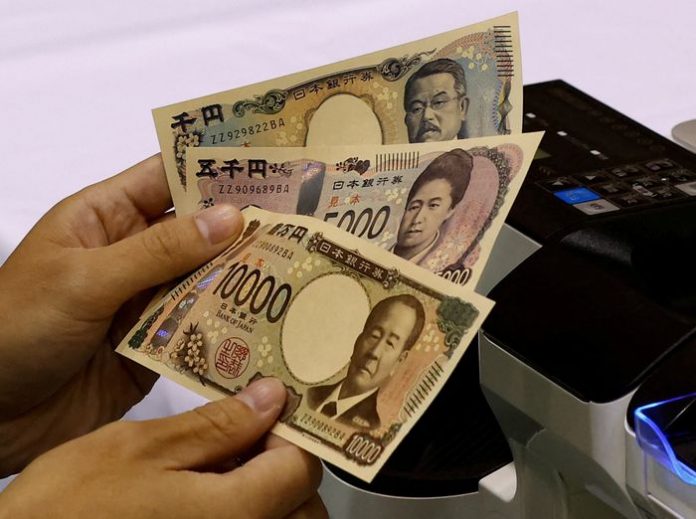
Currency markets remained relatively stable. The euro traded near $1.1442, while the U.S. dollar hovered around 162.36 yen, close to its strongest level in nearly four decades and keeping pressure on Japanese authorities, who have repeatedly warned they could intervene if speculative selling drives the yen materially weaker. Sterling held steady near $1.3462 as investors awaited Britain’s incoming Prime Minister Andy Burnham’s appointment of a new Chancellor.

In commodity markets, the rise in government bond yields limited demand for non-yielding safe-haven assets. Spot gold slipped 0.1% to around $4,013 an ounce, giving back some recent gains as investors balanced geopolitical uncertainty against the prospect of higher global interest rates.

The week’s market direction is therefore likely to be determined by two competing forces. One, escalating tensions in the Middle East threaten to keep energy prices elevated, potentially delaying interest-rate cuts globally. Two, a critical wave of technology earnings is expected to test whether corporate fundamentals remain strong enough to justify lofty AI-related valuations after months of exceptional market gains.

Together, they are expected to shape investor sentiment across global markets in the weeks ahead.

Evolution of Bitcoin From Digital Currency to Cultural Asset

0

For years, Bitcoin was viewed as digital gold—a decentralized store of value designed to preserve wealth and resist inflation. NFTs, on the other hand, represented a different corner of the crypto world: speculative digital collectibles, cultural assets, and symbols of online communities.

Yet in recent years, the lines between these two narratives have begun to blur. An important question is emerging across the crypto industry: Is Bitcoin quietly becoming the new NFT?

At first glance, the idea seems absurd. Bitcoin and NFTs were built for entirely different purposes. Bitcoin was created as money, while NFTs gained popularity as unique digital assets representing art, gaming items, and online identity.

Market behavior increasingly suggests that Bitcoin is evolving beyond its original monetary function and adopting characteristics that resemble the NFT market.

One reason for this comparison is scarcity. NFTs derive much of their value from uniqueness and limited supply. Bitcoin also possesses scarcity through its hard cap of 21 million coins. As institutional adoption increases and large corporations accumulate significant amounts of BTC.

The amount of freely circulating Bitcoin continues to shrink. This creates an environment where ownership itself becomes a status symbol. Holding Bitcoin today increasingly resembles owning a rare collectible rather than using a currency. Very few people spend Bitcoin on everyday transactions.

Instead, they hold it, showcase it in portfolios, and treat it as a prestigious digital asset. Similar to high-value NFT collections, Bitcoin ownership has become associated with exclusivity and long-term cultural significance.

The emergence of Bitcoin Ordinals and inscriptions has further strengthened this comparison.

By enabling data, art, and collectibles to be permanently stored on Bitcoin’s blockchain, Ordinals effectively introduced NFTs directly into the Bitcoin ecosystem. Rare satoshis, historical inscriptions, and limited digital artifacts now command significant premiums, much like rare NFT collections during the boom years of 2021 and 2022.

Bitcoin increasingly benefits from a powerful social narrative. NFTs were driven largely by community, culture, and belief. Their value often depended less on utility and more on collective conviction. Bitcoin exhibits many of the same dynamics today.

The Bitcoin maximalist community treats BTC not merely as a financial instrument but as an ideological movement.

Ownership has become intertwined with identity, much like membership in elite NFT communities once was. Institutional participation is also changing Bitcoin’s role. The launch of spot Bitcoin ETFs has made BTC accessible to traditional investors who may have little interest in its payment utility.

For many institutions, Bitcoin is simply a scarce digital asset with a compelling story—a modern collectible with strong branding and increasing demand. This does not mean Bitcoin is destined to follow the boom-and-bust cycle that affected many NFT projects.

Unlike most NFTs, Bitcoin benefits from unparalleled network security, global liquidity, regulatory recognition, and a proven history spanning nearly two decades. Its monetary properties remain fundamentally stronger than those of speculative digital collectibles.

The comparison highlights an important shift. Bitcoin is increasingly valued not because people intend to spend it, but because they believe others will continue to desire and accumulate it in the future. This mirrors the psychological foundations that once drove NFT markets.

In this sense, Bitcoin may indeed be quietly becoming the new NFT—not in technology, but in narrative. It is evolving into the world’s most valuable digital collectible: scarce, culturally significant, highly desired, and increasingly treated as a symbol of status and belief rather than merely a form of money.