DD
MM
YYYY

PAGES

DD
MM
YYYY

spot_img

PAGES

Home Blog Page 9

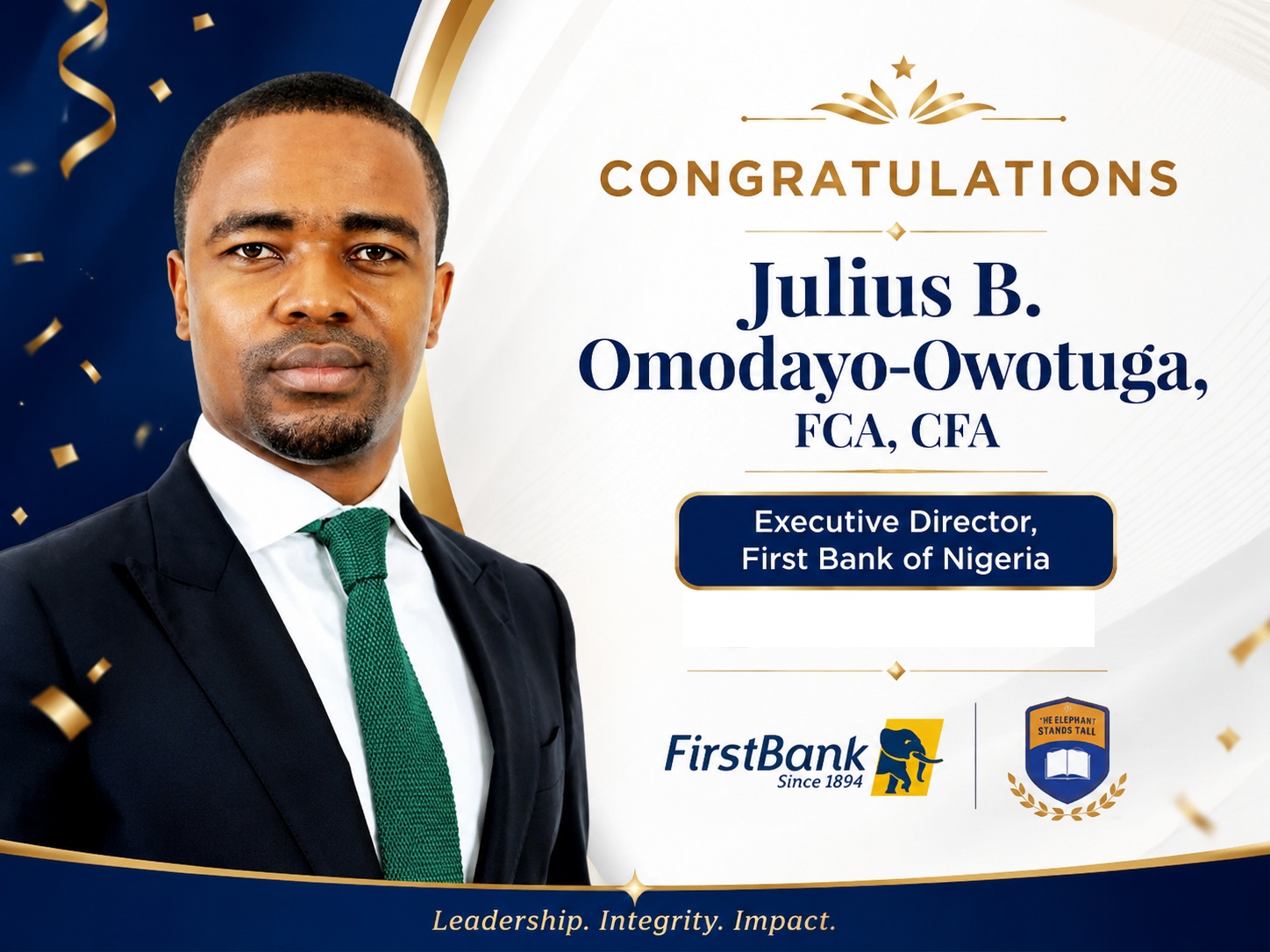
When Leadership Meets Impact: Celebrating JB Omodayo-Owotuga’s New Chapter at First Bank

0

Tekedia Institute is delighted to congratulate Dr. Julius Omodayo-Owotuga on his appointment as Executive Director of First Bank Nigeria, effective May 13, 2026. Good People, one of Nigeria’s finest professionals has ascended to yet another important leadership position, and from all of us at Tekedia, we celebrate JB Omodayo-Owotuga, FCA, CFA, DBA on this remarkable milestone.

Beyond professional excellence, JB and the Omodayo-Owotuga family have demonstrated a deep commitment to investing in people. Through a multi-year endowment established in memory of Late Most Supreme Apostle Matthew Omodayo Owotuga, hundreds of young people have attended Tekedia Mini-MBA through scholarships provided at no cost to the beneficiaries.

Even in our upcoming edition beginning in June, another cohort of scholars from the Owotuga Foundation will join the program, continuing a legacy of empowering and developing future leaders.

Good People, leadership is not only measured by positions attained but also by lives impacted. Through the Owotuga Family initiative, many young people have gained access to knowledge and opportunities which have shaped their careers. We know the number of recommendation letters we complete monthly as scholars and learners ascend to higher levels.

For First Bank, I expect the elephant to discover new dance moves. We wish JB and the entire First Bank Team continued success and many more wins ahead. And on a lighter note, perhaps now is the right time to open a First Bank branch in Ovim, Abia State. Ovim sons and daughters will ensure the bank has adequate deposits to make this branch a profit-center.

GTCO CEO, Agbaje, Says Group No Longer Sees Fintech As Threat As Habaripay Emerges Into Major Profit Engine

0

Guaranty Trust Holding Company Chief Executive Officer Segun Agbaje says the banking group is no longer worried about the competitive threat posed by fintech companies, explaining that the rapid growth of its digital payments subsidiary, HabariPay, has positioned the group to compete aggressively in Nigeria’s evolving financial technology market.

Speaking during an interview with NairaMetric’s CEO, Ugo Obi-Chukwu, on the sidelines of GTCO’s annual general meeting in Lagos, Agbaje said the company deliberately responded to the rise of fintech disruptors by building its own digital payments infrastructure rather than attempting to resist the shift reshaping the banking industry.

“Everybody was really nervous about fintech, so we built our own speed boat. That’s Habari,” Agbaje said.

“Habari is competing very, very effectively and it means we are not scared about the threat of fintechs any longer. We have a very strong engine to compete with them.”

The remarks mark a shift from how Nigeria’s major banking groups viewed fintech companies as existential disruptors.

For years, investors and analysts questioned whether traditional banks could withstand mounting pressure from agile fintech firms offering faster onboarding, lower transaction costs, and digital-first payment solutions. Companies such as Flutterwave, Moniepoint, OPay, and PalmPay transformed Nigeria’s payments landscape by rapidly expanding agency banking, transfers, merchant services, and mobile wallets.

The rise of those firms triggered concerns that legacy banks risked losing transaction revenues, customer engagement, and younger digital users.

GTCO’s latest results suggest the group believes it has found a workable counterstrategy by embedding fintech operations within its existing banking structure while leveraging its low-cost deposit base and established customer network.

HabariPay posted a profit after tax of N9.7 billion in 2025, representing a 155% jump from N3.8 billion recorded in 2024. Operating income rose 122% from N5.8 billion to N12.9 billion over the same period. The company’s rapid growth highlights how digital payments are becoming increasingly central to banking profitability in Nigeria as lenders seek to reduce dependence on traditional interest income in a volatile macroeconomic environment.

Although operating expenses doubled to N3.2 billion as HabariPay expanded operations, the business maintained strong efficiency levels and recorded no loan impairment charges or tax expenses during the year. The performance made HabariPay the strongest contributor among GTCO’s non-banking subsidiaries in 2025.

Guaranty Trust Fund Managers generated N9 billion in profit, while Guaranty Trust Pension Managers posted N1.7 billion in earnings.

Agbaje described the subsidiaries as increasingly important pillars within GTCO’s broader financial ecosystem.

“These are our little babies and it’s working perfectly for us,” he said.

“GTBank, if you look at it like a factory, is a low cost operator. So where we’re losing money to yield in the past to other people, we’re now losing it to ourselves within our ecosystem.”

That comment reflects a broader transformation underway in African banking, where financial groups are increasingly attempting to internalise high-growth revenue streams that previously migrated to standalone fintech firms. Rather than competing solely through conventional banking products, lenders are now building ecosystems spanning payments, pensions, asset management, digital lending, and merchant services.

The strategy also helps banks diversify revenue away from interest-rate cycles and sovereign debt exposure, particularly important in Nigeria, where lenders have historically generated large profits from government securities and currency-related gains.

Agbaje said GTCO’s 2025 earnings quality remained strong even after the fading of major revaluation gains that boosted profits in 2024 following the naira devaluation.

“For us, it’s been a really good year. 2025 quality of earnings was really good. It has allowed us to pay a healthy dividend. All indices are right. We made up the revaluation gains of 2024. Core business is strong,” he said.

His comments appear aimed partly at reassuring investors that GTCO’s profitability is becoming more structurally diversified rather than overly dependent on one-off foreign exchange windfalls. The group has also been expanding geographically to reduce concentration risk tied to Nigeria’s economic volatility.
According to Agbaje, international operations contributed 27% of group profit in 2025, while Nigeria accounted for 73%. He identified Ghana as one of GTCO’s strongest-performing foreign markets.

“We’re diversifying the earnings from outside of Nigeria, but Nigeria is still the mothership,” he said.

“Ultimately, the diversification gives us strength. It’ll give us a competitive edge and we’re hoping to break the country’s sovereign risk rating by diversifying the earnings strong enough outside one geographical location.”

The reference to sovereign risk matters because Nigerian banks remain heavily influenced by the country’s macroeconomic conditions, including inflation, exchange-rate instability, fiscal pressures, and regulatory policy shifts. By increasing contributions from foreign subsidiaries and fee-based businesses, GTCO is attempting to reduce vulnerability to domestic economic shocks.

Agbaje also defended the group’s long-term strategy at a time when some investors had earlier questioned the stock’s valuation and growth trajectory.

“I remember we were trying to get people to buy this stock at 44 Naira and we’re trying to convince them. I think what has happened is vindication for us,” he said.

GTCO recently completed a N500 billion capital raise as Nigerian banks prepare for new regulatory capital requirements imposed by the Central Bank of Nigeria. Agbaje stressed that the capital raise increases the group’s responsibility toward shareholders, particularly retail investors who depend heavily on dividends.

“Anytime you go out and collect people’s monies, you have a sense of responsibility,” he said. “We have a lot of retail investors, and retail investors rely on dividends for day-to-day life, for expenses, for school fees, for things.”

On pensions, Agbaje said GTCO intends to maintain a measured expansion strategy because of the long-term structure of the business.

“It’s a fee-based business, fixed income, so you have to grow carefully. Can’t do crazy acquisitions because the ROIs will work, but it’s a three-year journey for us,” he explained.

However, the broader significance of GTCO’s strategy lies in how traditional African banks are adapting to technological disruption. Instead of being displaced by fintech firms, several major lenders are increasingly absorbing fintech capabilities into integrated ecosystems that combine digital scale with banking licenses, large customer bases, and cheaper funding structures.

That transition may ultimately reshape the competitive balance in Nigeria’s financial sector, where the line separating banks from fintech companies is becoming progressively harder to define.

Porsche SE’s Nearly €1 Billion Loss Represents more than a Disappointing Earnings Report

0

The announcement that Porsche SE, the holding company that controls major stakes in both Volkswagen and Porsche AG, posted a loss of nearly €1 billion has intensified concerns about the future of Germany’s automotive industry.

Once regarded as the global benchmark for engineering precision, efficiency, and profitability, the German car sector is now navigating one of the most difficult transitions in its modern history. Porsche SE’s financial setback is not merely an isolated corporate event; it reflects deeper structural pressures reshaping the global automobile market.

Porsche SE’s loss is particularly significant because the company sits at the center of one of Europe’s largest industrial empires. Through its holdings, it exerts substantial influence over Volkswagen AG and Porsche AG, two brands that symbolize German manufacturing strength. When a holding company of this scale reports a billion-euro loss, investors interpret it as a warning sign about broader industry weakness rather than a temporary accounting issue.

Several factors contributed to the decline. One of the biggest challenges has been slowing global demand for electric vehicles. European automakers invested billions of euros into electrification strategies over the past decade, expecting rapid adoption across major markets.

High interest rates, inflation, and concerns about charging infrastructure have reduced enthusiasm for EV purchases, particularly in Europe. Competition from Chinese manufacturers has intensified dramatically. Companies such as BYD and NIO have expanded aggressively into international markets, offering cheaper electric vehicles with increasingly advanced technology.

Chinese automakers benefit from lower production costs, strong domestic supply chains, and extensive government support. This has placed enormous pressure on legacy European firms that traditionally relied on premium branding and engineering superiority to maintain margins.

Volkswagen, which is central to Porsche SE’s portfolio, has been especially vulnerable to these competitive pressures. The company has struggled with rising manufacturing expenses, software development delays, and declining profitability in certain regions. China, once Volkswagen’s strongest market, has become increasingly difficult as domestic brands capture greater market share.

Since China accounts for a major portion of Volkswagen’s sales and profits, weaker performance there has had significant consequences for the group’s overall valuation. The financial loss also highlights how expensive the automotive transition has become.

Carmakers are simultaneously trying to maintain combustion-engine businesses while investing heavily in electric vehicles, battery technology, autonomous driving systems, and digital platforms.

This dual burden has compressed profit margins across the industry. Investors who once rewarded aggressive electrification strategies are now demanding clearer paths to profitability and stronger cash flow discipline. Another major issue facing Porsche SE and Volkswagen is geopolitical uncertainty.

Trade tensions between Europe, China, and the United States continue to disrupt supply chains and investment strategies. Tariffs on Chinese EV imports in Europe, alongside growing political scrutiny of industrial dependence on China, have complicated long-term planning for global automakers.

Meanwhile, energy costs in Germany remain elevated compared to pre-2022 levels, weakening the competitiveness of domestic manufacturing operations. Despite these challenges, Porsche SE’s loss does not necessarily indicate imminent collapse. The company still controls valuable assets and globally recognized automotive brands.

Volkswagen remains one of the world’s largest automakers by volume, while Porsche AG continues to enjoy strong demand in the luxury performance segment. However, the scale of the loss demonstrates that even the strongest industrial giants are no longer immune to disruption. The situation also raises broader questions about the future of Germany’s economy.

The automobile sector has long served as the backbone of German industrial power, supporting millions of jobs directly and indirectly. Weakness among leading firms could have ripple effects across suppliers, engineering companies, logistics providers, and regional economies dependent on automotive production.

It symbolizes the immense financial and strategic pressures confronting traditional automakers during a period of historic transformation. The global auto industry is moving into a new era defined by electrification, software integration, artificial intelligence, and fierce international competition. Companies that fail to adapt quickly and efficiently may struggle to survive, regardless of their historic prestige or market dominance.

Trump and Xi Agree on “Strategic Stability” Framework as U.S.-China Relations Enter Managed Competition Phase

0

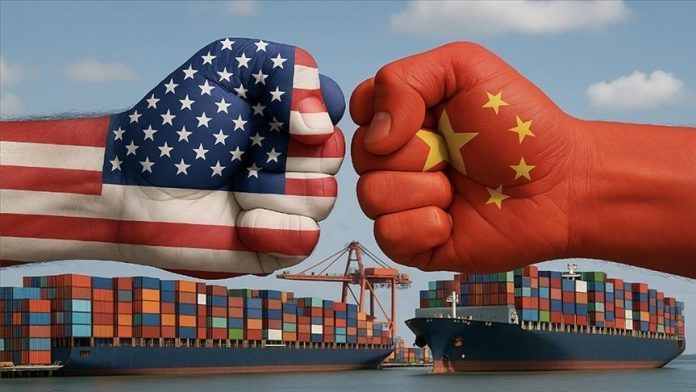
President Donald Trump and Chinese President Xi Jinping concluded their summit in Beijing on Thursday with an agreement to guide bilateral ties under a new framework of “strategic stability,” offering a pragmatic pause in years of intense friction over trade, technology, security, and human rights.

The meeting, characterized by cordial gestures and attended by top U.S. business executives, including Tesla’s Elon Musk and Nvidia’s Jensen Huang, produced several concrete discussion points while underscoring that fundamental differences, especially on Taiwan, remain unresolved.

Key Outcomes from the Summit

  • New Guiding Framework: The two leaders agreed to pursue a “constructive China-U.S. relationship of strategic stability.” Xi described this as the overarching direction for the next three years and beyond, centered on cooperation paired with “measured competition” and “manageable differences.” He emphasized that the framework “must be translated into concrete actions.”
  • Positive Momentum from Pre-Summit Talks: Xi noted that trade envoys achieved “overall balanced and positive outcomes” during preparatory meetings in South Korea. He welcomed greater U.S. commercial engagement, stating, “China’s door to opening up will only open wider.”
  • Expanded Cooperation Areas: Both sides committed to better utilizing diplomatic and military communication channels. Discussions covered deeper economic and trade ties, agriculture, tourism, and market access. Trump pressed for stronger Chinese action against fentanyl flows into the U.S. and increased purchases of American agricultural products.
  • Middle East and Energy Security: The leaders stressed that the Strait of Hormuz must remain open. Xi opposed the “militarization” of the waterway and “any effort to charge a toll for its use.” China expressed interest in buying more U.S. oil to reduce dependence on Middle Eastern supplies. Both countries agreed that “Iran can never have a nuclear weapon.”
  • Taiwan Remains the Core Flashpoint: Xi reserved his strongest language for Taiwan, calling it “the most important issue in U.S.-China relations.” He warned: “Handle it well, the relationship holds; handle it badly, the two countries risk collision or conflict.”

Chinese markets reacted with cautious optimism. The Hang Seng Tech Index rose around 0.5%, and the broader Hang Seng Index gained roughly 0.3% on Thursday. While gains were modest compared to rallies in South Korea, Taiwan, and Japan, many investors viewed the summit as a tactical positive.

Goldman Sachs analysts had anticipated focused discussions on trade, tariffs, semiconductor restrictions, and rare earths. They expect China to ramp up purchases of U.S. agriculture, energy, and aircraft in exchange for avoiding escalated tariffs. The bank described the meeting as a potential “tactical catalyst” for the Chinese yuan and equities.

A notable development came shortly after the summit when Reuters reported that Washington cleared sales of Nvidia’s H200 AI chips to several major Chinese firms, including Alibaba, Tencent, ByteDance, and JD.com. This represents a meaningful breakthrough for China’s AI sector.

Jiong Shao, China internet analyst at Barclays, highlighted the stakes, saying: “The most important competitive arena today, especially between U.S. and China, is in AI, and the greatest bottleneck today in AI is compute.”

He added that access to Nvidia’s latest chips “is very, very critical for the Chinese players to compete on a global stage.”

Recent strong cloud and AI-related earnings from Alibaba and Tencent have also lifted sentiment. Analysts note that Chinese tech giants may be “a few quarters behind the U.S.” in realizing returns on their AI capital expenditure.

Despite the positive tone, investors remain selective. Dong Chen, chief investment officer at Bank J Safra Sarasin, sees the summit as a near-term catalyst but cautions that China’s equity market still faces an earnings problem.

“The problem with the Chinese equity market… is still earnings,” he said, noting a divergence between strong-performing mainland A-shares in hardware and AI versus many Hong Kong-listed internet firms.

Some traders adopted a wait-and-see approach. Jeff Mei, COO of BTSE Group, observed: “We believe that some traders are in a wait-and-see mode, taking profit and hedging their positions in the event that the U.S.-China summit fails to meet expectations.”

Economist Tianchen Xu of the Economist Intelligence Unit summarized the broader significance. He notes that while frictions will continue, the new framework provides “a guardrail, and things won’t spiral out of the two sides’ control as they nearly did in 2025.”

The Beijing summit indicates a mutual desire for stability rather than a fundamental thaw. It offers potential relief on inflation, supply chains, and fentanyl to the U.S. For China, it provides breathing room for economic recovery and technological development amid domestic challenges.

The presence of key American tech leaders and the swift Nvidia chip approval signal that both sides recognize the high costs of total decoupling in the critical AI domain. Yet the sharp language on Taiwan and the emphasis on “measured competition” make clear that rivalry remains the dominant underlying dynamic.

Markets will now watch closely for follow-through actions, increased agricultural and energy purchases, implementation of new export licenses, and whether this “strategic stability” can withstand inevitable future tests. For the time being, the world’s two largest economies have chosen managed coexistence over escalation.

The “Two Bets” Strategy for Nigerian Players: Minimizing Risk

0

Aviator is a popular crash game where players place bets before a virtual plane takes off and try to cash out before it flies away. The best part is that you can place up to two bets at the same time during one round! This means you can use two separate betting buttons with different amounts and cashout strategies.

In Nigeria, players love this feature because it helps save money. Using this trick on Pin Up Aviator helps you play for a longer time without losing everything. The goal is to use the first button for a small, quick win. You can set it to cash out early at 1.50x.

This win pays for both of your bets. Then, you use the second button to try for a much bigger prize. If the plane goes high, you win extra profit. If it crashes, you already got your money back from the first bet. This two-button system is the best way to manage your balance and play smart.

Overview of the Popular Mechanic: “Two Panels — Two Roles”

Good players do not just click one button. They use both betting boxes at the same time. This is the smartest way to play Pin Up casino Aviator so you do not run out of money too fast.

Each box has a different job:

  • Role of the first panel: This is for safety. You set it to cash out early at 1.20x or 1.50x. This small win pays for the money you spent on both bets.
  • Role of the second panel: This is for a big prize. You use this bet to try and hit huge numbers like 50x or more. You let it fly high because your first bet already kept your money safe.

Always look at the past rounds at the top of the game. If the plane has crashed early many times, a big win might happen soon. Using two panels keeps you ready for that big jump.

Analytics and Statistics: Transparency in Every Round

The game shows a list of old results at the top. You can use this to find “pink” numbers, which are huge wins over 100x. Smart players check these stats to see how often the big wins come. If you do not see a pink number for a long time, a big win might happen soon. Checking this list is a great way to win more in the Pin Up Aviator game.

There is also a live chat where you can talk to other players. You will see people cheering when they catch a high multiplier. This shows you when the game is giving out more money. Do not just guess. Look at the past rounds and read the chat to plan your bets. This helps you keep your money and play better.

Technological Advantages for the Mobile Market

The game runs smoothly on any phone, even with slow internet. These tools help you play perfectly every time:

  • Automation: Use “Auto-Bet” and “Auto-Cashout.” These buttons finish the round for you. If your internet in Lagos stops working, the game still saves your win at the exact number you picked.
  • Provably Fair: The game uses a special code that no one can fake. This makes sure every round is 100% honest. You can look at the data yourself to prove the game is fair.

Auto-features are great because they are faster than your finger. They stop you from losing money if your phone lags. It is a good idea to try the Aviator Pin Up free demo first to see how everything works. Make sure your phone is charged so you do not lose your connection during a big flight.

Conclusion: Freedom of Choice in Every Round

This game gives you the best tools to play. You are the boss of your own bets. You can take your money early to stay safe, or you can wait for the plane to go very high. Both choices are good.

When you play Pin Up Aviator, the two buttons let you do both things at the same time. Always remember to play only with money you can afford to lose. You choose the plan and you click the buttons. Play smart and have fun.