
DD
MM
YYYY

PAGES

DD
MM
YYYY

spot_img

PAGES

Home Blog Page 2

Florida Faces New Retirement Rival as North Carolina Attracts More Retirees

0

For decades, Florida has occupied an almost unquestioned position at the top of America’s retirement map. Warm weather, beaches, relatively low taxes and a large ecosystem of retirement communities have made the Sunshine State a magnet for older Americans seeking to turn their working years into a more relaxed chapter of life.

But that dominance is facing a new challenge as another state emerges as an increasingly attractive destination for retirees. The competition is not simply about sunshine.

America’s retirement population is becoming more sensitive to the total cost of living, healthcare access, housing prices, taxes, natural-disaster risks and quality of life.

Those considerations are reshaping where older Americans choose to live, particularly as retirees confront longer lifespans and the possibility that their savings must support them for decades. Florida still possesses powerful advantages. It has no individual state income tax.

A substantial healthcare industry and an enormous network of retirement-oriented communities. Its warm climate remains a major attraction for people escaping colder northern winters.

Cities such as Sarasota, Naples and Fort Myers have developed economies and infrastructure specifically suited to older residents. Yet Florida’s popularity has also produced new pressures. Housing costs have risen sharply in many desirable communities, While insurance has become a major concern for homeowners.

Hurricanes, flooding and extreme heat can translate into higher insurance premiums, maintenance costs and disruptions. For retirees living on fixed or carefully managed incomes, these expenses can materially change the economics of relocating.

That is creating an opening for states that can offer a different retirement proposition. One emerging contender is North Carolina.

The state combines relatively mild winters with mountains, beaches and a growing collection of mid-sized cities. Places such as Asheville, Wilmington and the communities surrounding Raleigh and Charlotte offer retirees access to healthcare, cultural amenities and outdoor activities without requiring them to live in one of Florida’s most expensive coastal markets.

North Carolina also benefits from demographic and economic growth. A growing population can support restaurants, healthcare providers, transportation networks and other services that retirees rely upon.

At the same time, retirees have increasingly shown that they want more than a warm climate. They want communities where they can remain socially active, access medical specialists and maintain a comfortable lifestyle without exhausting their savings.

Other states are competing for the same demographic. Tennessee has attracted attention because of its absence of a broad individual income tax, while Arizona remains popular for its dry climate and established retirement communities.

South Carolina offers coastal living and a relatively attractive tax environment for many retirees. These states illustrate how retirement migration is becoming a broader competition rather than a contest automatically won by Florida.

The shift also reflects a larger change in retirement itself. Today’s retirees are not necessarily looking for the same lifestyle as previous generations. Some want walkable communities, others prioritize proximity to family.

While many are weighing access to hospitals and airports alongside golf courses and beaches. Remote work has also allowed some older adults to remain economically active after relocating.

Florida is therefore unlikely to lose its retirement identity simply because competitors are gaining ground. Its enormous retiree population, established communities and lifestyle advantages give it considerable momentum. But the idea of a single undisputed retirement capital is becoming harder to sustain.

The next chapter of America’s retirement migration may be defined less by one state and more by a collection of destinations competing on affordability, healthcare, climate, taxes and quality of life. Florida built the modern retirement destination.

Now, other states are showing retirees that they do not have to follow the traditional path to find a place to grow older.

CXMT Prepares To Enter NAND Market, Challenging Samsung, YMTC Amid Memory Crunch

0

Chinese memory-chip maker CXMT is preparing to enter the NAND flash market, challenging a segment dominated by Samsung Electronics and other foreign manufacturers as a global memory shortage creates an opportunity for Chinese suppliers to expand their presence.

ChangXin Memory Technologies, known as CXMT, plans to establish a research and development production line for NAND flash at its new plant in Beijing, two people familiar with the company’s plans told Reuters. The company has also established a research institute in the Chinese capital, where NAND development is among the projects underway, one of the sources said.

The move would mark a significant expansion for CXMT, which has built its position primarily in dynamic random access memory, or DRAM. It would also bring the company into direct competition with Yangtze Memory Technologies, or YMTC, China’s leading NAND producer.

Three people familiar with the matter said CXMT has discussed its NAND plans with customers, including a newly established startup that intends to purchase its NAND chips for storage products used in AI systems and supercomputers. The sources declined to identify the startup.

CXMT’s plans remain at an early stage. It is not clear when the Beijing R&D production line will begin operating or whether the company will eventually move from research and trial production to large-scale commercial manufacturing.

The potential expansion comes as AI infrastructure is driving strong demand for memory chips. Industry executives expect the global shortage to persist through at least 2027, while TrendForce expects tightness in the NAND market to ease only in the second half of next year.

SK Hynix CEO Kwak Noh-jung said in July that 2027 could be the industry’s most difficult year from a supply perspective. Memory manufacturers have been directing more capital toward DRAM and high-bandwidth memory, or HBM, which are critical to AI servers, limiting additional investment in NAND production.

The distinction between the two markets is considered necessary for the deal. DRAM provides the working memory used by processors, while NAND is non-volatile storage used in smartphones, computers, and data centers.

As AI data centers consume increasing amounts of memory and storage, the resulting supply constraints have strengthened the position of manufacturers that can add capacity or secure supplies for customers.

CXMT and YMTC Move Into Each Other’s Territory

CXMT’s potential move into NAND would further blur the traditional division between China’s two major memory-chip manufacturers. The companies have often been described in China as the industry’s “twin stars,” but they have historically focused on different technologies. CXMT dominates domestic DRAM production, while YMTC is China’s leading NAND manufacturer.

That separation has already begun to weaken.

Reuters reported in April that YMTC had sent low-power DRAM samples to customers as it considered moving into CXMT’s core market. CXMT’s potential entry into NAND would create a corresponding overlap on the other side of the memory market.

Both companies remain behind the largest international memory manufacturers in technology and scale and are more exposed to lower-priced products. The current shortage, however, has strengthened their pricing power among some Chinese customers.

Reuters reported in July that some Chinese memory buyers were paying more for chips from domestic suppliers than for comparable products from foreign competitors, highlighting the effect of tight supply and the importance of local sources for companies seeking to secure memory.

The potential expansion into NAND would also give CXMT another route to diversify its customer base at a time when demand for memory is being reshaped by AI infrastructure. Samsung remains the largest NAND supplier globally. TrendForce estimated that Samsung held 29.3% of the market by revenue in the second quarter, followed by SK Hynix and US-based Micron Technology.

Entering that market would therefore put CXMT up against companies with much greater production scale and established positions with global customers. But the current supply shortage could provide an opening for additional capacity, particularly within China’s domestic technology ecosystem.

AI Demand Strengthens China’s Push For Memory Self-Sufficiency

CXMT’s expansion also fits into Beijing’s broader effort to reduce China’s reliance on overseas semiconductor suppliers. Both CXMT and YMTC have received backing from China’s national semiconductor fund and local governments. CXMT expanded with support from Hefei, the capital of Anhui province, while YMTC was built in Wuhan, the capital of Hubei province.

Local government support has become an important part of China’s semiconductor strategy, with cities and provinces competing to attract investment in technologies considered important to national industrial and technological development.

CXMT is now expanding its footprint further. The company raised 57.92 billion yuan, or about $8.6 billion, in July through Asia’s largest initial public offering of the year. It also plans to build a second memory-chip plant in Beijing and has held funding discussions with a government-backed technology manufacturing hub, Reuters reported last month.

YMTC’s parent company, CCSH, is also preparing for a Shanghai listing that aims to raise 33 billion yuan.

US export controls have added another layer of urgency to China’s efforts to develop domestic memory suppliers. Washington placed YMTC on its Entity List in 2022 and subsequently tightened restrictions on China’s access to high-bandwidth memory used alongside advanced AI processors. Those restrictions have increased the importance of domestic alternatives as Chinese technology companies build AI systems and data-centre infrastructure.

NAND could provide an additional opportunity for CXMT at a time when the global memory industry is entering a period of unusually strong demand. The company still faces uncertainty over whether its current research and trial-production efforts will develop into commercial-scale NAND manufacturing.

If CXMT does make that transition, however, China’s two leading memory companies would be competing across both major categories of memory, while Beijing would gain another domestic supplier capable of serving the storage requirements of the country’s expanding AI infrastructure.

Central Banks Turn Hawkish as Yen Weakens Despite BOJ Rate Hike

0

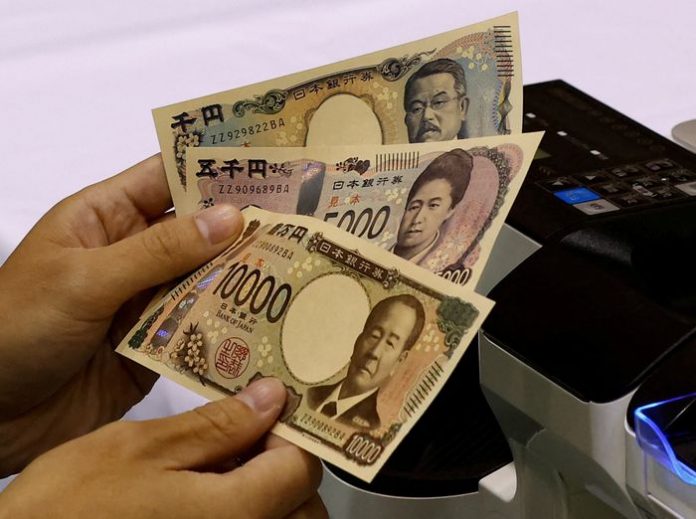
Global stocks and bonds slipped on Friday as investors assessed a week of increasingly hawkish central-bank policy, while the Japanese yen weakened sharply even after the Bank of Japan raised interest rates to their highest level in 31 years.

The BOJ increased its policy rate to 1.25%, a move that had been widely anticipated by markets but failed to strengthen the yen. Instead, the dollar climbed 1% against the Japanese currency to 157.54, putting the yen on course for its largest one-day decline since mid-February.

Two BOJ board members dissented from the rate increase, adding to investor expectations that the central bank may face a difficult path as it balances persistent inflation against the risk of renewed currency weakness.

The yen had gained 1.6% against the dollar earlier in September as traders anticipated a faster tightening cycle and signs emerged that Japanese investors were beginning to repatriate funds. But the currency has since been hit by the Federal Reserve’s shift toward tighter policy.

The Fed raised interest rates on Wednesday for the first time in three years and adopted a more aggressive stance toward inflation. The move has pushed the yen toward a 2.6% weekly decline against the dollar, its worst weekly performance in two years.

BOJ Governor Kazuo Ueda said Friday that the bank’s policy focus had shifted as underlying inflation approaches 2%. He also said most board members still consider monetary policy accommodative even after the latest increase.

Chris Scicluna, head of research at Daiwa Capital Markets Europe, said the Fed’s tightening could leave the yen vulnerable to another sharp decline, potentially adding to Japan’s inflation problem.

“That certainly should keep the door open to further tightening, assuming inflation and domestic demand remain resilient,” Scicluna said. “Another rate hike to 1.50% before the end of the year would seem a decent bet.”

Central Banks Move Toward Tighter Policy

The BOJ’s decision capped a week in which inflation increasingly dominated monetary policy discussions across major economies. September has produced the largest increase in average G10 interest rates since July 2023, with four central banks raising rates and others warning that additional tightening could be required.

The Bank of England kept its policy rate unchanged on Thursday but indicated that a prolonged Iran war could eventually require higher rates if elevated energy prices keep inflationary pressure alive.

The European Central Bank also raised rates last week while signaling that further tightening could be necessary.

In Australia, the central bank’s governor said Friday that some of the upside inflation risks previously identified by policymakers appeared to be materializing.

The synchronized shift is being driven largely by the energy shock created by the conflict in the Middle East. The war has now approached its seventh month, with no clear resolution in sight, keeping oil prices above $100 a barrel and complicating central banks’ efforts to bring inflation back toward target.

For policymakers, the problem is difficult because energy prices can raise inflation even as higher interest rates weaken demand. Holding rates higher for longer can contain secondary price pressures, but it also increases borrowing costs for households and businesses.

Falling Oil Prices Offer Limited Relief

Oil prices provided some relief on Friday, although the decline has yet to eliminate concerns about supply disruptions. Brent crude futures fell as much as 2.8% to $101.92 a barrel after a Reuters report that China had asked Tehran to help restrain the Houthis following a week of military attacks.

Expectations that Gulf oil exporters could find alternative shipping routes have also reduced some of the immediate supply concerns.

Brent was heading for a weekly decline of about 2%.

The headline price movement, however, masks tighter conditions in physical markets, where oil was trading around $120 a barrel. That gap matters for the inflation outlook. A sustained fall in futures prices could ease pressure on headline inflation and improve sentiment across financial markets, but continued tightness in physical supplies could keep energy costs elevated for consumers and businesses.

European stocks fell 0.3% on Friday, while U.S. stock futures gained between 0.3% and 0.6%, led by technology shares.

The technology sector also recovered from losses earlier in the week, when warnings from leading AI executives about the risks of unchecked AI development triggered concerns that a slowdown in frontier AI could eventually reduce spending on data centers, chips and other infrastructure.

Bonds Remain Under Pressure

Government bonds also remained volatile after one of the worst selloffs of the year. The U.S. 10-year Treasury yield crossed 5% earlier in the week, reaching its highest level since 2007, before easing to about 4.93% on Friday.

Bond prices edged higher as yields declined, although the move provided limited relief after the sharp increase in borrowing costs across major markets. European and British government bond yields have also reached multi-year highs over the past week, reflecting expectations that central banks may have to keep policy restrictive for longer.

The combination of higher oil prices, tighter monetary policy and elevated bond yields presents a difficult backdrop for global investors.

The Fed’s rate increase has also widened the policy divergence with Japan at a pivotal moment for currency markets. The BOJ is tightening policy, but the yen can still weaken when U.S. rates rise faster or remain substantially higher than Japanese rates. That dynamic risks creating a feedback loop for Japan. A weaker yen raises the domestic cost of imported energy and other goods, potentially increasing inflation and giving the BOJ another reason to raise rates.

At the same time, faster Japanese tightening could increase the incentive for domestic investors to repatriate money from overseas markets, potentially affecting global bond and currency flows.

For now, Friday’s market moves show that a BOJ rate increase alone is not enough to reverse those forces. This has raised a fresh market concern of whether falling oil prices can continue long enough to ease inflation expectations, or whether persistent physical-market tightness and geopolitical risks will keep central banks in tightening mode.

After a week in which policymakers across the G10 moved decisively toward higher rates, markets are entering the next phase with the same problem they began the week facing: inflation has not yet been brought under control, and the cost of doing so is rising across currencies, bonds and the wider economy.

Bitcoin Retraces Above $81,000 as Crypto-Linked Stocks Rebound Sharply

0

Bitcoin has rebounded above the $81,000 mark, extending a sharp recovery that has lifted the broader cryptocurrency market and triggered a strong rally in crypto-linked stocks.

The world’s largest cryptocurrency climbed more than 5% on Friday, surging as high as $81,204, while shares of companies including Coinbase, Strategy and Robinhood posted double-digit or near-double-digit gains.

The recovery comes after Bitcoin fell below $75,000 earlier in the week following the U.S. Senate’s failure to advance the CLARITY Act, with renewed regulatory developments and a wave of short liquidations helping fuel the latest rebound.

Recall that earlier this week, the CLARITY Act failed to advance in the U.S. Senate, dealing a setback to efforts to establish a comprehensive regulatory framework for the cryptocurrency industry.

The Senate voted 49-50 against invoking cloture on the motion to proceed to H.R. 3633. The measure needed 60 votes to advance to full debate. All Democrats opposed the motion.

Republican U.S. senator representing Wyoming Sen. Cynthia Lummis, has accused Democrats of putting politics ahead of progress, after the CLARITY Act failed to advance in the U.S. Senate.

In a statement following the vote, Lummis said Democrats proved they were never truly serious about protecting consumers and preserving American leadership.

She argued that after more than a year of negotiations and substantial concessions, the opposition amounted to political gamesmanship rather than genuine policy disagreement.

The collapse of the Clarity Act ought to have dealt a big blow to the price of Bitcoin, but the world’s largest crypto asset showed resilience.

Bitcoin’s latest upside saw it reclaim its True Market Mean, the aggregate cost basis of all coins acquired on secondary markets, which currently sits at $76,660.

“That puts price back above a crucial level and back into a bullish regime,” on-chain analytics platform Glassnode told X followers on Friday.

Commenting on low-time frame BTC price action, trader and analyst Rekt Capital said that bulls now faced a “moment of truth.”

A chart uploaded to X showed $82,000 as a key level for BTCUSD to break through. Failing to do so would constitute a double rejection pattern together with the price action that ended the mid-May rebound.

Since the vote, US regulators have begun moving ahead with crypto-related actions under their existing authority. 

Thursday brought actions from both agencies, with the CFTC providing no-action relief to passive software providers and the SEC temporarily easing requirements for certain platforms facilitating onchain trading of tokenized securities.

The CFTC also submitted a crypto market regulatory action for White House review, though the “prerule” filing does not disclose details of the planned regulation.

A House panel voted earlier this week to move forward with the American Reserve Modernization Act, which would direct the Treasury Department to maintain a “secure Bitcoin storage facility.”

“The industry doesn’t need Congress,” Dan Morehead, Pantera Capital founder and managing partner, told CNBC on Friday. “The SEC and CFTC are enacting all of the things that would have been in Clarity anyway.”

Morehead said people remain bullish on bitcoin because the U.S. Federal Reserve is “still way behind on inflation… rates should be much higher than they are today.”

Outlook

Bitcoin’s near-term outlook now hinges on whether the cryptocurrency can sustain its recovery above the $80,000–$81,000 area.

Analysts have identified the $81,000–$86,000 range as a significant resistance zone, where cost-basis levels, existing supply, and short-liquidation positions could create additional volatility.

A sustained break above $82,000 could strengthen the recovery and put higher resistance levels into focus, while failure to clear the zone could leave Bitcoin vulnerable to another period of consolidation or a pullback.

Aramco Cuts Crude Supplies to European Refiners After Saudi Pipeline Attack, Opening Opportunity for Dangote

0

Saudi Aramco has told at least two European refining customers that they will receive no Saudi crude oil next month, Bloomberg News reported on Friday, as an attack on the kingdom’s critical East-West pipeline disrupts established supply flows and forces refiners to search for replacement barrels.

The development represents a further escalation of the disruption created by the attack. European refiners typically rely on term contracts with Saudi Aramco for predictable monthly crude deliveries, but at least two customers have now been told that their October supplies will not proceed, according to people familiar with the matter cited by Bloomberg.

The immediate consequence is a scramble for alternative crude. Poland’s Orlen, one of the affected buyers, has already been seeking replacement supplies, with traders saying the refiner bought North Sea crude to compensate for disrupted Saudi deliveries.

The significance for the wider oil market extends beyond the individual cargoes that have been cancelled. Saudi Arabia is one of the world’s most important crude suppliers, and any interruption to its established export infrastructure forces refiners to compete for alternative grades from other producers. That can increase crude procurement costs, freight rates and, depending on the duration of the disruption, refined-product prices.

The attack damaged three pumping stations along Saudi Arabia’s East-West pipeline, which transports crude from the kingdom’s oil-producing region in the east toward the Red Sea port of Yanbu. The pipeline provides Saudi Arabia with an alternative export route that reduces its reliance on the Strait of Hormuz.

Aramco is working to partially restart the pipeline within days and restore full capacity within six weeks, Bloomberg reported. In the meantime, the company has been increasing crude movements from its Gulf operations through ship-to-ship transfers near Oman’s Sohar port.

Trade sources said Aramco plans to move about 60 million barrels from its Gulf port of Ras Tanura through ship-to-ship transfers at Sohar during September and October, equivalent to roughly 1 million to 1.5 million barrels per day.

Those measures could reduce the immediate impact of the pipeline shutdown, but they do not eliminate the disruption. The cancellation of contracted European supplies shows that logistical workarounds are not yet sufficient to maintain all established customer flows.

A Potential Opening for Dangote

For Nigeria’s Dangote Refinery, the timing creates an unusually favorable commercial environment.

The refinery is currently at the center of an initial public offering through which Dangote is seeking to raise about 2.15 trillion naira, or roughly $1.6 billion, from the sale of 4.1 billion shares at 525 naira each. The offering values the refinery at roughly $47 billion and is scheduled to close on October 13.

The Saudi disruption provides investors with a real-world example of why large refining capacity outside traditional Middle Eastern supply corridors can become valuable when geopolitical shocks disrupt global energy flows.

Dangote is already operating at about 700,000 barrels per day, its current processing capacity, and has increasingly established itself as an important supplier of refined products beyond Nigeria.

The refinery generated $1.82 billion in after-tax profit in the first half of 2026, compared with a $476 million loss for all of 2025. Its growing exports of jet fuel, diesel and gasoil have also given the plant a larger role in international petroleum markets.

The Saudi disruption could strengthen that position if European buyers continue looking for alternative sources of refined products as Middle Eastern crude and refining operations remain vulnerable to attacks and transport disruptions.

For Dangote, the opportunity is not necessarily about replacing the Saudi crude that European refiners have lost. Rather, it is about benefiting from the broader market consequences of that shortage.

When refiners lose access to contracted crude, they have to compete for replacement barrels. When regional refining capacity or crude transportation is disrupted, buyers also become more dependent on refiners elsewhere that have available production. If those conditions push up product prices and refining margins, a large refinery with access to international markets can benefit.

But there is a hard limit to how much Dangote can capture.

The refinery can currently process about 700,000 barrels of crude per day. It cannot immediately increase that figure simply because international fuel markets have become tighter.

That constraint bears a heavy impact as Dangote prepares its IPO because the company’s longer-term investment proposition is built around substantially greater capacity.

Dangote plans to double the refinery’s capacity to 1.4 million barrels per day by 2029. The additional capacity would give the company significantly greater ability to serve Nigeria, supply other African markets and maintain exports to Europe and other international destinations at the same time.

At 700,000 bpd, Dangote is already a major single-site refinery. At 1.4 million bpd, it would become one of the world’s largest refining complexes, giving the company considerably more flexibility to allocate production toward markets offering the strongest margins.

That flexibility becomes particularly valuable during supply disruptions.

The IPO Is Betting On Future Scale

The current geopolitical crisis thus arrives at an important moment for Dangote. The refinery is demonstrating strong earnings at the same time that disruptions in Middle Eastern energy infrastructure are creating tighter global petroleum markets. Analysts say that combination can strengthen the near-term economics of the business and provide investors with a tangible illustration of the value of additional refining capacity.

But investors need to separate the temporary benefit of a supply shock from the refinery’s underlying long-term economics.

Geopolitical disruptions can produce unusually high refining margins because crude supplies become constrained while demand for fuels remains relatively firm. Refiners that have available capacity and access to alternative crude can capture those spreads.

While those conditions can generate exceptional profits, they cannot automatically be assumed to persist.

If Saudi Arabia restores the East-West pipeline within the expected six-week timeframe, crude exports normalize, and Middle Eastern refining capacity recovers, some of the scarcity premium supporting current fuel prices could disappear.

That makes the timing of Dangote’s IPO significant. The company is asking investors to value not only the refinery’s current earnings but also its future expansion and its ability to remain profitable when market conditions become less favorable.

Reuters Breakingviews has calculated that the offering implies a valuation of roughly $50 billion and noted that Dangote’s implied 2026 EBITDA multiple is substantially above those of major U.S. refiners including Valero, Marathon Petroleum and Phillips 66.

That premium effectively places considerable value on the refinery’s future growth. The Saudi disruption strengthens the argument that additional refining capacity can be valuable in a fragmented global energy market. It does not, by itself, establish that the IPO valuation is justified.