DD
MM
YYYY

PAGES

DD
MM
YYYY

spot_img

PAGES

Home Blog Page 2

Micron Awards Taiwan Workers Up To 68 Months’ Pay After Extraordinary Year

0

Micron Technology will pay some of its Taiwan-based direct labor employees bonuses equivalent to as much as 68 months of salary for fiscal 2026, offering its biggest-ever rewards to workers after the U.S. memory-chip maker posted what it described as an extraordinary year.

The payouts come as Micron faces growing pressure from unions representing about two-thirds of its Taiwan workforce, which have indicated broad support for strike action amid a dispute over compensation.

Micron said on Friday that direct labor employees in Taiwan, including operators, technicians and shift engineers, will receive rewards equivalent to between 35 and 68 months of pay for fiscal 2026. The minimum cash compensation will be T$1.7 million ($53,809.39). The company said more than 60,000 employees worldwide will receive fiscal 2026 rewards, while describing the Taiwan payouts as the strongest it has ever provided.

The compensation package includes a T$1 million cash bonus for Taiwan employees who joined Micron before August 29, 2025.

For entry-level engineers, total rewards will average T$3.4 million, including about T$2.9 million in cash compensation, with the balance made up of equity valued at the time of the grant. Every employee will also receive an annual equity grant, Micron said.

The size of the awards is significant not only because of Micron’s performance but also because they arrive as semiconductor manufacturers compete to retain skilled workers amid a boom in demand for advanced memory used in artificial intelligence infrastructure.

Micron employs about 15,000 people in Taiwan, one of its most important manufacturing bases, and has invested more than T$1.6 trillion in the island.

Micron Seeks To Avert Strike

The announcement comes against the backdrop of a dispute with Taiwan’s labor unions.

Unions representing roughly two-thirds of Micron’s Taiwan employees have previously signaled widespread support for a strike.

Micron and the Taoyuan union failed to reach an agreement during a mediation session last week, with another round of mediation scheduled.

The latest compensation package is expected to become an important factor in the negotiations, although the company has not indicated that the rewards represent an agreement with the union.

Micron’s decision to substantially increase employee rewards also comes as the company seeks to avoid a repeat of labor unrest at its South Korean rival Samsung Electronics.

In May, Samsung faced the prospect of an 18-day strike involving as many as 48,000 union members before last-minute negotiations produced an agreement. The deal created a special bonus pool worth 10.5% of the semiconductor division’s operating profit, subject to profitability targets.

The possibility of a prolonged stoppage at Samsung had raised concerns about disruptions to global memory-chip supplies and wider economic effects in South Korea, one of Asia’s largest semiconductor manufacturing centers.

Micron’s Taiwan unions have previously argued that compensation arrangements at Samsung and SK Hynix have widened the gap between their workers and their South Korean counterparts.

That comparison is considered relevant as memory-chip manufacturers benefit from the surge in artificial intelligence investment. High-bandwidth memory and other advanced memory products have become increasingly important components in AI accelerators and data-center systems, strengthening demand for semiconductor manufacturing capacity and putting pressure on companies to secure the workers needed to operate and expand that capacity.

For Micron, the cost of richer compensation must therefore be weighed against the potential cost of labor disruption at a critical manufacturing hub.

A strike at a major memory producer could have consequences beyond the company itself because the global memory market is concentrated among a relatively small number of suppliers. Any prolonged disruption could tighten supply, affect prices, and create complications for customers already competing for memory capacity.

At the same time, Micron’s unusually large payouts illustrate how the AI-driven semiconductor boom is changing the economics of the industry for workers as well as investors. The company is effectively sharing part of the gains from its strong fiscal year with employees while attempting to contain a labor dispute that has exposed differences in compensation across its Asian manufacturing operations.

Whether the rewards are enough to resolve the dispute remains uncertain. Micron and the Taoyuan union have yet to reach an agreement, and further mediation is still required.

But the scale of the payments sends a clear signal about the value Micron places on retaining its workforce at a time when memory demand, particularly from AI infrastructure, is reshaping the chip market.

Global Bond Selloff Pushes U.S. 10-Year Yield Toward 5% As Oil Fuels Inflation Fears

0

A global bond selloff pushed the U.S. 10-year Treasury yield toward the closely watched 5% threshold on Friday as oil prices surged above $100 a barrel, inflation fears intensified, and investors increased bets that major central banks will have to resume raising interest rates.

The benchmark Treasury yield climbed as high as 4.979%, its highest level in almost three years, before easing to 4.946% as oil prices retreated from their session peak. The move nevertheless left investors confronting a potentially important shift in the cost of money across global markets.

The latest selloff stretched from Tokyo and Sydney to New York and London, with government bond yields reaching multi-year or multi-decade highs as investors reassessed the outlook for inflation and monetary policy.

“We’re seeing a perfect storm of higher oil prices, more inflation fears, central bank hawkishness and ongoing concerns over fiscal deficits all combining to push global yields higher,” said Mansoor Mohi-uddin, chief macro strategist at Bank of Singapore.

The combination has stirred interest because sovereign bond yields form a reference point for borrowing costs throughout the financial system. Higher government yields can translate into more expensive mortgages, auto loans and consumer credit, while increasing financing costs for companies and governments.

The pressure is being amplified by growing government borrowing across developed economies. Investors are demanding greater compensation to hold sovereign debt as fiscal deficits remain a persistent concern, adding another source of upward pressure on yields independently of central-bank policy.

A sustained move above 5% in the U.S. 10-year Treasury could therefore have broader consequences for financial markets. At those yields, bonds become more competitive with equities and other risk assets, potentially encouraging investors to shift capital away from stocks and toward fixed income.

Oil Reshapes The Rate Outlook

The immediate catalyst has been the sharp increase in energy prices. Brent crude futures climbed to $109.97 a barrel, a four-month high, after rising 6% in the previous session. The contract subsequently retreated almost 2% to around $105.90, but remained on course for a weekly gain of roughly 10%.

Oil flows have remained restricted through the Strait of Hormuz as the United States and Iran exchanged attacks, while Iran-aligned Houthis seized control of Yemen’s port of Mocha, adding to concerns about disruption to Saudi oil exports through the Red Sea.

The longer the disruption lasts, the greater the threat that higher energy costs will feed into broader inflation and force central banks to keep monetary policy tighter.

Investors have already sharply adjusted their expectations for the Federal Reserve. Markets were pricing in a 72% probability of a rate hike at the Fed’s meeting next week, according to CME FedWatch, up from 49% a week earlier.

The U.S. producer-price data for August added to those concerns, while investors were awaiting consumer inflation data for further evidence of whether price pressures are becoming entrenched.

“If tonight’s consumer price data is strong then 10-year Treasury yields will likely break 5.00%,” Mohi-uddin said.

Prashant Newnaha, senior rates strategist at TD Securities, said a sustained period of oil prices above $100 would make a move above 5% increasingly difficult to avoid. He described the August inflation data as “setting up as the most important print for the Fed and markets so far this year.”

A softer inflation reading could temporarily reverse the move in yields, Newnaha said, but such a decline would be difficult to sustain unless oil prices also fall. That creates a difficult policy problem for central banks. Higher energy prices can push headline inflation higher at the same time that tighter monetary policy is weighing on economic activity. Policymakers therefore face the prospect of having to respond to inflation generated partly by a geopolitical shock while avoiding an unnecessarily deep slowdown.

Global Yields Climb

The bond selloff has not been confined to the United States. Australia’s three-year government bond yield surged 18 basis points to 5.047%, its highest level in 15 years. Japan’s 10-year government bond yield rose six basis points to 2.97%, with the Bank of Japan widely expected to raise rates next week to a level not seen in 31 years and potentially signal a faster pace of tightening.

European bonds also came under pressure. German bund futures fell 0.22%, near their lowest level since 2011, while French OAT futures dropped 0.3% to a record low.

JPMorgan analysts now expect eight of the nine developed-market central banks to raise interest rates by the end of the year. Their forecast includes the Federal Reserve, Bank of Japan, four European central banks and the central banks of Australia and New Zealand.

“The tightening is for now expected to remain shallow, but risks to our forecasts lean in the direction of more action in the face of resilient growth, sticky core inflation, and commodity price pressures,” JPMorgan analysts said.

The European Central Bank raised interest rates on Thursday for the second time this year, with some officials seeing the possibility of additional tightening as early as October.

The repricing is also visible in shorter-dated U.S. debt. The two-year Treasury yield, which is particularly sensitive to expectations for Fed policy, reached 4.596% on Friday, its highest since July 2024, after jumping 12 basis points in the previous session.

Higher yields are beginning to make government bonds more attractive to investors searching for income. Tina Teng, market strategist at Moomoo ANZ in Auckland, said the current levels could provide an opportunity for fixed-income investors.

“These yields are very high,” she said. “There might be an opportunity now.”

The Treasury market’s move has also occurred alongside concerns about liquidity and the government’s borrowing needs. The U.S. government bought back $5.2 billion of bonds in its latest buyback operation, below the $6 billion maximum and roughly half the $10.5 billion offered.

For equities, the immediate effect has been mixed. European stocks stabilized as oil prices retreated, with the STOXX 600 gaining 0.2% on Friday but remaining down about 2% for the week. Nasdaq futures rose 0.3%, while S&P 500 futures gained 0.4%.

Asian markets were weaker, with MSCI’s broadest index of Asia-Pacific shares outside Japan falling 1.5% and Japan’s Nikkei dropping 1.9%. The dollar strengthened alongside Treasury yields, having gained 0.4% against major peers on Thursday, and was around 99.04 on Friday. Gold rose 0.6% to $4,342 an ounce after falling nearly 2% the previous session.

The market’s broader message is that investors are pricing a world in which interest rates may stay higher for longer.

“Markets are pricing in a scenario of higher rates for longer,” said Gustav Helgesson, macro strategist at SEB.

That repricing matters because the 5% Treasury threshold is not simply a psychological milestone. A sustained move above it would raise the return investors can earn from relatively low-risk government debt while increasing the discount rate applied to equities and other long-duration assets.

It would also expose the fiscal consequences of higher borrowing costs. Governments already facing large deficits would have to refinance debt at increasingly expensive rates, while consumers and businesses would confront higher financing costs.

The critical variable now is whether the oil shock proves temporary or becomes embedded in inflation expectations. If energy prices retreat and inflation data softens, Treasury yields could fall sharply. If oil remains above $100 and price pressures persist, markets may have to price a still more aggressive monetary response.

That would make the 5% level less a ceiling for Treasury yields than a marker of a broader adjustment in the global price of money.

JPMorgan’s Dimon Warns UK Against Bank Windfall Tax as Budget Tax Raid Looms

0
JP Morgan Chase puts contents through its CEO account, it goes viral. But the same content via JPMC account, no one cares (WSJ)

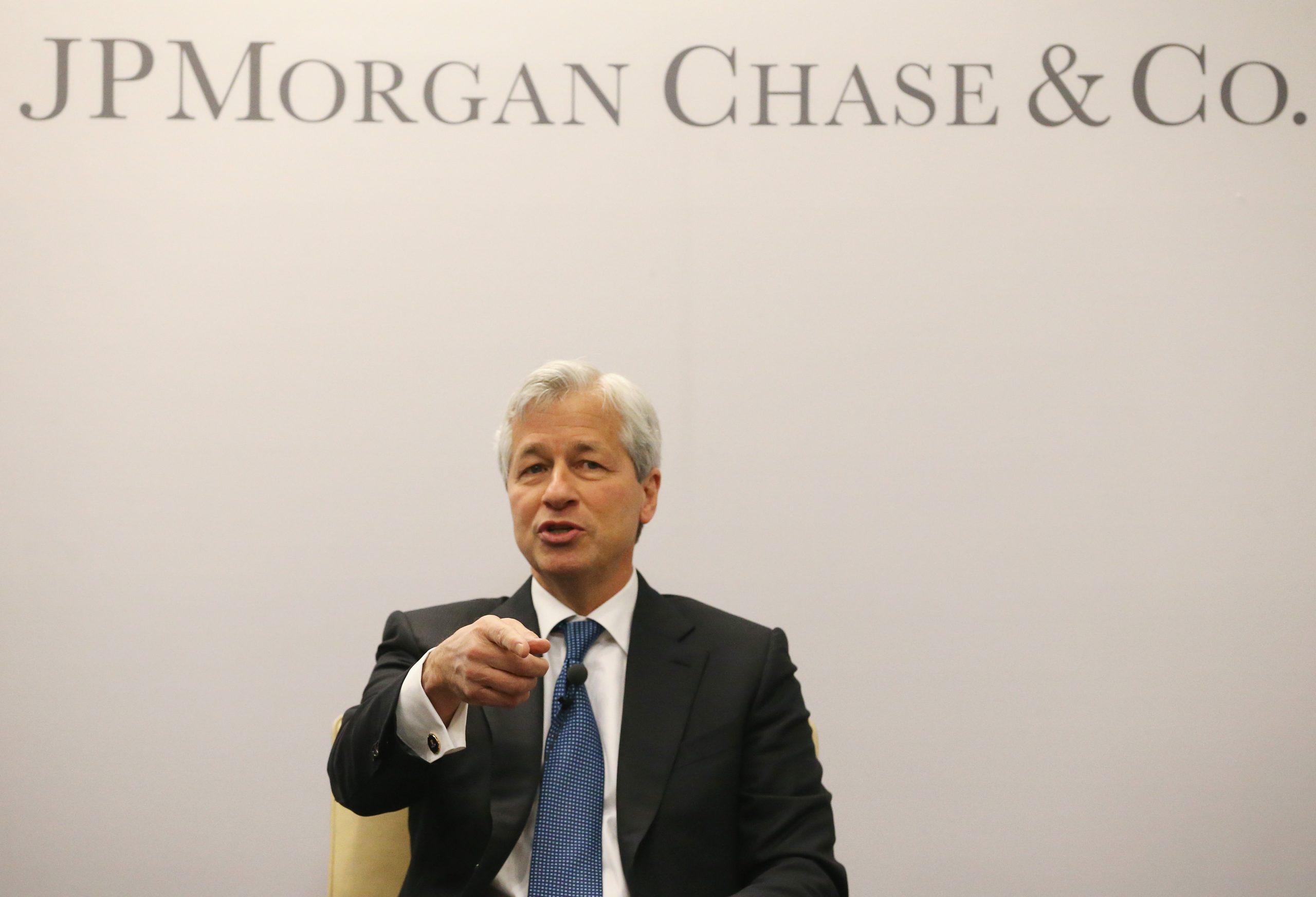
JPMorgan Chase Chief Executive Jamie Dimon has warned Britain’s new government against increasing taxes on banks, adding pressure on Finance Minister John Healey ahead of an Autumn Budget that could include a windfall levy on banks and oil companies.

Dimon met Healey at Downing Street on Wednesday and was also reported to have held talks with newly appointed Prime Minister Andy Burnham, as the government prepares to set out its fiscal plans on Oct. 28.

The meetings come as Burnham and Healey face a difficult balancing act. Britain is dealing with persistent inflation, elevated government borrowing costs and weak economic growth, while the new administration has also pledged to ease living costs, increase defense spending and transfer more political power to local authorities.

Those commitments leave the government searching for additional revenue and spending cuts while remaining within its fiscal rules. Banks, which have generated strong earnings in recent years, are increasingly being viewed by some unions and lawmakers as an attractive source of additional tax revenue.

For the banking industry, however, another tax increase could further raise the cost of operating in one of Europe’s most important financial centers.

British banks already face a substantially higher tax burden than most companies.

They pay the standard 25% corporation tax, alongside a 3% bank surcharge and a separate bank levy on balance sheets ranging from 0.05% to 0.1%. Banks also face broader business taxes, including National Insurance contributions on employee wages, sales taxes and business rates on commercial properties.

According to industry body UK Finance, the combined tax rate on banks’ U.K. operations was 46.4% in 2025.

The prospect of a further windfall tax has therefore triggered a coordinated response from the industry, which argues that policymakers risk prioritizing short-term revenue at the expense of longer-term investment and competitiveness.

David Postings, chief executive of UK Finance, wrote to Healey last month opposing a bank windfall tax. He warned that increasing taxes could “ultimately risk undermining the very tax base the government seeks to protect and grow” while damaging Britain’s international competitiveness.

Postings also highlighted the tax gap between London and competing financial centers including Frankfurt, Dublin and New York.

The argument has gained attention because financial services are one of the industries in which Britain retains a globally important competitive position. Higher taxes may not immediately cause banks to leave London, but they can influence decisions about where new operations, technology investment, senior functions and future capital are allocated.

Antony Jenkins, founder and chief executive of 10x Banking and former Barclays chief executive, told CNBC’s “Squawk Box Europe” that high taxes “act as a disincentive” to investment and growth.

He said financial services, technology, creative industries and higher education were among Britain’s strongest sectors and should be encouraged to expand because of their wider contribution to the economy.

“We’re a world leader in a number of industries: financial services, technologies, creative arts, higher education,” Jenkins said. “These are industries that we need to be supporting and encouraging to grow, to act as a dynamo for the rest of the economy, so obviously there’s a set of very difficult political choices to be made.”

Jenkins also cautioned against creating the perception that successful industries can be taxed without consequences.

“There are no free rides. If you put taxes on industries, that’s going to have a consequence,” he said.

The Political Appeal of Taxing Banks

The government’s dilemma is that the banking sector is also an obvious political target. British lenders have enjoyed bumper profits in recent years, helped in part by higher interest rates and stronger net interest income, the difference between what banks earn on assets such as loans and what they pay on deposits and other liabilities.

That has created a perception among unions and some lawmakers that banks benefited disproportionately from the higher-rate environment and should contribute more to public finances. A windfall tax can therefore be politically attractive because it allows the government to raise revenue from highly profitable companies without directly increasing taxes on households at a time when the cost of living remains a major concern.

But the economic effects are less straightforward.

Banks can respond to higher taxes through a combination of lower shareholder returns, reduced investment, changes to lending prices, lower deposit rates or the relocation of certain activities. The extent to which the burden falls on shareholders, customers or employees would depend on the design of the tax and competitive conditions in the market.

That creates a difficult calculation for Healey. A tax that generates substantial revenue in the short term could become less attractive if it reduces investment or weakens the profitability of the sector that generates billions of pounds in existing tax receipts.

The issue is especially sensitive for JPMorgan.

Dimon has repeatedly made clear that Britain’s tax treatment of banks is a concern for the U.S. lender as it expands its London operations. In May, he said JPMorgan could reconsider its planned 3 million-square-foot tower in London’s Canary Wharf financial district if a new government proved “hostile” toward banks.

Asked whether political instability could change the bank’s view of the project, Dimon said that if a new government was “hostile to the banks, then yes.”

In July, he again criticized Britain’s banking taxes during an appearance on “The Master Investor Podcast with Wilfred Frost,” saying he had “always thought [Britain’s taxes on banks] was wrong.”

“It may sound great, ‘tax the banks’, but it’s $5 billion that my shareholder’s paid on that extra tax,” Dimon said, arguing that such measures could produce adverse consequences.

His intervention ahead of the October budget gives the banking industry’s lobbying effort a particularly prominent voice. JPMorgan is one of the largest global financial institutions and has committed heavily to its London presence, making its investment decisions an important signal for other international banks.

For Burnham and Healey, the challenge is to raise enough revenue to fund their spending priorities without weakening the tax base itself.

Britain’s fiscal position leaves little room for error. Higher borrowing costs increase the cost of servicing government debt, while weak economic growth limits the revenue available from existing taxes. Defense spending adds another pressure at a time when the government is already struggling to reconcile its commitments with its fiscal rules.

That makes a bank windfall tax tempting. But it also makes the potential consequences more punitive.

Against this backdrop, analysts say the major issue facing the government is not simply how much additional tax it can extract from banks in the next budget, but whether the measure can raise meaningful revenue without discouraging investment, reducing London’s competitiveness or prompting banks to shift profitable activities elsewhere.

The banking industry is clearly betting that the answer is no. With Dimon now personally making the case to Britain’s new leadership, the pressure on Healey ahead of Oct. 28 is intensifying.

Intel-Backed Altera Prepares $2 Billion-Plus IPO As Semiconductor Listings Rebound

0

Altera, the programmable-chip maker backed by private-equity firm Silver Lake and Intel, is preparing for an initial public offering that could raise more than $2 billion as early as this year, potentially making it one of the largest U.S. semiconductor listings since Arm Holdings returned to public markets in 2023.

The San Jose, California-based company is expected to confidentially file for an IPO in the coming weeks, people familiar with the matter told Reuters. The listing could come as early as this year, although the timing and size of the offering remain subject to change.

Silver Lake has selected Barclays, Citi, JPMorgan and Morgan Stanley as potential underwriters, three people familiar with the discussions said. The final order of the banks in the underwriting lineup has not yet been determined.

If completed, the offering would mark Altera’s return to the public markets after a decade under Intel and provide an early test of the value created since Silver Lake took control of the business.

The potential deal also comes as U.S. IPO activity accelerates sharply. U.S. initial public offerings, excluding special-purpose acquisition companies, raised a record $137 billion through the end of August, according to Dealogic.

Altera’s offering could add to a pipeline of large technology listings. Anthropic could go public as soon as October and is expected to raise about $100 billion, according to people familiar with the matter. Such a transaction would exceed the reported $75 billion SpaceX raise and potentially push total U.S. IPO proceeds beyond the roughly $156 billion record set in 2021.

From Intel Division to IPO Candidate

Altera’s path to the public markets began with Intel’s $16.7 billion acquisition of the company in 2015. The business became fully standalone last September after Intel agreed to sell a 51% stake to Silver Lake for $4.46 billion, valuing Altera at $8.75 billion. Intel retained a 49% stake.

Silver Lake committed roughly $3.3 billion in equity to the transaction alongside Abu Dhabi-based investment firm MGX, which co-invested in the acquisition.

An IPO at a valuation substantially above the $8.75 billion transaction value would therefore represent a rapid increase in Altera’s implied worth under its new ownership structure.

The potential listing also indicates the appeal of separating specialized semiconductor businesses from larger chip companies as investors place greater value on individual growth opportunities.

Altera makes programmable chips that can be adapted for different applications rather than being designed for a single fixed function. Its products are used in data centers, telecommunications networks, industrial equipment, aerospace and defense systems, as well as artificial intelligence applications.

The company has increasingly emphasized AI and robotics as potential growth markets.

Chief Executive Raghib Hussain said in a July interview with Reuters that Altera was “preparing for an eventual public listing” as it pursued opportunities in artificial intelligence and robotics.

The planned IPO would give public-market investors direct exposure to Altera’s growth prospects at a time when demand for specialized computing infrastructure is expanding, while also providing a market-based valuation for a company that spent most of the past decade inside Intel.

A Test for Intel’s Restructuring

The listing is equally relevant to Intel, which continues to undergo a sweeping restructuring under CEO Lip-Bu Tan. Since taking over in 2025, Tan has pursued asset sales, cost reductions and new sources of capital as Intel attempts to restore growth and rebuild investor confidence.

Altera’s separation fits into that broader effort. Intel retains a 49% stake, meaning a successful IPO could establish a public-market valuation for an asset that was previously embedded within Intel’s much larger corporate structure.

Intel has also attracted significant outside capital as it seeks to strengthen its finances and fund its semiconductor ambitions. Last year, the U.S. government agreed to acquire a 9.9% stake in Intel through an $8.9 billion investment tied to previously awarded semiconductor and defense funding.

The company has separately turned to public markets to finance its manufacturing expansion and artificial intelligence ambitions. In August, Intel raised about $20 billion through a follow-on stock offering, one of the largest equity offerings by a U.S. technology company, with proceeds earmarked for capital expenditures and working capital.

The Altera IPO is expected, therefore, to provide more than a liquidity event for Intel. It would potentially demonstrate that assets carved out during the restructuring can command substantial standalone valuations while allowing Intel to retain exposure through its remaining stake.

For Silver Lake, the transaction offers a different test. The private-equity firm acquired control of Altera at an $8.75 billion valuation and is now positioning the business for a public listing potentially worth considerably more. That creates a relatively short timeline between acquisition and proposed IPO, making the deal an important measure of how quickly investors are willing to revalue semiconductor businesses linked to AI, data centers and specialized computing.

The broader market environment is favorable for a deal of Altera’s size. Semiconductor companies have benefited from investor interest in AI infrastructure, while the reopening of the U.S. IPO market has created a more receptive environment for large technology offerings.

But the public market will ultimately judge Altera on its own growth prospects rather than simply its association with Intel or Silver Lake.

The company operates across industries ranging from telecommunications and industrial equipment to aerospace, defense, and AI, giving it a broader addressable market than a pure-play AI chipmaker. Its ability to translate that exposure into sustained growth will be central to the IPO valuation.

The proposed offering consequently arrives at the intersection of three trends: Intel’s attempt to reshape itself, Silver Lake’s effort to unlock value from a former Intel division, and a renewed wave of semiconductor and technology listings.

If Altera proceeds with a $2 billion-plus offering, it would give investors one of the clearest new public-market opportunities to assess the value of a specialized chipmaker emerging from a major corporate restructuring. It would also put a price on Silver Lake’s bet that Altera can grow faster and command a stronger valuation as an independent company than it could as part of Intel.

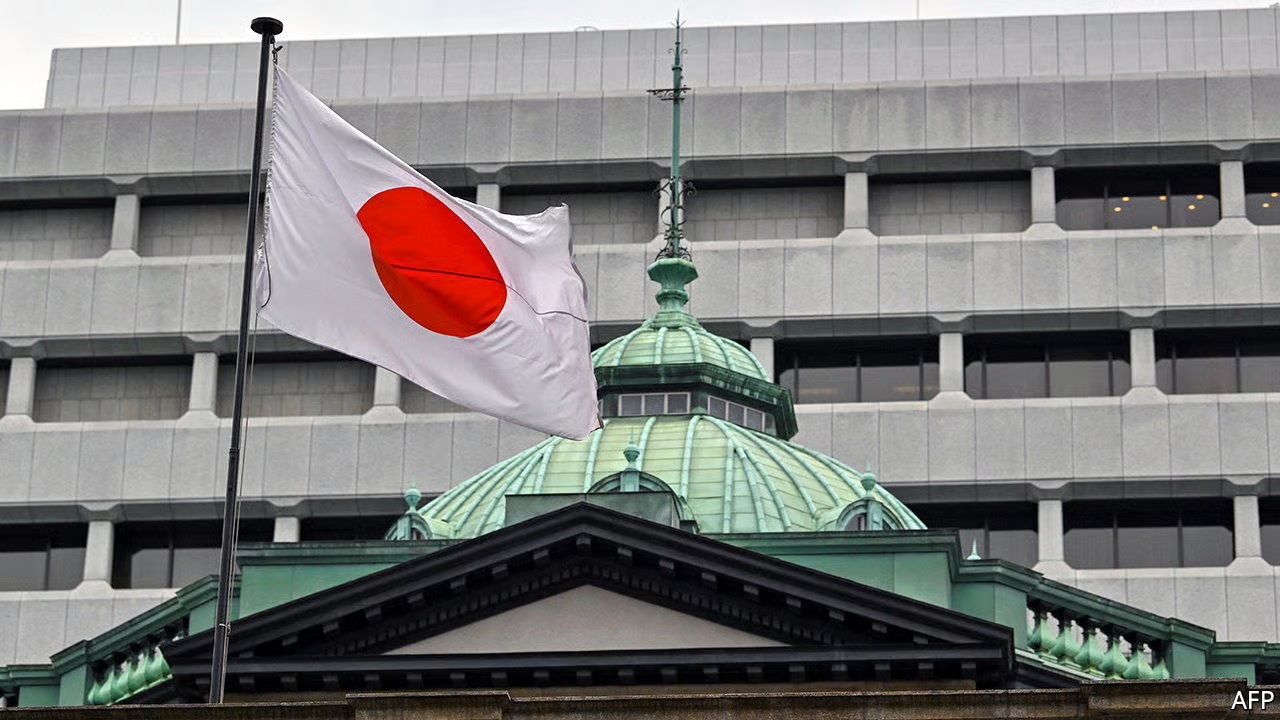
BOJ Set to Raise Rates to 1.25% as Inflation Risks Build

0

The Bank of Japan is expected to raise interest rates by 25 basis points next week and could signal a faster pace of tightening if persistent price pressures increase the risk that inflation will overshoot its target, according to four people familiar with the central bank’s thinking cited by Reuters.

A move to 1.25% would take the BOJ’s policy rate to its highest level in 31 years, marking another significant step in Japan’s gradual departure from decades of ultra-loose monetary policy.

The central bank last raised rates in June, meaning another increase just three months later would point to a potentially quicker tightening cycle. A further hike before the end of the year would strengthen that signal, particularly if inflation and wage trends continue to support the BOJ’s view that Japan is moving toward a more durable normalization of prices.

The sources, who spoke on condition of anonymity because they were not authorized to speak publicly, said many BOJ officials increasingly see the conditions for another rate increase falling into place. The economy is on track for a moderate recovery, while underlying price pressures are strengthening.

Even with a move to 1.25%, the BOJ expects financial conditions to remain sufficiently loose to support economic activity, the sources said.

“With underlying inflation so close to 2%, the BOJ needs to be extra mindful of upside price risks,” one source said, a view echoed by the other sources.

The BOJ raised its policy rate to 1% in June and indicated that borrowing costs would continue to rise if economic and price developments evolved broadly in line with its forecasts. It left rates unchanged in July but warned that inflation risks could intensify as a result of pressures linked to the Middle East conflict, a weak yen and strong demand associated with the artificial intelligence sector.

That combination has complicated the central bank’s policy calculations. The yen’s recent appreciation should reduce imported inflation by lowering the local-currency cost of overseas goods and commodities. But the currency’s earlier weakness continues to feed through to prices, while a renewed surge in energy costs threatens to offset some of the relief from the stronger yen.

Markets Look Beyond The September Hike

A September increase is already fully priced into financial markets, shifting attention toward what BOJ Governor Kazuo Ueda says about the path that follows.

Some investors had considered the possibility of a surprise 50-basis-point increase, particularly given the extent to which markets have already anticipated the 25-basis-point move. But the absence of an abrupt acceleration in wages and consumer prices makes a larger increase unlikely, according to the sources.

The more probable outcome is therefore a conventional 25-basis-point increase followed by a period in which policymakers assess incoming data before deciding whether another hike is warranted.

Recent comments from BOJ board member Kazuyuki Masu also point away from an aggressive move.

“Underlying inflation is about to reach 2%, but we don’t see it sharply overshooting that level,” Masu said Thursday, suggesting there is no immediate inflation shock that would require the central bank to deliver a larger increase.

A Reuters poll of analysts shows expectations for the policy rate to reach 1.25% at the September 17-18 meeting, 1.5% by the end of March next year and 1.75% in the second quarter of 2027. Most analysts expect the eventual terminal rate to be at least 1.75%.

But the BOJ itself is not thought to have settled on a specific terminal rate.

The sources said policymakers are likely to judge how far rates should rise based on the delayed effects of previous increases on economic activity and the extent to which companies pass higher input costs through to households. That leaves Ueda with limited incentive to provide markets with a precise timetable for future increases. Instead, he could repeat the message delivered in July that the BOJ could accelerate tightening if it concluded that financial conditions remained excessively loose.

The absence of a predetermined terminal rate also reflects divisions within the BOJ over the strength and persistence of inflation. Some policymakers believe underlying inflation has already reached the bank’s 2% target, while others remain more cautious.

Board member Toichiro Asada dissented from the June rate increase.

The next policy meetings after September are scheduled for October, December and January, giving the BOJ several opportunities to adjust its pace if economic and price data change materially.

Oil Shock Complicates Yen-Driven Disinflation

The latest inflation data are reinforcing the BOJ’s concern about upside risks. Wholesale inflation rose 7.6% year-on-year in August, pointing to mounting cost pressures that could eventually feed into consumer prices. The BOJ expects those pressures to push consumer inflation back above its 2% target in the coming months.

In its July quarterly projections, the central bank forecast core consumer inflation at 2.5% for the fiscal year ending March 2027 and 2.4% for the following fiscal year, before returning to 2% in the subsequent year.

The yen has provided some relief. It has gained more than 6% since Japan and the United States intervened jointly in late July, raising expectations that a stronger currency will reduce import costs.

But that benefit is now being challenged by energy markets. Brent crude has risen above $100 a barrel, threatening to raise fuel and transportation costs across the Japanese economy and potentially complicate the BOJ’s effort to distinguish temporary supply shocks from sustained domestic inflation.

That is likely to be one of the central questions surrounding next week’s decision. A 25-basis-point hike is largely expected, but the more consequential signal may come from Ueda’s assessment of whether rising energy prices are temporary, whether companies are increasingly passing costs on to consumers, and whether underlying inflation is becoming sufficiently persistent to justify a faster tightening cycle.

Currently, the challenge for the BOJ is to normalize monetary policy without tightening so aggressively that it undermines the recovery it is counting on to make inflation durable. The September meeting is thus expected to mark less a debate over whether rates should rise than the beginning of a more consequential debate over how quickly Japan can move toward a higher-rate economy.