DD
MM
YYYY

PAGES

DD
MM
YYYY

spot_img

PAGES

Home Blog Page 3

Ethereum’s Onchain Conviction Strengthens Even as Price Struggles, MoonPay Acquires Decent and Launches MoonPay Trade

0

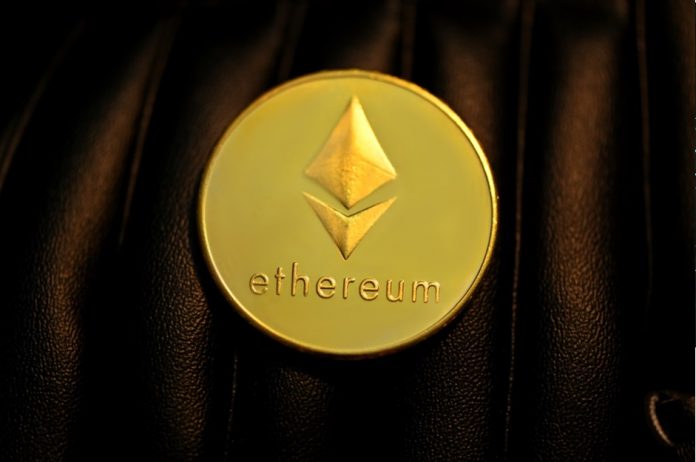
Ethereum’s onchain conviction continues to strengthen even as its market price struggles to keep pace with competing layer one narratives across the digital asset ecosystem. Ethereum’s onchain conviction remains strong despite price weakness near $2,130.

Over 39 million ETH, about 31% of supply, is staked. Exchange balances fell to 14.8 million ETH, the lowest since 2016. Corporations and long-term holders accumulate, reducing liquid supply and reflecting deep confidence amid short-term market selling.

Despite periods of relative underperformance, staking activity on Ethereum has steadily climbed, signaling that long-term participants are increasingly prioritizing yield generation and network security over short-term price appreciation. This divergence between price action and staking behavior highlights a structural shift in how capital is being allocated within crypto markets.

Staking on Ethereum operates as both an economic incentive mechanism and a security guarantee for the network’s proof-of-stake consensus model. As more ETH is locked into validator contracts, circulating supply becomes more constrained, theoretically tightening sell-side liquidity.

However, this supply dynamic does not always translate into immediate price appreciation, particularly in macro environments dominated by interest rate expectations and risk-off sentiment. Instead, staking yields act as a counterbalance, offering participants a predictable return stream denominated in ETH.

Staking locks Ethereum to secure the network and earn yield, replacing miners after the Merge. With 39 million ETH, roughly 31% of supply staked, it reduces liquid supply, strengthens consensus security, enables institutional participation, and reflects long-term holder conviction despite price volatility and short-term market pressure.

The rise of liquid staking protocols such as Lido has further accelerated participation. These systems allow users to stake ETH while maintaining liquidity through derivative tokens, effectively lowering the opportunity cost of securing the network. As a result, institutional allocators and retail holders alike are increasingly treating staking as a baseline yield strategy rather than an optional commitment.

One important driver behind this trend is the maturation of institutional participation in Ethereum staking markets. Custodial staking solutions and regulated access points have reduced operational barriers, allowing larger pools of capital to participate without managing validator infrastructure directly.

This professionalization of staking infrastructure reinforces the perception of Ethereum as a yield-bearing digital bond-like asset, particularly in portfolios seeking diversified onchain income streams. At the same time, macro liquidity cycles continue to exert strong influence over ETH valuation dynamics.

Even as staking reduces circulating supply growth, broader risk asset repricing often dominates short-term performance. This creates a tension between fundamental network strengthening and market narrative volatility, a pattern that has become increasingly common in post-staking upgrade cycles.

Market participants also point to Ethereum’s evolving role in decentralized finance and tokenization infrastructure as a reinforcing mechanism behind rising staking participation. As settlement activity, smart contract deployment, and layer two scaling solutions expand, ETH’s function as both gas asset and security collateral deepens.

This dual utility increases the incentive to hold and stake rather than trade, particularly among participants who view the network as core financial infrastructure rather than a speculative asset.

Over time, the accumulation of staked ETH may serve as a structural floor for network participation and validator engagement, reinforcing decentralization and resilience across the protocol layer regardless of price fluctuations in Ethereum itself. Staking signals long term alignment between users, validators, and protocol design incentives across time.

MoonPay Acquires Decent and Launches MoonPay Trade

MoonPay acquires Decent and launches MoonPay Trade marks a notable expansion in the company’s strategy to evolve from a crypto payments onramp provider into a broader trading and liquidity infrastructure platform within the digital asset ecosystem.

The acquisition signals a deliberate move toward vertical integration where fiat onboarding trading execution and settlement increasingly converge under a single user experience layer In parallel. MoonPay Trade introduces a unified interface designed to streamline access to multiple liquidity venues allowing users to move between fiat and crypto markets with reduced friction and improved execution efficiency.

The acquisition of Decent adds a new layer of technical capability and product depth to MoonPay’s growing ecosystem particularly in the realm of trade routing infrastructure and order execution logic. While MoonPay has historically focused on simplifying fiat to crypto onboarding through cards bank transfers and embedded checkout flows this acquisition suggests a shift toward capturing more of the transaction lifecycle.

Decent’s capabilities are expected to enhance routing efficiency reduce slippage and improve access to fragmented liquidity across centralized and decentralized venues.

This integration also positions MoonPay more directly against exchange incumbents and neobrokers competing for retail and institutional flow. MoonPay Trade itself represents an attempt to unify trading functionality with onboarding infrastructure into a cohesive product stack. Users are expected to benefit from aggregated pricing smarter order routing and potentially lower effective spreads compared to traditional exchange interfaces.

The launch reflects a broader industry trend where payment processors are increasingly absorbing brokerage like functionality blurring the lines between fintech wallets exchanges and liquidity aggregators. For users this convergence may reduce onboarding complexity while improving capital efficiency across portfolios especially in volatile market conditions.

Strategically the move reflects a maturing digital asset infrastructure landscape where differentiation increasingly depends on execution quality liquidity access and user experience rather than simple asset availability.

As regulatory clarity improves in major jurisdictions platforms like MoonPay are incentivized to expand vertically into trading and market making adjacent services. The combination of Decent and MoonPay Trade may therefore be interpreted as a step toward building a full stack financial gateway for digital assets bridging fiat rails and crypto markets in a more seamless and composable way.

In the broader context of crypto market infrastructure evolution this acquisition also underscores the growing importance of embedded finance models where user journeys begin outside traditional exchanges and increasingly originate within wallets fintech apps and neobanking platforms. By consolidating onboarding and trading under one umbrella MoonPay reduces dependency on external intermediaries while capturing more value per user interaction.

At the same time Decent brings specialized infrastructure that can optimize execution paths and enhance cross venue liquidity discovery which is increasingly critical in fragmented global crypto markets. Looking forward MoonPay Trade could serve as a foundational layer for hybrid trading experiences blending centralized efficiency with decentralized access potentially reshaping how retail and institutional participants engage with digital assets.

The deal reflects a competitive landscape where payments companies exchanges and fintech platforms are converging into vertically integrated ecosystems capable of handling onboarding trading settlement and custody within a single stack. This convergence may define the next phase of crypto infrastructure maturation as user expectations shift toward seamless global liquidity access without friction and unified financial interfaces across asset classes at scale for global users overall impact.
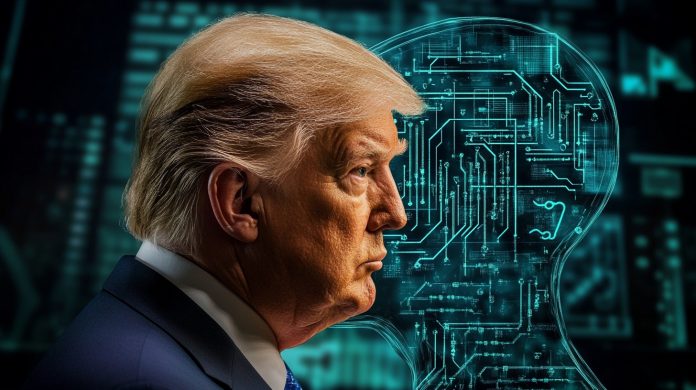
U.S.-China AI Rivalry Expands Across Asia After Trump-Xi Meeting, Washington Pushes for American Tech Adoption

0

The United States is intensifying efforts to ensure American artificial intelligence technologies become embedded across Asian markets, opening a new front in the escalating technological rivalry between Washington and Beijing.

Speaking on the sidelines of the Asia-Pacific Economic Cooperation trade ministers’ meeting in Suzhou, senior U.S. State Department official Casey K. Mace said Washington is actively promoting American AI systems across the region as China rapidly scales lower-cost domestic alternatives.

“We’re very active in promoting U.S. AI options and solutions,” Mace told CNBC, underscoring how AI diplomacy is increasingly becoming part of broader U.S. economic and geopolitical strategy in Asia.

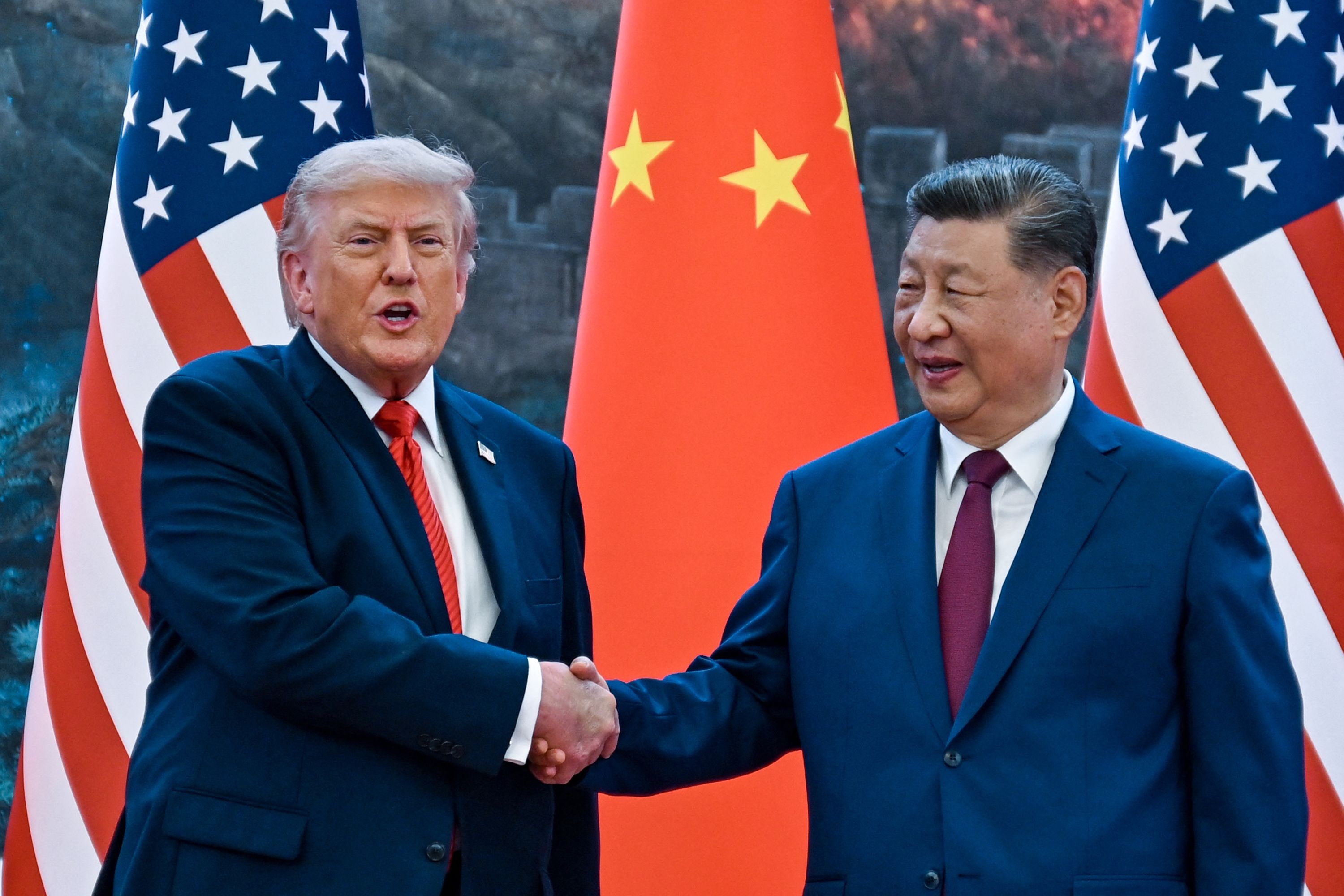
The comments come just days after Donald Trump traveled to China alongside leading American technology executives, signaling how central AI and advanced computing have become to the competition between the world’s two largest economies.

At stake is not merely commercial dominance, but influence over the technological infrastructure likely to underpin future industries, supply chains, healthcare systems, and digital governance frameworks across the Asia-Pacific region.

Washington has spent the past several years restricting China’s access to advanced U.S. semiconductors and AI hardware, particularly high-end chips used for training frontier AI models. Those export controls were designed to slow Beijing’s progress in military AI, advanced computing, and strategic technologies.

China, meanwhile, has accelerated efforts to build a self-sufficient technology ecosystem. Beijing has long blocked major American platforms such as Google and Meta Platforms’ Facebook from operating in mainland China, while Chinese technology firms increasingly offer lower-cost alternatives to U.S. software, cloud infrastructure, and AI systems across developing markets.

The emerging battle is now shifting toward third countries, especially across Asia, where both Washington and Beijing are seeking to shape standards, partnerships, and long-term digital dependencies.

Mace said U.S. technology firms will participate in an APEC “digital week” event in Chengdu in July, where workshops will focus on practical AI applications, including food traceability, genome sequencing, and biotechnology. Although China is hosting the broader APEC process this year, Mace said the forum provides Washington with an opportunity to engage all 21 member economies simultaneously.

The official declined to identify which American firms would participate, though the involvement of U.S. companies highlights how government and private-sector coordination is becoming increasingly central to America’s AI diplomacy.

Mace also pushed back against suggestions that Washington was simply attempting to impose “best in class” U.S. technologies over Chinese competitors. Instead, he framed the effort as expanding market access and commercial engagement for American firms operating in Asia.

Still, the broader objective is increasingly difficult to separate from geopolitical competition.

Chinese technology companies, including cloud providers and AI developers, are moving aggressively into overseas markets with offerings that are often cheaper and less restricted than U.S. alternatives. That creates growing pressure on Washington to ensure allied and partner nations continue adopting American computing infrastructure and software ecosystems.

“There is pressure to distribute American compute globally,” Ryan Fedasiuk, a fellow at the American Enterprise Institute, told CNBC last week.

“The Trump administration is right in trying to advocate and implement with this,” Fedasiuk said. “But it will compete with Chinese hyperscalers and Chinese AI labs that are attempting to do exactly the same.”

The competition is increasingly extending beyond conventional AI applications into strategically sensitive sectors such as biotechnology and genomic research. Fedasiuk noted he is closely watching whether Washington and Beijing can coordinate on safeguards involving DNA synthesis vendors to reduce risks tied to engineered pathogens and future pandemics.

That area illustrates a growing paradox in the U.S.-China technology rivalry: the two powers are simultaneously competitors and necessary counterparts in managing risks associated with rapidly advancing technologies.

Signs of limited cooperation may already be emerging. China’s foreign ministry confirmed this week that Beijing and Washington have agreed to begin discussions on the safe development of AI following recent high-level engagements between Trump and Chinese President Xi Jinping.

Mace described the atmosphere surrounding recent talks as “positive,” attributing the tone partly to what he called the “very successful meeting” between the two leaders in Beijing.

Yet beneath the diplomatic language, the competition is intensifying.

For Washington, exporting American AI systems is becoming as much a national security objective as a commercial one. U.S. officials increasingly view control over global AI infrastructure, cloud computing and advanced semiconductors as foundational to maintaining economic leadership and geopolitical influence. China, meanwhile, sees technological self-reliance and overseas digital expansion as essential to insulating itself from U.S. restrictions and reshaping the global technology order around alternatives less dependent on American firms.

Trump Pulls Back on AI Oversight Order Amid Internal Republican Divide Over Cybersecurity Risks

0

U.S. President Donald Trump abruptly halted plans to sign a long-awaited executive order on artificial intelligence after concerns emerged inside the White House and among influential allies that the proposal could slow America’s AI race with China and create the foundation for future federal control over advanced models.

A draft of the order obtained by POLITICO showed the administration was preparing to introduce a voluntary oversight framework for frontier AI systems developed by companies such as Anthropic, OpenAI, Google, and xAI. Under the proposal, developers of powerful AI models would be encouraged to provide the U.S. government with access to systems as much as 90 days before public release.

The draft order represented one of the clearest signs yet that the Trump administration is struggling to balance two competing priorities: maintaining America’s technological lead in AI while responding to growing warnings that increasingly capable systems could supercharge cyberattacks, infrastructure sabotage, and digital espionage.

Trump acknowledged Thursday that he personally intervened to stop the order from moving forward.

“I didn’t like certain aspects of it,” Trump told reporters, admitting he feared parts of the proposal could hamper U.S. competitiveness against China.

The reversal came after weeks of mounting debate inside Trump’s political coalition, exposing widening divisions between national security hawks demanding tighter AI safeguards and Silicon Valley allies who oppose any framework that could evolve into mandatory regulation.

The draft order repeatedly emphasized that participation would remain voluntary, appearing designed to calm concerns from the tech sector.

“Nothing in this section shall be construed to authorize the creation of a mandatory governmental licensing, preclearance, or permitting requirement for the development, publication, release, or distribution of new AI models,” the document stated.

Even so, the proposal triggered resistance from prominent technology figures aligned with Trump, including venture capitalist David Sacks, who reportedly warned White House officials that voluntary reviews could eventually become de facto government approval systems.

The dispute is seen as another example of how rapidly the political conversation around AI has shifted in Washington following the emergence of powerful cybersecurity-focused models such as Anthropic’s Mythos and OpenAI’s GPT-5.5-Cyber. Both systems have intensified fears among lawmakers and intelligence officials that AI tools could dramatically lower the barrier for sophisticated cyber warfare, malware generation, and infrastructure attacks.

The executive order draft sought to address those concerns partly through existing criminal statutes rather than new regulations. It directed the attorney general to enforce the Computer Fraud and Abuse Act against anyone using AI to illegally access or damage computer systems.

The White House had reportedly planned a formal signing ceremony on Thursday afternoon with leading AI executives in attendance before the event was suddenly postponed.

The debate surrounding the order also underscores a broader transformation within the Republican Party. Traditionally skeptical of federal regulation, sections of Trump’s populist base are increasingly calling for stronger oversight of advanced AI systems, arguing that major technology companies cannot be trusted to police themselves.

Former Trump adviser Steve Bannon and conservative activist Amy Kremer have been among the most vocal proponents of stricter AI guardrails. Their camp has urged the administration to require government security reviews before the release of highly capable models.

The pressure intensified after Anthropic launched Mythos under its tightly controlled “Project Glasswing” initiative. The model is being used by organizations including Amazon, Microsoft, Nvidia, and Apple for defensive cybersecurity applications.

Anthropic has warned that Mythos possesses unusually advanced coding and vulnerability-discovery capabilities that could potentially be weaponized if widely distributed without safeguards. The Pentagon has also been using the model to identify software vulnerabilities across government systems, further elevating concerns inside Washington.

National security officials appear increasingly worried about what some lawmakers describe as “sudden frontier AI capability jumps,” where models rapidly acquire unexpected capabilities that outpace existing oversight structures.

At the same time, the technology industry argues that overregulation could undermine the United States in its intensifying technological rivalry with China. AI executives and investors have consistently warned that slowing domestic model deployment could allow Chinese competitors to close the gap in generative AI and advanced computing infrastructure.

That concern has become more acute as Chinese technology companies accelerate development of domestic AI chips and models in response to U.S. export restrictions. Firms such as Alibaba Group and Huawei are aggressively expanding their AI ecosystems while Beijing pours billions into semiconductor self-sufficiency.

The political balancing act facing Trump is complicated further by the administration’s broader AI strategy, which has largely favored industry-led innovation over direct federal intervention. Since returning to the office, Trump has positioned AI leadership as central to U.S. economic and geopolitical dominance, while simultaneously facing pressure from security officials warning that unchecked frontier AI systems could create systemic risks.

The now-delayed executive order appeared to reflect an attempt at compromise: avoiding formal regulation while encouraging companies to cooperate with federal agencies on high-risk models.

Whether that middle-ground approach survives remains uncertain. Administration officials have not said when the order might return or what changes Trump wants made before reconsidering it.

Elon Musk’s Fortune Hits Record $722bn After SpaceX IPO Filing Removes Major Leverage Assumption

0

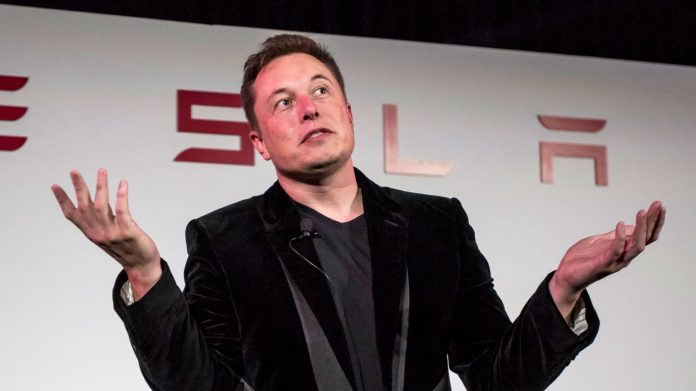
Elon Musk’s estimated net worth surged by $45 billion on Thursday to a new all-time high of $722 billion, propelled by fresh transparency from SpaceX’s IPO prospectus that dramatically lowered perceived risks tied to his personal finances.

The Bloomberg Billionaires Index adjusted after the filing revealed that Musk had pledged far fewer SpaceX shares as collateral for personal loans than previously assumed. Bloomberg had long carried a conservative $45 billion liability based on Musk’s 2019 comments about borrowing against his SpaceX holdings.

The prospectus showed that as of May 1, he had pledged only 238,000 shares out of his 849.5 million total stake, less than 0.3%, as security for personal indebtedness. Removing that shadow liability instantly supercharged his calculated wealth.

This marks Musk’s largest single-day gain on record and brings his year-to-date increase to an astonishing $103 billion, a sum larger than the total net worth of most billionaires. He is now richer than the next two people on the Bloomberg list, Alphabet co-founders Larry Page and Sergey Brin, combined.

The SpaceX filing offered rare visibility into one of the world’s most valuable private companies and Musk’s ownership structure. He holds approximately 50% of SpaceX, while owning about 11% of Tesla — a stake that could potentially double if he meets the performance milestones in his latest compensation package.

The reduced leverage assumption not only boosted his net worth but also improved his overall financial flexibility, lowering perceived personal risk and potentially easing future borrowing for ambitious projects.

This adjustment reflects how much of Musk’s fortune had been discounted due to uncertainty around his use of company shares as collateral. With clearer numbers, markets are now pricing him as significantly less leveraged than previously feared, which could have positive ripple effects on investor sentiment toward both Tesla and SpaceX as it prepares to go public.

Explosive Growth Across Musk’s Ecosystem

Musk’s wealth surge is rooted in the extraordinary valuation growth of his companies. Tesla’s stock has risen roughly 14-fold since the start of 2020, driving its market capitalization to around $1.3 trillion. SpaceX, meanwhile, has seen its valuation rocket approximately 20-fold between spring 2020 and December 2025. The rocket and satellite business, which also acquired Musk’s xAI in February, is now targeting a public valuation north of $1.5 trillion.

These gains are fueled by Tesla’s leadership in electric vehicles, energy storage, and autonomous driving, and SpaceX’s dominance in reusable launch systems, Starlink satellite broadband, and increasingly sophisticated space infrastructure. The integration of xAI further strengthens Musk’s position at the intersection of AI, space, and automotive technologies.

At $722 billion, Musk’s fortune now exceeds the market capitalization of most major global corporations, including Exxon Mobil, Visa, and Intel. It is believed that this scale gives him unparalleled financial firepower to fund moonshot initiatives, influence industries, and even shape public discourse. It also amplifies his already significant political and regulatory influence, especially as SpaceX and Starlink play critical roles in government contracts and global connectivity.

However, the concentration of such wealth in one individual continues to draw concern. Musk’s companies operate at the frontier of strategic technologies, from AI and space to energy and communications, areas where national security, competition policy, and geopolitical considerations often intersect. His ability to move markets with a single statement or tweet adds another layer of volatility to an already dynamic portfolio.

Musk’s trajectory remains closely tied to the success of his high-stakes bets. Tesla is pushing aggressively into robotaxis, humanoid robots (Optimus), and energy storage, while SpaceX continues to advance Starship development for Mars missions and expand Starlink coverage. The potential IPO of SpaceX could unlock even more value and liquidity in the coming years.

Despite the record wealth, Musk’s fortune has always been volatile, swinging dramatically with Tesla share price movements and shifts in private valuations. The current surge, however, feels more structural, driven by genuine business momentum and improved transparency rather than pure market exuberance.

In many ways, Musk embodies the modern tech wealth phenomenon: a single visionary whose companies sit at the center of multiple transformative megatrends — electrification, autonomy, space commercialization, and artificial intelligence. As these sectors continue to expand, his financial influence is likely to grow even further, for better or worse.

Wall Street Rally Extends as Iran Diplomacy, Earnings Strength Push Dow to Record High

0

U.S. stocks climbed sharply on Friday, with the Dow Jones Industrial Average hitting an intraday record high, as investors grew more optimistic that diplomatic efforts could prevent a deeper Middle East conflict.

The rally shows how investors continue to prioritize earnings momentum and the artificial intelligence spending boom even as geopolitical risks, elevated oil prices, and inflation concerns linger in the background.

The benchmark S&P 500 moved closer to its eighth consecutive weekly gain, marking its longest winning streak since late 2023, while the tech-heavy Nasdaq Composite remained near record territory. The Dow Jones Industrial Average surged more than 400 points during the session as industrial, healthcare, and technology shares advanced broadly.

Markets drew support from comments by U.S. Secretary of State Marco Rubio, who said Washington had made some progress in talks with Iran, though negotiations remained unresolved. Iran’s foreign ministry acknowledged discussions were continuing but stressed that significant differences remained between both sides.

The diplomatic developments offered investors a measure of relief after months of market anxiety surrounding the war involving the United States, Israel, and Iran, which has threatened global energy supplies and pushed oil prices sharply higher this year.

“Earnings season looked really good and the economic data, save a few outliers, looked pretty solid so fundamentally the picture looks really solid,” said James St. Aubin, chief investment officer at Ocean Park Asset Management.

“The war has been one major speed bump along the road for at least the equity market but I think the headlines today looked encouraging and that was probably helping at the margin,” he added.

The market’s rebound also reflected easing pressure from the bond market. Yields on long-dated Treasuries retreated after spiking earlier in the week on concerns that energy-driven inflation could force interest rates to remain elevated longer than expected.

The benchmark 10-year Treasury yield slipped to around 4.56%, calming fears that a sustained move above 5% on long-term bonds could destabilize richly valued equities, particularly in the technology sector.

“The bond market seems to be cooling off and yields are coming down from where they were starting to peak earlier this week and I think that’s very encouraging too,” St. Aubin said.

Technology and semiconductor stocks remained central to the rally, even as investors rotated selectively within the sector. The Philadelphia Semiconductor Index jumped 2.5%, extending gains fueled by the global AI infrastructure boom that continues to drive spending on chips, servers, and data centers.

Shares of Qualcomm surged 12% after upbeat investor sentiment around AI-enabled mobile computing and semiconductor demand, while Nvidia slipped modestly following its recent record-breaking rally. Nvidia remains one of the biggest beneficiaries of the AI spending race, with hyperscalers and governments worldwide pouring billions into computing infrastructure.

Investor appetite for AI-linked hardware spread beyond semiconductors into the broader computer industry after Lenovo Group reported a stronger-than-expected 27% rise in quarterly revenue, signaling renewed demand for PCs and enterprise hardware as corporations upgrade systems to handle AI workloads.

The results triggered a sharp rally in U.S. computer makers. Dell Technologies jumped 17% to a record high, while HP Inc. surged more than 15%.

The gains supported a growing market narrative that the AI boom is no longer confined to a handful of mega-cap technology firms but is spreading across hardware, software, and enterprise infrastructure providers.

Elsewhere, corporate deal activity and earnings continued to shape trading. Estée Lauder climbed 12% after the cosmetics maker and Spanish fragrance group Puig ended merger discussions, easing investor concerns about integration risks and deal financing in a volatile market environment.

Workday also advanced after the enterprise software company reported quarterly revenue and profit above Wall Street expectations, adding to evidence that corporate technology spending remains resilient even as businesses face higher borrowing costs and geopolitical uncertainty.

The broader market tone suggested investors remain willing to look past near-term macroeconomic risks as long as earnings growth and AI-related spending continue to offset concerns about inflation and slowing global growth.

Still, underlying tensions remain visible beneath the rally.

Higher gasoline prices linked to instability in the Persian Gulf continue to pressure consumers and complicate the outlook for inflation. The appointment of Kevin Warsh as Federal Reserve chair comes at a delicate moment for policymakers trying to balance economic growth with persistent price pressures.

The war in the Middle East has already added fresh uncertainty to the inflation outlook, especially if disruptions to shipping through the Strait of Hormuz worsen or oil prices remain elevated for a prolonged period.

For now, however, investors appear focused on the combination of robust earnings, cooling bond yields, and hopes that diplomacy may prevent a broader regional escalation. Market breadth reflected that optimism. Advancing stocks outpaced decliners by nearly two-to-one on the New York Stock Exchange, while the S&P 500 recorded dozens of fresh 52-week highs.

The CBOE Volatility Index, Wall Street’s closely watched fear gauge, fell to its lowest level in more than two weeks ahead of the Memorial Day holiday weekend, signaling that investor anxiety has eased significantly from the peaks seen earlier during the Iran conflict escalation.