DD
MM
YYYY

PAGES

DD
MM
YYYY

spot_img

PAGES

Home Blog Page 4595

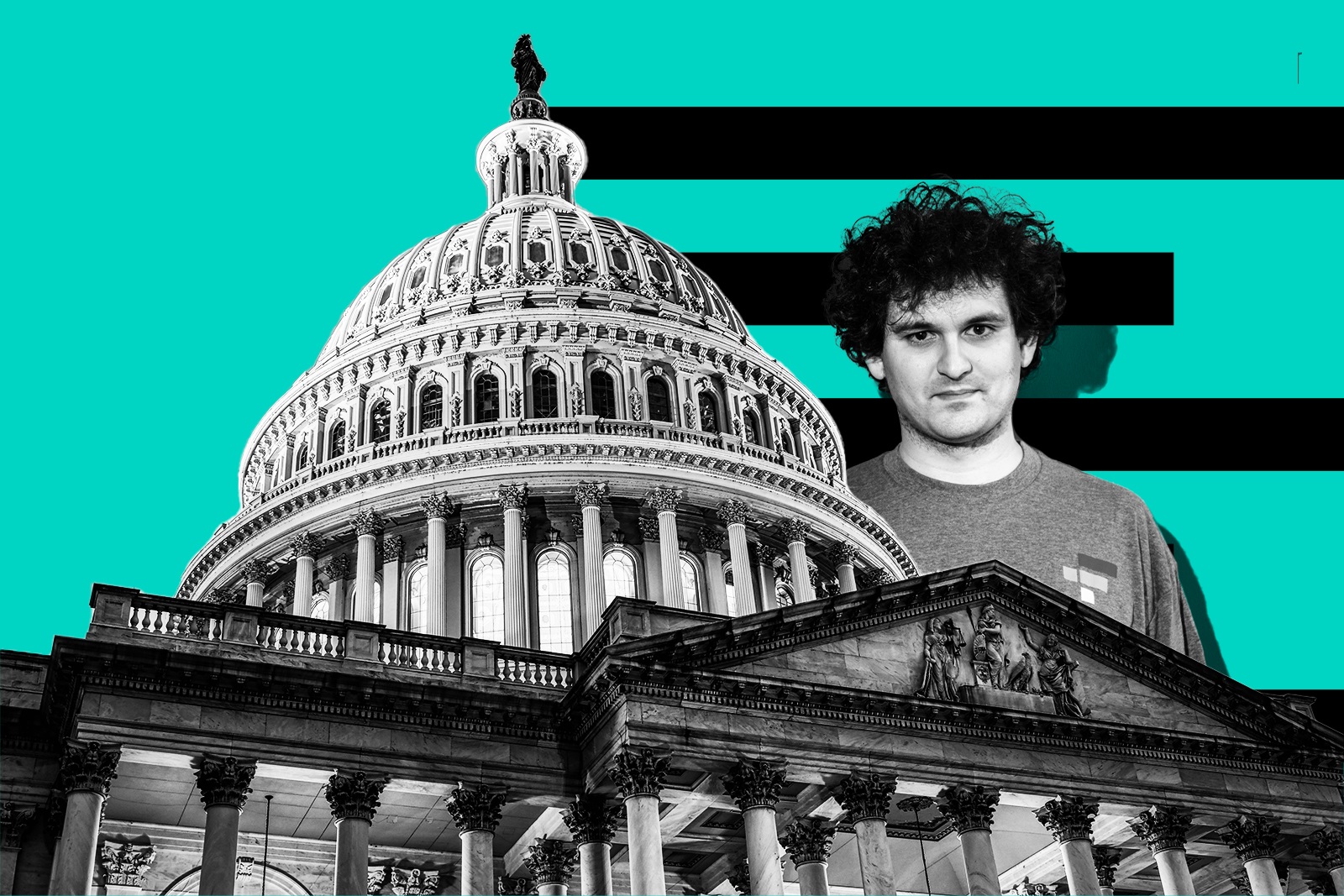
Bankman-Fried Agrees to Testify Before Congress Amidst Call for His Conviction

0

Sam Bankman-Fried, the founder and former CEO of the collapsed crypto exchange FTX, has agreed to honor the invitation of House Committee on Financial Services amid heavy criticism and allegation that he is guilty of fraud.

On Thursday, Bankman-Fried tweeted in response to the invitation of Rep. Maxine Waters that he’d be attending the Dec. 13th hearing, although he said he still doesn’t have “access to much of my data — professional or personal.” He added that “there is a limit to what I will be able to say, and I won’t be as helpful as I’d like.”

“I will try to be helpful during the hearing, and to shed what light I can on: — FTX US’s solvency and American customers –Pathways that could return value to users internationally — What I think led to the crash — My own failings,” he said.

Bankman-Fried has maintained innocence even as prominent business leaders join voices in alleging that the once bright-shining chief executive committed fraud leading to the fall of FTX.

FTX filed for bankruptcy in November after Bankman-Fried failed to secure a bailout fund from rival exchange Binance – leading to his resignation. However, the company’s implosion has opened a Pandora’s box of issues centered on “what happened to $10 billion investors’ fund?” question.

While Bankman-Fried admitted that ignorance and oversight on his part formed a huge part of FTX’s ordeal, he has denied committing any form of fraud. He said on Friday that one of his “biggest failings” is thinking of himself “as a model CEO, who wouldn’t become lazy or disconnected. Which made it that much more destructive when I did.”

“I’m sorry. Hopefully people can learn from the difference between who I was and who I could have been,” he added.

The former executive has exonerated himself from any wrongdoing in all his interactions with the media since the collapse of FTX. He had earlier told Rep. Waters that he was not sure if he would testify on Dec. 13 because he has not finished “learning and reviewing what happened.” But his critics see it all as typical excuses that people use to evade responsibility in a matter like this.

Tesla and Twitter CEO Elon Musk and “Shark Tank” investor Mark Cuban have suggested that Bankman-Fried be given a jail term.

“Let’s just give him an adult timeout in the big house & move on,” Musk said on Twitter, a hint he thinks Bankman-Fried should go to prison.

Mark Cuban, billionaire owner of the Dallas Mavericks NBA team told TMZ: “I don’t know all the details. But if I were him, I’d be afraid of going to jail for a long time.”

Changpeng “CZ” Zhao, Binance CEO, who moved to provide FTX with a bailout fund but backed out hours later saying the exchange’s predicament, was much deeper than Bankman-Fried had told him, called Bankman-Fried a “fraudster.”

“SBF perpetuated a narrative painting me and other people as the ‘bad guys’. It was critical in maintaining the fantasy that he was a ‘hero’,” said Zhao.

“SBF is one of the greatest fraudsters in history, he is also a master manipulator when it comes to media and key opinion leaders,” he tweeted.

Federal prosecutors have reportedly opened investigation into FTX’s implosion. Bankman-Fried is being probed over allegations he manipulated the crypto market and mishandled customer funds. He’s also been accused of orchestrating trades to undermine digital token Tether that risked a crypto crash.

Tekedia Mini-MBA End of Year Boat Cruise Knowledge Party [video]

0

The most amazing part of Tekedia Mini-MBA is that it brings people, learners and innovators together.  And those learners have come together to start companies, improve businesses, and do many awesome things. As our learners organize in cities and communities independently, Tekedia Institute wishes everyone safe connections and success.  I just received that some Tekedia Institute alumni organized an End of Year party / Boat Cruise Party.

We are truly thankful for how our small contributions at the Institute are bringing people together. Please include me in the Aso Rock Innovation Party!!!

Tekedia Institute >> more than a business school, you meet future business and professional partners here.

New Borrowing by The Nigerian Government Sees Its Public Debts Surge to N44.06 Trillion

0

Nigeria’s public debt recently rose to N44.6 trillion in the third quarter (Q3) of 2022, due to recent borrowings.

Amid the growing concerns that Nigeria might be approaching a debt trap, the Debt Management Office (DMO) in a statement, revealed that the recent increase in the nation’s public debt was due to new borrowings by the government to part finance the deficit in the 2022 Appropriation Act, as well as new borrowings by sub-nationals.

The statement reads, “Total public debt stock which comprises the total domestic and external debt stock of the federal government of Nigeria (FGN), all State Governments and the Federal Capital Territory (FCT) stood at N44.06 trillion.

“In comparison, the total public debt figure as of June 30, 2022, was N42.84 trillion. The total domestic stock as of September 30, 2022, was N26.92 trillion while the total external debt stock as of September 30, 2022, was N17.15 trillion.

The increase in the Debt Stock was largely due to New Borrowings by the Federal Government to part-finance the deficit in the 2022 Appropriation Act, as well as, New Borrowings by sub-nationals.”

Also, data from the DMO’s external and domestic debt service revealed that Nigeria spent N1.17 trillion on debt in the third quarter (Q3) of 2022.

Nigeria’s latest debt of N44.06 trillion represents a 2.9 percent quarter-on-quarter increase when compared to N42.84 trillion recorded in Q2 in 2022.

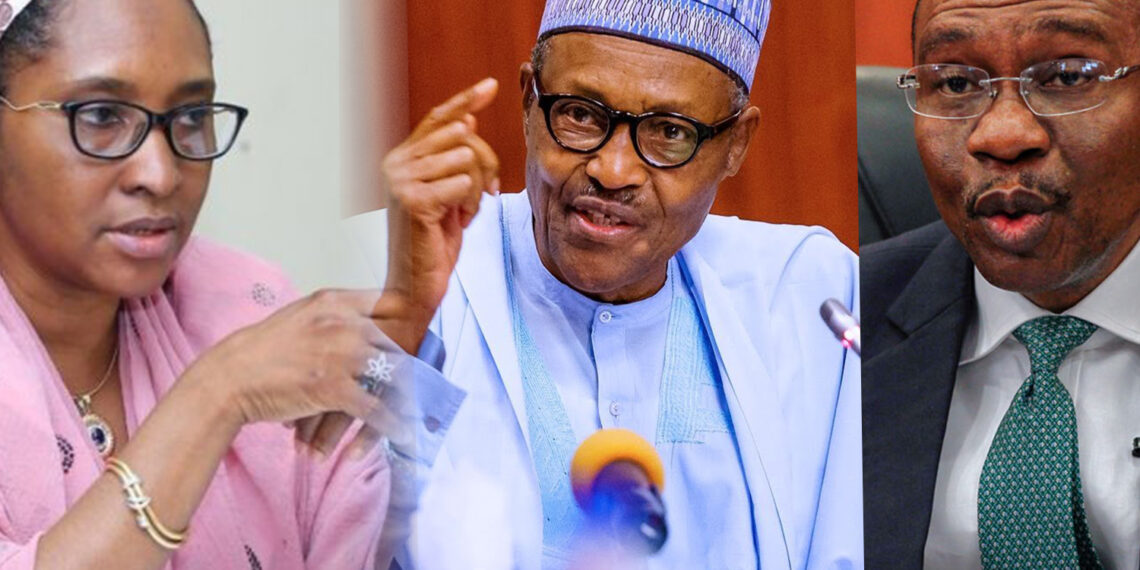
Reports reveal that Nigeria’s public debt has risen the most under President Buhari’s administration when compared to other administrations since 1999.

The government keeps borrowing to meet its debt financing obligations, a development many economists describe as disturbing and unsustainable.

Meanwhile, in 2021, the DMO justified President Muhammadu’s continuous borrowing, noting that it has been instrumental in helping Nigeria bounce back from the recession caused by economic shocks which put a strain on the country’s revenue.

Analysts in the financial sector projected that the continuous borrowings by the federal government in 2022, were due to low oil outputs resulting in a decline in oil revenue which was affected by incessant oil theft.

However, in a 2021 report, the World Bank placed Nigeria among the top 10 countries in the world with the highest debt risk exposure.

The world bank therefore, cautioned Nigeria against excessive debts, urging a balance between massive spending for development on one hand and moderation in borrowing on the other hand.

Due to the country’s incessant borrowings, last year, some prominent statesmen and leaders warned the international community against lending to the Nigerian Government, stating that Nigeria is a country with questionable sovereignty.

Starbucks Building a Web3 Project To Reward Its Community

0

Starbucks plans to build a new, global digital community that can be defined by collaboration, experiences, and shared ownership.

Creating private communities on Web3 is now common at big brands. But this time, consider it all centered around coffee to start and perhaps expand into many areas Starbucks has played over the years, like art, music, books, and beyond.

As you know, Starbucks, which is the most popular coffee chain in the world, appears as an encouraging brand with its projects in the digital field.

The coffee giant responds to people who prefer their products with specific reward systems if they make transactions through the application. Now Starbucks is working on a project that will integrate this reward system into the Web3 world.

The brand has always had an audience that is happy to use its products. However, we have never seen this audience engage.

With the world of Web3 Starbucks will now have a community with benefits of its own. Centering on coffee-focused NFTs, the company plans to build a structure where it will offer exclusive content and opportunities to NFT owners rather than a ordinary digital collection.

New technologies associated with what is commonly referred to as “Web3” are now creating a space to expand the concept of community, which has always been at the heart of Starbucks. Web3 refers to many things in the blockchain space, but NFTs are the unique technology that has the brand’s attention.

Many people consider NFTs as a new form of ownership of digital art, often traded in a highly speculative way. While it was somewhat true in the early days of space now, NFTs allow people to own a programmable, brandable digital asset that serves as an access card.

What Is Starbucks Rewards

Starbucks plans to launch an NFT collection, the ownership of which initiates community membership, and allows for access to exclusive benefits. These collections’ themes will be inspired by Starbucks’ aesthetic expressions, both traditional and contemporary, as well as through world-class collaborations with other innovators brand skinning.

Additionally, Starbucks has a track of adopting cutting-edge technology, developing, and making it friendly and accessible for general audiences. They are always good at engaging customers at scale to create possibilities from brand history with loyalty, mobile payment, mobile ordering, and Wi-Fi.

A Starbucks Digital Community Web3 platform might also lead the way in this area by combining a user-friendly, broadly accessible front-end with the appropriate, quick, and affordable blockchain technology.

Starbucks is planning to start with their first NFT collection, membership and community later this year, based on coffee art and storytelling. It will come with a host of unique experiences and benefits, worthy of a genesis NFT collection from Starbucks.

Private Nigerian citizens can prosecute crimes without the authorization of the AG

0

According to S.211 of the Constitution of the federal republic of Nigeria, it is the Attorney General of the state who has the power to institute and prosecute crimes in the state. By the subsequent provision of subsection 2 of this section, these powers of the attorney general can also be delegated to officers in the state ministry of justice only. 

This provision by its reason, therefore, introduced a rule  which has stood for a long time in the Nigeria legal system and the rule is that institution and prosecution of crimes is reserved exclusively for the Attorney General of the state, therefore private citizens or private legal practitioners cannot exercise that power unless that such private individual who wishes to prosecute a crime applies to the Attorney General to delegate such power to him and the Attorney General can thereby delegate the power to the private citizen to prosecute crime by the issuance of a legal document known as “fiat” to that private citizen. 

This has been a long-held rule that a private citizen cannot institute and prosecute crime in Nigeria excerpt with the consent and authorization of the attorney General of the state but this rule has been overruled by the recent (2022) judgment of the Supreme Court of Nigeria in the case of RAPHAEL OBIJIAKU V CHIEF JOE OBIJIAKU & 2 ORS (2022) 17 NWLR (PT. 1857) 377 at 405 Paras E- F. His Lordship Aboki JSC while reading the leading judgment held inter alia thus; 

“A private legal practitioner or indeed a private citizen, has the indisputable right, under section 301(1) of the Anambra State Administration of Criminal Justice Law, 2010, to lay a complaint and prosecute same, without the fiat of the Attorney General of the State”

By the above judgment, the Supreme Court of Nigeria, the long-known and long-held position of the law that it is only the Attorney General of the State can prosecute or authorize the prosecution of criminal complaints in the Courts has been overturned. 

The Supreme court further emphasized that the notion that the provision of the Administration of the Criminal Justice Act/ Law granting powers to private legal practitioners or private citizens to prosecute without the authority of the Attorney General of the State is in conflict with Section 211 of the Constitution of the Federal Republic of Nigeria 1999 ( As Amended) is held in error, therefore, the power issued to private citizens by the ACJL to prosecute crimes is not in conflict with any constitutional provision. 

This is the new position of the law as ruled by the supreme court of Nigeria, therefore lawyers and students of the law should thereby take note of it.