
DD
MM
YYYY

PAGES

DD
MM
YYYY

spot_img

PAGES

Home Blog Page 4622

The Notable Provisions Of The Finance Act of Nigeria 2021

0

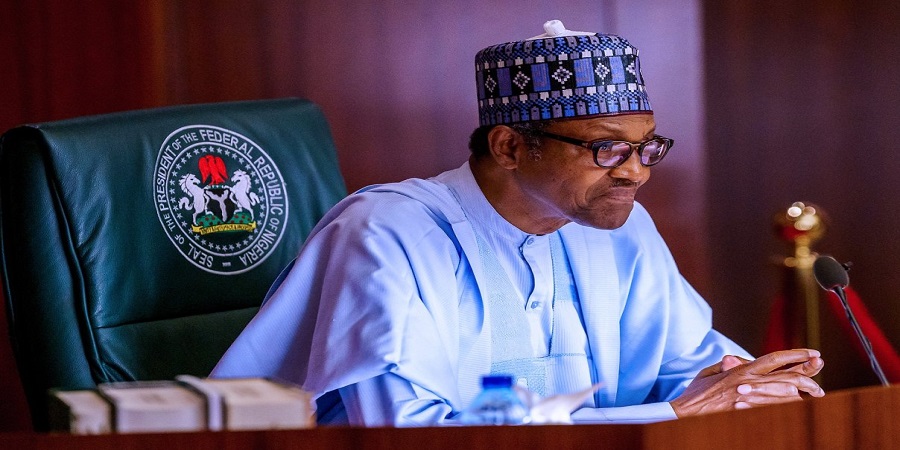
The Finance Act of Nigeria was on  December 31st, 2021 signed into law by President Muhammadu Buhari and effectively serves as an amendment to a number of laws that include the Companies Income Tax Act CITA, the Personal Income Tax Act (PITA) , the Customs and Excise Tariffs Act, the Capital Gains Tax Act (CGTA), & the Tertiary Education Trust Fund Act .

The act was created to bring a more streamlined and effective improvement of Nigeria’s economic system through the development of a uniformly ascertainable Tax regime across all sectors of the economy as well ensure greater fiscal policy at the state policy level.

This article will be looking at the most important provisions of this act and their implications for the Nigerian Economic going forward. The provisions of the act that will be looked at for the purpose of this article are as follows:-

Data Protection :- Under the Finance Act, Taxpayer information is now deemed secret and private and as such requiring utmost confidentiality and protection in line with the Nigerian Data Protection Regulations.

Non-Resident Digital Company Taxes :- Under this act, the Federal Inland Revenue Service (FIRS) is now charged with assessing company income tax on businesses not based in Nigeria but engaged in rendering digital services ranging from communications even via advertisments to e-commerce and Fintech services.

Dividends for the Purposes of Company Income Tax :- Under the act, the previous practice under the CITA of compensating payments received or paid in regulated securities exchange transactions (RSLT) has been stopped.

Capital Gains Tax :- Capital Gains Tax rates are now fixed at a 10% rate on gains made from the sale of shares in Nigerian companies except where proceeds from such sales are used to purchase shares of any company.

Minimum Tax Rate Reductions :- Under the Finance Act, Minimum Tax rates have been reduced to 0.25% of gross sales for the period of January 1, 2020 – December 31, 2021.

Tertiary Education Tax Rates :- Under the Act, Tertiary Education Tax rates have been placed at 2.5% for registered Nigerian companies excluding small businesses.

Non-Alcoholic Beverages/Sweetened Beverage Taxes :- Under the Finance Act amending the relevant provisions of the Customs and Excise Tariffs Act, an excise duty of 10 Naira per litre is now payable for businesses engaged in the manufacturing of soft drinks and Non-Alcoholic Beverages. This tax was announced by the Nigerian government as a stop-gap measure aimed at consumption reduction of such drinks due to their negative health effects.

State Borrowing :-Under the Finance Act, governments in Nigeria can now engage in borrowing for purposes of reforms or projects having major national importance at low interest rates.

Nigeria’s 9 Oil-producing States Received N625.43bn for 2021-2022 13% Derivation, Subsidy and SURE-P Refund

0

The federal government of Nigeria has released a total of N625.43 billion as part of 13 percent oil derivation, subsidy and Sure-P refund to nine oil producing states.

In a statement titled: Oil Derivation, Subsidy and Sure-P Refunds: Nine Oil Producing States Receive N625.43bn in Two Years; N1.1trn Still Outstanding, which was signed by the Senior Special Assistant to the President on Media & Publicity, Garba Shehu, the federal government shared how the fund was disbursed and promised to ensure that the outstanding N1.1trn is paid to the respective states.

“The states that received the refunds dating from 1999 to 2021 are Abia, Akwa-Ibom, Bayelsa, Cross River, Delta, Edo, Imo, Ondo and Rivers.

Data obtained from the Federation Account Department, Office of the Accountant General of the Federation, show that a total of N477.2 billion was released to the nine states as refund of the 13 percent derivation fund on withdrawal from Excess Crude Account (ECA) without deducting derivation from 2004 to 2019, leaving an outstanding balance of N287.04 billion.

The States also got N64.8 billion as refund of the 13 per cent derivation fund on deductions made by NNPC without payment of derivation to Oil Producing States from 1999 to December.

The benefitting States still have an outstanding balance of N860.59 billion windfall from the refunds, which was approved by President Muhammadu Buhari.

According to the figures, under the 13 percent derivation fund on withdrawal from ECA without deducting derivation from 2004 to 2019, Abia State received N4.8 billion with outstanding sum of N2.8 billion, Akwa-Ibom received N128 billion with outstanding sum of N77 billion, Bayelsa with N92.2bn, leaving an outstanding of N55 billion.

Cross River got a refund of N1.3 billion with a balance N792 million, Delta State received N110 billion, leaving a balance of N66.2 billion, Edo State received N11.3billion, with a balance of N6.8billion, Imo State, N5.5 billion, with an outstanding sum of N3.3 billion, Ondo State, N19.4 billion with an outstanding sum of N11.7bn while Rivers State was paid 103.6 billion, with an outstanding balance of N62.3 billion.

The States were paid in eight installments between October 2, 2021 and January 11, 2022, while the ninth to twelfth installments are still outstanding.

On the 13 per cent derivation fund on deductions made by NNPC without payment of derivation, the nine oil producing States were paid in three installments this year, with the remaining 17 installments outstanding.

Under this category, Abia State received N1.1 billion, Akwa-Ibom, N15 billion, Bayelsa, N11.6 billion, Cross River, N432 million, Delta State, N14.8 billion, Edo State, N2.2 billion, Imo State, N2.9, billion, Ondo State, N3.7 billion, and Rivers State, N12.8 billion.

Meanwhile, the benefitting States shared N9.2billion in three installments in April, August and November 2022 as refunds on the 13 per cent derivation exchange rate differential on withdrawal from the ECA.

The three largest benefitting States were Akwa Ibom (N1.6billion), Delta State (N1.4billion) and Rivers State (N1.32billion).

Similarly, all the nine states received N4.7 billion each, totaling N42.34 billion as refunds on withdrawals for subsidy and SURE-P from 2009 to 2015. The refund, which is for all the states and local government councils, was paid on 10th November, 2022.

The Federation Account also paid N3.52billion each as refund to local government councils on withdrawals for subsidy and SURE-P from 2009 to 2015 on the same date in November.

President Buhari considers it a matter of honour and decency that debts owed to states or anyone for that matter be repaid, and in time without regards to their partisan political affiliations.

The President will continue to render equal service to all the states of the federation and an acknowledgment of this by Governor Nyesom Wike of Rivers State and the others is not out of place.

The refunds to the oil producing states will continue,” the statement said.

However, the announcement has sparked fresh criticism of the state governors who are said to be largely responsible the development deficiencies in Nigeria, particularly in human capital development.

Recently released report by the Nigeria Bureau of Statistics shows that 133 million Nigerians are in multidimensional poverty. This includes people living in the oil-producing states – receiving the 13 percent oil derivation fund. Some of them ranked among the most poverty-stricken states in Nigeria.

President Muhammadu Buhari had this week blamed the governors for the rising spate of poverty in the country. He said that the governors are not doing enough to alleviate poverty in their respective states, supporting the belief that most of the funds derived by the states are being misappropriated by their chief executives.

Yugalabs Security Engineer Discovers Bugs in Hyundai and Genesis Automobiles

0
TEHRAN, IRAN - JULY 19: (RUSSIA OUT) Russian President Vladimir Putin leaves his presidential plane during the welcoming ceremony at the airport, on July 19, 2022 in Tehran Iran. Russian President Putin and his Turkish counterpart Erdogan arrived in Iran for the summit. (Photo by Contributor/Getty Images)

A Security Researcher have disclosed a critical issue in Hyundai and Genesis vehicles that could be exploited to remotely control a car.

Yuga Labs staff security engineer Sam Curry reported the findings on a Twitter thread on November 29, noting that the bug allowed the team to “remotely control the locks, engine, horn, headlights, and trunk of vehicles made after 2012”.

A bug bounty hunter under the moniker _specters_acted as a mock car thief (with his own Hyundai vehicle) for the project by Curry and other researchers.

Curry, noted that recent cybersecurity research on vehicles tends to focus on cryptographic assaults on physical keys but that, novel exploits aside, the websites and apps supporting modern communication protocols and controls may have been overlooked.

For example, the Hyundai and Genesis mobile device apps allow authenticated users to manage functions, including starting or stopping and locking or unlocking their vehicles, which could be a serious problem if compromised.

Using Burp Suite, the researchers proxied app traffic and monitored API calls, seeking an entry point.

Curry, explained that there appeared to be a ‘pre-flight’ check when JSON Web Tokens (JWTs) were generated during an app’s email/password credential check.

However, as the server did not require email address confirmation, it was possible to add a CRLF character to the end of an existing victim email address during registration and create an account that bypassed the JWT and email parameter check.

The app’s HTTP response returned the victim’s vehicle identification number (VIN) during testing. Curry then sent an HTTP request with the crafted account details, and after a few seconds, Specters confirmed his car had been remotely unlocked.

In the driver’s seat

In itself, the attack chain required many requests. The researchers, therefore, created a Python proof-of-concept (PoC) script compiling these steps – and according to a video of the script in action, an email address is all that is required to launch an attack.

Actions that the team carried out included:

  1. Remotely flashing the victim’s vehicle’s headlights.
  2. Honking the horn.
  3. Starting or stopping the engine.
  4. Locking or unlocking the car.
  5. Changing a PIN.
  6. Unlocking the boot.

Speaking to The Daily Swig, Curry said the vulnerability was disclosed to Hyundai roughly two months ago as part of a package of telematics issues impacting different car manufacturers related to SiriusXM remote management software.

As part of a coordinated vulnerability disclosure program, a fix was issued before the vulnerability was made public.

Fuel for thought

While Curry said the project was “mainly for fun”, commenting on the research, Specters said:

“I do want to highlight we started this research because we all recognized that embedded security for vehicles was getting increasingly better but application security was lagging behind by a large margin. We wanted to push that change and hope we did.”

Mark Mobius Predicts More Woes For Bitcoin Amidst Plummeting Price

0

Veteran investor and founder of Mobius Capital Partners LLP, Mark Mobius has predicted that the price of Bitcoin will plunge to an all-time low of $10,000.

He disclosed that the price of Bitcoin will fall more than 40%, adding that he wouldn’t dare invest his cash or client’s asset in the digital asset, due to how dangerous he described it to be.

The veteran investor seems to be spot-on in his predictions concerning the crypto asset, as he had earlier predicted correctly that the price of Bitcoin would drop to $20,000 this year, with his recent prediction of it dropping further.

In his words, “With higher interest rates, the attraction of holding or buying Bitcoin or other cryptocurrencies becomes less attractive since just holding the coin does not pay interest.

Of course, there have been a number of offerings of 5% or higher interest rates for crypto deposits but many of those companies offering such rates have gone bust partly as a result of FTX. So as those losses mount people become scared of holding the crypto coin in order to earn interest.”

Mobius also said the boom in crypto was directly related to the Fed’s “printing machine working overtime so that money supply in USD rose by 40% plus in the last few years.

“So there was abundant cash to speculate on the crypto coin,” he added.

Bitcoin is currently trading at $16,845, as the price of the crypto asset has continued to plunge after it fell as much as 3.2% on Monday, a year after it reached a record high of $69,000 in November.

Also, the prices of other crypto assets have declined, as the industry is currently experiencing a massive blood bath.

The massive decline in the price of crypto assets has been attributed to the collapse of the FTX exchange platform, which filed for bankruptcy two weeks ago after it witnessed a massive loss of revenue.

The collapse of the platform has prompted investors to withdraw their assets, which has led to a high decline in the price of crypto assets.

Meanwhile, institutional and retail investors are abandoning crypto in droves, further compounding the industry’s issues. Trust in the industry is currently at an all-time low, and there aren’t enough users to keep every project in the black.

FTX bankruptcy has no doubt sent shockwaves to the industry as major crypto lender BlockFi has filed for bankruptcy.

Also, crypto exchange platform Coinbase halted some trading activity, as well as AAX exchange which suspended withdrawals for seven to 10 days for a scheduled system upgrade to protect users.

The FTX upheaval has been predicted by analysts to affect other cryptocurrency exchanges, as there are speculations that several of them are considering filing for bankruptcy.

As the dust is yet to settle, a far larger question on the mind of every investor is, “Who is next?”

In the past, many had predicted the price of Bitcoin but success has been limited.

Crypto advocate Mike Novogratz dropped his forecast for Bitcoin to climb to $500,000 in five years, citing the Federal Reserve’s interest rate increases.

It will, but “not in five years,” Novogratz said Thursday during an interview on Bloomberg Television. The biggest change that happened is that Fed Chair Jerome Powell found “his central banking superpowers.”

Like most risk assets, Bitcoin has slumped this year because the Fed is raising rates to contain inflation, Novogratz, the chief executive of Galaxy Digital, said.

Bitcoin has tumbled more than 60% this year, dropping to around $17,000. Fallout from the bankruptcy of the FTX exchange last month helped accelerate losses across the cryptocurrency market.

The demise of FTX, along with the collapse of hedge fund Three Arrows Capital and lenders Celsius Network and BlockFi are “certainly hurting the overall confidence in crypto, but that too shall pass,” he said.

Automotive Company Tesla Finally Launches Its Semi-Truck Model After Initial Unveil Five Years Ago

0
TEHRAN, IRAN - JULY 19: (RUSSIA OUT) Russian President Vladimir Putin leaves his presidential plane during the welcoming ceremony at the airport, on July 19, 2022 in Tehran Iran. Russian President Putin and his Turkish counterpart Erdogan arrived in Iran for the summit. (Photo by Contributor/Getty Images)

Automotive and clean energy company Tesla has launched its semi Truck models, after initially unveiling the prototype five years ago.

Tesla’s recently launched heavy-duty truck models were first unveiled in 2017 at an event in Los Angeles. During the event, Musk hyped the semi-trucks to blow the mind of users when they finally hit the road.

He also teased that the truck could “transform into a robot, fight aliens and make one hell of a latte”.

During the unveiling event, American multinational food and beverage company Pepsico placed an order for 100 trucks, putting down at least a $20,000 initial payment.

Tesla also recorded a lot of pre-order interest from some other top companies such as Loblaws, Walmart, Etc.

Following the recent launch of its semi-truck, the automotive company has already delivered the first set to Pepsi at an event in Sparks, Nevada.

The fully electric semi truck features an unusual design in which the driver sit is positioned in the center of the cab rather than on one side.

Tesla has boasted of the truck’s performance saying it accelerates much more quickly, even when loaded with goods than the traditional diesel-powered semi-trucks.

At the launch event, a video presentation showed the fully loaded Tesla Semi accelerating up a steep grade and passing other trucks.

Regenerative braking, the way electric vehicles use their motors to slow down and recharge their batteries using the vehicle’s motion will also be a safety benefit on the truck.

This will entail that drivers will not have to downshift going down long hills and may not need to use the truck’s actual brakes at all.

Speaking on road usage, Tesla disclosed that its Semi-truck would be able to travel 500 miles on a single battery charge when fully loaded and driving 65 miles per hour, with the capacity to move from zero to 60 miles per hour in 20 seconds when fully loaded.

Lead engineer and program development of the Tesla Semi-Truck Dan Priestley said,

We’re coming off of a great launching pad with everything that’s done in the rest of our products already.

“It’s also enabled because Tesla’s got this whole vertical integration on the software and the hardware side, so the teams are working together to put all that together into one package. This is a huge win for all of our products, but particularly Semi.”

He further added that the Semi truck had three times the power of any diesel truck on the road currently, also noting that drivers would be able to stand up and change clothes within the cab, which is built with cargo space for tools, as well as charging ports.

The Semi-truck is also built with regenerative braking, which means the brakes deliver power to the battery when drivers take their foot off the accelerator.

The wheels have better traction, good enough to stop the truck from jackknifing than a diesel truck because electric motors are more precise than diesel engines.

The semi-truck will be charged with a “megawatt-class charger” that features a next-gen immersive cooling system. These chargers will be similar to Tesla’s supercharger network.

The company will also install Megapacks alongside the chargers, which are an energy storage system that prevents peak electricity surges from the grid.

Tesla’s addition of heavy-duty semi-trucks to its portfolio will no doubt heighten its competitive advantage in the EV industry.

It will also see the company gain more dominance in several markets across the world, as it already dominates the U.S. electric car market with a 68% market share.

In 2020, its vehicles accounted for 79% of new electric vehicles registered in the United States.

With the unveiling of the Tesla Semi, the automaker confirmed that Tesla Cybertruck will also take advantage of the company’s 1 MW ultra-fast charging technology.

At today’s Tesla Semi Delivery Event, the automaker didn’t roll out a new Roadster from the back of a Tesla Semi as it did at the truck’s original unveiling five years ago, but there was still a “one more thing” moment during the event.

Tesla unveiled its new 1 MW DC fast-charging technology for the Tesla Semi.

We already knew that Tesla had a ~1 MW charging tech for the Tesla Semi, but at the event today, Tesla announced its new “immersion cooling technology” that enables it to achieve a much higher output in the same small form factor: