DD
MM
YYYY

PAGES

DD
MM
YYYY

spot_img

PAGES

Home Blog Page 5774

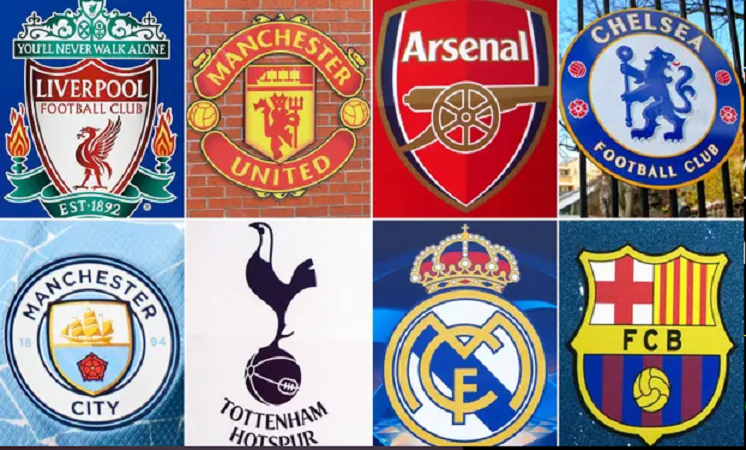
The SuperExit, Bigger for European Fans Than BREXIT

1

Europe’s finest football teams want to have their own parties. That would help them keep most of the money they make for European football. Yes, If  Real Madrid FC plays with FC Porto, most people are watching because of Real Madrid. However, at the end, Real Madrid may not capture huge value when the revenue is shared. But that spirit of allowing the weak to join that party has kept the game going for ages. Unfortunately, some bankers in New York have figured out a way: have a totally different party that is super-invitation-only and ensure that only the BIG boys could attend!

JP Morgan Chase bankers have American blood: there are no Silver or Bronze medals in most of their competitions. Either you are #1 (gold) or you go home empty handed. NBA, NFL, Hockey league, etc do not recognize runners-up with any public medal. Simply, America does not believe in coming second.

If you export that to the European football, you will get what the bank is saying: why get Rangers of Scotland  to join the Champions League when it has no chance of winning. Yes, it is better to allow the few teams which have won 80% of the last 20 trophies to compete if the ultimate goal is to win the trophy.

In the past, it was the weak teams they were making a case that they would pull out of the unity league. Many of them had complained that limited resources would never help them compete and win anything. In other words, three players in Real Madrid could buy a whole whole team within the qualifying rounds of some Champion League games. But here, the big boys are the ones pulling out, losing patience for sharing their goodies with the underperformers.

But no matter what – European football needs a draft system to improve competition in the game, and reduce the impacts of dominant teams. In the US, with a draft system, talent becomes distributed, making the game more competitive. If you check the NFL, the American football, you can see that most teams have won the trophies. That is possible because the NFL has drafts which inject the best talent to low performing teams to help calibrate out the outperformers. With that, a bad team can over time become better. That contrasts to what we have in Europe where you do not need any permutation to know the league contenders.

The best-known type of draft is the entry draft, which is used to allocate players who have recently become eligible to play in a league. Depending on the sport, the players may come from college, high school or junior teams, or teams in other countries. An entry draft is intended to prevent expensive bidding wars for young talent and to ensure that no one team can sign contracts with all of the best young players and make the league uncompetitive. To encourage parity, teams that do poorly in the previous season usually get to choose first in the postseason draft, sometimes with a “lottery” factor to discourage teams from deliberately losing.

People, this is the real SuperExit which may cause more pains for many in Europe than Brexit.

The Guardian has uncovered an unpublished European Super League document in the hidden code of its new website which seeks to justify the controversial breakaway by saying it will give fans “what they want”.

In comments that will raise eyebrows, it also claims the breakaway will offer “a sustainable and competitive environment for the whole football pyramid” – by providing more than three times the level of solidarity payments to smaller clubs than currently exist.

[…]

UEFA president Aleksander Ceferin has strongly condemned “disgraceful” proposals for a new European Super League as a “spit in the face of all football lovers”.

“We are all united against this nonsense of a project … The players that will play in the closed league will be banned from playing in the World Cup and Euros,” says UEFA President Aleksander Ceferin.

Ceferin: “Players who play in the closed league will be banned from participating in the World Cup and the European Championship. They won’t be able to play for their national team.”
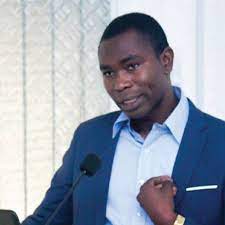
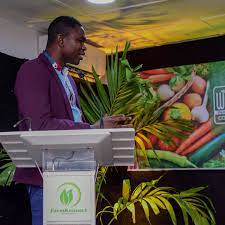
CEO Oluwole and Re-making of Awolowo’s Strategic Visionary Leadership in the Context of FAgEX, FIDAS Africa

0

From agriculture to education and sports to entertainment, former Premier of Western Nigeria, Chief Obafemi Awolowo is known for initiating and implementing groundbreaking projects in the region and Africa in general. He was the brain behind the erection of the first television station in the region and Africa as a whole. He was the builder of the first Olympic stadium in Nigeria and Africa. He planned and implemented construction of the first skyscraper building, funded from the Cocoa proceeds, in Nigeria. 

Despite being an indigene of Ijebu, Chief Awolowo concentrated these projects in Ibadan, a city which was created in 1829 as a war camp for warriors coming from Oyo, Ife and Ijebu. While he was alive, his critics cannot dispute the fact that he was a real visionary leader, who always sees the future by economising and concentrating available resources where they would deliver high immediate and delayed impact for the benefit of the people. 

With more than one year of studying the business footprints and little successes recorded by Azeez Oluwole, the Chief Executive Officer of Farmkonnect, an Agritech company in Ibadan, our analyst notes that like Chief Awolowo, Mr Oluwole is seeing the future of agriculture beyond Nigerian space. In the last few years, through his company, Mr Oluwole has been able to exhibit some of the leadership qualities of the late sage, which transformed old Western Nigeria socially, economically and politically. 

Like Chief Awolowo wrote Ibadan on Africa map as the city of first, Mr Oluwole will do same on April 29, 2021 as his company and staff unveil FarmKonnect Agricultural Electronic extension Service Centre (FAgEX) and the FarmKonnect Institute for Data and Agricultural Studies (FIDAS). 

Our checks indicate that these projects/businesses within the Farmkonnect Agribusiness aim at enlivening computational agriculture in Nigeria and Africa in general.   Our analyst notes with the establishment of the Centre and the Institute, Farmkonnect has set the foundation for the refinement of agricultural data [from the farms and off-the-farms] from Ibadan towards the creation of a new aspirational trajectory in Nigeria and the continent as a whole.

The Man Who Sees the Future

CEO Oluwole

Obviously, these projects/businesses were not evolved without the support of his  staff and other stakeholders who have interest in his vision and mission to transform agriculture in Africa towards sustainable food security and improved livelihood for smallholder farmers and investors.  

Observation of his leadership style reveals that he gives people around him opportunity to innovate, experiment and take calculated risks towards value creation that uplift everyone in the society.  Examination of some excerpts from the recent press conference held, as part of activities for the launching of the two projects/businesses, our analyst notes that his choice of words and presentation resonate with Chief Awolowo’s rhetorical strategy. 

“FAgEX will enable us to monitor and receive live feeds from all our farms and greenhouses anywhere in Africa. With this initiative, we can also control certain operations such as irrigation and humidification remotely. This is first of its kind on African soil.” 

  1. FarmKonnect Agricultural Electronic Extension Service Centre (FAgEX) is established with the intent to accelerate controlled environment farming practices in Africa. Leveraging modern technologies such as satellite imagery, drones, electro-optic systems, global positioning system, geographic information system, on-site sensors, etc.
  2. Apart from setting up new systems or creating enabling environments for digital agriculture in Africa, there is also a need to improve human capacity by increasing digital-data learning of farmers in the continent.
  3. …FIDAS is established primarily to increase knowledge and skills acquisition of stakeholders in the demand and supply sides as well as the business, dimensions of the agricultural value chain
  4. This initiative will help businesses, individuals and governments to capture inherent values in data and insights towards tailored value delivery in the demand and supply sides of the agricultural value chain.
  5. It will also raise more business-oriented professional farmers through classrooms and field exposure to modern agribusiness practices
  6. The vision of FIDAS is to enhance the use of smart processes, people and technologies for data and insights generation that help stakeholders make an informed decision towards responsible production and achieving food security in Africa by 2030 and beyond, while the mission is to contribute to the quality and data-driven workforce that can help Africa to transition into a new path in the digital data economy.” 
  7. It aims to enhance quality research in the agriculture industry as well as help young entrepreneurs, emerging business leaders and professionals to understand inherent values of big data and data analytics in the industry.


Harvard Business Review Has Approved The Work On The Igbo Apprenticeship System

0

Harvard Business Review has approved the work on the Igbo Apprenticeship System (IAS). In short, my editor was impressed. She wrote, partly, “Thanks so much for your work here. I like how you’re setting up the idea of stakeholder capitalism at the start while introducing the Igbo IAS…” The online version should be out by next month. The core construct is to present the  Igbo Apprenticeship System  as a thesis for the world as the conversation continues on stakeholder capitalism, not just shareholder capitalism.

Learn more about IAS.

Tekedia Capital >> we fund NEXT Africa

0
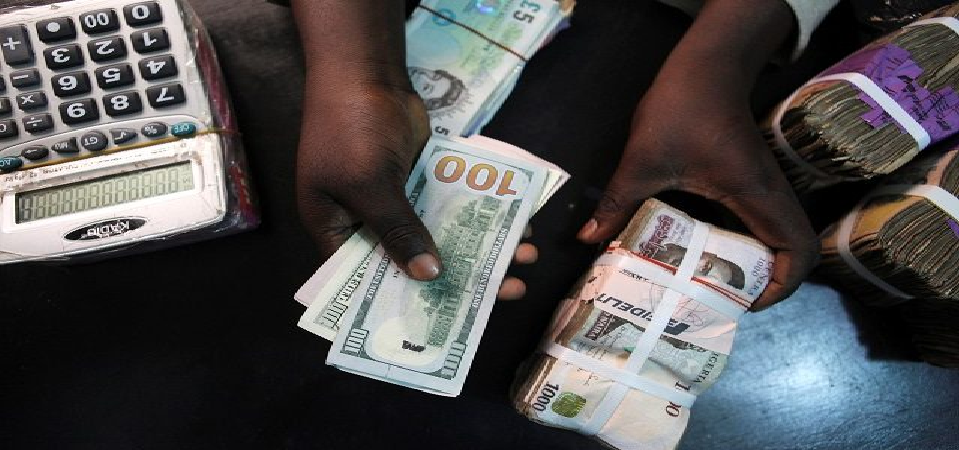
Nigeria Naira US Dollar

At Tekedia Capital, this short video explains how we evaluate startups and their leaders.  We do not even require you to have earned any revenue. But we require clarity on the friction which is being solved. We also look at your capabilities and examine if there are potential leverageable factors which can compound and accelerate over time. Our founders must be hungry with capacity to see the big picture. Let’s build the NEXT Africa together.

Tekedia Capital, we fund NEXT Africa.

Co-invest to build the NEXT Africa; learn more here.


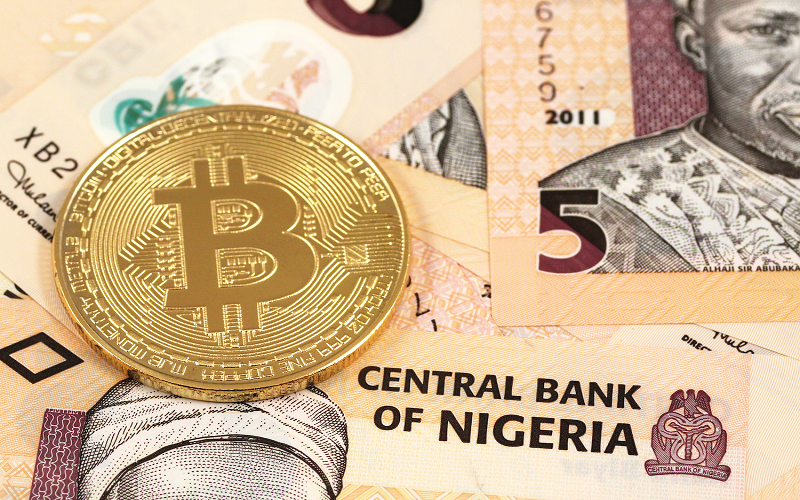
Indicators That Nigeria Will Have A Cryptocurrency Regulation By Q4 2021

1

A few months ago, Nigeria banned cryptocurrency exchanges in its financial systems. But over the last few weeks, it is becoming evident that Nigeria is marching on the path to regulate cryptocurrency trading, investment and use as a form of currency in the nation. Here are some indicators:

  • The clear statement by the Vice President of Nigeria for the regulators to regulate and not ban

“There is a role for regulation here. And it is in the place of both our monetary authorities and SEC to provide a robust regulatory regime that addresses these serious concerns without killing the goose that might lay the golden eggs. So it should be thoughtful and knowledge-based regulation not prohibition.”

  • Statement from the Abuja Chamber of Commerce and Industry (ACCI)

“The [Securities & Exchange Commission] should propose a plan of action for phased usage of the technological currency within the Nigerian financial system. We suggest that members of the commission should be drawn from the Central Bank of Nigeria (CBN), Nigerian Stock Exchange, banking /financial Institutions, bitcoin community, digital currency experts and relevant MDAs and organised private sector….

“The policy lacuna impresses on the administration to consider possible options to prepare the nation to cope with the positive and negative fallouts of this new financial technology”

  • Disclosure from the Director-General of SEC, Lamido Yuguda

We are in discussion with CBN for both understanding and better regulating of this market. We will be able to come back to you later to inform you of the outcome of these engagements.

But because of the lack of access to commercial bank accounts, we had to suspend our own guidelines of September 2020. The implementation of that circular is suspended until these operators are able to have access to Nigerian bank accounts.

Remember that nobody operates in the Nigerian capital market if that person does not have access to a Nigerian bank account,” he said.

More so, Nigeria could surprise everyone by unveiling a Central Bank Digital Currency (CBDC) roadmap and begin a push for e-naira, following the footsteps of China and other nations: “A central bank digital currency (CBDC) uses an electronic record or digital token to represent the virtual form of a fiat currency of a particular nation (or region). A CBDC is centralized; it is issued and regulated by the competent monetary authority of the country.”

I expect the air to clear by Q4 2021 and by then the regulators would put a framework for cryptocurrency in the nation. With Coinbase publicly baptized in the markets, most concerns will begin to wane across the world.

Nigeria’s Central Bank Bans Cryptocurrency Trading in the Country