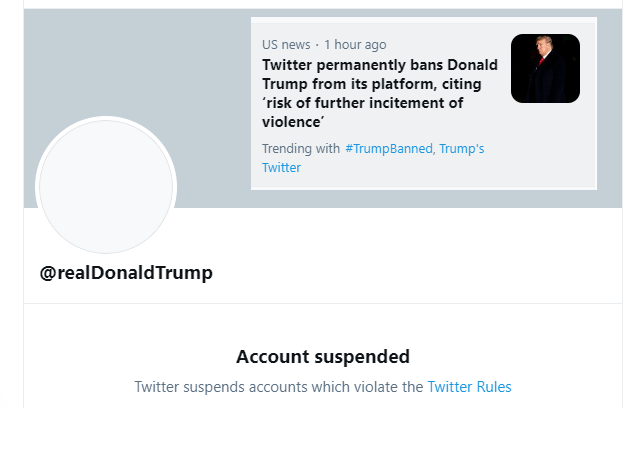
Let us return to business and look at how the Inversibility Construct applies to President Trump who loses his most prized possession in politics. Yes, without Twitter, he would not have been a president. I make that point as old century media powers would have filtered him out. The media moguls were the gatekeepers; they decided what the world consumed. There is a lesson on that dynamics within the digital business of aggregation construct.
For the Inversibility Construct, you need to turn a typical frustration in the meatspace into strength in the digital space. That means, you need to INVERSE the experiences of people, so that what annoys them in the physical becomes strength in the digital space. I provide some examples:
-
People hate crowded shopping malls; make people to like crowded shopping malls via your products (Amazon, Konga)
-
People hate crowded classrooms; make a classroom where everyone is happy when it is crowded (Udacity, Facyber)
-
People hate crowded bank halls; make products where everyone enjoys the service when the bank hall is crowded (Paypal, Paystack)
-
People hate crowded motor parks with passenger hailers; make a hailer which people like because it is crowding many people together (Uber. Little Cab)
Yes, Vanguard, New York Times, and Punch were in charge of the news to break, and the elements in the political world to champion. Because they were the gatekeepers, they controlled and influenced demand (the readers). Then, it was “Blessed is he who is a friend to a media publisher!”
Being published in the Guardian Nigeria newspapers was a career turning point for most people 40 years ago. Simply, the supply of newspaper space was extremely limited, and only few articles made it past the editors.
But today, in the digital era, supply is unbounded and constrained, shifting the power from New York Times, Punch and Washington Post to companies like Twitter, Facebook and LinkedIn. These entities are the gatekeepers now. They control and influence demand and magically become exceedingly powerful. The problem of today is no more supply of contents, but aggregating the amalgam of contents which come out daily. So, the world congregates in ecosystems where those contents are aggregated, pushing power from suppliers to those who control demand.
If the New York Times drops Trump’s subscription (if he has one), the world would not blink. But with Twitter pulling the account, it is a big deal. Without Twitter and Facebook, Trump goes into a political existential threat because he cannot influence demand (his base) and without the base, he loses influence. The power is not just in his written words or the spoken words. Rather, on the platform where they were put. He can build a website but would that site give him 87 million followers? That is the issue.
That is why social media platforms are extremely powerful – and why companies must pay attention to them: they can make you and they can destroy you. The deceleration and acceleration are asymmetric: take more than a decade to build 50,000 followers; lose all those customers in one day. In Trump’s world, 87 million people; today, he has zero! Here, we see the new order in the powers of the future.