DD
MM
YYYY

PAGES

DD
MM
YYYY

spot_img

PAGES

Home Blog Page 61

Musk Predicts AI and Robotics Could More Than Double Global Economy in Less Than a Decade

0

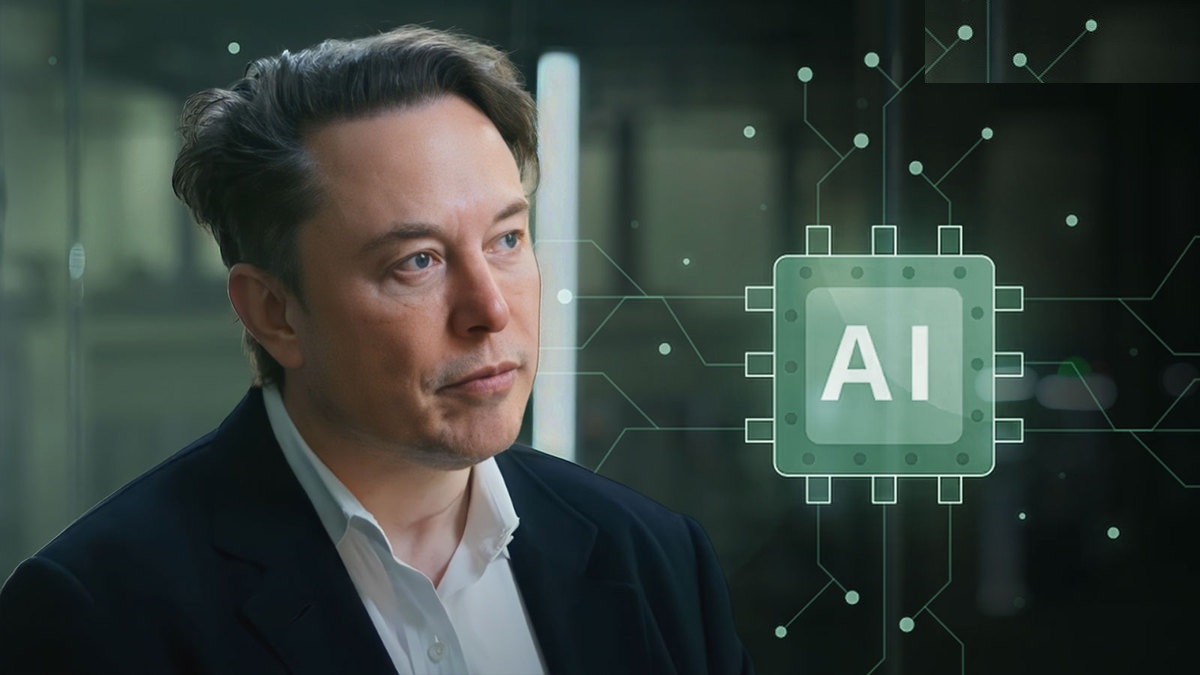
Elon Musk has raised the stakes on one of the decade’s boldest economic forecasts, predicting that the rapid advancement of artificial intelligence and robotics could more than double the global economy within the next decade.

The Tesla and SpaceX CEO believes increasingly capable AI systems and humanoid robots could reshape how goods and services are produced, potentially driving economic growth at a pace far beyond historical norms.

In a post on X, he wrote,

“AI+robots will more than double the global economy in less than 10 years.”

Musk’s comment came as a direct upgrade to his earlier prediction that artificial intelligence alone could expand the world economy significantly. Just days earlier, speaking remotely to the G20 Innovation Ministerial in Chapel Hill, North Carolina, he had offered a more measured projection.

He estimated that sophisticated AI would boost global GDP by 20 to 30 percent, adding roughly $20 trillion to $30 trillion in annual economic output. He added that AI would soon handle virtually any digital task that does not require physically shaping atoms, potentially by the end of 2027, and that human competition in software development would become effectively impossible as AI reached “Stockfish-level” performance.

Musk has repeatedly forecasted that humanoid robots such as Tesla’s Optimus will number at least one billion within ten years. Tesla’s Optimus is being developed as a general-purpose, bipedal humanoid robot designed to operate in environments built for humans.

Tesla says its long-term goal is for Optimus to handle work that is unsafe, repetitive, or boring, using AI systems for balance, navigation, perception, and interaction with the physical world.

Each of those robots, Musk argues, will deliver roughly five times the productivity of a human worker because they can operate around the clock without fatigue. Once robots begin manufacturing other robots, he expects a recursive, explosive scaling effect.

At that point, the combined output of a billion humanoids would exceed the productivity of all humanity. The arithmetic is striking. Global GDP currently sits near $100–110 trillion.

A full doubling in under a decade would require sustained growth rates far above historical norms, closer to 7–10 percent compound annual growth or higher, depending on the exact timeline.

Musk has previously suggested even more ambitious multiples, including the possibility that AI and robotics could expand the economy by a factor of ten or more over a longer horizon, leading to what he calls “universal high income” rather than mere basic income.

In that scenario, goods and services become so abundant that traditional employment becomes optional for many people. Supporters of the vision point to real momentum already visible in the humanoid robot sector. Shipments have been rising sharply, and Chinese manufacturers currently dominate early volumes.

Advances in AI software, specialized chips, and electromechanical dexterity especially in robot hands are improving simultaneously, and Musk frames usefulness as the product of those three factors multiplying together.

Tesla’s own roadmap envisions Optimus moving from factory tasks to broader commercial availability in the coming years.

Yet the path is far from guaranteed. Energy stands out as a critical bottleneck. AI data centers and large-scale robot fleets will demand enormous amounts of electricity, and Musk has warned that power constraints outside China could limit progress as early as 2027.

Regulatory environments also matter. Musk has urged policymakers to treat new technologies as “default legal” rather than “default illegal,” arguing that heavy regulation, particularly in places like the European Union, slows deployment.

Questions about job displacement, wealth distribution, and the social effects of widespread automation remain unresolved. While Musk frames the outcome as abundance that can eliminate poverty, critics note that transitions of this speed and scale have historically created significant short-term disruption.

Musk has described the coming period as the most interesting time in history. Whether AI and robots deliver a doubling of the global economy inside a decade will depend on continued exponential progress in software, hardware, energy, and manufacturing.

The prediction is characteristically ambitious, but it rests on trends that are already measurable. The next several years will test how quickly those trends can compound into the kind of transformative growth Musk now projects.

Dangote Refinery Shows Nigeria Has Capital—The Challenge Is Turning Savers Into Owners

0

Nigeria’s capital market tells a striking story about who finances the country’s growth—and who gets to own a piece of it. Fewer than 600,000 Nigerians hold accounts capable of trading on the stock exchange.

In a country of more than 200 million people and with over 100 million bank accounts, that number is remarkably small. It reveals a deeper contradiction: Nigerians participate extensively in the financial system as savers and depositors, but far fewer participate as investors and owners.

The Nigerian stock market is worth only about 11 to 13 percent of the country’s GDP. That ratio matters because it suggests that a relatively small portion of the economy is directly accessible through public equity ownership.

Most Nigerians can work for companies, buy their products, deposit money in banks and pay taxes that support the economic system, yet remain largely disconnected from ownership of the businesses driving national production.

Now consider the Dangote refinery. The refinery represents one of Africa’s largest industrial investments and a landmark attempt to build domestic productive capacity at extraordinary scale. Its financing story is particularly revealing.

Nigerian banks participated heavily in syndicated lending for the project, meaning a significant portion of the capital ultimately came from within Nigeria’s own financial system.

Estimates that roughly 60 to 70 percent of the financing came from domestic sources underline an important reality: Nigerian savings can finance Nigerian ambition. The money did not simply materialize from international development institutions.

It was mobilized through banks operating on deposits and capital accumulated within the Nigerian economy. In other words, ordinary financial activity—savings, deposits, lending and balance sheets—helped provide the foundation for an industrial project with national and continental significance.

Yet there is a paradox here. Nigerians can collectively provide the capital without necessarily owning the asset through the capital market. The distinction between financing and ownership is fundamental. When Nigerians deposit money in banks, they become providers of liquidity to the financial system.

When banks lend that money to major businesses, those businesses gain access to capital. But unless citizens also have meaningful access to equity markets, pension investments, mutual funds or other ownership structures.

The average Nigerian remains several steps removed from the value created by the companies that capital helps build. This is where Nigeria’s capital-market development becomes more than a financial-sector issue. It becomes an economic participation issue.

A deeper equity culture could allow Nigerians to transform from passive participants in the economy into active owners of it. More retail investors, stronger financial literacy, easier market access and broader participation through pensions and investment funds could help distribute the wealth generated by corporate expansion.

The opportunity is enormous. Nigeria does not necessarily lack capital. It often lacks mechanisms that efficiently connect domestic savings with broad domestic ownership. The Dangote refinery therefore offers a powerful lesson. Nigerian money can finance globally significant infrastructure.

The next challenge is ensuring that Nigerian citizens can also participate meaningfully in the wealth such infrastructure creates. The question is no longer simply whether Nigerians can finance the economy. It is whether they can own enough of it.

Tether’s Role in Iran’s Crypto Strategy Comes Under Scrutiny

0

The United States is widening its campaign against Iran’s use of cryptocurrencies, bringing Bitcoin and dollar-backed stablecoins such as USDT further into the center of the sanctions battle.

The move highlights a growing tension in digital finance: cryptocurrencies can provide countries and individuals with alternatives to traditional banking networks, but the infrastructure behind many major crypto assets remains vulnerable to government pressure.

On August 24, Washington designated digital assets as a sanctionable sector of Iran’s economy, expanding the potential reach of US enforcement.

The decision reflects growing concern that Iran can use cryptocurrency markets to move value outside conventional financial channels that are already heavily restricted by sanctions.

The scale of Iran’s crypto economy helps explain the concern. Chainalysis estimates that Iran’s cryptocurrency ecosystem exceeded $7.8 billion last year. More strikingly, wallets linked to the Islamic Revolutionary Guard Corps reportedly accounted for more than half of the country’s crypto activity during the fourth quarter.

If accurate, the figures suggest that digital assets are no longer simply a tool for individual Iranians seeking protection from inflation. They have also become part of a broader financial infrastructure with potential implications for state-linked entities.

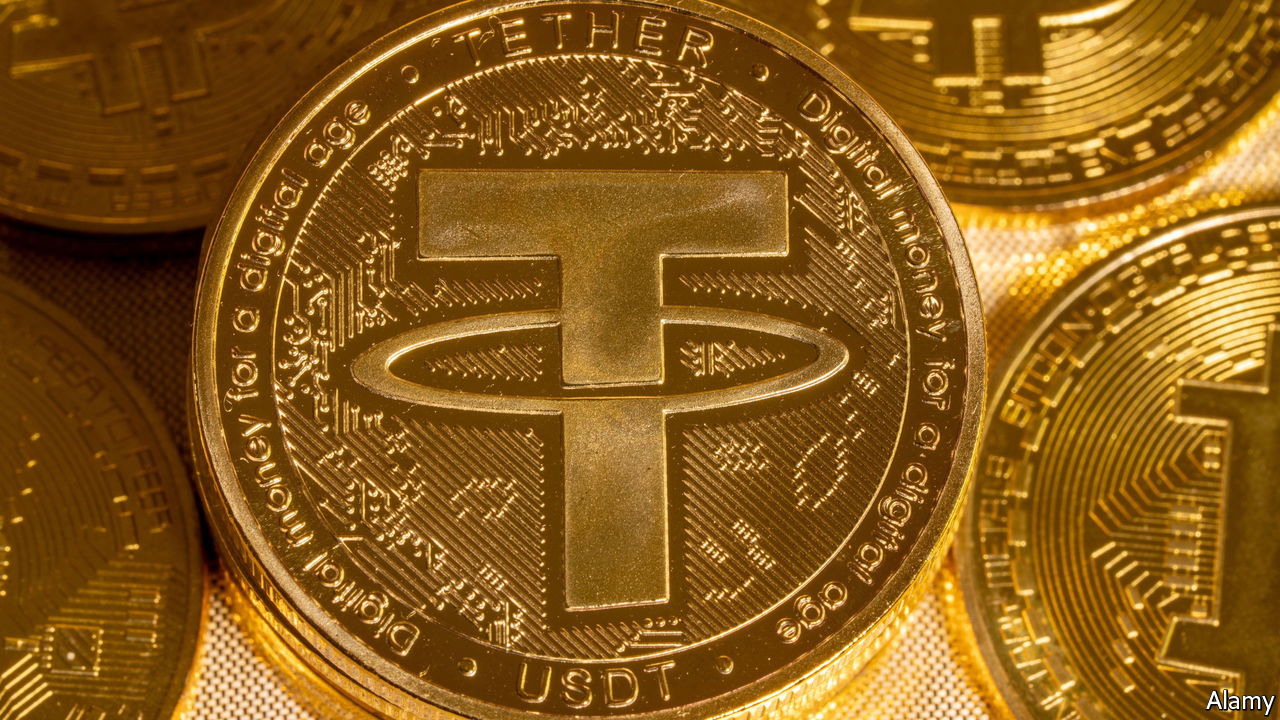
USDT appears particularly important in this system. According to Elliptic, Iran’s central bank acquired at least $507 million worth of Tether’s dollar-pegged stablecoin. Such a reserve would provide access to a digital representation of dollars without relying entirely on conventional banks or correspondent banking relationships.

That distinction matters because Iran’s national currency, the rial, has suffered severe pressure. As confidence in the domestic currency weakens, dollar-linked assets can become attractive stores of value.

USDT can potentially function as a digital dollar substitute, allowing value to move across borders through blockchain networks rather than through traditional financial institutions.

Much of the reported activity initially passed through Nobitex, Iran’s largest cryptocurrency exchange. The exchange has therefore become an important part of the country’s digital-asset infrastructure and, by extension, a point of interest for international regulators and sanctions authorities.

Yet the Iranian strategy exposes an important weakness in the idea that stablecoins provide completely independent access to dollars. USDT may operate on public blockchains, but Tether retains significant control over the token itself.

The company can freeze addresses, preventing specific USDT holdings from being transferred. Tether has demonstrated that capability repeatedly. The issuer blocked approximately $344 million worth of USDT in April and another $131 million in July, illustrating how centralized control can remain embedded within an otherwise decentralized financial ecosystem.

This creates a paradox for countries attempting to circumvent sanctions. Blockchain technology can remove banks and traditional intermediaries from parts of the transaction process, but it does not necessarily remove centralized issuers, exchanges, compliance systems or governments from the equation.

For Iran, Bitcoin presents a different proposition because it does not depend on a single issuer capable of freezing individual coins. Yet Bitcoin remains volatile, traceable on public ledgers and increasingly connected to regulated exchanges and financial institutions.

Washington can therefore target the surrounding infrastructure even when it cannot directly control the network. The expanding US crackdown signals that cryptocurrency sanctions enforcement is entering a more sophisticated phase.

Governments are no longer treating digital assets simply as an alternative payment technology. They are increasingly viewing them as strategic financial infrastructure.

Iran’s experience demonstrates both the power and limitations of that infrastructure.

Crypto can create new pathways around traditional financial restrictions, but those pathways are not necessarily beyond government reach. As sanctions enforcement catches up with digital finance.

The struggle over Bitcoin and USDT may become an important test of how much financial sovereignty blockchain technology can actually deliver.

Abraxas Capital’s Massive ETH Position Highlights Growing Crypto Market Hedging

0

Abraxas Capital is drawing attention in the Ethereum market after reportedly purchasing another 13,000 ETH, worth approximately $32.39 million, as part of a strategy designed to hedge its enormous short position on Hyperliquid.

According to blockchain analytics platform Lookonchain, the investment comes alongside a short position of roughly 141,180 ETH, valued at about $353.27 million. The unusual combination of spot Ethereum holdings and a large derivatives short highlights how sophisticated crypto traders can manage exposure without making a simple directional bet on whether ETH will rise or fall.

At first glance, buying Ethereum while simultaneously maintaining a substantial short position appears contradictory. A trader who expects ETH to decline would normally benefit from selling or shorting the asset rather than accumulating it.

However, the strategy makes more sense when viewed through the lens of portfolio hedging. By holding actual ETH, Abraxas can offset some of the losses generated by its short position if Ethereum rises sharply.

For example, if ETH increases in value, the short position would lose money because Abraxas would eventually need to close the position at a higher price.

However, the spot ETH holdings would appreciate at the same time. This creates a natural hedge that can reduce the portfolio’s sensitivity to Ethereum’s price movements. Conversely, if ETH falls, the short position can generate gains, while the spot holdings decline in value.

The strategy can become even more attractive when funding rates are favorable. Perpetual futures contracts on platforms such as Hyperliquid use funding payments to keep derivative prices aligned with the underlying asset.

Depending on market conditions, traders holding short positions can receive funding from long-position holders. In such circumstances, a trader can potentially earn funding income while maintaining a relatively hedged exposure to ETH.

This means Abraxas may not necessarily be making a straightforward prediction that Ethereum will collapse. Instead, the firm could be attempting to exploit the difference between spot and derivatives markets.

Using its ETH holdings to reduce directional risk while seeking returns from funding, basis, or other market inefficiencies. The scale of the reported short remains significant. The additional 13,000 ETH represents only a fraction of the approximately 141,180 ETH short position.

Consequently, the latest purchase should not automatically be interpreted as evidence that Abraxas is fully hedged. The overall hedge ratio depends on the firm’s complete portfolio, including other spot holdings, derivatives, collateral, leverage and potentially additional positions that are not publicly visible.

The transaction demonstrates the increasingly sophisticated structure of institutional crypto trading. Large digital-asset investors are no longer limited to simply buying Bitcoin or Ethereum and waiting for prices to rise.

They can combine spot assets, perpetual futures and funding mechanisms to construct market-neutral or partially hedged strategies. For Ethereum, activity of this magnitude can also influence market sentiment.

Traders watching blockchain data may interpret large purchases as bullish accumulation, while the corresponding short position suggests a more nuanced strategy. The important distinction is that the two positions can exist simultaneously without representing a contradiction.

Abraxas Capital’s latest 13,000 ETH purchase therefore offers a glimpse into the complexity of modern crypto markets. Rather than betting exclusively on Ethereum’s next move, sophisticated traders can use opposing positions to manage volatility and potentially generate returns from market structure.

The real question is not whether Abraxas is bullish or bearish, but how effectively its overall portfolio balances the risks and opportunities created by its massive Hyperliquid position.

Why the Magnificent Seven Are No Longer One AI Trade

0

The idea of buying the “Magnificent Seven” as a single artificial intelligence trade is becoming increasingly difficult to justify, according to Plexo Capital founder Lo Toney.

While the seven technology giants are often grouped together as the primary beneficiaries of the AI boom, their business models, exposure to AI infrastructure and ability to generate returns from massive investments are increasingly different.

At the center of Toney’s argument is a simple dividing line: which companies control the infrastructure, and which companies can actually turn that infrastructure into sustainable profits.

The distinction matters because the AI revolution requires unprecedented levels of capital spending. Data centers, advanced chips, networking equipment and energy infrastructure require billions of dollars before companies can determine whether the resulting AI services will generate adequate returns.

Google, Microsoft and Amazon are among the companies making enormous investments in data centers and AI infrastructure.

These investments could strengthen their competitive positions, but they also create significant financial pressure.

Their challenge is not simply building AI capacity; it is demonstrating that the revenue generated from cloud computing, AI products and digital services can justify the enormous capital expenditures required to support them.

Nvidia occupies a different position in this equation. Rather than primarily financing the infrastructure needed to develop AI, Nvidia supplies the critical computing hardware that many of the world’s largest technology companies need.

Its customers are spending heavily on data centers and AI models, while Nvidia collects revenue from the demand for its GPUs and related technology. That distinction gives Nvidia an important position in the AI value chain.

If companies continue competing to build increasingly powerful AI systems, demand for high-performance computing could remain strong. Nvidia is not completely insulated from the broader AI investment cycle.

If customers eventually reduce capital expenditures because AI returns disappoint, demand for its products could also weaken. Meta and Apple represent another category. Both companies can use AI to reinforce businesses that already have established revenue engines.

Meta can integrate AI into advertising, recommendation systems and consumer products, potentially improving the efficiency and value of its enormous digital ecosystem.

Apple, meanwhile, can use AI to make its hardware and software more useful while strengthening the attractiveness of its devices and services.

Tesla presents a different proposition again. Its AI strategy is closely connected to autonomous driving, robotics and physical products. That could create a massive opportunity if Tesla successfully commercializes these technologies.

Yet the path is more complicated because regulatory requirements, manufacturing economics and profitability remain important considerations. For Toney, Google stands out because it combines several advantages.

The company owns significant data-center infrastructure, develops its own custom AI chips and operates businesses capable of monetizing that infrastructure. Search, cloud computing, advertising and emerging AI products provide multiple potential channels through which Google’s AI investments can translate into revenue.

The broader lesson is that investors may need to stop treating the Magnificent Seven as a uniform AI basket. The companies occupy different positions across the AI economy, from semiconductor suppliers and infrastructure owners to advertising platforms, hardware manufacturers and autonomous-technology developers.

As AI spending grows, the key question may therefore shift from who is investing the most to who can capture the most value. Companies that control critical infrastructure or possess established mechanisms for monetizing AI could have an advantage over those still trying to prove that enormous AI investments can become profitable businesses.