DD
MM
YYYY

PAGES

DD
MM
YYYY

spot_img

PAGES

Home Blog Page 6515

Capitalism Will Save Africa

2
Five ways to raise capital

If you want to make money, look for a problem and solve”

This statement in itself is one of the reasons we have lots of failed startups scattered across Africa. I don’t want to go too far, let’s stay within the confine of Nigeria.

For some time, I’ve heard lots of business speakers give advises to wantpreneurs or early startup founders on why they should look for a problem in Africa and solve then charge people for it.

While it’s true that we have so many problems in Nigeria at the moment, it’s also true that we really need to address how to approach them.

Firstly, I’d say that we need ideas that would generate money for both the problem solver and in turn affect the economy than people who just solve problems.

In order words, if we really want to solve problems, we must also consider how the solution will sustain itself. Sustainability is the key word here.

We need entrepreneurs to think sustainability than solving problems. This is what we lack in Nigeria.

I have seen so many people cling to the idea of being part of the sustainable development goals (SDG) goals and I wonder what exactly they’re saying.

Once they present their ideas to me, I discover they are only concerned about solving the problems and they are not thinking in 10 years time.

I think that we really do not understand what the word sustainable means. Sustainable means it has the ability to keep itself from going down at least for some time.

But how else can an idea keep itself from going down if it’s not making money?

I love the ideas of NGOs and I believe some people have small NGOs as an act of philantropism, but when we talk about tackling major problems we’re facing, then NGOs are the wrong approaches.

Take a look at the educational dysfunction and the high unemployment rate it has caused. Remember, there are tens of millions of unemployed youths littered everywhere.

How can we solve this situation without building structures, spending money, and spending more money.

Where do you get the money from?

Grants? Aids?

Would we depend on these forever to keep it running? That would be fatal.

Now back to my point, some start-up founders don’t run NGOs but their business models look like they’re running such.

I want to briefly explain why these startups founders are prepared to fail from day 1 and connect it to why solving problems is not the right mindset for startups.

The mindset of solving problems works in a way that you look for problems within the environment and think about solving.

The issue is not that people do not know they have the problems. The problem is that they can live comfortably with the problems.

The only problem people cannot do without is food, clothing, housing and the desperation to pretend to be who we’re not.

If you provide a solution around these, be rest assured you will run sustainable. However, it’s obvious that these are not the only problems we’re facing.

Matter of fact, the problems we’re facing asides these are grave and terrible. So do we only face problems that people are willing to pay for?

Of course not!!

People are not willing to pay for education. I don’t mean schooling, I mean to learn stuff that would make them relevant.

Yet we’d see lots of people still coming up with solutions to solve the education problem. So how do you run a sustainable business amidst this?

This is why I simply explained that sustainability should be the mindset of entrepreneurs.

That in itself is capitalism.

Since people are not willing to pay, should we leave the problem alone. No. There are many problems in this particular problem itself that would lead to money and I tell you it’s beyond solving problem skills.

One of the hardest thing to do is to create a structure that would take money away from people. Yet, that’s what we need for these ideas to be sustainable.

Taking money for your idea is way harder than solving the problem and if you don’t think in the money making direction, you’d not get it right.

If you get it right, you can scale up, move across territories and help more people. I used the word help because despite the fact that you’re taking their money, you’re exchanging help in return.

Are startups founders really ready to go this hard way to figure out how to make money from their ideas?

Well, you should pin this down and ponder on it as an entrepreneur.

Think like a capitalist.
Last Decade Was Not So Good For Kids

0

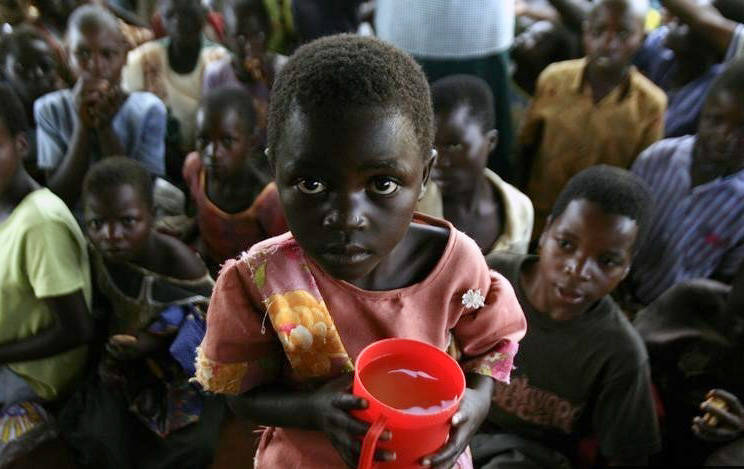
As 2019 winds to its end, a look at major events around the world shows that the decade was characterized by developments of proportionate impacts on humanity – the good, the bad and the ugly. From economic downturns to health crisis to armed conflicts, and the most vulnerable amongst all – children, had their full share of them all, but especially from armed conflicts.

According to news report published by the charity, Save the Children, nearly one in five children live in areas affected by armed conflict and war.

In 2017, about 420 million children were living in conflict-affected areas, a staggering number that has broken every record of conflict effect on children for the past 20 years, the report stated.

The research report, “Stop the War on Children” carried out by the Peace Research Institute Oslo stated that among the hardest conflict-hit areas were Afghanistan, South Sudan, Yemen, the Democratic Republic of Congo, Iraq, Central African Republic, Mali, Somalia and of course Nigeria.

According to the report, the reason for the increase in children living in conflict-affected areas in 2017, is that modern warfare has changed the lines of engagement, and fighting in urban areas among civilian populations became more common while international rules of engagement were disregarded.

The Save the Children charity report defined affected children as those living within 50 kilometers (30 miles) of where one or more conflict events took place in a year within a country’s borders.

The result of this has been grave violations of children’s rights and their being abused in so many ways that include getting maimed, killed, recruited or abducted by armed groups. There were also sexual assaults, school attacks and denial of humanitarian aid. The excesses of 2017 heightened the previous figure of 2010, from 10, 000 to 25, 000, and according to United Nations data analyzed in the report, it’s the highest number ever recorded since 2010.

Analysis of the reports showed that children were specially targeted and lack of protective measures for them spiked their vulnerability.

The President and CEO of Save the Children, Carolyn Miles said the rate and style at which these conflicts happen is an indication that children are suffering more than ever.

“The way today’s wars are fought is causing even more suffering for children.

“Our analysis clearly shows the situation is getting worse for children and the world is allowing this travesty to happen. Every day, children come under attack because armed groups and the military forces disregard international laws and treaties. From the use of chemical weapons to rape as a weapon of war, war crimes are being committed with impunity,” she said.

Another notable challenge that has been successfully birthed in areas of conflict, especially in Africa is lack of education for the affected children. In the Northeast Nigeria, occurrence of school attacks by Boko Haram became so rampant that many schools were shut. In 2016, in the same region, over 1 million school children were left out of school due to Boko Haram activities.

The most notorious of the abductions was the Chibok School Girls in April 2014, when 276 girls were taken from their school’s hostel. The attacks on schools continued with so many more kids being abducted.

It was deemed unreasonable to subject schools kids to further attacks from the Islamist armed group, when the Nigerian Military was reportedly using these schools as bases. A report by Human Rights Watch titled “They Set The Classroom on Fire: Attacks on Education in Northeast Nigeria” noted increase in brutal assault by Boko Haram on schools. It stated that between 2009 and 2015, the terrorist group destroyed more than 910 schools and forced at least 1,500 more to close. The conflict led to the death of over 611 teachers and 19, 000 others were forced to flee. There were also cases of abduction involving more than 2, 000 civilians, among them were large groups of students made up of a lot of girls.

The onslaught continued, leading to internal displacement of communities, destroying every basis of education in the region. The number of out-of-school children consequently increased, and many of them were scattered around places of shelter and safety with no access to education.

As the decade drew close to its conclusion, there were over 11 million out-school-children in Nigeria alone. These children were exposed to the devastating reality of lack of education and hunger. Efforts by humanitarian groups were not enough to quell the menace of the organized onslaught against western education that has done more than deny children basic education and nourishment.

In other parts of the world where there is relative peace, the problem has been more of economic hardship. Parents who could barely provide for their families have watched their children helplessly as they grow through hunger and malnutrition.

However, the bleak situation of education in the Northeast Nigeria has made the region a typical example of children’s woes in the world. This is because, according to Unicef, a lot of factors have come into play to create a dysfunction that has altered the essence of education in the region.

The education deprivation in northern Nigeria is driven by various factors, including economic barriers and socio-cultural norms and practices that discourage attendance in formal education, especially for girls” – Unicef.

The solution has been tied to the Sustainable Development Goals 4, which advocates the prioritization of education and target children who are likely to receive the least education.

The aim of UNICEF’s education programme is to support the government in achieving SDG 4 by 2030 through improved planning and by addressing some of the systemic barriers that hinder the implementation of an effective education strategy” – Unicef.

The Nigeria’s Financial Bill And Magic of Tax-free $70,000-Turnover Companies

0

The Nigerian Financial Bill was recently passed by the Senate. While it awaits the assent of the president, the Minister of Finance, Budget and National Planning, Zainab Ahmed, said the Bill will exempt companies and businesses with turnovers less than N25 million from Companies Income Tax (CIT)

She added that companies with turnovers of N25 million to N100 million yearly will be paying 20 percent as Companies Income Tax, but those earning over N100 million will pay 30 percent of their profit as income tax.

Presently, all companies are required to part with 30 percent of their profit as CIT to the Federal Government, but the Minister said there is going to be consideration to businesses earning less to enable them to expand.

“Not only will small businesses be able to do more because they are not paying taxes, we are also working together with the trade authorities to also encourage people in the formal sector to become formalize because they will see other businesses like them that are not registered doing well.

“Their productivity will increase, they will employ more Nigerians and at the end of the day, they will grow to the level of a medium size business and begin to pay taxes.

“Our assessment is that any business that has a turnover of less than N25 million needs that break, not being taxed so they can invest in their business.

“We reduce the tax for medium size businesses from 30 percent to 20 percent so they can have more resources that they can plough back in their business.

“These are the largest employers of labor. The federal and state governments have a total labor force of less than one percent of the population,” she said.

The CIT rate is currently 30 percent, assessed on a preceding year basis. For small companies in the manufacturing industry and wholly export-oriented companies with turnover not exceeding N1 million, the Company Income Tax is reduced to 20 percent in the first five calendar years of operation.

Resident companies are placed under corporate income tax on their worldwide income, while non-resident are subject to CIT on their Nigeria-source income. In business profit aspect, if a company is a Permanent Establishment (PE) or a fixed base in Nigeria, it will be taxed based on profits attributable to the fixed base.

However, the 2019 Financial Tax Bill made many changes to the already existing rules, aimed at easing the tax burden on businesses. The Bill seeks to promote fiscal equity, align domestic laws with global best practices, in support of micro, small and medium enterprises. It aims to help the government implement policies that will enable increased revenue for the government. But it also has demerits as Deloitte Nigeria analysis shows.

The key policy changes have come in these areas.

Wider base for taxing Non-Resident Companies (NRCs). Through provisions that create a taxable presence for NRCs operating digitally in areas of consultancy, technical management etc. in Nigeria, as long as there is Significant Economic Presence (SEP) and resultant profits from the activities thereof.

While this provision is a welcome development as its objective is to ensure activities with an economic base in Nigeria, it does not give definition to what constitutes SEP. It leaves the decision at the discretion of the Finance Minister, who wields autonomous power to determine SEP through executive order.

Without the executive order, the ambiguity surrounding the significant economic presence remains.

Under the Bill, Insurance companies would be able to carry forward losses indefinitely as opposed to the 4-year restriction currently in place. Life and non-life businesses would no longer be liable to special minimum tax provision and all wholly, exclusively, reasonably and necessarily incurred expenses will be tax deductible.

Moreover, “taxable investment income” would be limited to “income derived from the investment of shareholders funds.” The change seeks to clarify taxable income and limits it to income accruing to the insurance company as against income accruing to insurance fund.

The analysis noted the exception on Excess Dividend Tax (EDT) provisions. Currently, where a company pays a dividend in excess of its taxable profits, such dividend is subject to CIT at 30%. It does not matter if the income from which the dividend is paid has been taxed or the underlying income is altogether exempt from tax.

Mrs. Ahmed however decried the faux against VAT increment to 7.5%, saying that the Financial Tax Bill, when passed, would cushion the effects.

Nigeria’s 78% Electricity Tariff Increment and the Burden of Darkness

0

The Nigerian Electricity Regulatory Commission (NERC) has said that electricity billing will be increased in April this year. The decision was made in December 31st during the regulator’s Minor Review of Multi-Year Tariff Order 2015 and Minimum Remittance Order for the year 2020.

The order is to take effect from January 1st for 11 DisCos (distributing companies), and in April, for the rest of the DisCos. It was said to be issued to reflect the impact of changes in the minor review variables in the determination of cost-reflective tariffs and relevant tariffs and market shortfalls for 2019 and 2020.

Statement released by the Commission disclosed that the order also involves the minimum remittances payable by the DisCos in meeting their market obligations based on the allowed tariffs, which will run until 2021. The DisCos are required also to settle their market invoices to reflect applicable tariff shortfalls.

“The Federal Government’s Updated Power Sector Recovery Program does not envisage an immediate increase in end-user tariffs until 1st April 2020 and a transition to full cost reflectivity by end of 2021. In the interim, the Federal Government has committed to funding the revenue gap arising from the difference between cost-reflective tariffs determined by the commission and the actual end-user tariffs payable by customers.

“All FGN intervention from the financing plan of the PSRP for funding tariff shortfall shall be applied through NBET and the market operator to ensure 100 percent settlement of invoices issued by market participants.

“Effectively, this order places a freeze on the tariffs of TCN and administrative charges until April 2020 at the rates applied in generating MO invoices for the period of January to October 2019.”

For Abuja DisCo, customers ought to pay average N54.3 per kilowatt hour (KWH) as cost reflective tariff effective January 1, 2020.

However, NERC said it should continue collecting N32.7. Hence, Residential 2 (R2) customers’ bill remains at N24.30/kwh till April when the PRSP stipulates a hike. But it must remit 42% as payment for monthly bulk energy to the Nigerian Bulk Electricity Trading Plc (NBET).

Benin DisCo customers will pay average N32.5/kwh instead of the new N56.4 cost reflective amount. Residential customers will continue to pay N31.26/kwh and it must remit 35.7% for bulk energy henceforth.

In Lagos, Ikeja DisCo customers ought to pay N44.6/kwh but are allowed to pay N27.3/kwh for now by NERC. While its Residential customers continue to pay N21.30/kwh, the DisCo must remit 49% bulk energy payment.

For Eko DisCo, customers will pay N28.3/kwh average instead of N47.0/kwh cost reflective amount. Residential customers will continue to pay N24/kwh and it must remit 43% bulk energy settlement to NBET.

Kano DisCo, customers should pay N52.7/kwh average but are allowed to pay N30.1/kwh. The DisCos collects N22.50/kwh from Residential customers now and must pay 38% of its monthly bulk energy bill.

Enugu DisCo averagely collects N35.3/kwh from customers instead of N54.4/kwh. Residential customers pay N30.93/kwh and the DisCo must pay 42% monthly bulk energy invoice to NBET. For Yola DisCo, customers will pay N57.4/kwh in future but are presently allowed to pay N26.8/kwh. It bills Residential customers N23.25/kwh and it must pay 12% of its monthly energy invoice or face sanctions.

NERC said the order was pursuant to Section 32 and 76 of the Electric Power Sector Reform Act aimed at providing cost reflective tariffs that ensures prices charged by licensees are fair to consumers.

According to Premium Times, such prices are supposed to be sufficient for licensees to operate efficiently to recover the full costs of their activities, including reasonable returns on the capital invested in the business.

In issuing the order, Section 17 of the MYTO 2015 expects that changes in the variables in the economy outside the control of DISCOs, including inflation rates, foreign exchange rates, gas prices and available electricity generation capacity will be taken into consideration.

NERC said the new order updates was based on actual changes in macroeconomic variables in generation capacity as at October 31, 2019, including inflation rate of 11.3 percent for January to October 2019.

The order was also based on exchange rates of N306.9 plus one percent premium which is about N309.97 to the dollar and gas price of $2.50 per million metric tons BTU and gas transportation cost of $0.80 per MMBTU

Basic assumptions that guided the review included exchange rate of N310, generation cost of N23 per kWh, transmission cost of N7.8 per kWh, transmission and admin cost of N3.99 per kWh.

The Commission said it will hold DisCos responsible and ensure that they accountably comply with the remittance order.

“In the determination for compliance to the minimum remittance threshold in this Order, the Commission shall consider verified receivables from MDAs (ministries, departments and agencies) for the settlement period and DISCos’ historical collection efficiency for MDAs.

“The commission shall hold the TCN (Transmission Company of Nigeria) responsible for deviation from the economic dispatch order that adversely impact on the base weighted average cost of the wholesale of energy.”

However the 78% increment has aroused outrage among consumers who said they are being charged for services not rendered. In Enugu, where the hike is notably more exorbitant, considering that most consumers fall on the residential category, there is a tendency of a faceoff between the DisCo and consumers.

At the center of controversy trailing the upward review of the electricity tariff is the fact that only about 2 million consumers use prepaid meters. So the rest who are going to be placed on estimated billing will likely pay higher than the stipulated price.

Asamoah Gyan: Unsung Hero with Managerial Implications for Africa, Europe and the Middle East

0

I am writing this piece as part of my current research on management in the MESSA (Middle East and Sub-Saharan Africa) taken from the purview of football. This working paper is aligned to my recent involvement in the ManaGlobal Project, a collaborative research project seeking scientific knowledge into the discovery and inter-sectoral mobility of researchers across Europe, Africa and Arab countries.

ManaGlobal is an interdisciplinary research across social scientists which provides opportunities for new insights on how and why businesses and their leaders manage their enterprises in a specific way. The project ensures widening participation amongst policy makers, business enterprises and researchers across the regions.

The project’s main objective is to study and understand the hybridization of business and management practices in African and Arab countries, and to develop a theoretical framework that may help future business leaders and managers to act locally and think globally. Institutional partners include Universite Rennes II (Rennes 2); Institut Des Sciences et Industries du Vivant et de l’envirnment-Agro Paris Tech (AgroParisTech), Universitaet Bielefeld, University of Manchester (UK), and the Abertay University Dundee amongst others.

Evidently three continents are involved in this collaborative effort: Africa, Europe and the Middle East. It is against this backdrop that I profile one of the top Ghanaian footballers and his exploits across these geographies in what I label waves.

The First Wave – Africa

The focus of this wave highlights the career progression of a notable Ghanaian footballer and any football management lessons that could be learned from his exploits since 2003.

At the National level, Asamoah Gyan is the all-time leading goalscorer of the Ghana national team having represented his country at the 2006, 2010 and 2014 FIFA World Cups. With 6 goals, he is the top African goalscorer in the history of the World Cup.

Watch Asamoah Gyan World Cup Goals on YouTube

Besides the FIFA World Cup, Gyan has also represented Ghana at the 2004 Summer Olympics and in seven Africa Cup of Nations (AFCON) in 2006, 2008, 2010, 2012, 2013, 2015 and 2017, helping them finish in third-place in 2008 and runner-up in 2010 and 2015.

In a 2019 Ghana Alert article entitled “2019 Africa Cup of Nations: Not playing Asamoah Gyan was a mistake – Former GFA chief,” Dr Nyaho Nyaho-Tamakloe, the former Hearts of Oak (a historical Ghanaian football club) board member, argued that the decision to keep Asamoah Gyan on the bench during Ghana’s games at the AFCON tournament contributed to Ghana’s exit from the 2019 event.

Watch Asamoah Gyan all 8 AFCON goals on YouTube

At the Club level, Asamoah Gyan began his career in 2003 with Ghanaian Premier League club Liberty Professionals scoring ten goals in sixteen matches.

The Second Wave – Europe

On leaving Liberty Professionals Gyan spent three seasons with Serie A club Udinese via two seasons loan at Modena netting on fifteen occasions in 53 league matches. Five years later in 2008, he joined Ligue 1 club Rennes, netting fourteen times in 48 league matches in just two seasons.

In a further two years in 2010, Gyan joined English Premier League club Sunderland, breaking the club’s transfer record and netting on ten occasions in 34 Premier League matches again in just two seasons. So there you have it Italy (Udinese), France (Rennes) and England (Sunderland).

The Third Wave – Middle East

By 2011, Gyan joined Al Ain in the UAE Pro-League on loan and became the league’s top-goalscorer, before permanently joining the club and helping Al Ain retain the title and continue to dominate the league.

https://youtu.be/QxcpY_wE6c8

At this time, it is worth highlighting that I left the United Arab Emirates in August 2015 after having been part of the celebration of this African’s exploits in the Middle East, only to now realise that he wasn’t very far behind. Gyan also exited the Middle East the same year and joined Chinese Super League club Shanghai SIPG in July 2015 for an undisclosed fee that made him one of the world’s best paid football players.

In the 2013–14 season, Gyan scored on 44 occasions in 40 matches with Al Ain.

Not long afterwards he moved on to the Turkish club Kayserispor on 5 July 2017 on a spell that ended 9 August 2019 when he moved to the Indian Super League club side, NorthEast United FC – a club owned and operated by Bollywood actor John Abraham – representing the 8 states of North East India: Assam, Nagaland, Manipur, Meghalaya, Sikkim, Arunachal Pradesh, Tripura and Mizoram.

Management Implications

In my article entitled “Management implications of foreign players in the English Premiership League football,” I pointed out that the English Premier League football provided a unique environment for management decisions and processes at varied levels. I also cautioned that the globalisation of professional sports has received relatively little attention in terms of theory development and management and policy implications. Indeed, West African countries such as Nigeria and Ghana, and to some extent Cameroun, have made their mark on the global stage – albeit in rather fragmented ways, which have consequences for their self-inflicted marginalisation from the global sports (football) arena.

In another recent article entitled “Don’t Cry for Me Africa (and Nigeria) – An unSporting Faux Pas,” I posited that African personality of the year award was a worthy imperative identifying and celebrating unsung heroes in the BRICS context. For example, guest appearances on TV talkshows could serve as a peripheral route while other central routes are pondered.

Only recently, Michael Essien, former Chelsea and Ghana football icon chose his best 11 African players of the decade, a list that included himself, the Nigerian Goalkeeper, as well as Ivorian and Camerounian icons.

This follows the path of a December 2018 article by Tom Gott entitled “Here are the 11 Nigerian players who have scored the most Premier League goals”, ranked top goal scorers such as Jay Jay Okocha with 14 goals, Kelechi Iheanacho and Odion Ighalo with16 goals each,  Victor Moses with 20 goals, Victor Anichebe with 26 goals, Obafemi Martins with 28 goals, Peter Odemwingie with 36 goals, Shola Ameobi with 43 goals, Efan Ekoku with 52 goals, Nwankwo Kanu with 54 goals, and Yakubu with an outstanding 95 goals.

Austin Jay Jay Okocha Joggles the Ball for the King of Talk! Best Interview Ever! – YouTube

My parting question is about the future of African footballers and football management in general – what does life after the “beautiful game” (in the field of play) have to offer?

Football agents? Managers? Pundits? Brand Ambassadors, Influencers or even Entrepreneurs?

We have seen some examples from Nigeria and Ghana and the interference of their respective associations in contravention of FIFA ground rules in recent times. For example, “Ghana’s FA ousts national team coaches at all levels.”


Further reading:

Madichie, N. (2009). Management implications of foreign players in the English Premiership League football. Management Decision47(1), 24-50.

Madichie, N. (2010). Giving the Beautiful Game a “Pretty” Bad Name: A viewpoint on African Football. African Journal of Business & Economic Research5(1), 135-150.

Madichie, N. (2011). Sharjah Football Club (UAE): still kings? Emerald Emerging Markets Case Studies1(4), 1-9.

Madichie, N. (2013a). Ode to a “million dollar” question: does the future of football lie in the Middle East? Management Decision51(9), 1839-1860.

Madichie, N. (2013b). Is the Middle East the land of the future? It is not a given! Foresight15(4), 321-333.

Madichie, N. (2016). Re-branding the Nigerian Professional Football League: open play or dead ball? Marketing Intelligence & Planning34(2), 256-280.