DD
MM
YYYY

PAGES

DD
MM
YYYY

spot_img

PAGES

Home Blog Page 6591

“Joromi” – Testing Nigeria IP Laws By Simi and Victor Uwaifo

0

Since the author shared his piece on Sir Victor Uwaifo taking Simi, a musician, to court, demanding compensation for trademark infringement on “Joromi”, an entertainment character he created, the comments in the community are largely that (1) Mr. Uwaifo should go and sit down, or (2) the author did not “understand” trademark laws.

The entire conversation above developed as a result of a recent fifty million naira law suit filed by Sir Victor Uwaifo on the award winning female musician Simi. Simi is being sued for N50 million as damages for using the word ‘Joromi’ in her song and as the title of one of her tracks. Remember ‘Joromi’ was also the title  Uwaifo gave to his 1979 global hit.

I think the problem here is the fact that her song bears the same title as Uwaifo’s. So if a foreigner walks into a store and asks for Joromi, he or she could be given Simi’s even though it may not be what the person had in mind. These are fundamental issues every musician should know, but is frequently violated by a good number of artistes we have today probably because there have been no consequences for neglecting  such rules.

I have tried to challenge the #2 group, but so far I am unable to get anything the author did not understand. Personally, my understanding is that if I name a toy Elmo, a movie Spider-Man, Godfather, or simply Living in Bondage, a certain level of infringement may be happening. Also, if I launch a spice and call it Maggi or Royco, I may be causing confusion in the market. Also, if I name a song Thriller (originally controlled by Michael Jackson estate), I may be creating fiction in this world, and liable to damages.

Sure, Nigeria does not care. But while we have not followed up, for years, on protecting certain creatives, nothing stops us waking up today. Mr. Uwaifo may be saying – I might not have built a house protected by physical security guards, but I built an “intellectual property estate” on “Joromi” and will use legal guards to protect it. 

Lawyers here – what is it that the author did not understand in the piece? I want to believe that Uwaifo’s legal team is not stupid for asking for this N50 million compensation. Are we saying another bank can launch tomorrow and call itself Union Bank? Even if Joromi is a common word, Uwaifo was the first that used it as a song title. Possibly, as a lay man, Nigeria’s trademark law will allow him to trademark it for music title which means only him can use it in Nigeria for a music title.

Yet, I will need those that understand IP (intellectual property) matters to educate us here within the context of Nigerian law. Simply, I want this question answered: can any musician name his/her album or song title without considerations of existing titles, and making sure customers are not confused?

Trademark Law in Nigeria – The Sir Victor Uwaifo’s Suit Against Simi on ‘Joromi’
Sad Tales of Nigerian Emergency Services

0

On October 2, a fully loaded Sienna bus plunged into Ososa River, along Sagamu-Ijebu-Ode axis of Lagos-Benin expressway, Ogun State. It has been a month now and none of the 10 occupants of the vehicle has been found, even though there is credible evidence that the bus is in the river.

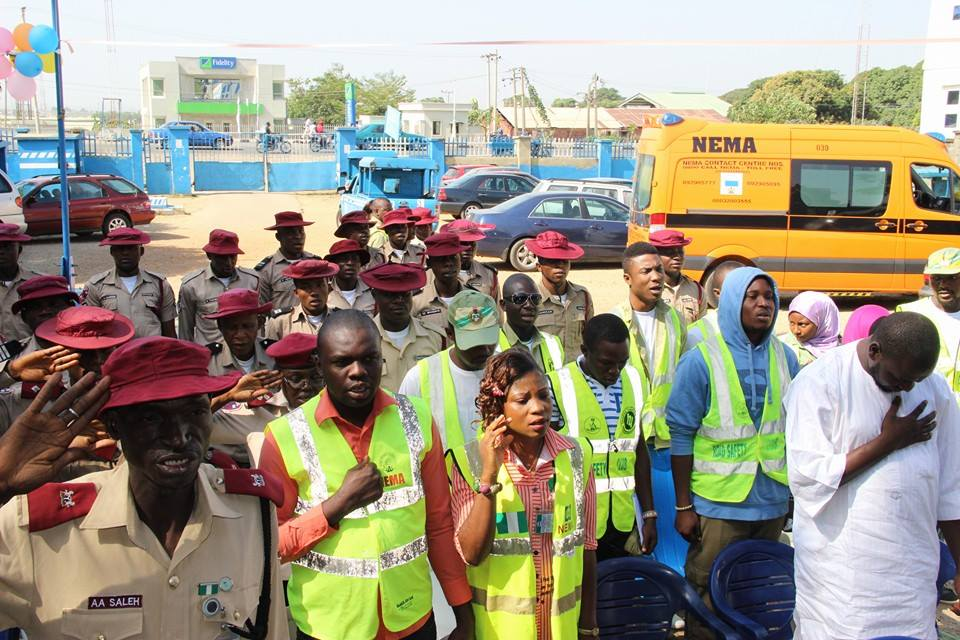
The collective efforts of the Federal Road Safety Corps (FRSC), the Ogun State Traffic Compliance and Enforcement (TRACE) Corps, the police and locals did a little to effect a rescue.

Clement Oladele, the Ogun State Sector Commander of FRSC, attribute the failure to continuous downpour around the axis. He said the level of the river waters has risen to the degree that made it difficult for divers to continue the search for the accident victims.

In October 16, a fully loaded tanker fell along Up Iweka road, spilling its contents and eventually gutted fire. For hours the fire raged through lives and property with devastating freedom emanating from the lack or inefficiency of Emergency Services.

It was full of preventable losses. The gory images of a mother and child burnt beyond recognition, 40 houses, 500 shops, and goods burnt to ashes tell tales of carefree emergency services provision by the state government.

Forty eight hours after the disaster, another tanker fell, giving another test to the state’s fire service – but once again, they helplessly failed. These two incidences don’t only expose the rot in Nigeria’s emergency services; it tells how vulnerable Nigerians are in the face of disaster. It was reported that since 2013, Anambra State’s budget for fire service has not gone beyond N3 million, the highest has been in 2019, which has N3, 638, 250. And many other states don’t have a better story.

It is not just a problem of providing fund for emergency services, it is a problem deeply rooted in the thinking of policy makers. Infrastructural developments in Nigeria, like roads and buildings have little or no consideration for emergencies.

Most Nigerian roads don’t have alleys where a motorist can pull over in case of emergency; and public places, buildings, are developed without consideration that may be fire outbreak, flood or a need for an ambulance. Therefore, preventable disasters become overwhelming due to mainly two factors; poor town planning and underfunding of emergency services.

Unfortunately, only a few states in Nigerian feel the need to develop a system that will ameliorate the situation. Even disaster prone states don’t see any need to do better.

In April, a fuel tanker fell and gutted fire in a busy road in Ibadan, killing scores and injuring others. The most disappointing part of the incident was that there was no ambulance to convey the injured to the hospital. Commercial vehicles were used to move the wounded to the hospital, aggravating the pains on their bodies torn by fire.

There has been a glaring display of inadequacy in every case of emergency in every Nigerian state. From the provision of ambulance services to every other needed tool; it has been a “you are on your own” condition. For instance, in Lagos, there have been instances of fire outbreak where first responder-firefighters got the location only to ask the victims where their water tank is.

A mortifying display of unpreparedness that has been aiding the prevalence of preventable cases of tragedy: To make matters worse, they are not serving as warning examples to other states.

In the aftermath of Anambra’s tragedy, everyone was expecting the state government to make a holistic reform announcement on the emergency services of the state. Instead, the Anambra state Government announced restriction of movement of tankers during the day, a perceived solution to fire outbreaks that results from falling petrol tankers.

The State Commissioner for Information and Public Enlightenment, Mr. Don Adinuba, said the restriction will commence on Saturday, November 2, the tankers are only free to move from 8:00 p.m to 5.00 a.m.

“Following the incessant collapse of trucks carrying petroleum products in Anambra State in recent times, including one which happened in Onitsha on Thursday. The Anambra State Government has decided to restrict the time which vehicles laden with petroleum products can move in the State.

“With effect from Saturday, November 2, 2019, such vehicles can be allowed to move within Anambra State from only 8:00 p.m. to 5:00 a.m.

“The restriction is to enable agencies like the Anambra State Fire Service, the Nigerian Police Force, the Federal Road Safety Corps, the Civil Defence, the Anambra Traffic Management Agency and indeed all other security, law enforcement and safety agencies to respond effectively and in good time to emergencies created by such accidents,” he said.

Many believe that the statement reeks of inadequacy and unpreparedness for emergencies excused with the activities of the day.

Tankers fell mostly because of bad roads, and the fire becomes devastating because the State’s Fire Service is not equipped to quench it. So the solution proffered by the State is more like shifting the time, in case fire is going to break out from a fallen tanker, let be by 8:00 p.m. to 5: a.m.

The incessant cases of preventable cases of disaster in Nigeria is mortifying and devastating, and the cost of repairing the damage is always higher than the cost of preventing it. Therefore, the government should provide facilities needed to contain emergencies, and rehabilitate already existing infrastructures in anticipation of the inevitable – emergencies.

A Scented Declaration of Progress And Afropolitan Imagineering

0

This article is based on my chance encounter with an advertisement celebrating an “African” luxury brand.

Inspired by a recent study by Grace Adeniyi Ogunyankin, this brand, a brainchild of Tanal Ghandour, a Lebanese-Ghanaian and founder of Ghandour Cosmetics exudes power, identity and imagery.

Conceived in a product launch event at the prestigious Kempinski Hotel in Accra, the brand features two African stars. Oluchi Orlandi, a Nigerian super model and TV personality mingling with Marcel Desailly, a French-Ghanaian international football star. Evidently, such fame, according to Ogunyankin “helps to draw attention to the perfume.”

The choice of brand ambassadors could not have been more adept, as they increase the appeal of diverse audiences.

There are also some instructive sensory cues captured in the sixty-seconds clip i.e. sight, sound and touch. The visual is deft, only two black acts draped in exquisite white, while the White acts are dressed in black – colour switch. The background music is also mellow but sublime – Afrobeats for sound effect. It was also specially produced for the ad. As far as the sense of touch is concerned, “he keeps his left hand in his pocket and puts his right hand on the small of her back, and both her hands are on his back.”

A few quotes from the article are worth highlighting, and especially so considering the implicit (or explicit if you like) innuendoes of race, gender, and identity.

Race

“…the advertisement challenges panoptical time […] through the use of scent and re-writes the narratives that position the African man as a belated monster […] and that locate progress on the African woman’s body. [Posits] that the presence of the white gaze is an “unhappy technology” […] of Afropolitan Imagineering that serves to disrupt the historically privileged invisibility of the white gaze…”

Gender and Identity

Once all the candles are blown out, an image bearing the map of Africa and the words “Scent of Africa for woman” and then “man” appear on the screen. There is a simultaneous female voiceover, stating “Scent of Africa, the new fragrance” then there is a pause as the background music continues to play, and the screen focuses on the two main characters again.


This time, the woman’s arms are resting on the man’s shoulders and loosely wrapped around his neck. They are gazing at each other, nose touching, and it seems like they may kiss—and the voiceover comes on again, ending the commercial with the statement:

“Who I am is where I am from”.


Over the din of Afrobeats, clicking champagne glasses and the tshh-tshh of freshly spritzed cologne, I randomly overheard comments like “This doesn’t happen in Accra” from a passing socialite.

Indeed, the closeness of Oluchi and Marcel, the breeze blowing out the candles at the table are all electric. Yes, Professor Grace Ogunyankin persuasively points out that “the breeze symbolizes the wind of change” as Africa joins the elite club of luxury fashion brands.

Ladies and Gentlemen, introducing the “Scent of Africa” –  A symbol of Beauty, Elegance, and Power.

Read more:

Ogunyankin, G. A. (2018). A “Scented Declaration of Progress”: Globalisation, Afropolitan Imagineering and Familiar Orientations. Antipode. 1-21.

5 Top Financial Tips for Entrepreneurs

1

As a new entrepreneur, you’ve got too much ahead of you to tackle, yet; the problem of finances always comes to the forefront. After all, without enough cash, your company can run into the ground long before it reaches its full potential.

If you are not careful enough with your finances, this is often specifically what’s about to happen. There are several operational and financial challenges entrepreneurs got to overcome when starting and growing a business. 

One of the best ways in which to beat these difficulties is to prepare ahead of time and learn from the experiences of others. With that in mind and without further ado, here are 5 (five) necessary financial tips for an entrepreneur, so as to assist them to bridge that rough patches.  

  • Develop financial goals: Do you want your cash to grow, save for a vacation or buy a home one day? It may not be attainable while you lead your company, however it’s all attainable over the future if you work with your best interests in mind. If you’re unsure what you’re searching for with your finances or a way to guarantee a robust financial future, you will need to talk with a licensed financial planner. They will assist you to develop goals and work towards achieving them consistently over the course of many months or years. it’s going to merely be a matter of putting cash away every month. 
  • Managing income: The next thing worth keeping an eye out for is the income. The initial investment cash gets depleted fairly shortly, however; the operational costs still remain. Then, you need to introduce, supply incentives to customers apart from discounts, and pay bonuses to your staff so as to keep their morale high. The issue regarding money is that, throughout the initial stage of your startup, it’ll consume much money. Therefore, you need to be additional careful once it involves your management of these few resources you have available. 
  • Exploring Fundraising Options: The way within which you acquire the money for your startup can determine the way within which your company functions from that day on. Getting a partner means split management and going through preorder; a crowdfunding system implies that you already have some customers whereas taking money from a relative could place your personal relationship in peril. All things considered, several new entrepreneurs tend to go with start up business loans. 
  • Open Source Tools: One of the most effective ways to avoid wasting cash in your workplace is to go for ASCII text file tools. Open office is equally as economical as MS office. Nowadays, Google offers quite a number of nice alternatives to the current costly standard tool, as well. Apart from open source tools, free trials, demo versions, and free versions may also come in quite handy. Sure, some offer restricted practicality, others have an expiry date however; for the time being, they save you cash. Due to the very fact that your first several months are a period when you’re supposed to save the most, there’s no reason for you to not do so. 
  • Keep learning: There are numerous terms, acronyms, legal implications and steps to take. From life-insurance policies to money-market accounts, IRAs, stocks and bonds, there’s plenty to learn about. Check up on different apps that can build investment and budgeting more pleasant. Surround yourself with the proper people, like an accountant or financial adviser, who will assist you make sense of your current and future finances. Keep up on current economic developments, not simply within the space your company operates; but within the economy as a whole. You’ll be able to do that through audio books, reading online or taking classes. 

Final word

New entrepreneurs meet several challenges on their path to success however with proper organizational skills, enough analysis, and adequate advice it’s quite attainable to make it on your 1st attempt. Except for all the above-listed; it’s good to hire the services of a seasoned accountant, seeing as how this awaits you somewhere down the road. Never stop learning and forever stay persistent and you give yourself a very honest shot at success. Ensure to use these financial tips for entrepreneurs to help guide you on the way.

Things Nigerian Government Should Consider Before Attempting To Regulate the Use of Social Media

0
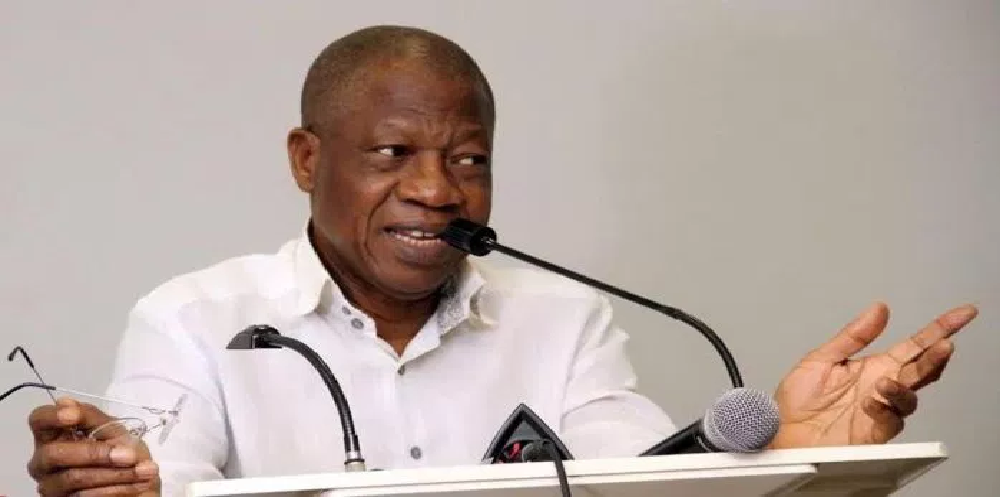
Lai Mohammed, Nigeria's minister of information

On Tuesday, 29th October, 2019, Lai Mohammed, the Nigerian Minister of Information, made it known that the Nigerian government is planning to regulate the use of social media. This, he asserts, became necessary as a result of the high rate of fake news and hate speeches circulated through the social media.

As expected, Nigerians didn’t receive this news with relish. They used different platforms to express their distaste and distrust for the incumbent government. Some went as far as seeing this ‘regulation’ as an onset of dictatorship, after all they should be free to express themselves.

But if you sit back and look at this critically, you may find out that there may be need for the enactment of laws that will monitor and control what is posted on social media. This isn’t just for the government benefit but also for individuals. For example, regulating the use of the social media may reduce the rate at which scammers hunt and defraud their victims. Regulating the social media may also reduce the rate of character defamation and blackmails that is on the increase these days. It is also possible that regulating the social media may make the platform less toxic and destructive.

So, why then are Nigerians uncomfortable with the news?

If you check the different posts and comments raised by Nigerians in different platforms concerning this issue, you will only see one thing – “fear of being suppressed”. Nigerians are truly afraid that the government wants to suppress their voice. They saw the social media as the only platform where they can make their grievances known to both the local and the international bodies. Social media is the only means through which Nigerians can easily and efficiently communicate to the government. It is the most effective means of obtaining and disseminating information. So, when Lai Mohammed brought up the social media regulatory issue again, Nigerians became suspicious of the intentions of the incumbent government.

Nigerians are also sceptical about the regulation of social media because they have not witnessed any hate speeches or fake news (at least not in a long time) that will warrant this decision. So calling for its regulation seems way out of place. If you truly weigh situation of things right now, you won’t blame anyone who believes that the federal government wants to gag Nigerians.

But, it is possible that the Federal Government (FG) meant well for Nigerians. It is possible that they want to protect Nigerians through regulating what is sent into the air waves. It is also possible that Nigerians will benefit if the social media is truly regulated. But, the FG needs to convince Nigerians first. They need to win the hearts of Nigerians. They have so many things to do and consider before continuing with the regulation plan. Here is the basis for this write up – what Lai Mohammed and his team need to do to convince Nigerians that regulating the social media is necessary.

THINGS NIGERIAN GOVERNMENT SHOULD DO
Below are some of the questions the FG needs to answer before continuing with the social media regulation plan.

1. What is Hate Speech?
It is not enough to tell Nigerians that hate speech is circulated through the social media when they have not been told what hate speech is. Different people can interpret that term differently. For this, the FG needs to clear up the air on what is and what is not hate speech. One thing Nigerians will want to know here is if going to the social media to voice out their grievances against the government or private individuals is also an aspect of hate speech. Nigerian government needs to explain in its minutest details, what it considers hate speech to entail. There is serious need to disambiguate that term so that people will know what they are expected to do or not.

2. What is Fake News?
How can Nigerian government brand a piece of information as fake? How can one determine that the circulating news isn’t a product of investigative journalism? The Nigerian government needs to convince the Nigerian citizens that fake news involves malicious stories released into the air to cause havoc and instability. They also have to release parameters that will be used to check on whether the news in question is true or not. They have to convince Nigerians that investigative reporters will not be victimised by this law.

3. Who is the Regulation Protecting?
This is the heart of the matter? So, who is this intended regulation actually protecting? If the regulation is designed to protect government officials, who are lax in their duties or corrupt, then the regulation may not hold. If the regulation is meant to address only government related matters, then it will be faulted. If the regulation isn’t designed to protect every single Nigerian – rich and poor, educated and non-educated, male and female, high and low – then, expect serious outcry from Nigerians. As stated earlier, this regulation should be designed to also reduce the rate of cybercrime, blackmail, character defamation and any other thing that violates their human person. So, let the Nigerians be told who the regulation is protecting.

4. Why must there be a Regulation?
There is need to convince Nigerians that this regulation is necessary. They need to be convinced that it is only through the FG control of what is posted on the social media that sanity could be brought into that platform. They need to see how havoc can be created as a result of malicious messages sent through the social media (and of course there are many of them).

Looking at this, it may be possible that what Nigerians actually need isn’t regulation but sensitization on the proper use of the social media. However, let the Minister of Information and his team try harder to state why this regulation is the only way the social media can be ‘sanitised’.

As can be seen, it is easier to convince Nigerians to accept regulation of social media if only the agency concerned enlightens Nigerians more on what they plan to fight against. The incumbent government should also give Nigerians reasons to trust its decisions regarding their (the Nigerians’) welfare. For this, if the master plan for this regulation about to be established doesn’t include protecting EVERY Nigerian, then it needs to be revisited. Else, the proposal will be kicked out, again.