DD
MM
YYYY

PAGES

DD
MM
YYYY

spot_img

PAGES

Home Blog Page 6633

The Religion Malady

0

Religion is meant to unite the people by teaching them how to love one another, and live together in peace and harmony, irrespective of nationality, tribe or colour. But what do we see today? Discrimination and religious conflicts. Even people with the same religion have conflicts.

Muslim parents would object against their sons and daughters getting married to Christians and vice-versa. Christians would not give Muslims any position in the work environment. These trends continue to grow from generation to generation. It deepens into our heart and causes unnecessary segregation. Are we not human?

It baffles me when I see people make religion the reason for not doing something humane. Where is the love? Where is the humanity?

Seven years ago, I fell in love with a Muslim girl. We truly love each other despite the difference in our religious beliefs. We were not even bothered by the difference between us, we just go with the language of love.

Somehow, my mom got to know about this and immediately object against it. She told me, ”As long as I am still alive, you will never marry a Muslim girl. You are a Christian and we Christians don’t get on the same page with Muslims. They are not righteous. They are into juju.”

She said many things that were not actually true about the Muslim religion. It’s obvious that many people only go with what they hear from shallow-minded people.

I told the girl what my mother said and she told me something quite shocking. She said, ”Of course, we can never get married unless you turn to a Muslim. My parents would rather disown me or kill me if I marry a Christian.”

That was the deal-breaker.

All my life, I struggled to understand why there’s a big disparity in both religions. I read my Bible and I understand one thing – Jesus was always spending his time with the people who are not even righteous. He told the people that he was here because of these people.

You look at our religious leaders, they are doing nothing to help the matter. They always preach against it. They have brainwashed our parents and make them see other religions as unbelievers. Everyone goes about with that mindset and wouldn’t want to associate with people from other religions. It’s so sad.

These are things we don’t really understand from these self-righteous messages that we preach:

  • Hatred: We are spreading hatred instead of love. When you make others see another religion as a barrier to their spiritual growth, they start hating on each other. They start judging each other. But who are we judge another person? Our judgement is always an opinion fueled by our own ego and bias analysis of a person.
  • Disunity: There can never be one nation with this type of mindset. Muslims won’t welcome Christians around them. They won’t even employ them in their own organization. The reason is clear – we are not the same. When you are preaching against another religion, simply know that you are creating disunity. Of course, disunity occurs in the absence of love.
  • Growth is hampered: The nation will never grow. Let’s take a look at Jurgen Klopp’s view about religion. The German tactician once said, ”Mane and Salah always fast at a particular period of time which I respect them for that because it is their religion. They always give their best with or without fasting.” That’s really a great perspective to learn from someone who understands what it takes to be human. What impact does this have on the German coach? He has transformed the Liverpool team into winners. No wonder he is currently the world’s best manager. There can never be growth in a nation that makes a big deal from differences in religions. Remember, no one chooses to be a Christian or a Muslim.

Nigeria is still suffering from this myopic way of thinking. If we are talking about having a one Nigeria, then it starts with our religious beliefs. Everyone should be free to practice the religion he wants. Everyone should fall in love with whosoever he or she deems fit to love and be with.

How someone will treat you is not based on religion. It is based on being humane and having a conscience. I have been dealt with by this so-called born-again. I have been cheated upon by these self-righteous Christians and Muslims.

We need to start looking past all these small talks. They are really not relevant to our growth and development as a nation and the world at large.

God bless the World.

The Unbelievable BBNaija Data that Summed up the Situation in Nigeria

1

The most popular TV Reality Show, Big Brother Naija, has finally come to an end on Sunday, October 6, 2019.

You’d be surprised at the data collated from this most talked about TV Reality Show.

A data expert, Adedayo Ayodeji Faniyan collected and published a useful data analytics that summed up the whole situation in the country. According to him, he decided to work on the figures due to what he overheard his colleagues at work were saying. He said,

A few months ago, some people were arguing at the office about the most talked-about  BBNaija Housemate. I normally wouldn’t bother about it, but I saw an opportunity to solve a problem and put the discussion to bed. My team and I started collecting data with different keywords such as #BBNaija, Big Brother Nigeria 2019.”

Faniyan and his team started working on this from August 8th to August 25th, 2019. According to him, the data collected was massive and they had never imagined that they would collect that much.

Faniyan continued, ”Excel could not open the file which I was not surprised about it, so we used R/ Python to clean the Data removing all irrelevant tweets (promotional tweets).”

”Our findings was – a total of 11 million tweets were collected. 5 million tweets from this pool were not related to #BBnaija conversation, they were majorly promotional tweets with the hashtag and were deleted. We were left with a total of 6,223,189 tweets by 214,388 accounts. These were found to be related to the BBNaija housemates.”Faniyan

Faniyan concluded, ”In August, there were 4,179,480 tweets while September had 1,626,169 tweets between August 8-25, and September 1-7 and 27.  
25.22% of the tweets were posted between 12am to 11:59pm while others were posted in the later hours of the day.”

Faniyan shared the link to the complete data here.

This is a real staggering stats. It is not a good omen for the country as these people are majorly youths. According to a LinkedIn Influencer and a Giant Writer, Rosemary Egbo, ”When President Buhari called us lazy, we were all angry and attacked him on social media. I think we owe him an apology. The sad state of this matter is, these youths are unemployed. But you’ll be surprised that they took from the little money given to them by their parents to vote for these housemates.”

I bet you would be surprised that the majority of these people did not vote during the last election. They never even bothered to register for a voters card. When we were supposed to vote for a more competent and innovative leader, you won’t see them. They are not even concerned about the state of the nation but they are always on the internet blaming the government they never voted for. Well, I stand to be corrected though.

11 million tweets is massive, but it would be nice if we can get to see what the age bracket of this 11 million tweets were. That’s another analytics figure that would be quiet expressive.

Although I am not anywhere a fan of BBNaija as I think its a waste of necessary resources that needs to be channelled into more priority things in Nigeria, I commend Adedayo Ayodeji Faniyan for working on this.

Anyone who looks into these stats will definitely see that our youths are lazy. There are many innovative programs that could help the thinking and creativity of our youths, but they chose to spend all their limited time arguing on Twitter and trolling each other on Instagram about the best housemate. I am ashamed of our youths sometimes.

You can’t watch BBNaija from beginning to end and still blame the government for unemployment. Common! Use your head.

Read that over 200 million votes were recorded. Each vote costs 4 naira. Now let’s do the calculation – 200 million votes multiply by 4 naira, that’s equal to 800 million naira.

If the stats were to be true, that’s a whole lot of money made by the BBNaija organizers. What can the youth learn from this? – ”Always Think Creatively.”

Someone’s creative thinking has got millions of youths glued to the screen for months. Then he made over 800 million naira. Aside from that, there are many big companies that sponsored this TV Reality Show. The winner gets 60 million naira but a First-Class graduate gets 100,000 naira.

That summed up everything about our country.

[Register, N150k] Vanguard Executive Masterclass with Ndubuisi Ekekwe

0

Good people, it is very amazing. Through some sponsors, the cost of my Vanguard Executive Masterclass has dropped from N350,000 to N150,000. If you have paid since I posted it here yesterday, you will be getting a refund.

We’re expecting more sponsors, and if someone/company writes the full cheque, the workshop becomes completely FREE to those that have paid.

As always, I remain humble on how my fellow citizens support any venture or initiative I pursue in our nation. Tell your supervisors, managers, and register today by contacting:

  • Jude on 08034187233
  • Ife on 09095372559
  • Email:Conferences@vanguardngr.com

To learn more about this workshop including theme, structure, etc, please click here.

[Register ] Vanguard Executive Masterclass by Prof Ndubuisi Ekekwe

The Need for Early Introduction of Calculators to Our Children

1

I bought a calculator for my son. He is 8 years old, and is in primary 4. His school, just like every other primary school in Nigeria, doesn’t use calculators for primary school pupils. But I still bought a calculator for him, only that he will use it at home for his homework. I don’t allow him to use it for all his calculations because he won’t be allowed to use it during exams; so I didn’t want him stuck in the exam hall.

I will give anything for the reaction I got from my son for such a little gift. He was so happy. He kept thanking, blessing and praying for me. He said I made him feel like he’s in secondary school (lol). The best part of it was that he immediately started writing down numbers on papers to calculate and all. Honestly, I’ve never seen my boy feeling so happy and grown up, not even when I bought a dictionary for him.

For reasons I am yet to understand, Nigerian schools are skeptical about introducing school children to the use of calculators until they get to their senior secondary school classes. If you ask me I’ll say Nigerians enjoy making things so difficult for themselves and for others. We want our children to be computer gurus immediately we give birth to them but we think that using calculators in solving math problems will ‘dull their brains’. This sounds so paradoxical if I may say.

In this age when exams are becoming computer based we are still clinging so hard to old ways of doing things. I could remember that during our time JAMB doesn’t allow candidates to come into the exam hall with calculators, yet they want them to solve lots of mathematical problems within a very short time. Now they are allowing in only customised ‘adding machine’ in place of a good scientific calculator.

But my problem today isn’t with JAMB, it is Nigerian primary and junior secondary schools that wouldn’t allow students to solve problems with the aid of machines. Anytime I complain about this, the ‘educationists’ around never hesitate to tell me that calculators are not good for students. I believe the Nigerian education system does not give room for the use of calculators in these schools. Teachers themselves believe that it shouldn’t be introduced into the education system.

Below are some of the assumptions given by some Nigerian educationists on why calculators should be kept away from school children:

  • a. Calculators make children less analytical. This of course is a fallacy. If someone is not analytical, the person won’t know what to ‘press’ on the calculator.
  • b. Calculators do not encourage the development of problem-solving skills. Well, calculator, as far as I know, helps people to solve problems faster. So I guess the person already has the problem-solving skills before using the calculator.
  • c. The use of calculator reduces someone’s self-confidence. I believe what they meant here is that the person will be so dependent on machine that without it, he will feel lost. Well, teachers should find a way to help their students not to become dependent on machines. The students can alternate between using and not using calculators to solve problems.
  • d. Using calculators do not help students to develop and sharpen their mathematical skills. The person that said this made reference to primary school pupils not being able to solve simple calculations using place values. Well, that is not an excuse for not introducing calculators early, don’t you think?
  • e. Calculator makes students lazy. You won’t believe that the teacher that said this is teaching Mathematics to SS 3 students. I don’t know what Nigerians see in stress and suffering. Well, if being lazy is the only way to find the easy way out, then let our students be lazy.

To refute the above assumptions, I will mention the changes I noticed in my son these few weeks I introduced him to a calculator. These changes are:

1. He is motivated to do his homework. Before, he drags his feet each time he has math homework that will require much calculations. The thought of placing numbers and marking out strokes seem to discourage him. But since he got this calculator, he couldn’t wait to do his math homework once he gets home.

2. He became faster with his calculations. I don’t know why but I noticed that calculating numbers seems easier for him now, even without using calculators. I think the calculator has taught him the answers to some common additions and subtractions. He can now look at some simple additions or subtractions and tell you their answers even without working them out.

3. He searches for his errors. Unlike before, if he makes a mistake and I tell him, he will just say, “mummy, leave it like that.” But now, if his calculates without his calculator, crosschecks the answer with the calculator and sees that he failed it, he will try to locate where the error is coming from. It is as if the use of calculator has made him not to see his homework as tiring.

4. He feels in-charge and confident. Maybe this is because the calculator tells him he got some answers right and also because he has a simple machine to take care of. I don’t really know but I can see the boy is feeling all grown-up these days.

5. He loves math once again. I think this is the best of them all. When he was in nursery school till he got to primary 1, he preferred his math assignment than any other one. This positive attitude towards math changed as he got to primary 3. But I’m happy he has gone back to his old self again.

All I am advocating for is that we begin early to introduce our children to calculators. This exercise should start from primary 3, or primary 4. I don’t think this will discourage our children from learning and developing mathematical skills; it will rather make them see it as an easy subject.

The world is fast changing and getting advanced; let us not allow it to pass us by.

With its Employability Workshop, UNILAG is Setting the Pace for Nigerian Public universities

0

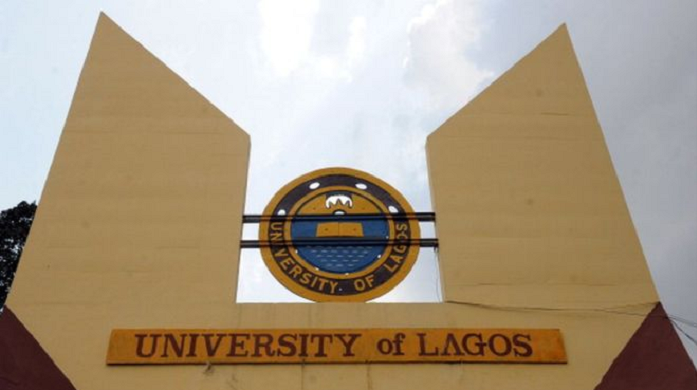
Some weeks ago, I came across a flyer on the twitter handle of the University of Lagos advertising a career week organized for students of the university in their final year. I was happy and excited by the fact that such an event is happening in UNILAG.  The advertised programme, with the theme “Grab your Job/ Empowered to be your own boss”, was organised by the Counselling Centre of the Students’ Affairs Division of the university. The aim, according to the flyer, was to expose the students to requisite mindset and relevant skills  for success in the world of work. The four-day programme covered training on job hunting, employability skills, CV crafting, job creation and skill acquisition. It also included dummy interview, job test and interaction with human resources experts.

With the frightening statistics of unemployment among Nigerian graduates, the training which was held in September this year was a right step in the right direction. The university should be commended for a number of reasons. One, being a public federal university, one does not expect that it would get to that level of innovation as quickly as this. Government owned institutions in Nigeria are not competitive. They do not look for students. Theirs is just to float a course, advertise and students would either rush or be forced to study such courses when their scores do not meet the cut off point.

Second, the fact that the programmes was conceived and executed also indicated that the university is waking up to the realities of education in this era. Global best practice dictates that universities do not only admit and train students for four or five years, they also ensure they give their graduates the needed training, exposure and connection. The return on investment is high. Such alumni would look back to reward the system that secures their future for them. The students can also have an idea, like the Stutern Report indicates, whether they stand to profit from the tuition and other fees paid while getting trained.

Third, the university has also attached some level of importance to the exit phase of the students’ life on campus. Before now, the tradition is to focus on the entry point. Tertiary institutions organise orientation programmes for newly admitted students. During these programmes, they enlighten the fresh students on university’s rules and regulations, sources and dangers of distractions and other issues they deem important to the survival of students on campus. Therefore, it is commendable that students in their final year of study are now being considered too. Creating such avenues would enable the students to have some level of clarity as far as post university issues are concerned.

Fourth, the university is located in the commercial and creative capital of Nigeria is leveraging on the town and gown collaboration. Even though not stated in the flyer, it is easy to add that such a programme is birthed by some kind of cross fertilization of ideas between the concerned units of the Students’ Affairs as well as selected human resources and recruitment agencies in the city. Such efforts can facilitate discovery of talents of brilliant students and get them the needed jobs. It is indeed a move that should be well applauded.

It is my hope that other universities, whether private or public, would emulate what UNILAG has done in the area of graduate career and employability development. The issue of unemployment in Nigeria is a time bomb which all concerned stakeholders must work together to diffuse.