DD
MM
YYYY

PAGES

DD
MM
YYYY

spot_img

PAGES

Home Blog Page 6648

Updated: Tecno’s Transsion Closed at $6.5 billion on IPO Debut

5

Update: this post has been updated – Transsion’s (makers of Tecno) closed at $6.48 billion valuation on its IPO debut, well ahead of $4 billion it was priced.

The Chinese smartphone company that’s taken Africa by storm had a gangbusters stock market debut. Transsion, which dominates Africa’s phone market with its Tecno brand, soared as much as 96% on its first day of trading on China’s Nasdaq-style stock market, briefly pushing its valuation to $7.7 billion.The stock later gave up some of those gains but still closed up 64%, valuing Transsion at 46.24 billion yuan ($6.48 billion).


Africa was Samsung nation before Tecno came. Today, Transsion (parent of Tecno, Infinix, itel) commands close to 47% of the market share. And based on that market leadership, Transsion is now worth about $4 billion. This is how CNN put it: “Chinese smartphone maker Transsion, which is dominating Africa with its Tecno brand, has raised nearly $400 million in an IPO on China’s hot new tech-focused stock market… pushes Transsion’s valuation to $3.95 billion”.

The Shenzhen-based company said in a stock market filing Wednesday that it sold 80 million shares for 35.15 yuan ($4.93) each, raising 2.81 billion yuan ($395 million).

The share sale pushes Transsion’s valuation to $3.95 billion and establishes the company as one of the biggest attractions on the Star Market, China’s answer to the Nasdaq.

The company said that its shares would begin trading “as soon as possible.”

Transsion — which also makes Itel and Infinix phones — doesn’t do business in China, despite being based there. But it controls a huge part of the smartphone market in Africa.

The interests on Tecno, and in extension Africa, are huge: “Its offering triggered a rush among investors. Only one in 20 online bidders were allocated shares, while only three in 1,000 offline bidders were successful.” Yes, as these investors were betting on Tecno, they were in reality believing in Africa since Tecno has no core strategic interest in pursuing the Chinese market at scale. My point is this: abundance is in Africa, but it has to be unlocked. Tecno did it for smartphones and it is having its moments. As the risks abound, so are the opportunities in Africa.

Just after hitting submit button on this piece which ran earlier this morning, I received this press release from Control Risk. Did you see Nigeria? Huge Risk but also massive Reward. That is the state of Africa in general – and if you want to eliminate all the risks, you will never buy a ticket from that Switzerland, Sweden or New York to venture into Nairobi, Lagos or Accra.

Tecno came with a new basis of competition – a parallel to anything Samsung was doing, picking to win from the flanks, as encapsulated by Sun Tzu in the Art of War. Before Teco, buying smartphone was in glass shops, but they made the process accessible physically and in monetarily terms, by working with shops in open markets to pursue the mission. That strategy has berthed a $4 billion company.

People, the opportunities in Africa remain unbounded but that does not mean that unlocking them is easy. But those that do will find glory. Tecno is having its moments.

Chuck This Way! An Art Gallery with a Passion for Africa

0

Historically, galleries have always needed to manage old relationships and cultivate networks in order to stay relevant. In today’s cultural landscape simple process has taken on a more complex approach that requires lateral thinking, creativity and innovation, in order to develop strategies that promote conversations about the Art as well as customer engagement.

Marketing art and artists today requires an approach that fosters resonance and amplification of the art and artists in both online and offline spaces.

A wholesome art-centred approach to marketing lies at the intersection of aesthetics, economics, and emotive storytelling. For a gallery, it starts with the induction of a rich heritage and cultural significance unique to the gallery. That is exactly what Chuck Gallery exudes as the first private art space in the North West England dedicated to the promotion of contemporary African art in Manchester (United Kingdom). As the founder and proprietor Chukwudi Onwudiwe tells me:

As an independent contemporary African art gallery, setting up in Manchester was deliberate – a city of creativity and diversity and a hotbed for radical ideas that influence political and social thinking.

Indeed, the registered address of Chuck Gallery on Plymouth Grove  is instructive. This is a street that houses a rich history of local creatives like Elizabeth Gaskell and is in close proximity to prominent landmarks such as the Victoria Baths and the University of Manchester.

Situating a modern and contemporary art gallery in such a progressive quarter is not only appropriate but also creates a connective link to the continued heritage of creativity of the quarter, city and wider geographic space spanning Africa and the diasporic chords.

Chuck Art Gallery is located at 166 Plymouth Grove, Manchester, M13 0AF, United Kingdom.

This article is excerpted from a recently published book chapter on Arts Marketing in Contemporary Issues in Marketing: Principles and Practice, 388-419. London: Sage.

Nigeria’s Big Challenge on Human Development

3

China has 99% primary education enrollment with less than 10% university attainment. They put all the good money in primary education. America does the same where primary and secondary are largely free. But in Nigeria, we flip it, taking care of a few to the detriment of many. Why should a professor be paid $2,000 per month when a primary school teacher cannot even get $100 monthly? The most important education is primary education. 

Yet, from state to federal levels, Nigeria continues to pump more money into universities, leaving primary and secondary severely underfunded. That is not to say that we are funding universities adequately – my point is that the little money we have should be prioritized for basic education.

U.S. does it this way – if you want to go to a university, pay for it or take loan; government has nothing on it. But if you are super-talented, U.S. can give you a scholarship. China follows the same playbook. But in Nigeria, public university students are on partial scholarships, through subsidies, thereby making people with no need to be near any university to enroll. Why not? There is no cost-to-benefit analysis to be undertaken at individual level because it is government that is wasting its money. So, people waltz through universities, sustainable the current paralysis.

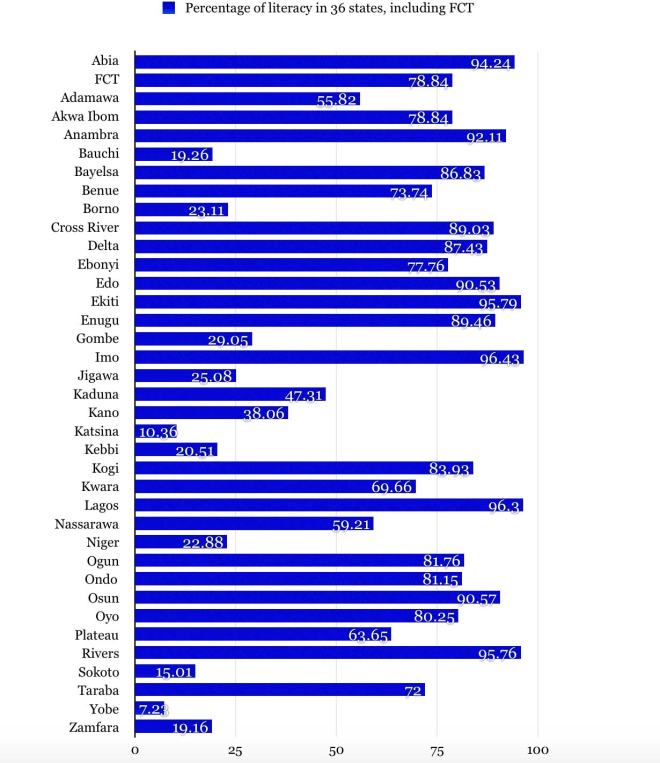
But as we subsidize the few to attend universities, illiteracy is massively scaled in pockets of communities: Yobe has literacy rate of 7.2 according to the National Bureau of Statistics. You may wonder if the across the board subsidies in the pubic universities could have gotten more kids to schools.

Nigeria needs to invest more on basic education – the current trajectory is not efficient. Making that turn is a challenge which has to be managed. Yes, it is either we find money to fund basic education and universities concurrently or we prioritize basic education, and remove all subsidies in universities. Everyone needs basic education – a really good one – but those that want to go to universities should find alternative sources to do. Subsidizing few thousands while millions fade, as we do, will not advance this nation.(Government can always award scholarships to extremely talented kids.)

Sure – you can accuse me that I benefited from this subsidy while a student in FUTO, Owerri. But notice that I have been an advocate to push more money to basic education in many speeches. Simply, I do believe that it is the right thing to do.

Three Reasons Why You Should Hire a Digital Marketer for your Practice

0

As a medical professional, you are always concentrating on your patients. But if you’re trying to balance your practice, you will need to concentrate more on digital marketing as well. Though juggling both can be a hard task.

The world is gradually changing thus medical professionals also want to do more with their website, social media presence, email marketing, and more. However, they do not have the luxury of time which means they need a digital marketing consultant.

Here are 3 reasons you need a digital marketing consultant for your medical practice:

  • A Digital Marketing Consultant makes you visible

One of the most essential things for all medical practices is Search Engine Ranking. Even though social media is popular, the first place most clients visit to find information is Google. Although some use another search engine, Google still remains the most visited search engine. As more visitors click on your site, the probability of getting more patients will increase. Your website can transform from virtual obscurity to first-page ranking if you have a fruitful SEO campaign. A digital marketing consultant will aid you with local SEO, aiding you to stand out from the competition, and become popular as a leading medical practice in your area.

  • Digital Marketing Consultants are inexpensive

Just imagine the cost of hiring an in-house SEO expert, social media manager, copywriter, public relations manager, web designer, advertising executive, and videographer. That will amount to a lot of money which you are probably not ready to spend on marketing. When you hire a digital consulting firm, there is a huge benefit of having a team of experts at hand, without paying a full salary for each one.

  • A Digital Marketer Gives you a new perspective

It’s a normal thing to get your head stuck in the bubble. Even though, your employees and you might all concur that your website, advertising, strategies, and social media efforts are great. You need to know what your marketing and lead generation model looks like to your rivals, clients, and prospects. A new perspective is highly valuable especially if your wheels have been spinning without gaining as you’d like. A professional digital consultant will conduct competitive research to see where your top rivals are investing their time and money so that you can have an edge over them.

Final Word…

Hiring a digital marketing consultant will have a positive effect on your medical practice due to the aforementioned reasons. I hope these 3 reasons will convince you of the need to hire one.


The Challenge of South’s Eastern Seaports in Nigeria

0

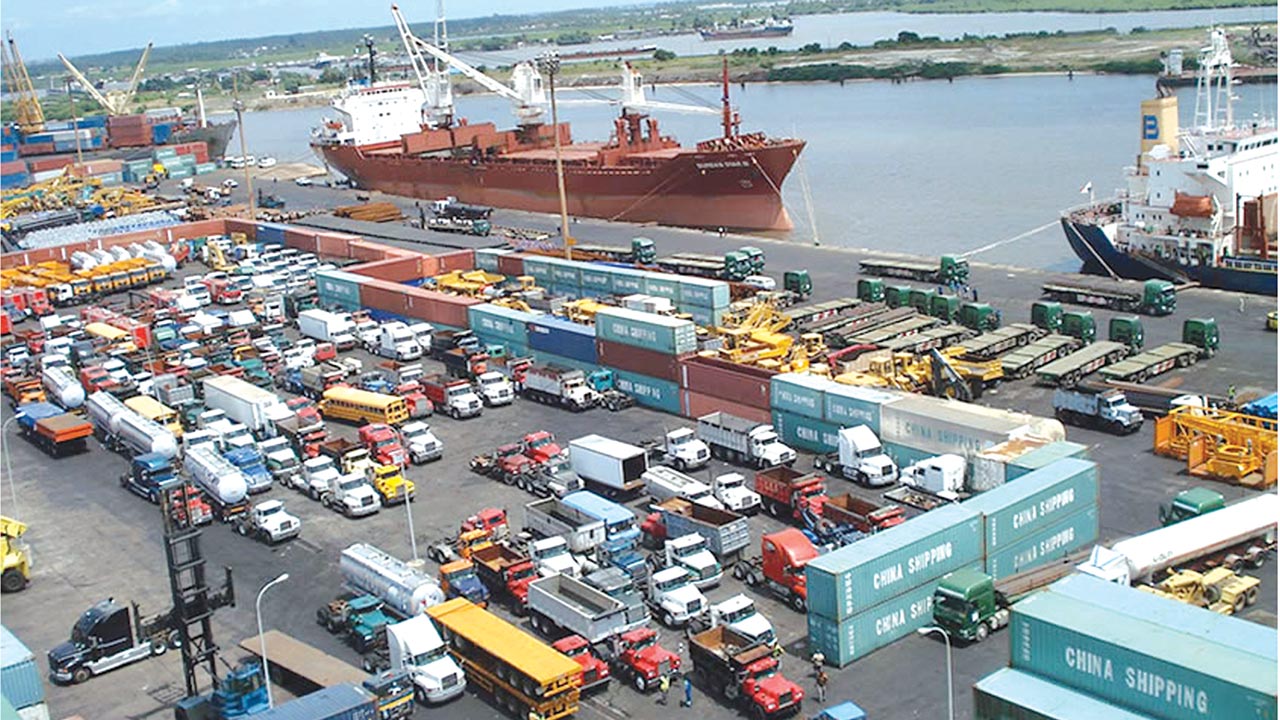
The long wait finally came to an end on Monday, September 23, with the arrival of Marguisa Shipping Line’s container vessel. It has been 13 years of hope and wait since concession for the Calabar Seaport was given. However, the development has opened a door of “other ports” possibility in the region; that’s, if the challenges are met.

A draft of 9.4 meters is required in the calabar seaport, because newly built ships come with higher tonnages that lower meters cannot sustain. For instance, the vessel that docked in Calabar Seaport on Monday has a length of 116.23 meters, gross tonnage of 6569 and net tonnage of 2874. And like the Calabar Seaport, there is a need to dredge the waters to the recommended 9.4 meters.

It took about a decade for the Nigerian Port Authority to do the needful, and it’s a job half done. Other ports in the east, Delta Port, Onne Port and Rivers Port (which all have a draught of 6.4 meters) need 13 to 14 meters’ draft to function, but there is more.

Experts say the possibility of the functionality of the ports depends on their ability to attract huge vessels like the Very Large Crude Carriers (VLCC), and Ultra Large Crude Carriers (ULCC). And that involves a lot of work that don’t depend on the management of those ports alone, the NPA plays a bigger role. And it may take forever before they take the steps.

Insecurity is a major challenge that neither the ports nor NPA can do anything about. The piracy activities in the creeks have kept sailors at a distance, and those who dared to sail the eastern waters do so with extreme caution.

The eastern ports are functioning on the International Ships Ports Security (ISPS) code 2, which indicates the low security situation in the region. It has been reported that sailors that berth and discharge in those ports find it scary to move in the night.

So they wait for the day at a very high cost of about $7,500 per hour. Even at that, the day isn’t safe for them since pirates can attack the vessels and kidnap members of the crew for ransom. The functionality of the ports depends on the number of vessels berthing at the ports from different countries of the world. Insecurity in the region is a risk many vessel companies don’t want take even when the ports have met the international standard of operation.

The debilitating condition of roads in the region has also stood in the way of haulage. Truck drivers are finding it difficult to cope with bad roads and poor road networks. Heavy artillery vehicles operating from the ports spend weeks on trips they should spend days.

Trucks getting stuck, some falling and there are breakdowns due to bad roads. Although there are few containers to clear now, it will become a problem when there is more.

The southeast and south-south governors, knowing the economic opportunities that lie in the region if the seaports work in their full capacities, should develop a blueprint of a sustainable mechanism that will tackle these challenges.