DD
MM
YYYY

PAGES

DD
MM
YYYY

spot_img

PAGES

Home Blog Page 6904

The China’s Dilemma

0

The world used to make a lot of things in Japan and elsewhere. Then, things moved to China. It remains so at the moment. Then, China began a global initiative – Belt and Road Initiative (BRI)– to create a new world order in its image. But Donald Trump arrived in the American White House – the seat of power.

The Belt and Road Initiative (BRI) is an ambitious effort to improve regional cooperation and connectivity on a trans-continental scale. The initiative aims to strengthen infrastructure, trade, and investment links between China and some 65 other countries that account collectively for over 30 percent of global GDP, 62 percent of population, and 75 percent of known energy reserves. The BRI consists primarily of the Silk Road Economic Belt, linking China to Central and South Asia and onward to Europe, and the New Maritime Silk Road, linking China to the nations of South East Asia, the Gulf Countries, North Africa, and on to Europe. Six other economic corridors have been identified to link other countries to the Belt and the Road. The scope of the initiative is still taking shape—more recently the initiative has been interpreted to be open to all countries as well as international and regional organizations.

Crises started with trade negotiations, and paralyses set in. But China continues to invest in India and Vietnam – and other Asian countries. Interestingly, as it does that, many Western firms that used to send things to be made in China, now figure out that if this trade war continues, things made in China, could be imperiled.

So, why not move the production systems to Vietnam and India since we do not know how this trade war will end? And that is happening as FDI continues to accelerate in Vietnam, and many of the investors do that because of the core infrastructure China had funded, making the nation better for foreign investors.

Globalization is hard to predict. If Vietnam attracts more investments on producing things, China loses market share. China has invested on things that made Vietnam attractive. Yes, it accelerated this redesign in Asia even though it did not predict Trump.
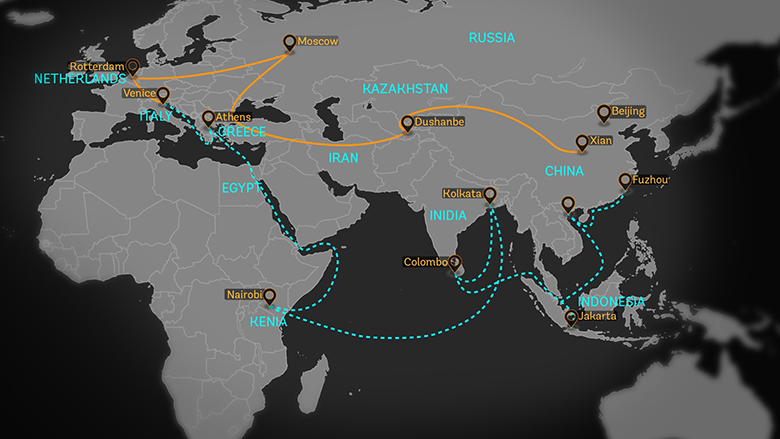
Belt and Road Initiative (BRI) Map

As we panic over Chinese investments in Africa, let me assure you that no one can effectively predict what the future can offer. There would always be Donald Trump! Yes, if you go into the minds of some leading Chinese leaders today, they may be worried that a really challenging trade war can move production to depart from China to other Asian countries. Vietnam will benefit – it has critical infrastructure investments which are making the country attractive to the West. China has played a key role in those investments through its BRI funds.

Yet, everything is still at infancy: we do not know the final version of the U.S.-China trade agreement, if any. Once that is known, you will understand how China could have ironically accelerated the move of manufacturing out of its shores.This is a huge China’s dilemma as it continues to deepen and expand the BRI map.

LinkedIn Comment on Feed

  1. The man Donald Trump is the greatest event in the last two years, one man that managed practically turn everything about political correctness on its head. You do not need to like his personality, but his usefulness cannot be questioned, except those that enjoy hysteria… Let the table shaking continue, at least it could give some African leaders the ‘liver’ to question certain things about global order; you cannot blindly support globalisation if your own future cannot be guaranteed. Leaders need to ask questions and challenge anything you don’t seem to benefit from, others may frown at first; but you can still manage to bring them to negotiation table, for a better deal. Even the young man in North Korea can get the whole world to pay attention; you don’t just follow blindly.

  2. Ndubuisi – you assume China wants to be manufacturing / export centric economy. The OBOR investment in infrastructure around the world gives unparalleled access to market, resources and infrastructure for Chinese economy. The more integrated China is to the region- the more influence they yield. My response: Good point. In the long-term BRI is a great vision but in the short term, it may cause some pains. Yet, China’s access to new markets must compensate for potential displacement it causes its companies by strengthening their future competitors. If China funds electricity in Nigeria, Nigeria will stop importing most things from China as Nigeria can make those things at home.

  3. Apart from moving production out of China, manufacturers in China are beginning to worry that BRI is now making them to loose market to overseas competitors. Yes we don’t know what they future may hold, but instead of hoping that another Trump may show up tomorrow, it is better that we start making smart deals today with China. In a case of sovereign default (most Chinese loans are structured this way), there is nothing a 100 Donald Trump will do to reverse it – a case in point is hambonata port in siri-lanka
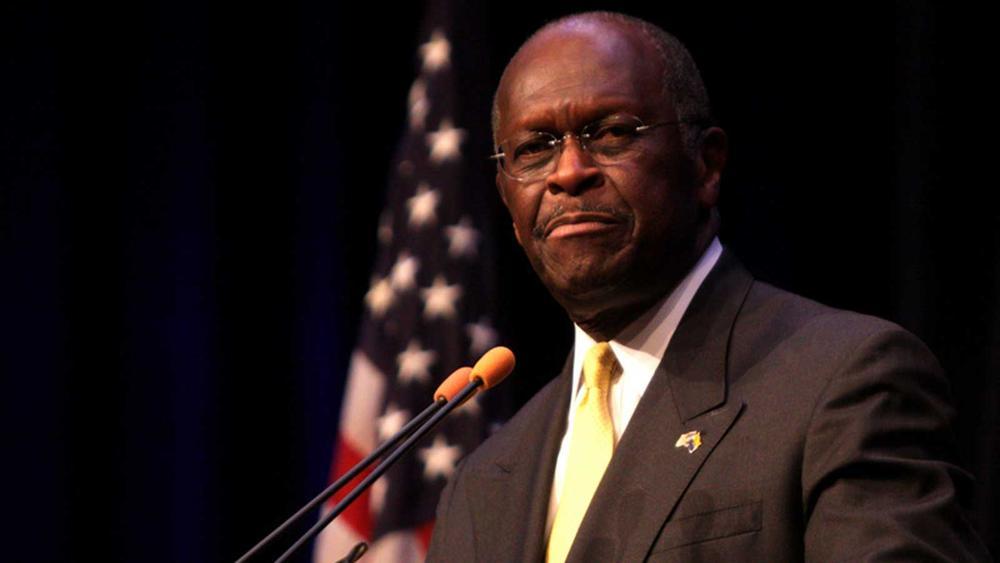
The Herman Cain’s “I would have to let go”

0

Herman Cain is an American businessman. He also ran for U.S. Presidency during which he came up with a moniker – 9-9-9 – as he postulated for a U.S. tax redesign. President Trump called Mr. Cain, and was on track to give him a position in the Federal Reserve board (U.S. equivalent of Central Bank of Nigeria). Cain, a part-time radio talk-show host [you need to be wickedly engaging to hold one in America, for long], was ebullient until they gave him a condition: practically, the man must be normalized as a commoner to serve America as a Fed board member.

That was too much for Cain. He gave up, and his response:

“I would have to let go of most of my business interests. I could not serve on any boards. I could not do any paid speeches. I could not advocate on behalf of capitalism, host my radio show or make appearances on Fox Business. Without getting too specific about how big a pay cut this would be, let’s just say I’m pretty confident that if your boss told you to take a similar pay cut, you’d tell him where to go.”

The politicians who did not want Cain (that is typical, some want you, some will not want you but most times the President gets what he wants) lost a target. Cain could not pay the prize of service here.

Now, think about Nigeria. We put extremely compromised people to lead institutions they should not come close to. Then, they enter and rig everything for themselves. Insane – have a medical director of a private hospital, serving as Chairman of the board of the government teaching hospital, in the same city, he runs clinics! Yet, we continue to wonder why the teaching hospital is not functioning.

In America, to do that job, you either exit from that private clinic or nothing. As they always say, there is a huge price to serve; Herman Cain just demonstrated the cost. Nigeria needs to upgrade our institutions to ensure conflicts do not derail our visioning systems.

Mr. Cain could not let go many things, and America said “thanks, there are others available”.

Ayodeji Adewunmi, Jobberman CEO, Resigns; Joining Investment Firm

0

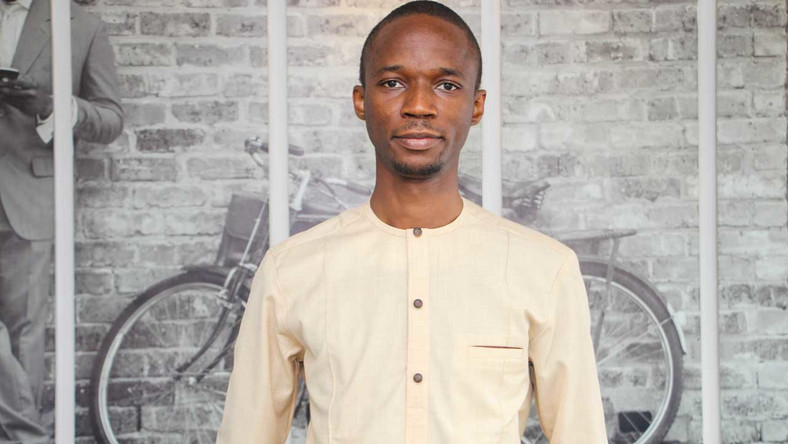
Ayodeji Adewunmi, the Co-founder and CEO of Jobberman, has resigned. Ayodeji did well. He helped young people of his generation to believe. Before him, many saw startups as esoteric. Yes, if you are an entrepreneur, you possibly could not get a decent job. But when you are on a medical path and decide to pursue the entrepreneurial trajectory, those dismissive judgments fade. He will be leaving to explore opportunities in investing.

The Chief Executive Officer and co-founder of the biggest job site in Sub-Saharan Africa, Jobberman, Ayodeji Adewunmi, has resigned to build a professional career in investment.

Adewunmi resigned as the CEO of the company after nearly 10 years to pursue his new career.

[…]

However, the company has announced the Head of Jobs of Ringier One Africa Media (ROAM), Matthew Page, as the interim head.

“We wish Ayodeji incredible success in the future and we are grateful for the impressive work he has done in building a remarkable brand.” Page said.

Launched in August 2009, Jobberman is the biggest job site in Sub-Saharan Africa with strategic partnerships with key media companies. Since 2017 Jobberman is part of the portfolio of Ringier One Africa Media.

Jobberman operates in one of the most challenging sectors in Africa: employment syndication. Yes, the HARDEST job is to help people with no jobs to find jobs in places with no jobs. That mission is not fun, I guarantee you.


Four distinct digital strategies for African Retail Banks

0

McKinsey has broken digital strategies retail banks, in Africa, can take as 40% of African banking customers now prefer digital channels while about the same like branches. The consulting giant in the report offers four distinct digital strategies: digitally transform like Equity Bank (Kenya), partner with telcos like MShwari, become a digital bank like ALAT, and build an ecosystem of non-banking services like Alipay.

. Some 40 percent of the African banking customers we surveyed prefer to use digital channels for transactions, roughly the same share as those who prefer branches. In four of the continent’s major banking markets, the share of customers who prefer digital channels is significantly higher than the share preferring the branch channel. Banks can adopt one of four distinct digital strategies:

  1. The first is to digitally transform their existing operations, to increase their share of digital sales and transactions to beyond 60 to 70 percent on each measure, as Kenya-based Equity Bank has done.
  2. Second, banks can partner with telcos or fintechs to deliver mobile financial services to their clients at a cost below that of the branch network. An example, also from Kenya, is MShwari, the mobile-based loans application formed in partnership between Commercial Bank of Africa and Safaricom.
  3. The third digital strategy is to build a digital bank from scratch— as Nigeria’s Wema Bank did in launching ALAT,Africa’s first fully digital bank, in 2017.
  4. Finally, banks can build an ecosystem or platform of non-banking services. Alipay in China and the Commercial Bank of Australia have applied this approach at scale in areas such as travel and hospitality (Alipay) and home-buying (CBA).

What Nigeria Can Learn from South Korea on Food Waste Management

0

By Nnamdi Odumody

According to the Food and Agricultural Organization, 1.3 billion tonnes of food is wasted every year. The 1 billion hungry people in the world could be fed on less than a quarter of the food wasted in the United States of America and Europe. Simply, food waste is a major problem in the world, creating disequilibrium where some regions waste food even as others go hungry.

According to the Food and Agriculture Organization, 35-50 percent post harvest losses for perishable agricultural products are lost annually in the region due to poor planting practices.

In a recent report released by the World Economic Forum, cutting food waste by 20 million tonnes could help the transformation of global food systems by 2030.

South Korea recycles 95 percent of its food waste. Its citizens generate more than 130 kg of food waste every year. In 2005, dumping of food in landfills was banned, and in 2013, compulsory recycling of food waste was introduced, using special biodegradable bags. An average family of four pays $6 a month for the bags which encourages home composting.

The bag charges meet 60 percent cost of running the scheme, and increased the amount of food waste recycled from 2 percent in 1995 to 95 percent presently. The South Korean government approved the use of recycled food waste as fertilizer although some wastes are also deployed as animal feed.

In Seoul, its capital city, 6,000 automated bins equipped with scales and RFID (Radio Frequency Identification) weigh food waste as it is being deposited in real time, and charges residents using an ID card. This had led to the reduction of food waste in the city by 47,000 tonnes, in six years, according to city officials. Before depositing waste, its residents remove moisture to reduce the weight which helps in reducing their charges as food waste is 80 percent moisture, saving the city $8.4 million in collection charges within the period.

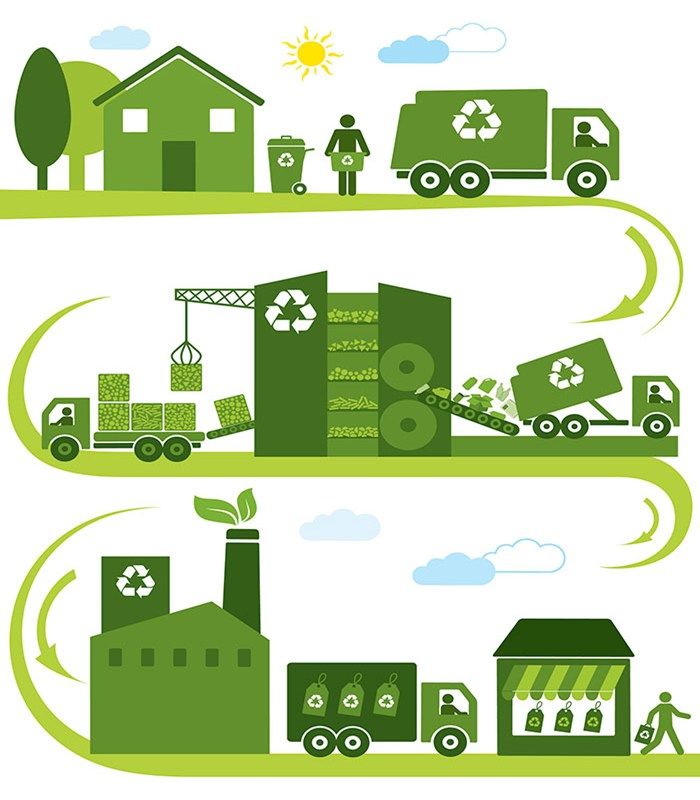
Recycling food waste in action (source: icas)

The waste collected using the biodegradable bag scheme is squeezed at the processing plant to remove moisture which is used to create biogas and bio oil. The dry waste in then turned to fertilizer for its urban farm industry which has increased in the past seven years, covering 170 hectares of community space in Seoul with the local administration providing between 80-100 percent of  startup costs.

Urban farming has helped to unite residents who are isolated from one another, and the city’s leadership plans to install waste composters to support this growing trend.

Nigeria and the rest of Africa can learn useful lessons from the South Koreans, in the sustainable management of waste, to create a circular economy that will make our environment livable for the 21st century.