DD
MM
YYYY

PAGES

DD
MM
YYYY

spot_img

PAGES

Home Blog Page 6905

Alibaba’s Xiang Hu Bao Crowd Insurance Model Could Work in Nigeria

0

This is a great idea for health insurance: crowd-insurance. Alibaba Ant Financial’s Xiang Hu Bao, which means mutual protection, has attracted 50 million people since its October inception. Simply, people crowd-insure themselves with no insurance company involved. U.S. Lemonade has something similar but not in health insurance.

The product operates somewhat like a collective, in which members contribute evenly to payouts of as much as 300,000 yuan ($45,000) when a participant falls critically ill. It’s free to sign up, there are no premiums or upfront payments, and disputes about claims are adjudicated by volunteer members, according to a statement from the company on Thursday. In return for managing the process, Ant will take an 8 percent administrative fee out of every payout.

[..]

The company’s foray into health care comes at a time when the country is grappling with a rapidly aging population, one of the more pressing long-term threats to the world’s second-largest economy. Ant said Thursday it hopes to sign up 300 million Xiang Hu Bao users within two years, which would represent more than 20 percent of China’s population.

Managing fraud? “Ant is using the same blockchain technology that underpins digital currencies like Bitcoin, which rely on common verification by members. Members who fall critically ill within 90 days of joining the plan will not be compensated.” They are bringing the tech elements together to deliver new business models.

I think with the deep distrust in the Nigerian insurance, crowd-insurance may be a good idea if the regulators will ever allow such. At least religious organizations and cooperatives can explore the model if platform-tech tools are available to power them. This is a great business to explore in Nigeria but focusing on churches, mosques and cooperatives which already have pre-existing trust infrastructure among themselves.

The insurance industry in Nigeria has used IT for productivity gains. Now is the time for the next level of innovation which is taking the insurance industry to the web. What they have been unable to do for decades – industry penetration acceleration – can happen if they digitize their products and make it possible for Nigerian entrepreneurs to participate via InsureTech. Should that happen, new products will evolve, and could actually deliver the aha moment that will make Nigerians begin to like buying insurance. The time is now: Nigeria needs a 21st century insurance industry.

LinkedIn Comment on Feed

A sort of an insurance model for esusu? Part of the motivation for contribution is that potential date to getting your returns on investment, once that element vanishes, many people could take off… The model can work well for middle-class settings, but what happens to children of the contributors?

Another twist, especially when it’s difficult to know who falls ill more often and who maintains better hygiene. Lots of things to outline. A good experiment worth doing, it can go either way.

Another Comment

Do you realise that that this is very similar to what is already done in the traditional village meetings? Just informally. Where everyone pays levies to the association and when a member is ill or deceased the association handle the cost up to a set amount. As long as the person’s own payment is up to date.

China Plans Dedicated Lanes for Autonomous Vehicles

0

These are three trends and technologies which Diamandis has captured.

Dedicated Lanes for AV: According to KPMG, China is currently ranked 20th in the world on its Autonomous Vehicle Readiness Index. To step up its game, the country is developing new road infrastructure with dedicated autonomous lanes. Slated to begin operation in 2020, the first stretch will be a 100 km road connecting Beijing with the Xiongan New Area in Hebei province. The road will embed sensors and electronic tolls that aid in the development of autonomous technology and facilitate easy payment for cab-hailing companies that begin to rely on driverless vehicles.

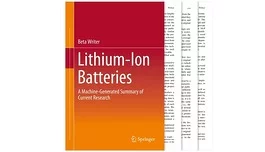
AI-Authored Book: Scientific journal publisher Springer Nature just released the first machine generated textbook by a scholarly publisher. Developed by the Applied Computational Linguistics (ACoLi) lab at Goethe University in Frankfurt, “Lithium-Ion Batteries: A Machine-Generated Summary of Current Research” is an attempt to distill insights from the vast amount of research in the area. According to Springer, over 53,000 papers on Lithium Ion batteries have been published in just the last three years. While there is an element of human quality control in the training phase, the algorithm condenses and organizes the pre-approved, peer-reviewed publications into coherent chapters and sections, giving researchers just 180 pages to review and consider versus 100,000+.

Road that Recharges EV Buses: Reimagining electric vehicle (EV) charging from the ground up (literally), the Swedish transport administration is now experimenting with electric dynamic charging roads. In a $12.5 million showcasing project, the Smart Road Gotland consortium will pilot a 1-mile stretch of e-road between Sweden’s Gotland Island airport and the town of Visby, capable of charging electric trucks and buses as they run over it. Funded primarily by the Swedish government, the project will leverage a Dynamic Wireless Electrification System developed by Israeli company Electreon, a driving lane-embedded infrastructure that powers vehicle batteries wirelessly.

The Facebook’s Density Map of Africa

0

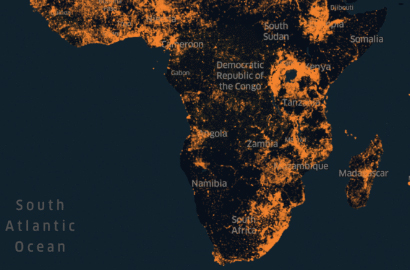
Facebook is working closely with key non-profit and research partners to use artificial intelligence (AI) and big data to address large-scale social, health and infrastructure challenges in sub Saharan Africa. These efforts range from rural electrification in Tanzania to vaccinating people in remote corners of Malawi.

Facebook is applying the processing muscle of its compute power, its extensive data science skills and its expertise in AI and machine learning to create the world’s most detailed and accurate maps of local populations. Facebook also partners with Columbia University’s Center for International Earth Science Information Network (CIESIN (www.CIESIN.org)) to ensure that this effort leverages the best available administrative data for all countries involved.

The Boston-based Facebook team uses advanced computer vision and machine learning to combine satellite imagery from Digital Globe with public census data and other sources to create detailed population density maps of Africa. Using Facebook’s machine learning capabilities, Facebook started developing population density maps to provide better tools to support connectivity efforts around the world. No Facebook data has been or will be used in the project and the census and satellite data used contain no personally identifiable information.

High-resolution satellite imagery already exists for much of the world. However, prior to Facebook’s mapping project, it would have required countless hours for volunteers to comb through millions of square miles of pictures to identify which contained a tiny town or remote village.

The Facebook team used AI to solve that problem, efficiently crunching through data at a petabyte scale. For Africa alone, for example, the computer vision system examined 11.5 billion individual images to determine whether they contained a building. The team found approximately 110 million buildings in just a few days.

“Having started my career at USAID working on malaria control, I have witnessed first-hand the critical role that accurate data plays in the effectiveness of humanitarian efforts,” says Laura McGorman, a public policy manager at Facebook. “What’s exciting about projects like these that they provide an opportunity for our company to contribute to these efforts through our expertise in data and machine learning.”

In Malawi, the Missing Maps Project used these AI-powered maps to filter out the 97% of the terrain that is uninhabited. This helped to coordinate the efforts of 3,000 Red Cross volunteers in Malawi who visited roughly 100,000 houses in just three days to educate people about measles and rubella vaccines

“The maps from Facebook ensure we focus our volunteers’ time and resources on the places they’re most needed, improving the efficacy of our programs,” says Tyler Radford, executive director of the Humanitarian OpenStreetMap Team, which is part of the Missing Maps Project.

In addition to assisting the Red Cross and Missing Maps Project in Malawi, the maps have been used by aid groups like the Bill and Melinda Gates Foundation, the World Bank, and Humanitarian OpenStreetMap. In Tanzania, Facebook’s AI-powered maps helped kick-start efforts to bring renewable electrification to rural areas.

To understand which locations would benefit most from decentralized energy solutions, the Humanitarian OpenStreetMap Team collaborated with the Reiner Lemoine Institut and Integration Environment and Energy to combine Facebook’s population maps with detailed data on settlement locations and structures from OpenStreetMap.

Humanitarian OpenStreetMap team personnel then travelled to villages identified as high priority and conducted surveys to understand the populations’ electricity needs. The results of these surveys were provided to agencies involved in rural electrification, helping mini-grid operators choose the most appropriate locations to begin the work.

The Facebook population density maps project now aims to keep adding new continents and countries.

The Google’s AI with African Accent Arrives

0

Google Africa begins the business of AI in Ghana. Below is a press release.


Last year, Google announced plans to open a new AI lab in Africa. Now, Google AI Accra is open for business, and the team there is working on building AI-powered solutions to real-world problems, including helping communities in Africa and beyond to improve their lives.

Google uses Machine Learning (ML) and AI in all of its products and AI and ML are used every day by people across the world, many of who don’t even realise they’re using it. Machine learning is used for everything from filtering out the spam in your email to powering the Google Assistant on your smart speaker, from taking the perfect low-light photos on the Pixel 3 to helping the world speak the same language through Google Translate.

Google recognises that it’s important for everyone that emerging technology is socially beneficial and upholds the highest standards of scientific excellence. Based on its seven guiding principles for ethical use of AI and ML, Google is taking a thoughtful approach to help nurture an emerging technology, which is outlined in depth here.

Google’s AI Centre was opened in Ghana because in order to build technology that benefits people everywhere, it needs to be built by people with a diverse range of backgrounds, experiences and viewpoints. The researchers of Google AI centre in Accra bring a fresh perspective and expertise to build new technologies in Africa that can contribute positively to life here, as well as around the globe.

Google AI Accra forms part of the company’s structured efforts to explore and integrate more diverse experiences / learnings beyond present-day centres of innovation. ‘AI by Africa, for the world’ helps us highlight the crucial role that this new centre will be playing in our vision of using AI to solve problems for everyone, in every part of the world.

A strong focus areas for Google is how AI and ML can be used for social good. We already see how machine learning is improving people’s lives, from protecting us all from spam and fraud to making devices more accessible via speech. Working with partners from such diverse fields as medicine, transportation, environmental  groups and small businesses can help to evolve AI and ML tools to meet real-world challenges. This is why Google shares its machine learning tools, so that organisations outside of Google can benefit.

Google’s AI for Social Good program includes projects such as:

  • Flood prediction: Floods affect up to 250 million people, causing thousands of fatalities and inflicting billions of dollars of economic damage every year. Google has developed a system that combines physics-based modeling with AI to produce earlier and more precise flood warnings.

  • Earthquake aftershocks: existing predictors are little better than chance. So we partnered with Harvard researchers to apply AI to seismic data, and created a model that — while far from fully accurate — can now do a much better job than previous models of predicting where aftershocks will occur.

  • Environmental protection: 6 out of the 13 great whale species are still endangered; even recovering species like humpbacks get entangled in fishing gear and hit by ships. The first step is to know where the whales are. So we’re working with the National Oceanic and Atmospheric Administration — we trained an AI model with over 100,000 hours of underwater audio from 12 different sites in the Pacific, and we can now not only find whale calls, but identify which species is making them.

  • Healthcare and biology:

    • We developed an algorithm to predict heart attacks and strokes simply from images of the retina — no needle or blood draw required!

    • Google researchers have helped doctors detect the spread of breast cancer tumors — the doctors and machine learning system are better working together than either is alone.

  • Environment, agriculture, and natural science:

    • Researchers at Makerere University used TensorFlow to help farmers identify disease in the cassava plant, a major food source in the developing world.

    • A dairy farm in Waynesboro, Georgia is using TensorFlow to keep cows healthier and more productive, similar to the project in the Netherlands

    • Protecting rainforests: Students in Los Angeles schools helped build ‘guardian’ devices that use TensorFlow to listen for chainsaws in rainforests in Brazil.

China Tech Outcompetes Amazon As It Exits Marketplace Business

1

China Tech has matured in the ecommerce space with the likes of Alibaba and JD.com as capable as anything in America. Amazon is shutting down its 3rd-party marketplace business in China along with the fulfillment centers, after years of massive spending and nothing to show for it. The fact is this: China has since gone post-ecommerce to azcommerce (for anywhere commerce), ahead of whatever new any U.S. firm can provide for competitive advantage. Simply, “Ker Zheng, marketing specialist at Shenzhen-based e-commerce consultancy Azoya, said Amazon had no major competitive advantage in China over its domestic rivals.”

Amazon.com Inc said it will shut its China online store by July 18, as the U.S. e-commerce giant focuses on the lucrative businesses of selling overseas goods and cloud services in the world’s most populous nation.

The move underscores how entrenched, home-grown e-commerce rivals have made it difficult for Amazon’s marketplace to gain traction in China. Consumer research firm iResearch Global said Alibaba Group Holding’s Tmall marketplace and JD.com controlled 82 percent of the Chinese e-commerce market last year.

An Amazon spokeswoman told Reuters on Thursday that it is notifying sellers that it will no longer operate a marketplace, nor provide seller services on Amazon.cn.

Sources familiar with its plans had told Reuters a day before that the company had planned to make such a move.

Nonetheless, consumers will still be able to buy Amazon Web Services cloud services, Amazon devices, and goods from merchants in Amazon’s storefronts in the US and other markets.

Now China is gone, when will Amazon arrive Africa, and improve logistics, with its massive war chest of capital? Expect that before 2022.

LinkedIn Summary

It is called first mover advantage and category-king market positioning. Once a digital company has assumed those, all the money from amazon cannot easily change the trajectory. Yes, Amazon, the ecommerce firm, exits Chinese marketplace because no one will miss it as JD and Alibaba are in command.

LinkedIn Comments on Feed

  1. I think it goes beyond first movers advantage – there’s more to doing business in China than first movers advantage – It isn’t that straightforward. The political terrain is complex and Chinese people generally prefer to buy Chinese, even while overseas

    My Response: Good point but those things work because the local players have Min Viable Alternatives. Buying Chinese works when there are Chinese alternatives. In Baby food today, foreign brands still rule in most Chinese homes because the local alternatives are not overly trusted. The reason govt plans work is because there are local alternatives. Obasanjo did same on laptop with Omatek and Zinox, MDAS followed until quality issues crashed the party. Simply, give China tech credit

  2. Some markets are owned, to come later and stand any chance: there must be serious flaw or friction you are coming in to fix, else your entrance is nothing other than ceremonial. Being that Amazon has a lot of money to play around with, it gives it the margins to test these markets, and after some sizable spending spree, you simply shake your head and exit… As for Amazon coming to Africa, the incentives or motivations may not be strong at the moment, but since it has perfected the art of losing money while remaining competitive; it will come in – and then sell other products or services that could shake things up across Africa.