DD
MM
YYYY

PAGES

DD
MM
YYYY

spot_img

PAGES

Home Blog Page 6959

The MasterCard’s $500 Billion African Prediction

0

$500 billion.

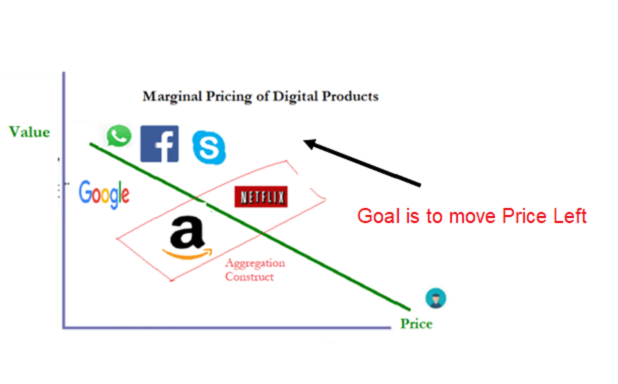
That is the number MasterCard Foundation has projected the ecommerce sector in Africa could generate in a year by 2030. Largely, that will be roughly 20% of the projected size of Africa’s economy of by then. Except the hard number, there is nothing revealing there: the world of commerce will move online because the web remains the only infrastructure that reduces the marginal cost of doing many things at exponential level compared with whatever currently exists.

Yes, African commerce and trade will move online, because that is the final destination. In short, in a perfect internet economy, marginal cost becomes absolute zero which means transaction cost and distribution cost go.  There is no economic infrastructure sphere that can compete with that, and that is why the web is the future.

Yet, it has been bumpy, in Africa,  as the march to ecommerce has made many poorer than richer, from Kalahari to old Konga. But inflection point is on the way, as logistics, immersive mobile connectivity, and citizen re-orientation converge.

2022 will be the magic year in Africa for that Eldorado moment to kick-in, on ecommerce, because most of the challenges would have been curtailed.

2022 Will Usher The Era Of Wireless Nigeria, Africa

Lagos’ Fintech Startup TeamApt Raises $5.5 Million from Jim Ovia’s Quantum Capital Partners

0

Another bucket of money arrives in the fintech space in Lagos. TeamApt, a payment startup supplying solutions to some leading Nigerian banks like Zenith, UBA and ALAT, has raised $5.5 million from Quantum Capital Partners, an investment firm founded by Zenith Bank’s Jim Ovia. The investor wrote the whole cheque.  According to the company, founded in 2015, it serves 26 African bank clients and processes $160 million in monthly transactions, growing revenue at 4,500 percent over a three year period. With this money, the company wants to expand into Canada and Europe.  And TeamApt plans another destination: NASDAQ.

Nigerian fintech startup TeamApt has raised $5.5 million in capital in a Series A round led by Quantum Capital Partners.

The Lagos based firm will use the funds to expand its white label digital finance products and pivot to consumer finance with the launch of its AptPay banking app.

[…]

TeamApt joins several fintech firms in Africa that announced significant rounds, expansion, or partnerships over the last year.  As covered by TechCrunch, in September 2018, Nigeria’s Paga raised $10 million and announced possible expansion in Ethiopia, Asia, and Mexico. Kenyan payment company Cellulant raised $53 million in 2018, targeted to boost its presence across Africa. And in January, Flutterwave partnered with Visa to launch the GetBarter global payment product.

Tosin takes on his former employer, Interswitch, even as Flutterwave, Paystack and others loom around. Many Nigerian companies largely funded this firm demonstrating that one does not need to raise money first if one can find a customer-investor!

“To start, we closed a deal with Computer Warehouse Group to build a payment solution for them and that’s how we started bootstrapping,” he said. A project soon followed for Fidelity Bank Nigeria.

[…]

TeamApt worked with Sterling Bank Nigeria to develop its Sterling Onepay mobile payment app and POS merchant online platform, Sterling Bank’s Chief Client Engagement Officer, CCEO, Moronfolu Fasinro told TechCrunch.


The Interswitch Bank Nigeria Ltd

The Challenge Ahead – Africa Must Prepare for Labour Dislocation by Technology

0

I have received questions on the impact of technology and the future of labour in Africa after a piece this week. One community member noted that he will like to ask questions on that during my upcoming webinar (click to register). Yet, there are people on denial, disputing any elemental construct that technology can affect employment in Africa. Their core hypothesis is that a displaced person in one area can find opportunity in another field.

COMMENT: This argument is the same argument people were saying about computers when they emerged, that people would no longer need to or be able to write. It’s over the top and kids are still learning to write.

MY RESPONSE: Could you provide any reference: “would no longer need to or be able to write”. I am curious how someone would say that computers would eliminate writing. What people said that computers would eliminate typists, some secretaries etc because anyone could do those things efficiently and consequently would not need another person.

Yet, even on the writing, if you attended school in 1970s, 100% of your education and testing happened on paper.  Today, it is likely that only 50% on paper. Possibly by 2050, it may be 10%. That prediction on reducing writing is happening but no one said it will kill writing. Show me a job on this LinkedIn that has personal typist on it. In 1980s, a personal typist was a hot job – computer has killed it.

Finally, 100 years ago, more than 50% of Americans worked in farms. Today, less than 3%. That is automation at work. It does not happen one day!

Source: LinkedIn Feed

First, let me make it clear that Africa has about 2-3 decades ahead of it before we can reach the inflection point. You cannot run AI without electricity. So, our best defense is really that our infrastructures are not optimal.  That reminds me a conversation I had in Moscow, few years ago, where some hackers told me that hacking Nigerian banks was hard because the networks were always timing out! So, for our banks, the network being slow was probably a defensive mechanism! Of course, nothing like that.

Simply, we cannot expect to defend low-paying jobs in Africa because we do not have electricity for AI and robots to operate. If we use 65% of working population to mass produce hunger while America uses less than 3% to make enough to feed the world [if it desires], it is evident the game has changed.

Yes, while technology will cause realignment of careers, the fact remains that technology does not usually create as many jobs as it distorts. The paralysis in media business around the world because of Facebook, affecting thousands of jobs, is evident: Facebook has not created as many jobs as its impacts have lost worldwide!

This post has received the highest interests from African policy leaders. Simply, Africa cannot copy the Chinese developmental paradigm because what made China successful will not be relevant in this era because of AI. The cheap manufacturing jobs of the 21st century belong to AI and not human beings. So, anyone pushing the path of industrialization to create low-level jobs is already disrupted. Yes, a farm in England has no single farmer, from planting the crops to harvesting them. Simply, no one is sending you cheap labour from the Western world to Africa because machines will do them!

As I noted in a Harvard Business Review piece few years ago, GM in 1979 employed more than half a million workers in U.S. But due to automation, that number has dropped to 170,000 as at 2018 even though it is making more cars and serving more customers. After the recent cuts, GM may be about 120,000 workers in few years. Simply, it takes lesser number of people to make cars, and revenue per staff has gone up.

In Nigeria, the high youth unemployment cannot be uncorrelated with the continuous march to automation in our industrial sectors. With ATMs everywhere, banks are making more money with smaller number of workers and those displaced have not found jobs in other areas as those areas are also automating. The impact is one thing: mass unemployment. Certainly, we cannot go back to the old era of paper entries where banks employed legions of people and yet customers would waste hours in bank halls just to collect their monies.

All Together

Our continent must plan even though we have about 2-3 decades ahead of us. We cannot move into this era of immersive technology-enabled automation without a strategic plan.  If we just dance without a plan, we would certainly have growths but with high unemployment. Yes, competition is no more localized because the web has created a new equilibrium where labour can move easily across boundaries. I am scheduling an interview with a major global TV station to explain what we need to do. So, I will leave those points here. That interview is planned to take place this month; I will share the time ahead with the community here.

LinkedIn Comment on Feed

We still have time to get a lot of heads and hands busy, only if we can invest massively in infrastructures and then open the economy. You cannot have a population that is hovering around 200 million in Nigeria, while we have practically only three sectors (Oil and Gas, Banking, Telecom) with capacity to pay decent salaries every month, without defaulting. It’s a joke to think we can survive with such a narrow economic space.

There’s so much space for development, while we realign our education sector to deliver the kind of knowledge that is relevant in Industry 4.0. At the moment, we are nowhere, and we do not seem to be bothered; just politics, and more politics, nothing more!

Africa’s Cheap Labour Comparative Advantage Has A Major Disrupter: AI (Artificial Intelligence)

Nigeria’s Payment Service Bank Guidelines and Quest for Financial Inclusion

0

By Chuma Akana

Recently, the financial inclusion programme of the Central Bank of Nigeria experienced a boost with the release of the guidelines for licensing and regulation of payment service banks in Nigeria. Some have cited this as a refreshing development, with potential to yield the desired financial inclusion results. Ostensibly, the guidelines intend that only entities with the right capabilities will drive the payment service bank sector as it attempts to make the field competitive.

It is worthy of note that the key objective of the regulation is to enhance financial inclusion by increasing access to deposit products and payment/remittance services to small businesses, low income households and other financially excluded entities through high volume low value transactions in a secured technology-driven environment. Previously, the CBN has sought to drive financial inclusion by the introduction of microfinance banking, agency banking and mobile money operators amongst others. However there is still much to be desired.

According to a 2018 report by the Central Bank of Nigeria, 37% of Nigerians do not have access to financial services, and this is at a time when internet penetration and smart phone penetration are on the rise in Nigeria, with 103 million Nigerians using the internet as at May 2018. More aptly, more than 66 million Nigerians do not have bank accounts or lack access to basic financial services. This deficit has led the CBN to introduce various policies to ensure that this number is drastically reduced and more Nigerians are banked. Also, this becomes more pertinent noting the fact that the informal sector contributes to more than half of the GDP of Nigeria.

The payments bank idea/model has been incorporated in various jurisdictions and climes, and is based primarily on the success of Mpesa in sub-Saharan Africa. A study by Bill and Melinda Gates Foundation identified four reasons why Mpesa was hugely successful and was able to reach a level of penetration that banks in Kenya were unable to reach. One of the core reasons was the extremely high cost of transferring cash to the rural areas from the cities, there was also a perception of lack of safety in transferring such monies. Another reason was the high reputation and trust that Safaricom, a telecom company, had garnered over the years by the citizens, arguably more so than Kenyan banks. A third factor that enabled its success, was the fact that Kenyan banks were restricted from utilising banking correspondents beyond a certain distance, thereby limiting their scope of reach.

Perhaps the most important component that fueled the growth of Mpesa, was that for nearly five years, Safaricom enjoyed a monopoly because banks did not have branches in remote areas due to high costs and because it made Mpesa easily available by strategically tying up with those vendors who provided mobile phone services and recharge. When Mpesa was launched in 2007, there was no regulatory framework for mobile money operations. At that time, the regulator was confronted with two options: to allow for Mpesa to operate freely while keeping an eye on the evolution of the service, or to introduce regulations that may confine the development of the innovation. The regulator chose to adopt a relaxed framework, and therefore at the time, the Kenya Banking Act did not provide a basis to regulate products offered by non banks, and Mpesa was one of such very successful product. In November 2014, Mpesa transactions for the 11 months of 2014 were valued at KES 2.1 trillion, a 28% increase from 2013, and almost half the value of the country’s GDP.

As a result, Mpesa became the driving force in financial inclusion in Kenya. According to the 2016 FinAccess Household Survey, 75.3% of Kenyans are now formally included; which represents a 50% increase in the last 10 years.

In contrast, more than 3 years after the Reserve Bank of India (RBI)) granted in-principle payments bank licenses to several corporate entities, the sector is struggling to come into its own. While a few of those companies have opted out, the others haven’t recorded much growth, due largely to stiff regulations including imposition of certain penalties to slow deposit collection and delayed launches, stringent know-your-customer (KYC) norms and a competitive banking ecosystem, according to experts.

The CBN guidelines provide that Payment service banks are expected to leverage on mobile and digital channels to enhance financial inclusion and stimulate economic activities at the grassroots through the provision of financial services through technology, and help in attaining the policy objective of 20 per cent exclusion rate by 2020.

The structure provides that the PSBs are to operate mostly in the rural areas and operate through banking agents in line with the CBN’s agent banking requirements, while they are also at liberty to roll out agent networks with the prior approval of the CBN. They shall conform to best practice on data storage security and integrity while ensuring that the word ‘Payment Service Banks’ will be part of their name.

The guideline provides that the Payment service bank permissible activities include; to accept deposit, carry out payments and remittances, operate electronic wallet, invest in FGN and CBN securities, while the PSBs are expressly prohibited from granting any kind of loans, any foreign exchange dealings, accepting any form of electronic value (airtime), as a form of deposit or payment and establishing any subsidiary outside the CBN guidelines.

The guidelines further opened the gateway for the participation of more companies as promoters including banking agents, telcos, retail chains e.g supermarkets, and downstream petroleum marketing companies, mobile money operators, fintech companies and financial holding companies. Where the entity is regulated, the entity must get a letter of no objection from its primary regulator.

The Payment service bank shall submit in connection with other requirements, a non refundable application fee of N500,000 and evidence of name reservation at CAC, further to which it may be granted an Approval-in-Principle. As at December 2018, over 30 firms had submitted name registration to CAC to be registered as payment Service Banks.

The requirements for the final license include non refundable fee of N2,000,000, CTC of certificate of incorporation, amongst others. There will also be a pre-licensing inspection to check the physical structure of the office building and infrastructure provided for take-off of the Payment service bank; sight the original copies of the documents submitted in support of the application for license; meet with the Board and Management team whose resumes had earlier been submitted to the CBN; verify the capital contributions of the promoters; and verify the integration of its infrastructure with the National Payments System.

The Financial Requirements for the Payment Service Banks include a minimum capital requirement of ?5,000,000,000.00. This is similar to the Payment Bank regulation in India where the minimum capital is Rs. 100 crore.

The guidelines also state that the provisions of the CBN code of corporate governance of banks shall be applicable to the PSBs and the Revised Assessment Criteria for Approved Person’s Regime for Financial Institutions shall be applicable to PSBs.

One of the challenges the payment service banks will face is in the area of ‘no lending’ as the PSBs are prohibited from any form of lending, and therefore the revenue stream may be limited, raising doubts over the model’s viability. The payment service banks also have restrictions with fund deployment as their investment is in stipulated government securities only. The guidelines states that PSBs shall maintain not less than 75% of their deposit liabilities in CBN securities, Treasury Bills (TBs) and other short-term federal government debt instruments, at any point in time. Another concern is the minimum capital requirement, which may be considered out-of-reach for some interested organizations.

The major opportunity for PSBs will be the sheer size of the market. To be successful, the Payment service bank system may require smart segmentation, both geographical and demographic, to offer tailor made products to bottom-of-pyramid (BOP), rural and unbanked Nigerians. Payment banks can also utilize the existing payments structure to move quickly, offer simplified payment solution and occupy a specific niche or segment.

The telcos should note that while they may want to participate in the round, because they have the advantage of a large customer base, the type of relationship they are trying to build with the customers this time is distinct, while for the new players, acquiring critical mass may be a tall order. It is apparent that banking as we know it is changing, and technology is poised to change banking paradigms. A payment service banking license gives the licensee a vantage position to view these changes much better and address them.

One thing is clear though, the success of Mpesa advises that regulations, particularly as it concerns technology, should allow for innovation, and be flexible enough to accommodate new changes. Conversely, tough regulations would not provide the necessary enabling environment, may stifle growth of the payment service industry and ultimately defeat the main objective of financial inclusion.

18+ Speakers Line up for Big Data and Business Analytics Conference 2019 in Lagos

0

  • Professors Ekekwe, Sonaiya, Ghose, Ndemo, others endorse the DABConference

Lagos, Nigeria: February 28, 2019: Information and Data Analytics Foundation (iDAF) has lined up over eighteen speakers for the maiden Big Data and Business Analytics Conference (DABConference).

The three-day Conference is scheduled to hold from March 5 to 6, 2019 in Lagos, Nigeria under the theme: Unleashing the Power of Data Analytics to Drive Business Results.

The Conference aims to bring together the leading figures in the Big Data and Business Analytics circle across Sub-Saharan Africa to share insights on leveraging data for strategic business decisions, with Prof. Yemi Osinbajo, Vice President, Federal Republic of Nigeria, as the Special Guest of Honour.

Line up of Speakers include; Prof. Emmanuel Sonaiya, Professor of Animal Science at Obafemi Awolowo University (OAU), Ile-Ife; Prof Ndubuisi Ekekwe, Founder and Chairman of Fasmicro; Prof. Anindya Ghose, Professor of Business at NYU, Stern; Yemi Keri, CEO of Heckerbella; Shingai Manjengwa, CEO of Fireside Analytics (Canada); Bayo Adekanmbi, Chief Transformation Officer, MTN Nigeria; Andrew Collier, Lead Data Scientist at Exegetic Analytics (South Africa) and Prof. Bitange Ndemo, Professor of Entrepreneurship (Kenya); Ugwem Eneyo, CEO Solstice Energy Solutions; Hon. Afam Mbanefo, Commissioner of Agriculture, Anambra State; Theo Medeiros, Founder of iDAF.

Others are Adeyemi Odeneye, Lead Data Scientist; Temitope Azeez, People Director, Jumia Services; Tony Ayabam, CEO of Infohob; Adedayo Ojo, CEO of Caritas Group amongst other speakers.

The Conference shall explore Insights and Analysis, while evaluating the African market opportunity, identifying top-ranking industries and providing market forecasts by over 18 high profile Big Data and Analytics experts who have confirmed attendance.

“Big Data has the potential to have a considerable impact on just about every industry. Its promise speaks to the pressure to improve margins and performance while simultaneously enhancing responsiveness and delighting customers and prospects or the citizens when you assess the impact of Big Data on governance,” says Theophilus Medeiros, the lead convener of the DABConference. “Despite this compelling value proposition, businesses and decision-makers will need to take a proactive approach to harness and turning insights to improving business decisions or as the case may be.”

“The primary objective of the DABConference is to discuss ways businesses can take advantage of their data as intellectual property to make informed strategic business decisions. It is time for business leaders and policy-makers in Africa to shift from intuition-based decisions to making data-driven decisions that align with organizational strategies” Medeiros explained.

The Conference, according to the Lead Convener, will include panel discussions, workshops, executive network cocktail, Hackathon and exhibitions from brand and stakeholders.

On his part, Prince Ogwuru, co-founder Information and Data Analytics Foundation (iDAF) said, “The understanding and adaptation of data-driven decision-making using big data analytics provide the pivots for the evolution of next level peer-to-peer accomplishments in organizations. Thought leaders in various sectors of the economy, therefore, must buy into the big data analytics ecosystems to stay ahead of the curve in the ever-evolving marketplace.” The Big Data and Business Analytics Conference 2019 promises that platform. He concluded “Intrinsic in data is the change code an organization requires and the elevator pitch you need to blossom.”

How to participate and Display your Brand

The conference hosted by iDAF in partnership with DPR, ManiFold, DigitalPRWire, TechEconomy.ng, provides an opportunity for brands to showcase their products and services to over 1000 participants expected at the event while registration has started at the website – dabconference.com.