DD
MM
YYYY

PAGES

DD
MM
YYYY

spot_img

PAGES

Home Blog Page 6967

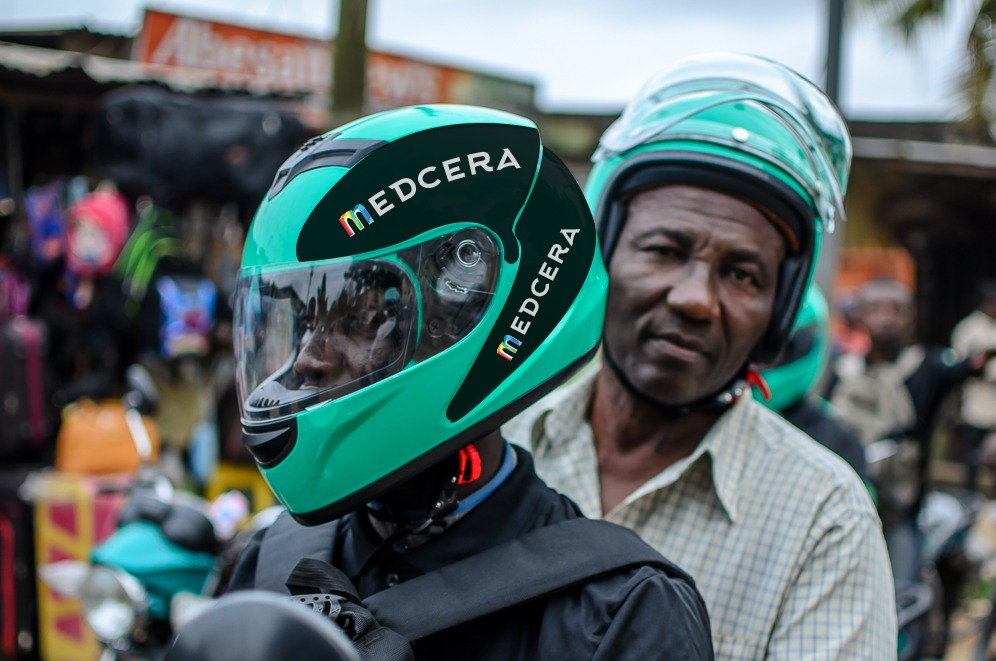
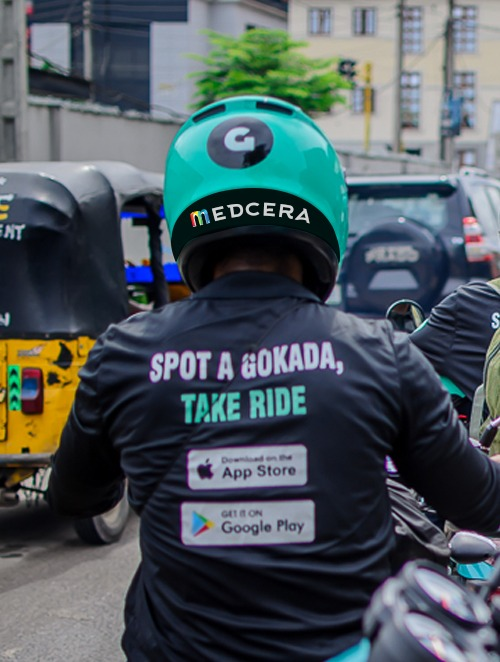
Medcera Rides With Gokada

0

On the beautiful streets of Lagos, @Gokada is okading our message to Lagosians. Medcera is winning markets and territories as we organize patient medical records through an all-in-one ecosystem that brings doctors, labs, imaging, pharmacy and insurance together. Upon the data, an AI engine will run to create a new future in our continent.

I am confident very soon, in your village square, your church, mosque or bus stop, common diseases can be diagnosed with prescriptions made without a human doctor. The future looks exciting.

Please ride @Gokada – I truly admire the innovations they bring in the space.

The INEC Ad Hoc Logistics Committee (Which excluded INEC Director of Logistics) That Paralyzed Nigeria

1
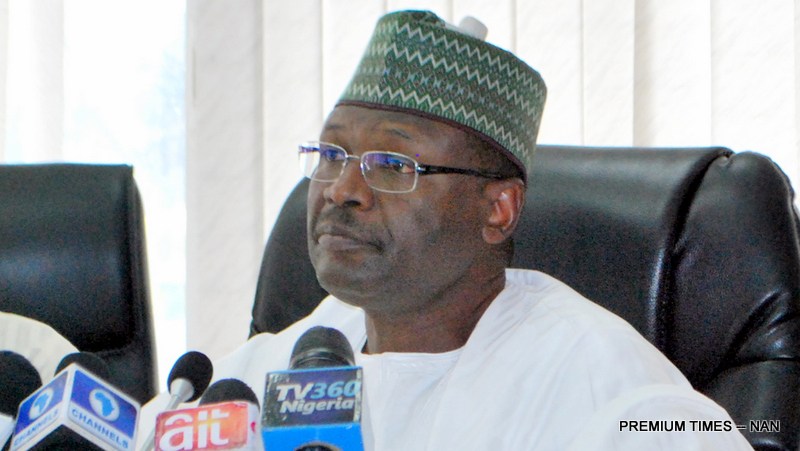
PIC.19. From left: National commissioner, Independent Electoral Commission (INEC), Prince Solomon Adedeji; chairman of INEC, Prof. Mahmood Yakubu; and another national commissioner, Prof. Antonia Okoosi-Simbine, during the INEC’s presentation of certificate of registration to five new political parties, in Abuja on Friday (16/6/17). 03311/16/6/2017/Hogan-Bassey/ BJO/NAN

Now, we can understand why INEC collapsed on logistics: the man in charge of logistics (Okechukwu Ibeanu) was cut-out by INEC Chairman when he formed an ad hoc logistics committee specifically for the election, Premium Times reports. Simply, the core leadership of INEC’s logistics department was not part of the election logistics. It is shameful that INEC could have an ad hoc committee for a general election without the Director of its logistics department as a member.

Mr Ibeanu, who officially heads the INEC logistics department, was not made a member of the committee.

“Curiously, close to the election, INEC chair created an ad hoc committee on logistics for the 2019 elections which reported directly to him. Prof Ibeanu is not a member of that committee,” said our source, an INEC insider.

Another source close the INEC leadership said such committee was unprecedented in INEC’s history.

“There was nothing like that under Jega (Attahiru, immediate past INEC chairman). Nobody knows why Professor Yakubu decided to duplicate functions and hand such a crucial task (logistics) to a committee when there is a department to handle it,” the source said.

The 15-member advisory committee is headed by another national commissioner, Ahmed Mu’azu, a retired Air Vice Marshall.

Two other national commissioners of INEC – Abubakar Nahuche and Mohammed Haruna – are also members of the committee.

Handing it over to Ahmed Mu’azu, a retired Air Vice Marshall and INEC national commissioner, when Nigeria has invested on Mr. Ibeanu for years shows INEC Chairman lacks honor. For the man to think an ad hoc committee is better than a permanent department explains the paralysis he has put the nation.

Apparently, he was troubled that all the key directors on technology, logistics and voter education are from the southeast/south-south and an ad hoc committee would have been a way to cut them out! That is a huge mistake and very offensive if Nigeria wants to thrive on professionalism and excellence.

We need to get over these petty tribal stuffs and make Nigeria fly. I cannot just comprehend why a national electoral umpire for a general election will think a man whose job to run logistics cannot even be part of the very activity (yes, the election) everyone in INEC was assembled to perform. Mr. President, probe INEC urgently because this is looking like a pile of mess.

Mr Ibeanu, a professor of political science, was asked to report at the SSS office by 2:00 p.m., multiple sources close to INEC told this paper.

Apart from Mr Ibeanu, others asked to appear before the SSS include Chidi Nwafor, the Director of Information and Communication Technology (ICT), Ken Ukeagu; Osaze Uzzi, the Director of Voter Education and Publicity and Bimbo Oladunjoye, the Assistant Director of ICT.

Update: SSS has called off the summons

PREMIUM TIMES reported how the SSS summoned the head of INEC’s operations and logistics department, Okechukwu Ibeanu, and four other officials of the agency.

The others asked to appear before the SSS include Chidi Nwafor, the Director of Information and Communication Technology (ICT), Ken Ukeagu; Osaze Uzzi, the Director of Voter Education and Publicity and Bimbo Oladunjoye, the Assistant Director of ICT.

They each received a phone call from the SSS on Monday who asked them to report at 2:00 p.m. on Tuesday.

They were also told that their summon had been discussed with the INEC chairman, Mahmood Yakubu, sources briefed by the affected officials told PREMIUM TIMES.

However, after our report and that of other media on Tuesday morning, Mr Ibeanu received another call from the SSS who told him the invitation had been cancelled. The other officials also received similar calls.

The SSS has refused to state publicly why it summoned the electoral officials, and why members of an ad-hoc committee set up by Mr Yakubu to handle logistics by INEC were not summoned.

Nigeria’s INEC Votes Incompetence

The MultiChoice’s 13.9 Million Subscribers

0

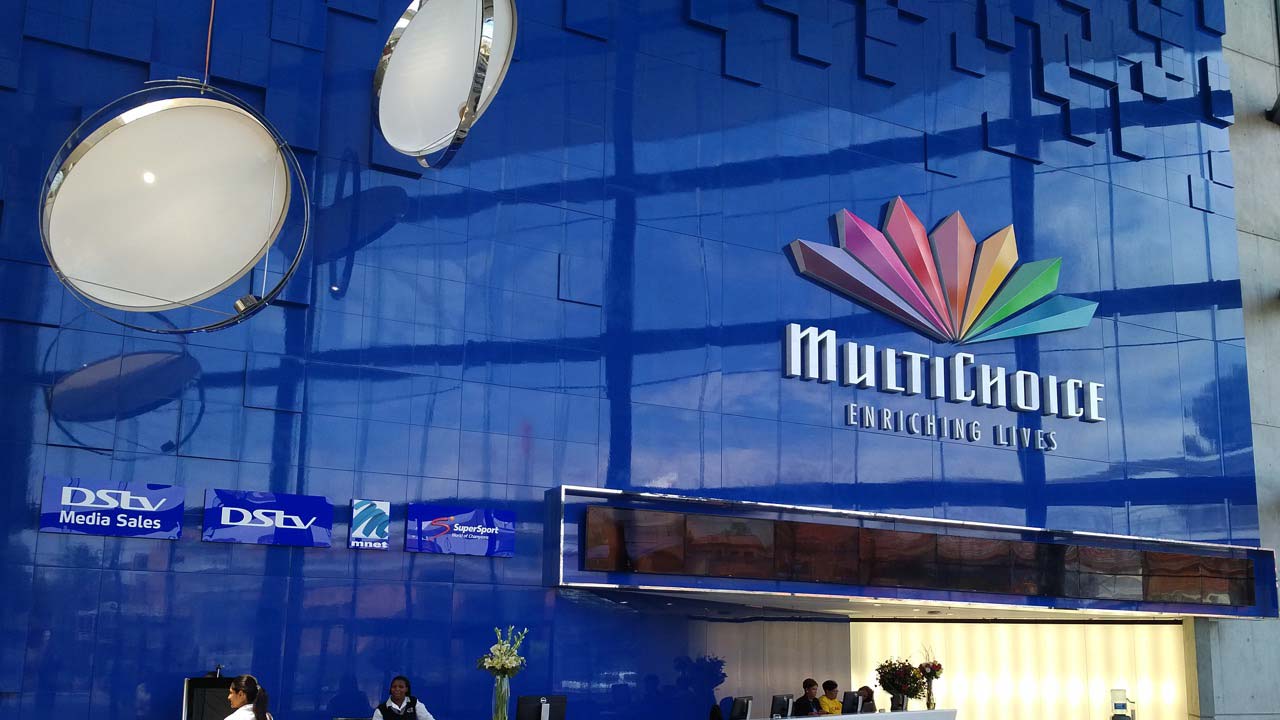
A securities filing report has revealed that MultiChoice has 13.9 million subscribers, across Africa, implying that many people do not have the choices, yet, to sign-up to many of the company services. In a continent of more than 1.2 billion people, one would have expected a clear category-king and dominant player to have better numbers since it began operations in 1996. This is typical in Africa – projections by pundits are always ahead in multiples when real numbers arrive. Recall the revelation that old Konga had just 350k users via a securities report filed by one of its (then) major European investors. Before that report, everyone had assumed the user base was in millions.

It supported the claim by comparing its subscriber base – which currently stands at 13.9 million across Africa – against those of Canal Plus Afrique, StarTimes and Netflix.

The Guardian checks showed that by late 2017, Nigeria controlled 40 per cent of MultiChoice Africa’s subscriptions.

But StarTimes’ Overseas Public Relations Director, William Masy, disclosed that approximately three million Nigerians are subscribed to the organisation’s services and products.

Netflix rising subscribers in Nigeria are also in millions.

The United States is about 25% of Africa’s population but Netflix alone has about 60 million subscribers, indicating a higher level of penetration. Netflix using the web to distribute has a huge advantage since the delivery mechanism is unbounded and unconstrained with a better marginal cost which helps its scalable advantage. It is possible that the rise of Netflix will remain a continued and sustained challenge to MultiChoice business in Africa. Netflix opened for Nigerians not long ago, and now has 1 million subscribers while MultiChoice despite its long presence has just 3 million subscribers. Yet to confront this challenge with a top-grade online streaming business will bring the innovator’s hangover paralysis within MultiChoice: you cannot destroy the highly profitable cable business for a largely low-margin online one.

Do not bet that Naspers, owners of MultiChoice, might not have given up by this unbundling of MultiChoice as a separate entity in the Johannesburg Stock Exchange. Yes, the firm remains solid, in the short term, but long-term view in the age of the web is severely gloomy.

LinkedIn Comment on Feed

  1. The day we are going to discover the true population figure of Nigeria, and also the number of Nigerians whose annual incomes are from N1 million up; maybe it will help demystify a lot of things about market size here. MultiChoice having less than 4 million subscribers, with good portion on GOtv, not good enough; but that’s the reality. Facebook still has less than 30 million Nigerians, and that’s the platform with largest concentration of Nigerians online, and yet we don’t have 50 million people there yet. We are yet to see any figures close to all the projections about market size and value in this part of the world, aside from NNPC telling us that we consume more 50 million litres of petrol daily. Someone needs to enter the dock and answer some questions…

  2. The coming years may not be funny for them. Seriously considering the disruptive innovations going on with Netflix and other of such businesses and the increase in data availability. Nigeria in particular is a huge market and Multichoice could do better by reviewing their billing pattern. Why would one pay  Naira 18000+ (Which expires active or not) for old movies and regular news channels when Netflix offers unlimited streaming for Naira 4000 or their about for recent and trending movies with even better quality. Multichoice could begin with pay as you watch options. this will give them a chance to fight pending imminent mega disruptions that will follow when other of such ventures like Netflix create the real competition.

  3. The likes of Netflix care for the younger tech savvy generation, while DSTv has the broader family oriented traditional audience. This market share is not going to dissipate overnight. The tech infrastructure in the country is still far behind, but in- line with DSTv audience. Yes DSTv will have to work hard to keep a good percentage of the younger generation, and there is one way rhis is already working. Satellite TV service providers are now embedding the likes of Netflix, Amazon Prime, YouTube, etc into their hardware, providing a onestop service; purchase my service and box and also have access to online streaming as well. This model seems to accommodate both the traditional household and young audience, added with an on-the-go app. We are a very longshot away thinking the model of Netflix will be the traditional means of consuming digital tv screening. 


Good News for DStv: South Africa Upgrades Its Tax Policy, Forcing Netflix to Pay VAT

Nigeria Needs World-Class Products Engineered for Local Markets

0

By Nnamdi Odumody

Every great nation which has achieved sustainable development is built on a strong foundation of innovation. From when Henry Ford in the early 20th Century pioneered the Ford TT as the world’s first assembly line, to General Motors range of cars targeted primarily at American consumers, and Volkswagen Beetle evolution as the premium vehicle for the Germans during the Second World War due to its shape, size and cost, local brands have defined the economic prosperity of nations.

After the Second World War when the shift in global manufacturing relocated to Japan as a result of the Kaizen Revolution which Dr Edward Deming introduced to the Japanese, Soichiro Honda, Shiji Toyoda, Akiro Morita and Konosuke Matshushita began the development of the now global brands – Honda, Toyota, Sony and Panasonic – by creating world-class products primarily for the Japanese, later Asian and finally global markets.

China’s rise as the world’s second largest economy and major technological player will not have been possible without these brands, engineered primarily for the Chinese consumers

Brand                    Category King

Alibaba               Electronic Commerce

Huawei               Telecommunication Equipment

Xiaomi                Consumer Electronics

Tencent               Consumer Internet

Geely                  Automotive

BYD                    Electric Automotives

DJI                      Consumer Electronics

Baidu                  Consumer Internet

Ping An Insurance            Financial Services

Ant Financial                     Financial Services

Oppo                                 Telecommunication Equipment

Oneplus                            Telecommunication Equipment

Face++                             Artificial Intelligence


In Nigeria, a couple of local innovators and businesses have actually come up with world class products engineered for our local market. In Agriculture and Healthcare, FASMICRO’s Zenvus and Medcera are intelligent solutions to transform the Nigerian agricultural and healthcare industries for the 21st century using artificial intelligence respectively.

Dr Collins Agu of I-Habitat has developed the Obuno and Amadioha range with about 80 percent local components for Smart City and other Internet of Things applications in Nigeria. Deji Oduntan and his team at Gokada are trying to redefine the customer experience with motorbikes, a popular means of transportation in urban cities such as Lagos where traffic gridlock is the order of the day.

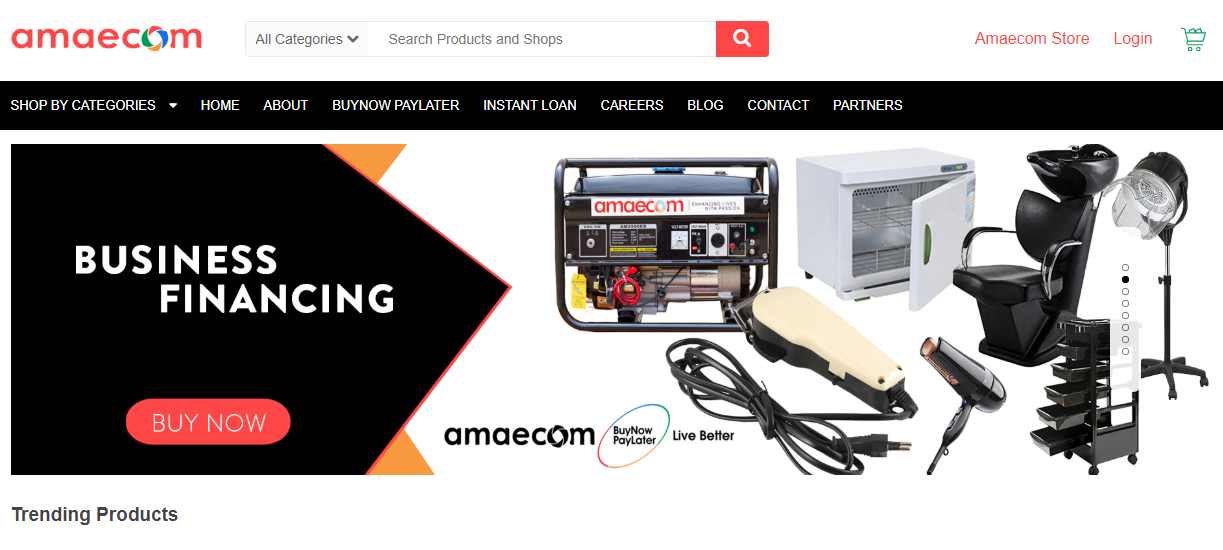
Marcel Ofomata with his company Amaecom Global has provided a flexible structure of getting finance for your assets. Chidi Ajaere has changed the face of interstate transportation with his GIG Motors offering the best customer service in the industry while Interswitch helped millions of Nigerians enjoy financial services through its platform. Konga has provided Nigerians who cannot withstand the stress of going to markets or shops with a convenient alternative, via e-commerce.

Outside the shores of Nigeria, in Kenya, MKOPA has come up with the most scalable solution to solar energy consumption for homes in Africa while BRCK is an invention borne out of necessity to solve a common problem on the continent by providing access to internet connectivity even in rural underserved locations.

Through the development of world class products engineered for our domestic and African markets, and patronage by Nigerians, local products and services will boom, delivering a highly diversified economy, not dependent on receipts from hydrocarbons for survival. The opportunities and capabilities are there, African policy makers, entrepreneurs and other stakeholders must find all the elements to unlock the promises.

The One Oasis Strategy – A Personal Application

3

By David Alade

It was early 2018, while studying the thought process of Prof. Ndubuisi Ekekwe to understand what made him so outstanding, I came across the e-book The One Oasis Strategy. To be candid, I couldn’t drop it midway. I keep reading till I flipped over the last page. After that day, I clustered the strategy in my mind as a strategy best fit for a business.

Indeed, oasis is very critical and every company has oasis. Your best product is the oasis in your business. Every other product feeds on that best product. If you build your investment around that main product, you will find success, because those investments will have a clear “customer”, and that reduces market risks. In other words, if your new business investments are geared to support the best product, and the best product is doing well, it means the risks on the new investments will be easily managed. Provided the best product continues to do well, demand on the new investment is assured. That is the One Oasis Strategy.

Fast forward to late 2018, after a careful study of the process that is shaping who I am, I coined the phrase ‘Success Leverage’ which means moving from where I am, to where I want to be, by leveraging what I have, to my advantage today.

Recently, I had some sort of spark and an eureka moment when I noticed a strong correlation between what Prof. Ekekwe calls the One Oasis Strategy and what I called Success Leverage.

What inspired the spark?

I like you to pay attention to what I call ‘The Story of How I/You Got Here’. It was at this moment that I saw a lot of doors opening up for me because I was successful in one thing already. I realized that a shut door was simply an indication that I had to develop my capabilities in that area. Once I did, that door and other doors also opened. Ultimately, doing this helped me break the cluster I had earlier created and helped me realize that One Oasis is unbounded and unconstrained in its applications as long as one can connect the dots.

Not one to horde knowledge, I really hope that this article will show you the dots on One Oasis and how to connect them to other focus points in your life.

Just for recollection, we will redefine oasis.

In geography, an oasis is an isolated area in a desert, typically surrounding a spring or similar water source, such as a pond or small lake. Oases also provide habitat for animals and even humans if the area is big enough. The location of oases has been of critical importance for trade and transportation routes in desert areas; caravans must travel via oases so that their water and food supply can be replenished. Thus, political or military control of an oasis has in many cases meant control of trade on a particular route. (Wikipedia)

In our life, forces must come together to form a shape before we attain a goal, just as forces of demand and supply must interplay in business. This forces on a personal level are always anchored on one or more few things that can be seen as a strength in personal analysis. The anchor’s behaviour is such that when properly understood and harnessed, it will be the driver of other breakthroughs in our personal life.

Ndubuisi noted, “The best product in a firm anchors its survival, just as oasis does in a desert. And every business must discover its oasis, if it hopes to thrive.” In similar way, an individual who hopes to thrive must know “product” of her/his anchor per time.

One Oasis Strategy, as Ndubuisi explained, “Is the proposition that if the best product drives key investments in a firm, it has the capacity to help other products in the business. Other products would feed from the best product, and on overall, the company would flourish.”

Refining that definition to fit our subject matter will be:

One Oasis Strategy is the proposition that if your greatest success per time drives the opportunity you aim for, the likelihood of attaining or utilizing such opportunities will be great. Those opportunities will form another source of your value proposition which when accumulated can drive another level of success.

A quick example, I started with the narrative of how a spark caused the breaking of the cluster I created. Here’s the detail of the spark, recently I messaged a distant connection to give me the opportunity to speak at one of his events. Without much questioning, he granted me the opportunity. Why? he checked my profile and saw where I work (current oasis) and for him, that was credible enough. Without that oasis, I don’t think that I would have scored that speaking engagement.

Why do I need the speaking engagement? For exposure! This, I believe, will cumulatively form another oasis that can be leveraged upon. Simply put, an oasis and its accompanying value can open up more oasis.

Another example is from a distant fellow, he planned on returning to an organization where he had previously worked. Though he had accumulated skills in other areas, he leveraged on his experience of working with the organization. There were many feet he could have put forward, but he chose this one because it was simply the right one. The result? He got the job.

How can you apply the One Oasis Strategy in your life?

Per time and per opportunity,

  1. Sit down to consider what is really required to get this job done, to get this opportunity, or to get this platform.
  2. Look within and ask, do my current abilities measure up to at least 50% of what is required to get what I want?
  3. Leverage your abilities when speaking or writing to apply or make requests.
  4. The likelihood of you getting what you want is on the high side if you follow through on the three steps above.

N.B. Another approach I use is to start from the inside out. It is all about considering what my oases are in line with whether or not to pursue an opportunity. This has helped me to experience less failures and more successes as I keep trailing more opportunities.

What you also need to note is that if this strategy must work for you, you will need to master the art of building relationships and your capabilities. Capabilities like communication skills will top my list and relationships cultivated when not needed is always effective.