DD
MM
YYYY

PAGES

DD
MM
YYYY

spot_img

PAGES

Home Blog Page 6970

Nigeria’s INEC Votes Incompetence

0
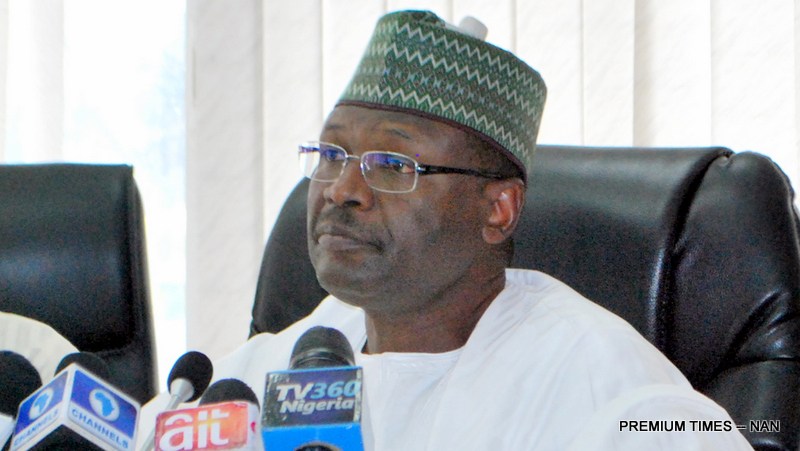
PIC.19. From left: National commissioner, Independent Electoral Commission (INEC), Prince Solomon Adedeji; chairman of INEC, Prof. Mahmood Yakubu; and another national commissioner, Prof. Antonia Okoosi-Simbine, during the INEC’s presentation of certificate of registration to five new political parties, in Abuja on Friday (16/6/17). 03311/16/6/2017/Hogan-Bassey/ BJO/NAN

The general elections have been postponed: February 23 for presidential and National Assembly elections and March 9 for governorship and state assembly elections. Once again, Nigeria has shown our level of incompetence but I give INEC credit for simply saying that it was not ready instead of blaming one clandestine intelligence report.

“The Independent National Electoral Commission met on Friday, 15 February 2019 and reviewed its preparation for the 2019 general elections scheduled for Saturday, February 16, and Saturday, March 2.

“Following a careful review of the implementation of its logistics and operational plans and its determination to conduct free, fair and credible elections, the commission came to the conclusion that proceeding with the election as scheduled is no longer feasible.

“Consequently, the commission has decided to reschedule the Presidential/National Assembly elections to Saturday, 23rd February 2019. Furthermore, the Governorship/State House of Assembly/Federal Capital Territory Area Council elections are rescheduled to Saturday, 9th March 2019.

“This will afford the Commission the opportunity to address identified challenges in order to maintain the quality of our elections. This was a difficult decision for the commission to take but necessary for the successful delivery of elections and consolidation of our democracy.

“The Commission will meet with key stakeholders to update them on this development at 2 P.M at the Abuja International Conference Centre.”

Until Nigeria begins to build institutions, where processes and standards are enshrined, we will not make progress. Since 1999, we have done this many times and yet every four years, we continue to struggle.

Yet, for me, the biggest paralysis is this idea that federal-level (presidential and national assembly) elections must hold before state-level elections. Largely, you have a feeder system where the triumph of a political party at the federal-level will cascade into the state-level elections. When it was evident, last night, that today’s election would not hold, I had expected a flip where people vote for their local leaders before opportunities for the national ones. But that will not happen as they have shifted everything to maintain the pattern.

Finally, what has happened to Festus Keyamo? He does not write anymore like a fine lawyer many have known him for. Blaming PDP does not help his mission. Festus should know that leadership is not simply holding a microphone!

“We condemn and deprecate this tardiness of the electoral umpire in the strongest terms possible….

“We have earlier raised the alarm that the PDP is bent on discrediting this process the moment it realized it cannot make up the numbers to win this election. We are only urging INEC not collude with the PDP on this.

“We are truly worried because as early as Friday morning, some known PDP Social Media influencers unwittingly announced this postponement, but quickly deleted the message and apologized to the public that it was fake news,”

This is a big shame and something good planning could have prevented.

LinkedIn Comment on Feed

In 2011, Jega postponed the national assembly elections, while accreditation had started in many polling units. Then in 2015, it was for “intelligence report”, at least it was announced earlier enough, so wasn’t much of a surprise. Then in 2019, elections postponed few hours to commencement.

Go through the INEC’s statement, they didn’t actually apologise, just a simple statement, telling anyone who cared to listen that they weren’t ready; so deal with it!

A party in power will argue that four years is too small to bring transformational leadership in a country, and now INEC has consistently demonstrated that four years is too small to plan for elections without excuses. They asked for fat cheque and got it, they never complained of money, there was excess money; perhaps they were surprised that they could get such amount of money for their operations, and so “logistics” slipped out of their collective memories…

We frown at our headmasters over “meddling” and “interference”, and yet we keep letting them know that we don’t actually know how to get anything done. INEC has become another NNPC, a perpetual inefficiency has become its second name.

As for Keyamo, nothing much, people initially overestimated his intelligence.
Like Like Francis Oguaju’s comment Reply

Making Nnewi A Special Economic Zone for Automotive Industry

1
Nnewi, Nigeria

by Nnamdi Odumody

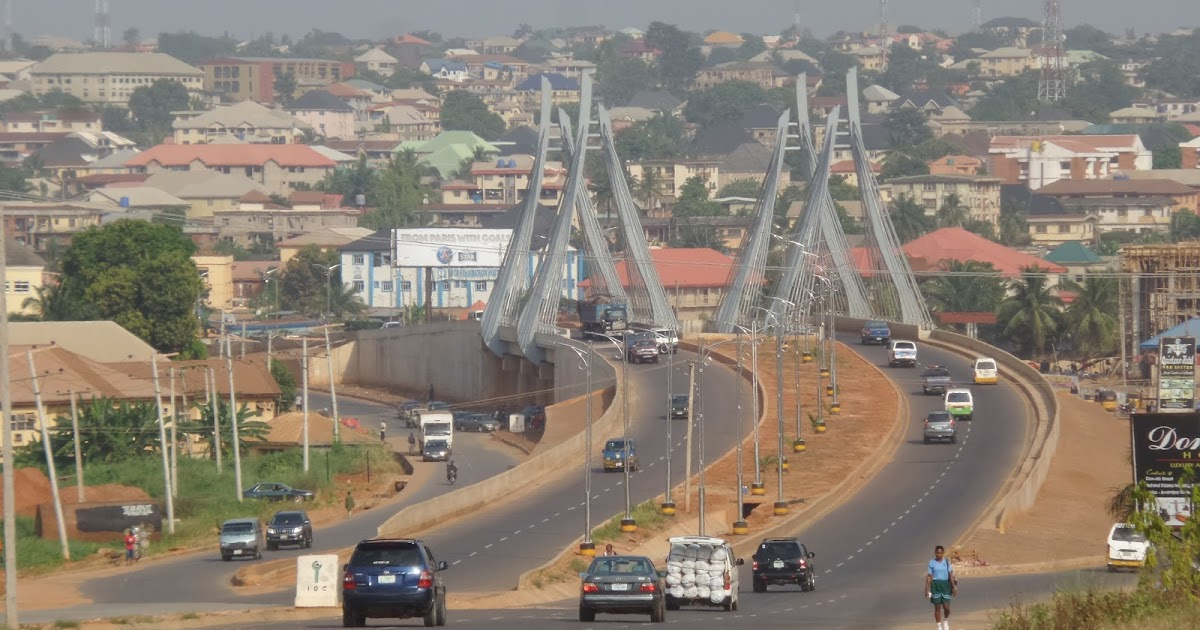
Nnewi, a town in Anambra, South Eastern Nigeria is famous for the enterprising spirit of its inhabitants which has earned them fame as one of Africa’s cities with a high per capita of millionaires and multimillionaires  in dollars.

Spend time with an Arochukwu/Ohafia (Abia) or Nnewi (Anambra) boy under apprenticeship and see the level of dedication. They build their masters and their masters make them.

Today, Nnewi is the most industrious tribe in Africa and has the largest concentration of millionaires per capita. A land where secondary school dropouts control factories and empires. While we celebrate the founder of Innoson Motors [never attended any university] for establishing the largest indigenous auto plant in Nigeria, he would continue to celebrate his masters.

The town is home to the biggest cluster for automotive industries in Nigeria as most of its entrepreneurs are involved in the production and other activities along the value chain. But in comparison with other global auto clusters, Nnewi doesn’t fare all and this can be attributed to lack of support from the government in provision of infrastructure and other things which can make the city globally competitive.

A car made in Nnewi by IVM

Recently, a lawmaker representing Nnewi North and South Federal Constituency, Hon Chris Azubogu, in conjunction with the National Automotive Design and Development Council has begun the development of an Industrial Park in Nnewi South which will be the new home of the automakers based in the ancient community.

On completion, the Anambra State Government should partner with the Federal Government to make the industrial park a Special Economic Zone (SEZ).

A special economic zone is an area in which the business and trade laws are different from the rest of the country. SEZs are located within a country’s national borders, and their aims include increased trade balance, employment, increased investment, job creation and effective administration.

This is important as some of the parts used in the production of vehicles and other automotive systems in the Nnewi cluster are imported from foreign countries. Doing the SEZ will attract companies from across the globe with supply chain services tailored for vehicle manufacturers, to set up shop in the industrial park, and in the process aid the local players to integrate world class design and production.  As the virtuoso circle happens, Nnewi will produce vehicles which will cope with the demands of domestic and foreign consumers of the 21st century.

Also, software designers will flock to the zone to aid the local manufacturers with the creation of intelligent vehicles. This will lead to enormous job creation for the youth and contribute significantly to the GDP of the state and nation. Largely, making Nnewi a SEZ for automobile sector is urgently needed.

The Innoson Motors Vision, Building Africa’s Largest Indigenous Car Company

Saving That Kingdom

2

In the ancestral Igbo tradition (Nigeria), empires have been saved by one word “ndo” which means “sorry”.  “Ndo n’ala uwa azi” [Sorry cures pains] is a popular saying when elders gather to settle disputes between people. For most communities, when the ikoro (king of drums) sings and elders gather over severe problems, against another community, men first look for how to resolve crises peacefully.

They send emissaries. And when those emissaries cannot get the job done, they look for “nwaada” (son to ‘their’ daughter) linked to that community. Nwaadas are highly respected in the mother’s birthplace as Igbos believe in Nneka (the mother is supreme) because if a man’s kingdom falls, his main option is to move to the mother’s place. So, strategically, your mother’s place is safe haven where no evil can come.

When a young boy arrives at his mother’s birthplace, he automatically assumes rights over most. If you check, as elders break kola nuts and drink palm wine, they first ask “do we have nwaada here?” If there happens to be nwaada, they will acknowledge him, and once after taking the palm wine, they will give him, over the sons of the soil. The idea is this: no matter what brought you to your mother’s birthplace, you are welcome! We will feed you before we eat. You are protected from any harm.

(If you read Things Falls Apart, this game was well played. Nneka was Okonkwo’s daughter in exile.)

So, with that high respect, elders plot to send nwaadas to help resolve issues between communities. Because if the enemy communities see their nwaadas, as emissaries to them, their hearts usually melt. Men that do this greatly attend the titles of ‘Udo” [custodian of peace]. They know how to say “Ndo” so that empires and kingdoms can thrive.

In business, symbolically Ndo has the potency as “Well Done” or “Great Job”. Tell your subordinates Well Done, when they do great things, and see how motivated they become. It energizes the spirit and activates the mind to believe. Just a word can make a difference.Your business kingdom can go far if you know how to appreciate and commend people.

Dear Diamond Bank, The “YES”

0

Dear Diamond Bank,

I was so touched that despite all that happened, you are still as emotional as before. The purity of your heart, the excellence in your vision and the emerging generation you shaped are things to celebrate. You gave us DIBS which changed our nation.

Yes, Access sent the Val gift; you said YES. We are living the history. But no matter what, even when they turn off that light behind that sparkled diamond logo, you will not be forgotten, in our hearts.

I came into the relationship with you, not even knowing how to sign a cheque book, fresh from college. In your generosity and matchless training program, designed by a banking legend (the P-G-D), you transformed me to see a world beyond what my eyes could imagine. And you did not stop there, sending more goodies even when I had left to the beautiful America.

I will vote YES, just as you have said YES, on this Val day, to Access Bank, next month. After that vote, I will drop a note to you. I will title it, “Good Night Diamond, You Lived a Great Life – I Appreciate ALL”.

Happy Valentine, Diamond Bank!

Ndubuisi

My First Day in America and Kindness of Diamond Bank Lagos

JP Morgan Runs With NairaCoin via JPM Coin, Nigerian Banks Over To You

1

I have been an advocate of a cryptocurrency that will be pegged to the Naira over what we largely have today where entities (usually outside Nigeria) “create” currencies with no regulatory control. So, I am not a fan of Bitcoin because mining equilibrium is not clearly distributed but rather concentrated in the hands of those with technological supremacy. I recommend NairaCoin to be pegged to the Naira as a crypto vehicle for Nigerian commerce for those interested in that new domain.

There is a very deep conversation which is going on LinkedIn since I wrote that the Nigerian government can indeed regulate cryptocurrencies like Bitcoin. As I noted, my preference is for the government to create our own cryptocurrency, NairaCoin, and tie its value to the Naira. I have a reason for that.

[…]

Yet, you can put your blockchain-contract in Naira, but since this is digitized architecture, my suggestion is to simply create a Nigerian cryptocurrency backed by the Central Bank of Nigeria so that Nigeria has its cryptocurrency (NairaCoin) which is tied to the Naira. That will make blockchain contracts more efficient. The NairaCoin will maintain exchange rates with Bitcoin and others, just as paper Naira has with U.S. Dollars and Euro, while making sure that the paper Naira and NairaCoin are always correlated.

That thinking is now new: stablecoins are engineered for that. Yes, you create cryptos and you peg them to a traditional currency like US dollars. What is new is that banks are getting into the game: “JPMorgan Chase is the first major U.S. bank to create its own cryptocurrency… JPM Coin, a dollar-pegged cryptocurrency, or “stablecoin,” intended to help big clients—like corporations, banks, and broker-dealers—settle up international payments, securities transactions, and treasury services…”, Fortune newsletter summarizes.

JPM Coin is a brilliant idea which will enable smooth operation of any blockchain architecture within JPM domain. Unlike the amalgam of many cryptos like Bitcoin, Ethereum, etc, the megabank now has one crypto defined and under its control, so that clients can see certainty and visibility when settling payments, securities and treasuring services.

The lender moves more than $6 trillion around the world every day for corporations in its massive wholesale payments business. In trials set to start in a few months, a tiny fraction of that will happen over something called “JPM Coin,” the digital token created by engineers at the New York-based bank to instantly settle payments between clients.

J.P. Morgan is preparing for a future in which parts of the essential underpinning of global capitalism, from cross-border payments to corporate debt issuance, move to the blockchain. That’s the database technology made famous by its first application, bitcoin. But in order for that future to happen, the bank needed a way to transfer money at the dizzying speed that those smart contracts closed, rather than relying on old technology like wire transfers.

It fixes one major challenge I have with Bitcoin: regulation. To make many things legal, most firms will still put Naira and Dollars in their blockchain-anchored contracts. I have argued that unless Nigeria has recognized cryptos, contracts based on them could be voidable in courts. So, largely, I tell people to ensure the numbers are in Naira, or any traditional global concurrency, because Nigeria is yet to test the validity of crypto-only contracts in court.

Bitcoin is flawed but NairaCoin offers promise in Nigeria

So while the world likes blockchain, making it to work cannot decouple the fact that you need to be sure that any contract therein can stand in courts. If a nation does not recognize Bitcoin, are you at risk on trusting it to set the basis of payment? Possibly, as before the law was updated, email documents were not admissible in Nigerian courts.

Yes, there used to be a time when in Nigeria, banks would not accept scanned documents sent via emails. The same happened in European Union where publishers required hardcopies, not digital (e.g. scanned copies via emails), copyright transfers before they would publish academic papers. Those requirements have since evolved.

But with JPM Coin-inspired model, a bank in Nigeria can have a blockchain system that runs on its crypto for settlement, as its customers can still operate in Naira knowing that the technology will handle the equivalency, even as transaction fees drop, due to productivity gains that blockchain makes possible. Because say Access Coin (for Access Bank), has no value different from Naira, it does not introduce any risk like Bitcoin and cousins.

JPM Coin will unlock new markets for the big bank. Nigerian banks should make a local version for the Nigerian market. Then, entrepreneurs in this space should then pursue the universal local one: NairaCoin fully pegged to the Naira.


Towards Nigeria’s NairaCoin with Central Bank Support