The Federal Government of Nigeria has approved N60 billion to support rice farming in the nation. Simply, entrepreneurs and companies with focus on rice production would win. As you work on the 30 agriculture and agtech business ideas, be thinking how you would bias most plans for rice farming.
The federal government has approved N60 billion in support of its rice subsidy programme aimed at bringing down the price of the commodity across the country.
The Minister of Agriculture and Rural Development, Audu Ogbeh stated this when he briefed State House correspondents on the outcome of the meeting of the National Food Security Council.
[…]
“There is a subsidy programme coming up. Government has approved some money, N60 billion to support the rice industry to bring down prices. But we are going to handle it differently.
[…]
“Every country does it for food, we will use a different method to do it and it will be cheap credit to the farmers, millers and the marketers, not outright cash subsidy for their product,’’ he said.
I took this photo in front of University of Lagos Guest House few years ago. I was a guest to the university, helping on some projects. As I look at the view (look well, you would see 3rd Mainland Bridge at the background), Zurich (Switzerland) comes to mind.
If you depart Zurich Central Station, you would behold a really fascinating water body. Nigeria has many of those water bodies but lack of local and national environmental leaderships have guaranteed that we have polluted and made them unusable.
Do you know that the part of Waterside (Aba) that runs through School Road (near Aba Stadium) would have been a tourist destination if Mother Nature has created that in Paris. But in Nigeria, it is a landfill (yes, waterfill).
As I travel around the world, there is nothing beautiful any nation can boast that Nigeria does not have. The problem is that we have not worked hard to unlock them.
Microsoft is taking a new step to make it easier to run Windows software on computers powered by Arm-designed chips, rather than Intel processors, the software giant revealed Friday. In the past, Windows apps ran slowly on Arm-powered devices. That was a relic of the mighty duopoly of the PC era—the Intel and Microsoft together known as “Wintel.“ But that relationship has been fraying over the past few years.
Microsoft is eager to move the Windows platform onto devices that are more mobile, which means bringing Windows onto the Arm chip architecture. Arm-based chips suck up less power than Intel chips; they already serve as main processor in every modern smartphone. Apple is also reportedly working towards using its own Arm chips for its Mac computers starting in 2020, Information newsletter summarizes.
Microsoft has unveiled official support for developer tools to create apps 64-bit Arm (Arm64) architecture apps for its Windows on Arm devices.
The Arm64 apps are designed for the Windows 10 on Arm convertibles like the new Lenovo Yoga C630 WOS and Samsung’s Galaxy Book2.
To create perception demand, you need to go beyond serving customer needs and expectations to meet their needs at the level of perceptions.
Perception Demand is very risky: you think without much learning curves decoupled from aligning scaling and market demand. But when you add “Stimulating” before it, you have a construct, Stimulating Perception Demand, which focuses on existing trajectories in the markets and how to take them to the next level, and around there massively get many fans to connect. Here, you have seen how the products in the markets are doing. You just want to take them to the next level. The product operates at perception level, but even with that, you must stimulate demand at new heights.
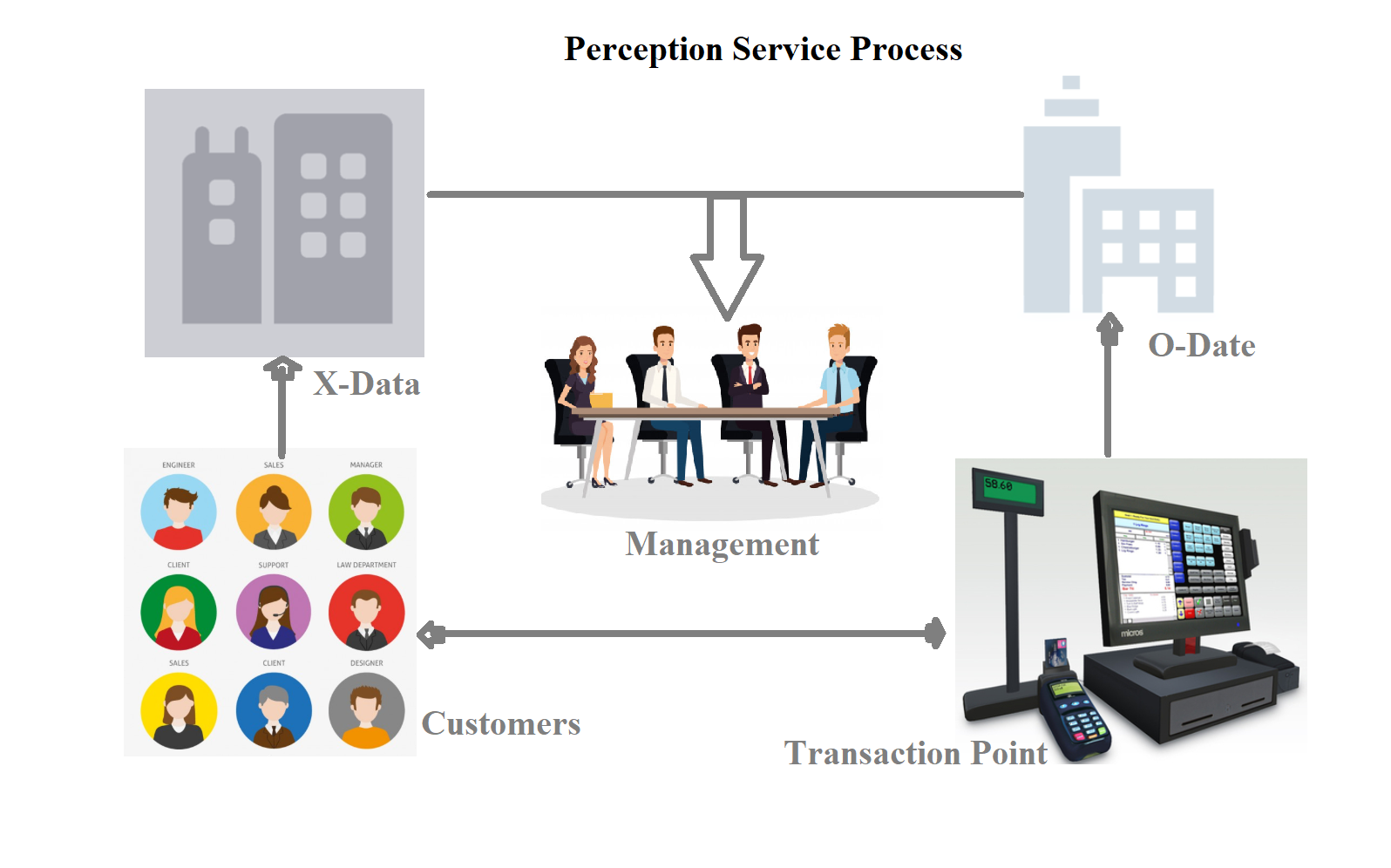
Two things are very critical to make that happen: operational data and experience data.
Operational data (O-Data): Operational data is actually one type of strategic data, which includes internal control and operational environment information such as data on the company’s workforce, direct competitors, creditors, suppliers and information on customers
Experience data (X-Data): Customer experience (CX) goes beyond measuring the relationship between customers and companies; it is also about quantifying the hundreds of regular interactions and residual memories that influence future behavior. Specific tools like journey mapping and touchpoint management are keys that employees can use to unlock the code for many in-store and in-person experiences. But it’s important for your team to understand the context in which data is being used to make company-wide decisions.
When you combine O-data and X-data, you have Perception Service which stimulates Perception Demand. If you miss either of O-data or X-data, you would struggle with the right insights. To have Perception Service, you need this loop, making sure that your X-data and O-data are all integrated for the management decision making. Giving customers great services before they even begin to ask for them demands a deeper level of insights which can only happen when X-data fuses with O-data.