


The following entities are the most active investors in African startups at the moment. I have included their recent deals after briefs about them. TLCOM Capital TLcom Capital LLP is a Lagos, Nairobi and London based Venture Capital firm focuse on Tech enabled companies across Sub Saharan Africa. TLcom has been investing across Europe, Israel […]
Beyond Data Scientists, You Need Data Translators

Data is the new oil but refining that oil is going to be catalytic in any organization. Great organizations put efforts, after the refining to make sense, and take action based on the insights generated. So, beyond the data scientists, you may need Data Translators. Just as technology needs to be structured to help in meeting the corporate goals, you need someone with capacity to make sense of BOTH the data engineering process and the business objectives. A data refining process which is decoupled from the corporate goal adds no value. Likewise, it would be hard to achieve a corporate goal when no one can communicate it to the data refiners.
A data translator is a conduit between data scientists and executive decision-makers. They are specifically skilled at understanding the business needs of an organization and are data savvy enough to be able to talk tech and distil it to others in the organization in an easy-to-understand manner.
This professional must be someone who can “talk the talk” of both the executives and the data scientists. They are adept at extracting the business meaning and applications from the information they are provided by the data scientists. They not only respect the functions of the data scientists, but also understand the needs of decision-makers; therefore, successful data translators are typically respected by those entities in return.

$150 Billion-Jeff Bezos, We Need You In Africa

The Founder and CEO of Amazon. Jeff Bezos, is worth $150 billion, notes Forbes (these numbers change as stock values move). This is a record accomplishment in the accumulation of wealth. But beyond these digits, Jeff Bezos is a builder. He has mastered the integration of the digital and physical worlds at a scale unprecedented in human history. Africa needs him, because if he comes with the same spirit, great things could happen. His AWS business is marginal in Africa; we need ecommerce as that would force him to look at enabling infrastructure.
Amazon investors, including CEO Jeff Bezos, should be in a festive mood, too.
Amazon’s stock hit a new all-time high Monday. That means Bezos — the world’s wealthiest person — is now worth more than $150 billion, according to Forbes.
For perspective, Bezos is worth more than Microsoft co-founder Bill Gates and Google co-founder Larry Page combined.
As we explore support from ICT utilities like Facebook and Google, I do think we need to find ways to get Bezos to show interest. He is among the few that can invest in hard infrastructure to unlock more values in the continent. Think of establishing a solid logistical system that will help in the economic integration of Africa. He has done it before and he can do it here. African Union should explore that opportunity with him.
In this video, I explain why Jeff can help in unlocking value in our logistics and transportation sectors which will help in deeper intra-African trade. Do not ask me why we can’t do it by ourselves? Good question, but we have not even started. So, if he shows interest, we need to try an alternative since what we have now is not working. It is so shameful that countries like Nigeria do not have functional postal systems thereby affecting the growth and development of the ecommerce sector
.
Yes, it may not be a bad idea to ask Jeff to come. African Union will offer him tax benefits (as American cities do) for years. Call it Conglomerate Tax we need to pay Amazon to help develop our logistics/transportation sector.
Will a Vehicle Provide a Boost to Your Business?

As of 2017, an estimated 81.5% of workers in Nigeria were categorised as being self-employed. One survey revealed that even among the middle class, “38% are entrepreneurs.” From business, to farming, to eCommerce, running a business in Nigeria takes dedication, time, and plenty of effort. Because so much is at stake when an individual is self-employed, it is crucial to be wise with every dollar that is spent. With the cost of an average vehicle set at approximately N10,500,000, and an average monthly salary at N82,045.45, it isn’t often that business owners rush out to buy a vehicle.
However, despite the obvious expense, the purchase of a vehicle could turn out to be an investment in your long-term success. Explore some of the top ways a vehicle could boost your business.
Are you missing opportunities?
Whether you work online or in person, having a vehicle for your business can open new opportunities. What kinds of opportunities? First, almost any kind of vehicle affords the chance to deliver goods to customers without the use of shipping services. If you find yourself spending a significant amount of money on local shipping costs, a vehicle could eliminate the hassle and reduce costs over several years. Second, if you do not currently offer delivery services, could your business benefit from doing so? If you have services or products that lend themselves to a delivery service, you have an opportunity to increase your earnings. For those who work in highly competitive fields, you can differentiate yourself by offering personalized service to your customers.
Will the cost of the vehicle benefit profits in the long-run?
As stated earlier, even a standard car is not inexpensive (at about N10,500,000). Although there is an initial upfront cost to owning a vehicle, as well as ongoing maintenance costs, the purchase could serve as a long-term investment. How can you determine if this is the case for your business? Compare the potential profits gained by the use of a vehicle in your business with the actual vehicle cost. If you find that your profits would ultimately pay for the vehicle in a short amount of time, this is a business purchase that is definitely worth exploring.
What kind of vehicle would enhance your business?
There isn’t one vehicle that fits all business needs. If you’ve decided that the purchase of a vehicle could be advantageous for your company, assess which sizes and styles would work best. Is a used truck appropriate? Or do you need a brand new car? Whatever the right answer is, be sure that you seek out the best possible deal among multiple sellers.
Buying a vehicle isn’t the right choice for every business owner. However, for those that can benefit from this purchase, enhanced profits, improved customer relationships, and easier day-to-day operations await.
MallforAfrica Takes Africa To The World
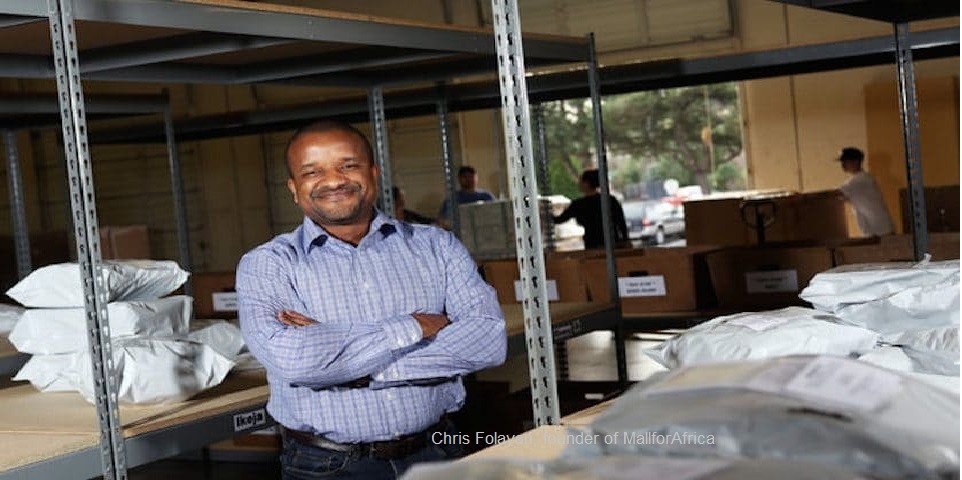
MallforAfrica is re-engineering the path of African shopping which has largely originated from America (and Europe) to Africa with a reverse path which begins from Africa into American and European homes. Yes, MallForAfrica is working with DHL to make it easier for artisans and makers within Africa to sell things to the world. They have created a web portal, MarketplaceAfrica.com, and introduced Africa Made Product Standards (AMPS). This partnership will cover fashion, body care, handbags, jewelry and home décor and the platform “will provide craftspeople and customers order verification, fast delivery, and shipment labeling and packaging services. Suitable delivery costs also keep products affordable”.
DHL, the world’s leading international express services provider, today announced its partnership with e-commerce giant, MallforAfrica’s new platform, Marketplace Africa, to help online retailers bring African-made products to the US and global market. The site offers items from the continent’s most talented designers and artisans from a variety of categories including fashion, body care, handbags, jewelry and home décor.
By providing this portal, MallforAfrica will fix one major friction which exists in African ecommerce: trust. Trust has been the major reason why African makers are isolated from the world. With this partnership, it would be easier for global buyers to shop from African makers and the items delivered to them by DHL. The system creates a kind of intermediation enabling the two elements (maker and buyer) to do business.
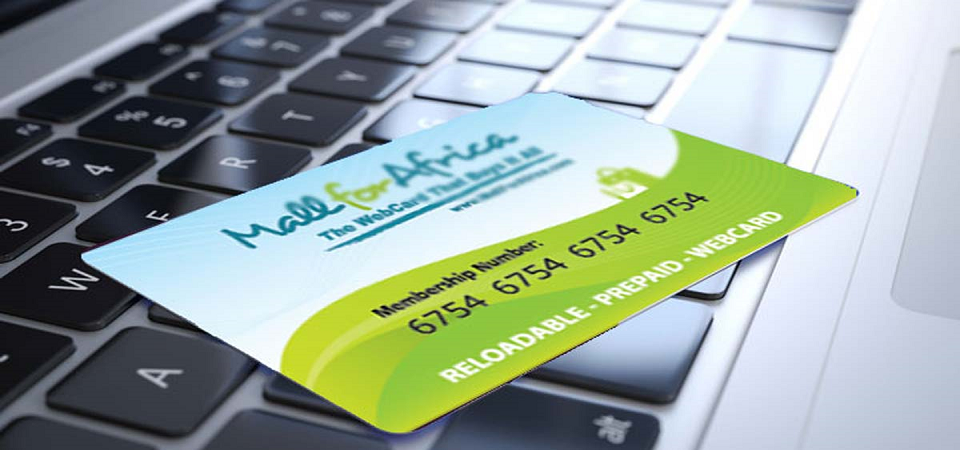
Until today, African craftspeople have been isolated from global customers due to distance, fear of not receiving overseas payments, and complex shipping requirements. Customers who wished to purchase products directly from African artisans faced obstacles regarding accessibility of items, authenticity and validation of the product, uncertainty of delivery, high delivery costs, and payment security.
The introduction of AMPS is a welcome development. I have noted the need of that in a piece on Aba leather industry. According to the press release, the AMPS will be used “to ensure that the highest quality products are being sold on the Marketplace Africa platform. It provides consumers with the assurance that products meet an international standard in quality. All products are crafted with the utmost care by an African artisan”. When product quality comes into the game, the most talented makers will reach more global markets. If AMPS advances, it would be all positive for artisans and markets across Africa.
A key element of the new system will be quality. The makers have to produce quality shoes and bags. delivering consistent quality which can be sold internationally. The brand owner will give them the specifications and then offer training to assist them do the job right. This will include better materials, use of Computer Aided Designs (CADs) and general automation to improve quality. Quality, defined by the brand owner, becomes the identify of that brand.
All Together
When they originally announced this partnership, I commended the vision. Africa needs a mechanism to ship items to U.S. and other global markets where some of our items are actually sought after. But our logistical challenges and payment infrastructures have hindered making such possible. This new platform is certainly a step in the right direction.
Of course, the complexity of the business has increased since it will start sourcing for opportunities in Africa with our infrastructure challenges. But this firm has developed and accumulated capabilities over the years. I do think it will manage the challenges of shipping from Africa to U.S. despite our logistical issues as it in-bounds items to DHL offices. Do not be surprised that they can appoint local firms to aggregate the sub-local supplies across cities. And just like that, MallforAfrica CEO Chris Folayan will focus on processing the invoices, counting the profits, with his usual smiles. People, treasure brilliance: this one is from home.
MallforAfrica will test its aggregation construct model at a deeper level with the aggregation of goods from within Africa to the world. It would not be that easy because of the lack of homogeneity in the African markets. Solutions have to be tailored for each community and scaling will struggle. Everything depends on unit economics and logistics: if the cost is manageable, the Americans, Europeans and the world would absorb all. The key element to look at is the marginal cost (which affects scalable advantage) of bringing these items at collation centers where DHL will pick before they would be shipped to the world. It is a big challenge, and if the team gets it right, they would lift the living standards of many families across African communities.