DD
MM
YYYY

PAGES

DD
MM
YYYY

spot_img

PAGES

Home Blog Page 7105

When Naspers’ MutiChoice (DStv, GOtv) Weeps Over Netflix

0
MutiChoice

It is very intriguing when monopolies weep. It makes nice sound bites except that monetary values are lost, and jobs are always at risks. Many months ago, when TStv launched, with statements boasting of disruptions, I laughed. I called it a Goliath’s challenge, reminding Tekedia readers that TStv has no chance. MutiChoice through clusters of its properties are experts on dealing with distractions like TStv: it has GOtv to take care of TStv and if the Nigerian newbie elevates its game, DStv is there. But there is a competitor from the flank: Netflix.

The video on demand players like iROKOtv and Netflix are also competitors. Anything that engages a customer time is a threat to pay TV.

That has just happened: MultiChoice properties are losing subscribers. It now needs help from government to regulate Netflix because the American video streaming pioneer is disrupting its business. Whenever you hear a monopoly asking for more regulations, just note that something is wrong.

MultiChoice, the pay-TV operator that continues to bleed subscribers, is fighting tooth and nail to remain relevant amid tough competition from online streaming services.

The pay-TV operator lost more than 100,000 premium subscribers in the previous financial year. It has lost a further 40,000 subscribers to date.

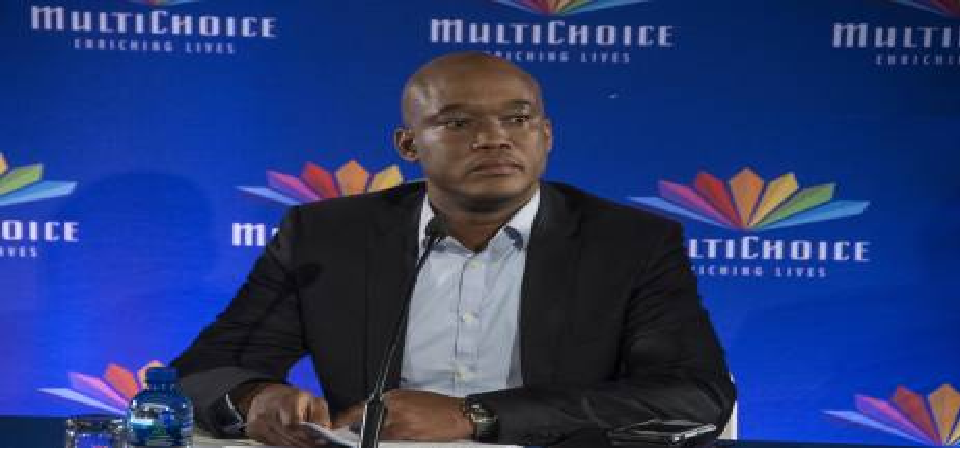
MultiChoice SA CEO Calvo Mawela attributed this loss of business to unregulated competition from video-streaming company Netflix, saying it had an unfair advantage as it was not under any regulatory pressure in SA.

However, MultiChoice, which owns DStv, said it was aware that failure to adapt its business model could make it a victim of digital disruption.
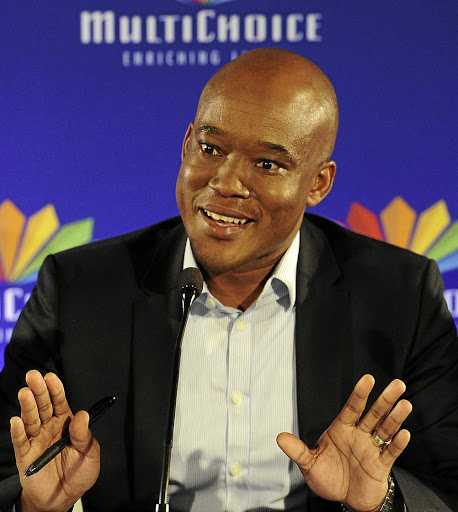
Calvo Mawela
Multichoice CEO Calvo Mawela

The MultiChoice Problem

The problem MultiChoice is facing today with the loss of subscribers is not really about Netflix. Simply, MultiChoice knew that the trajectory of entertainment was moving online and will continue to do so. Online is going to become the equilibrium state of “view entertainment”. Yet, MultiChoice did nothing. It is typical; I called it the monopoly hangover when I wrote about Interswitch. These entities are making so much money in the present model to creatively destroy it. Typically, someone else has to do it for them as that is the only way they can wake up.

Every product offered then by Interswitch was anchored on the premise that it was the only vehicle to connect companies online for payment, in Nigeria. You either take whatever you get or you stay offline. When we connected to GTPay, the company also needed to be supported by Interswitch. So, from banks to startups, Interswitch ruled the market. A one-product company, at its best, with many other things (electronic health records, etc) all linked to it, it had its moments.

The Game Ahead

Battling Netflix would not be easy. Hollywood represents the finest brand in the sector. Netflix is elevating the game with its original programming which would be a tough challenge for MutiChoice to match. Yet, it can innovate. It has launched DStv Now, a streaming version of the DStv product. It also plans to have pure video streaming product. But it is debatable how that would go. As I have noted in the Harvard Business Review, companies like Netflix operates on the winner-takes-all model. The implication is that once they come, you have limited chance to take them up unless you differentiate well. The only positive element here is that MultiChoice is not a small company; it is one of the largest corporations in the world. It has the financial capacity to take up Netflix if it wants. Its parent, Naspers, is the largest entity (by market cap) in Africa.
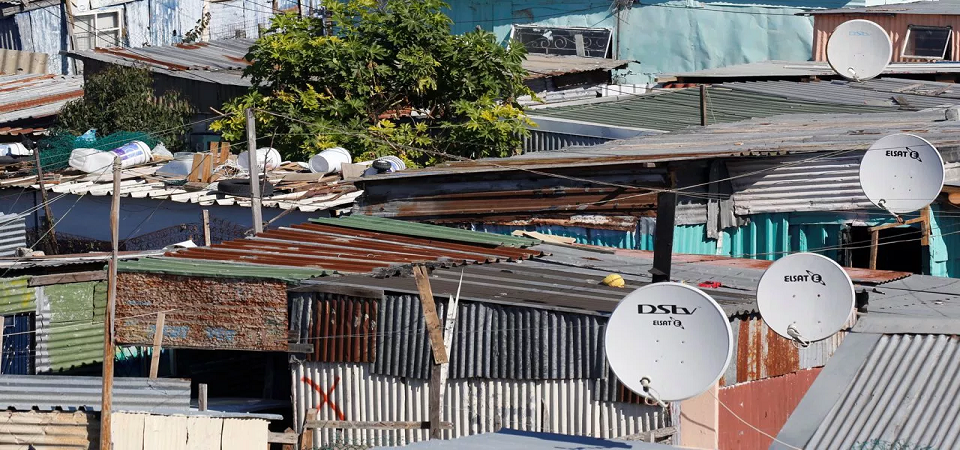
MultiChoice, DStv,
DStv systems (source: Quartz)

But focusing on Netflix misses the point for MultiChoice. YouTube, Instagram and Facebook are all competitors. Anything that engages people’s attentions online is a challenge. Pushing to regulate Netflix while leaving YouTube & Co would be catastrophic. Of course, Netflix has the best premium quality and it is fair to focus on it to drive the message home before regulators. But that would not be enough.

“As a country we have national objectives … if I was to be very narrow, I would say [to Icasa]: treat us like Netflix, so we do not have to pay tax or comply with black economic empowerment regulations,” he told the South African newspaper. “I am saying bring the likes of Netflix in the same net. Netflix does not employ even one person in this country, it doesn’t pay tax, they do not have to do any local content.”

We would be watching to see how South African regulators would regulate American companies. The challenge before MultiChoice is the problem of competing on the web where distribution is unbounded creating what I have called diminishing abundance of internet.

All Together

Many see the call for regulation from MultiChoice as a sign of weakness. Technically, it needs regulations to win because it has been badly challenged and disrupted. No monopoly asks for regulation unless it sees a problem in its path of domination.

This call for regulation is a common call from established monopolies who find their grip on a local market challenged by a tech disruptor, and MultiChoice is no different. At first the South African company tried to compete, launching its own streaming service as eyeballs moved online. Now it’s resorted to calling for stricter rules in its own market.

The problem is not really Netflix because only few Africans can afford to indulge on video online at the scale they could find value from Netflix: data is expensive and internet penetration remains low. In that space, MultiChoice products (DStv and GOtv) still lead because they are fairly cheaper when compared to Netflix. Of course the only way to live today and tomorrow is to innovate as the price of broadband continues to fall, meaning that more people will move online.

MultiChoice is not an underdog; it needs to compete through innovation. Its problem is not Netflix, rather all the clusters of digital ecosystems which entertain users at personalized levels which satellite-based cables cannot offer. The ability to watch only the things you want to watch, which online videos make possible, cannot be compared to cable TV products which show you things you may not like because of lack of personalization.
Which Microfinance Bank License Is Good For Nigerian Fintechs?

0
Microfinance bank Nigeria

If you check the microfinance bank licensing process in Nigeria, you will notice that it was written before the mobile internet era. It remains to be updated as I write. They have the unit, state and national licenses. According to The Vanguard, less than 1% of all the institutions have national licenses: “Less than one percent of Microfinance Banks, MfBs, licenced by the Central Bank of Nigeria, CBN, have national licence to operate in the country.” 

(1) Unit microfinance bank – with paid up capital of N20million,but without branches/ cash centres beside the main office.

(2) State microfinance bank – with paid up capital of N100million.To operate within the same state or the FCT subject to written approval by the CBN for each new branch/cash centre to be opened.

(3) National microfinance bank– with paid up capital of N2billion. Can operate all over the states or the FCT subject to written approval of the CBN for each new branch/cash centre.

Now, if you are a fintech startup which needs a microfinance bank license to support your operations on the web (like lending, saving, transfer, etc), which one would you go for?

Technically, a unit microfinance bank license may do, if the startup uses only the headquarters for its financing related operations. But doing that would create a big problem in the unbounded and unconstrained internet distribution system which enables that unit (microfinance bank) license holder to reach customers across Nigeria (the expected domain of the national license holders). Would doing that be out of compliance to the Central Bank of Nigeria? In the rule book, you have one physical office. Of course, internet has unbounded your distribution, making it possible to reach national clients.

The CBN, please update some of our regulations to remove ambiguity in our mobile internet era. While a unit license holder, operating on the web, can meet the physical domain requirement, the fact is that the risk is now at national license scale. Without fixing that, we can allow a systemic risk in the system.

This is what I suggest: The national license should be updated to National/Internet License making it clear that to operate on the web as the core distribution platform, any microfinance bank would require a national license.

Respond To People, Do Not Take Yourself Too Seriously

0
yourself too seriously

LinkedIn Summary: Humility brings accessibility. Accessibility opens doors to do great things. Business is about expansion and addition, work out ways to manage how to do that.

If you have a habit where you do not respond to emails, you do not answer phone calls, and yet you run a business, you are in trouble in Nigeria.

Being an entrepreneur means losing some of your personal rights to time! But where you want to hold the full rights, you need to go and look for a job in a bank, oil company, telecom or government. They have systems that make money and even if nothing happens, your paycheck is going to come. But if you open a shop, you will fail if you have that attitude.

Do not take yourself too seriously. It would be impossible to serve markets if you do not have the spirit to connect with people. Returning a client’s phone call and replying that email could unlock a great future. Learn to be nice to people – good things will come to you. 

The best audition happens when there is no prize. Audition always.


You know them – they never returned emails. They never return phone calls. They see everyone (but few) as forgotten. If you want to thrive, as an entrepreneur, do not be like them. Yes, there are people who just build relationships upwards and never bother to check what is happening downwards.

The fact is this: to become a good businessman or businesswoman you must develop a skill to make people feel good around you. You need to make customers feel appreciated. And you need to make everyone feel that way because today’s stranger may be customer or partner tomorrow. That is why people with skills to connect with humans typically make good business leaders.

Responding with “Noted” or “Thanks” or “Not possible” over ignoring people will not make us lesser humans. One of the things I tell close associates is that as you begin to find success, do not get trapped into thinking so much about yourself. By that, I mean, categorizing people. You stop picking calls. You stop responding to emails. And you stop endless excuses why no one can reach you in a week.

But that was that guy that had no start or end time. People liked the ability to reach you. Now, it is 8am-4pm as though that works for small companies. Being an entrepreneur means losing some of your personal rights to time! But where you want to hold the full rights, you need to go and look for a job in a bank, oil company, telecom or government. They have systems that make money and even if nothing happens, your paycheck is going to come. But if you open a shop, you will fail if you have that attitude.

Yes, if people call you twice and cannot reach you, they move on. If you check carefully, it is arrogance. Avoid it by all cost. Do not get trapped into the “alpha personality”. You might have hustled to find success, do not change that.

Humility brings accessibility. Accessibility opens doors to do great things. Business is about expansion and addition, work out ways to manage how to do that. Why it may not be possible to handle all calls, emails etc that come to you, delegating and shifting responsibilities make sense. But if you begin to make yourself so busy that no one can reach you, you are saying that you are too busy for new opportunities and partnerships.

But I never believe it is really about work. Most times, you are taking yourself too seriously. Possibly, you have a new title or you have added a new degree. Interestingly, those things do not matter when you are running your shop. People judge your business in the value they get and not the degrees you have. If they hire you and within 48 hours no one can reach you on emergency because you are busy, that would be the last contract.

Thank You Nigeria

1
Thank you Nigeria
Nigerian flag

Few hours ago, we received an email from one of the leading agencies in the Federal Ministry of Health that they would like to work with us on Medcera. Our Community Manager reached out asking what to do. Quickly, I told her the only response was Big Acceptance. Yes, we are honored that the agency reached out. But to avoid bureaucracy we would streamline the interface to make sure everyone gets value from the partnership. Our vision is to help fix a major friction in the healthcare system in Nigeria: disparate data resulting to poor patient outcomes.

Getting support from government in Nigeria is not very complicated if you understand Nigeria. Yes, our leaders are looking for help in some key areas. If you can help, they would come with support. I have made videos and wrote about this in my book – Africa’s Sankofa Innovation. Watch the videos, and read the piece. Ideally, government is majorly about policy; it is only through markets it can execute. If you position to attack those forgotten areas where they have real pains, they would call.

I can tell you that the focus has been qualifying partners over the last few days to support in Liberia, Namibia, Botswana, Ghana, Sierra Leone, Nigeria, etc [apply here]. They are coming and we are working with these businesses to strengthen execution models across markets. We have not even started government aspect of business development. I am happy they have noticed our vision: we welcome and ready to work together.

Thank You Nigeria, as always.


Africa’s Most Fearsome Fintech Competitor

0
opera crypto wallet. opera payment

I delivered a presentation to a South African client today via video. It is a fintech company, and I was tasked to offer the state of the fintech industry in Africa. Everything went fine (no tension) until I went into latent competitions of the near future. We examined them across different nexus. One is really fearsome.

Yes, one of the major latent future competitors is not really the fintechs getting licenses from the Reserve Bank and its agencies (like Central Bank in Nigeria and units). Rather, the biggest threat on the web payment is OPERA for the firm and most African fintech firms.

(USSD, mobile money and things like MPESA are not popular in South Africa. Typically, areas with pre-existing fairly mature infrastructure do not need such “leapfrogging” as what was available is just good enough for people to bother. That explains why no one would pay huge attention to MPESA in U.S., Germany and Canada.)

Opera’s strategy is brilliant for the firm, but it will put it in the crosshairs of many local companies. As more Africans use Opera, most local companies can experience erosion in their brands. Yet, it is also possible that Opera can move in the path of aggregation where it can make it easier to find leading payment, ecommerce and other partners through its browser. But no matter what happens, I do expect massive dislocation as Opera becomes a platform with commercial activities happening at the level of browser. It will be very interesting: Opera needs a business model to make money.

Opera is evolving as a web operating system in Africa. This company has a promise to automate out the need for most financial services to go beyond a browser. Why launch a web app for payment when that is available right in the browser? Yes, if your browser can enable you to make that payment, there is no need of visiting a fintech website to do so. And when you notice that Opera is really popular in Africa, you get the picture why this company can redesign the sector.

Across the continent, the trajectory is that Opera will build platforms with capabilities to abstract away most internet services at the level of its browser. My thinking is that Opera will increasingly make it easier for the bulk of its customer base to do more on its platform, thereby saving them more money in visiting the main Internet. Technically, your Internet can end in Opera because it will allow you do most things there. Simply, Opera is transmuting as an aggregator right at the browser level.

Because Opera is engineered to save you money when you browse, keeping you to its platforms makes a lot of sense. You do not have to visit websites where you spend too much mobile credit if you can get your news, games, financial services, etc delivered by Opera at the browser level [Opera technology minimizes the consumption of mobile credit]. It is investing $100 million in Africa to do just that.

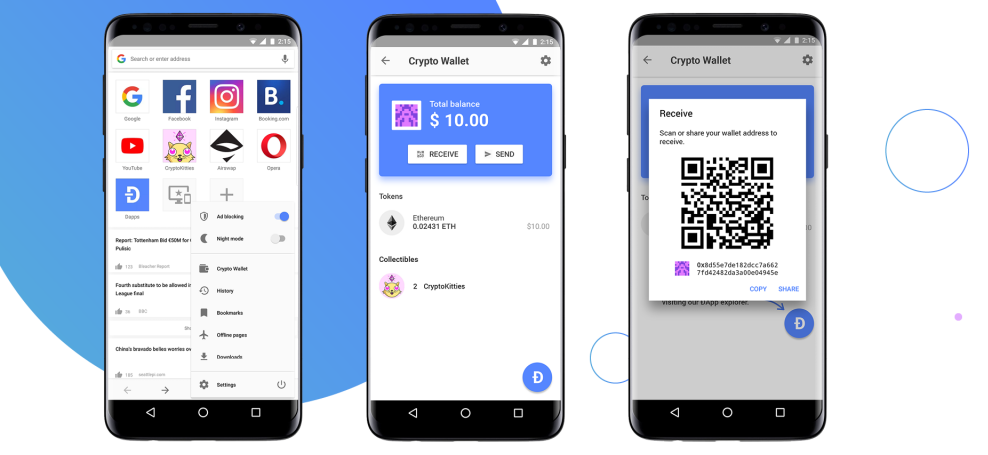
Now, the company wants to add crypto-wallet at the browser level, enabling the transition to Web 3.0 and web decentralization at scale. If it enables that, it may be winning Web 3.0 payment even before it begins in Africa. This is why this company is at the payment forefront even though most refer to it as a browser.

In a first for the company, Opera is launching new browser software that has a built-in cryptocurrency wallet.

The browser maker said Wednesday that its “new version of the Opera browser for Android… combines easy-to-use crypto wallet functionality with support for the Ethereum Web3 API.” The browser is currently in private beta, which the company is now inviting new users to join.

This means users no longer have to open a new web browser or download a separate extension to send, receive and pay in cryptocurrency – now they can do so directly from a toggle on their browsers on mobile Android devices.

It is an especially useful announcement for developers of decentralized web applications – more commonly known as dapps – given that the new browser functionality indicates users can now more easily interact with dapps being built on the ethereum network.

The Opera crypto wallet and general payment tool would be the grand-king of the consolidation of payment interfaces in Africa and could become ubiquitous that if you are not in it, you may be hidden in the “dark web” of African web payment. That is a threat to anyone doing fintech/payment in the continent.