With Zenvus zManager, a farm diary, we now have the ability to predict Farm Profitability if a farmer records all activities (labour, inputs, etc) in the system and the primary market is covered by our pricing engine. For example, if you produce pepper in Isiala Ngwa (Nigeria) and plans to sell in Aba (Nigeria), and allows our AI to “see” your records in zManager, we would concatenate data from our sensors, weather, diary data etc to tell you how much you would make at the end of the farming season. We have probability models which constantly update with capabilities to estimate your profits few weeks into the farming season. The models evolve as the season progresses.
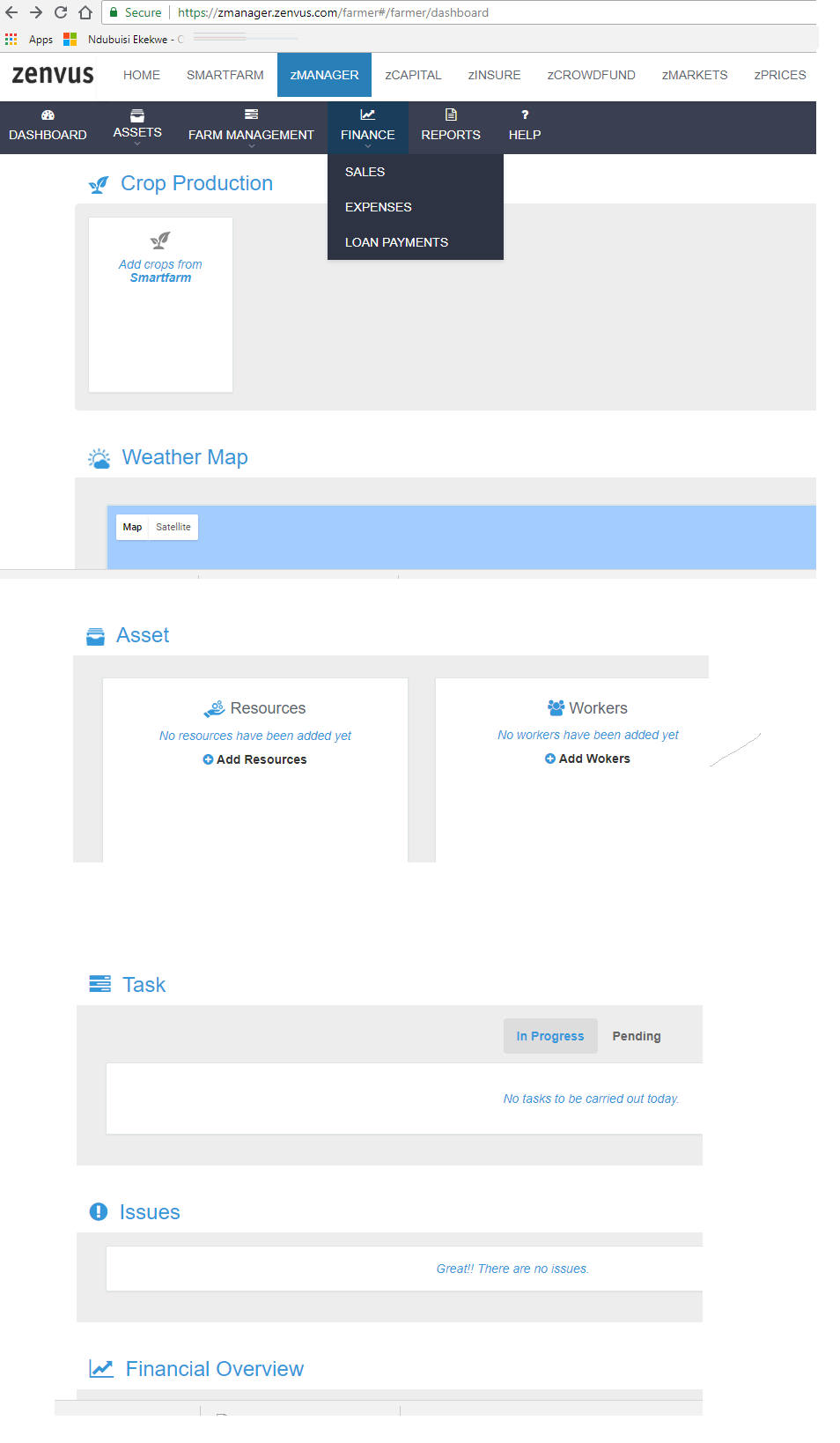
zManager is an electronic farm diary which helps Zenvus farmers run their farming operations. A Farm Management solution, it simplifies the business of farming by helping farms record activities, track inventory, prevent waste, manage employees, manages finances (sales and expenses), organize business calendar, record incidences (say, pest and disease outbreaks), track profitability, and more.
This service is available to farmers through their cooperatives and governments. Zenvus team would need to collect produce prices at least three months in the primary markets to attain equilibrium in the models.
zManager >> making farmers businesspeople.
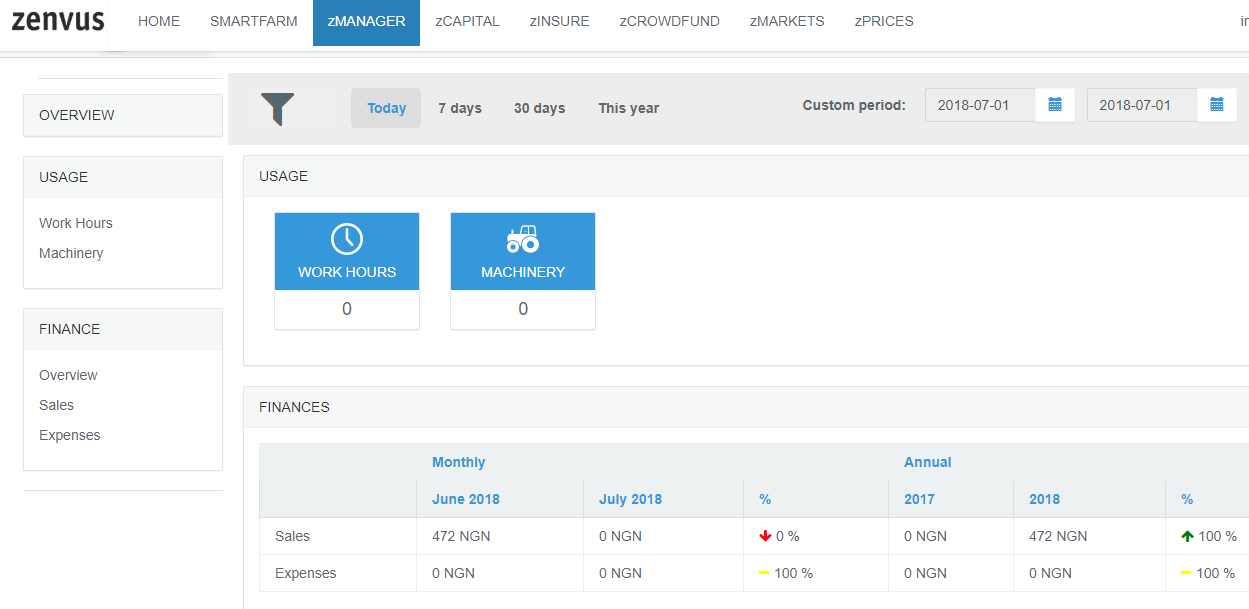
zManager Dashboard (many portions are combined as screen capture cannot pick all simultaneously)
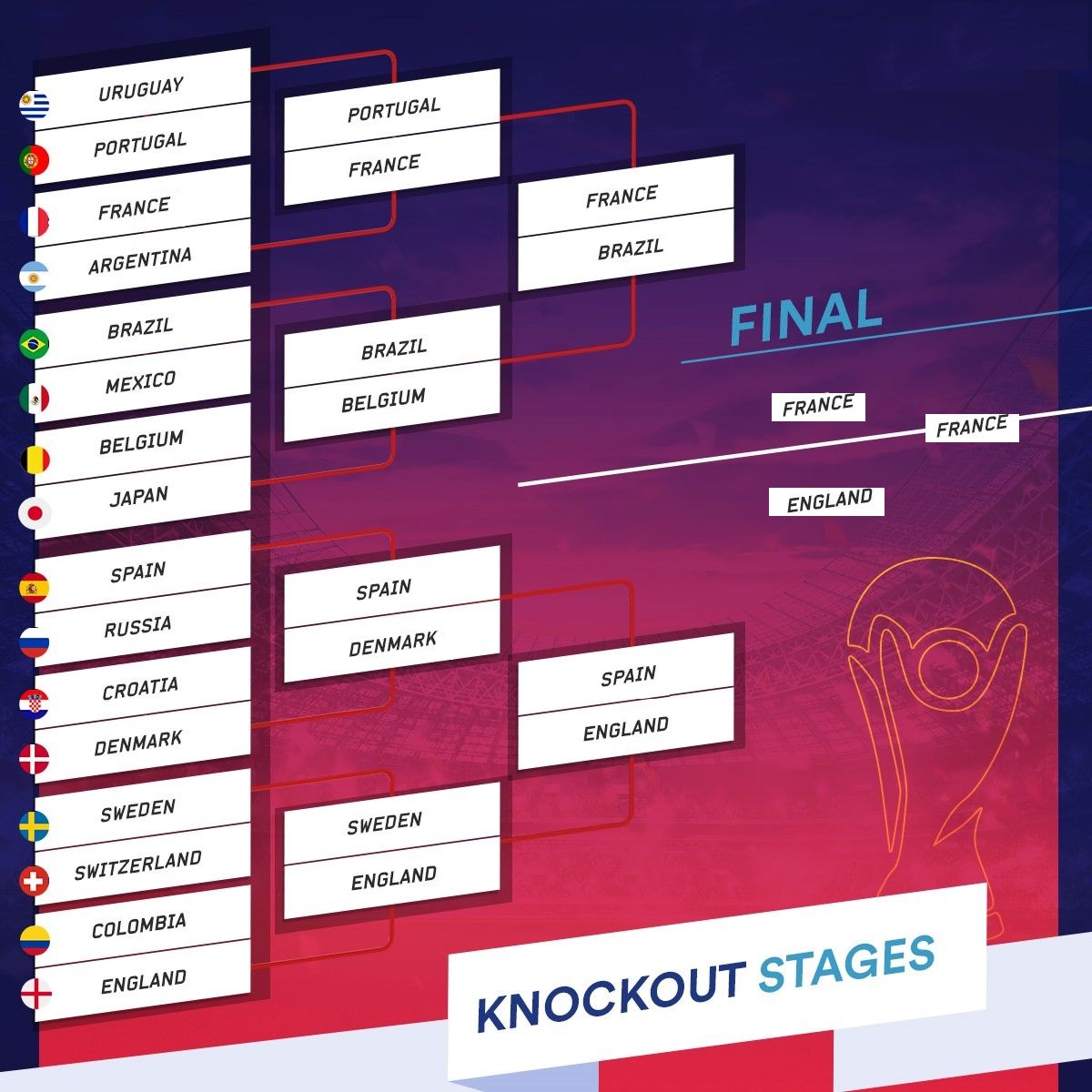
My Russia 2018 Prediction – France Defeats England to Win World Cup.
This is football, the king of sports and a religion in some places. Unfortunately, there is no emotion as my teams (Nigeria and Senegal) are already out.
Make your community innovative. Yes, Nigeria needs INNOVATORS, not just inventors who have great ideas but no products/services. We cannot be a nation like the old man in the sea who sees water everywhere but not a single drop to drink.
We need products/services – we must INNOVATE. In my Practice, we help companies and startups innovate (learn more).
Great weekend ahead.
Updated – March 2020
In the headquarters of the European Union in Brussels, Belgium discussing what EU can do to support Africa. The thesis of my lead presentation and a subsequent panel discussion was this: Europe is an innovation society, the best gift to Africa from EU will never be the cash donations, but helping to replace our inventive societies with innovation societies.
Nigeria’s Kobo360, accepted into YC’s 2018, has raised $1.2 million. The logistics startup built on the aggregation construct will use the capital to expand its business and introduce a new product – Kobo Wealth Investment Network (KoboWIN). KoboWIN is a crowd-invest, vehicle financing program which will make it possible for drivers to finance new trucks through citizen investors.
Kobo360 was accepted into YC’s 2018 class and gained some working capital in the form of $1.2M in pre-seed funding round led by Western Technology Investment announced this week. Lagos based Verod Capital Management also joined to support Kobo360.
The startup — with an Uber -like app that connects Nigerian truckers to companies with freight needs — will use the funds to pay drivers online immediately after successful hauls.
Kobo360 is also launching the Kobo Wealth Investment Network, or KoboWIN—a crowd-invest, vehicle financing program. Through it Kobo drivers can finance new trucks through citizen investors and pay them back directly (with interest) over a 60 month period.
I wrote about this company last year calling it ‘Nigeria’s best logistic company”. Its business model is asset-light (if not asset-free) and is engineered to use customer service to deepen competitive advantage. This news has simply validated the points I made about its vision.
Kobo operates under the principle of Aggregation Construct which depends on network orchestration where it works as an arbiter for many partners and customers. With this model, the customer experience becomes a key part of its business. It does not have ships, planes and trucks delivering services from U.S. to Nigeria and beyond. But it has a technology to simplify trade and commerce. It has got happy customers who do think its services are even better than firms like DHL. Interestingly, companies like DHL make it possible for Kobo to serve those customers.
This company is doing great – innovation always wins: “Kobo360 has served 324 businesses, aggregated a fleet of 5480 drivers, and moved 37.6M kilograms of cargo since 2017, per company stats. Top clients include Honeywell, Olam, Unilever, and DHL.” Congrats to Obi and Ife.
I have noted many times that the Nigerian ecommerce sector needs to fix its marginal cost challenge. That challenge is not digital but physical, and that means that ecommerce in Nigeria is largely a meatspace (offline) business. Anyone that fixes that marginal cost on distribution will pioneer a new dawn in the sector.
There are three major marginal costs which are consequential in the broad ecommerce business: cost of goods sold (COGS), distribution cost and transaction cost.The distribution cost is the most challenging in Africa because that is the cost that turns an ecommerce operation into a traditional physical business. The first, COGS, is incurred irrespective of the nature of the business. It is the cost of production, i.e. the cost of producing the product which is being sold. The last, transaction cost, is mainly the fees incurred as part of the commercial transaction activity. This can include a merchant fee for accepting credit/debit card from the payment processor. Here, I explain how the distribution cost can be handled.
In a piece in Harvard Business Review, I made a case that logistics remains a big issue. That logistics is the driver of that marginal cost paralysis. Until someone has a clear solution to logistics, it would be hard to make money in this sector since we do not have a functioning postal system. When we fix logistics, we would become unbounded by geography, distributing items not just in major cities but across the nation.
Amazon Human-Logistics
Amazon has just invented a clever way to handle this logistics issue: build an aggregation anchored on human systems at scale. Yes, Amazon wants people to become small business owners to deliver packages for it across America. That means registered people would come to its distribution centers, and collect items which they would take to shoppers’ homes and offices. Imagine armies of postal staff across American communities.
The company wants to help launch small businesses in the United States dedicated to taking its packages on the last step of their journey: from local Amazon sorting centers to the customers who ordered them.
It’s the latest attempt by Amazon to gain greater control of the delivery network at the core of its Prime business, which ships 5 billion packages a year globally.
{…}
Amazon’s new “Delivery Service Partners” and their staff members won’t be employed by the tech company. The initial $10,000 costs will go to helping them start an independent business that has to begin with at least five delivery vans and ramp up to 20 vans over an undisclosed period of time.
Amazon has negotiated discounts for approved entrepreneurs, including lower rates on insurance, fuel and leases for Amazon branded vans that have been customized inside for package delivery. People have to apply at logistics.amazon.com and be approved by Amazon. It’s also setting aside $1 million to specifically recruit and help military veterans become partners.
This works because it is America where trust is huge and Amazon can easily vet them effectively. We may not be as lucky in Nigeria. Yet, this is a model one has to consider. Can you get trusted people to become quasi partners to move items? They do not have to be part-timers but people that do this for a living.
All Together
We may not be as lucky as Amazon to have a system where people can be vetted at scale. Yet, there is something to learn from this model. If we have the ecommerce companies working together, the possibility of having critical volume will emerge. This will save them the burden of owning the employees and fleet. The vans for Amazon could be motorbikes in Nigeria. Those okada riders may make more money through this than riding bikes as transporters. But they would need volume to make this work. Bringing all the ecommerce into a logistics operating system will unlock value for many players.
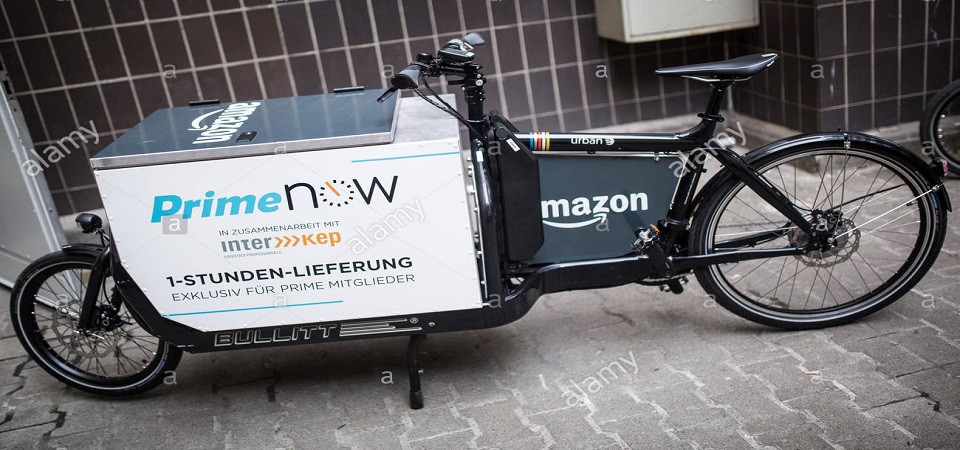
Have independent business owners with bikes move items in Nigeria (source: Alamy)
Can someone make okada riders to be logistics and independent players? Sure, it is challenging to get many you can trust. The goal would be to make this very exciting that they see the distribution business as a good job.
The Nigeria ecommerce will see extensive growth when the challenge of marginal cost of distribution is fixed. I have suggested the hybrid model which the new Konga is built upon. But that model is very expensive and can only be executed by companies with deep capital: it involves running physical and digital stores.