
DD
MM
YYYY

PAGES

DD
MM
YYYY

spot_img

PAGES

Home Blog Page 7114

The Most Important Factor when Raising Money for Startups

0

The MAIN factor that matters when raising money is building a good company. Other things like the slides, the suits, the no-suits, the pitch style, etc do not account more than 15% of the cumulative impact on success. Success has relations, vanquish is an orphan, they say.

If Nairaland wants to raise $200k today, many will invest. But Seun Osewa is not interested. He has no staff but runs the most popular indigenous African website [he is the only key staff; he has volunteers and minimized seasonal part-timers]. He owns it 100% [yes, he uses “Owner” as his title] and he ignores the world: does not attend conferences, events, ceremonies or anything.

I discuss Seun Osewa, the visionary young founder of Nairaland. Nairaland is Nigeria’s most popular indigenous digital property. His method is unique and by studying him, we can learn how we can build successful digital companies in Africa. Everything we know about scale, product innovation, and team has been challenged by Osewa’s Way. Because of his success*, I do think we need to pay attention. For example, he believes that Nigeria is his market, he does not care about Africa. Also, he does not see the need for outside investment because he does not understand what extra money will do for his business. Furthermore, he avoids publicity even when running a truly successful digital platform. The list goes on….This is Seun.

But monthly, he brings in millions of Naira with largely zero expense. Interestingly, when he has time, he puts rules to discourage engagements on Nairaland. He does not seem to like any social connection. But he runs the most popular indigenous social media website in Africa.

So, with everything you know about Seun, if he wants to raise money before investors who care in the area he works, nothing would really matter than the fact that Nairaland is a tree that produces cash. Many believe that Nairaland can do better but Seun has not changed it since 2005! For example, in-feed advertisement would improve the revenue base.

I am told that Seun has rejected many acquisition offers. He may just have Nairaland as an insurance to his retirement provided the hosting is working! Yes, if that site is up, money will continue to flow into his bank account every month. Many investors understand that opportunity.

So, as you plan to raise that cash, put more efforts on building a GREAT company over the mechanics and process of raising money. People that invest in companies may not even need any special drama when they see a great firm. They may not even need you to talk. Business plan is a waste of time under those circumstances. Yes, they would be asking you to provide your bank account, very fast. It happened in China when Sequoia Capital sued Binance.

Sequoia Capital, a venture capital firm headquartered in Menlo Park, California is suing the Chinese founder of the cryptocurrency exchange Binance, Changpeng Zhao (better known as CZ). The American VC fund reportedly accuses CZ of allegedly negotiating with another firm while he signed an exclusivity agreement with Sequoia.

According to Hong Kong court filings from March 26 and April 24, CZ and Sequoia started talking about terms for a possible investment by the fund in Binance in August 2017. And that the investment would have bought Sequoia almost an 11% stake in the exchange at a valuation of a mere $80 million. Unsurprisingly, as the prices of bitcoin and many other cryptocurrencies continued to rally, the deal seemed unattractive to CZ and the talks collapsed by the middle of December 2017.

Yes, the investor sued the founder for not collecting his money. That is the power of a great company. A great business makes one a great presenter because investors like good metrics and numbers. Sure, you need to work on your story telling and presentation but most times, those things do not matter if you do not have a great company.

But as you go through the process, even if that is not working, it does not mean your company is really bad. Sometimes, the company may need to move to the next level to unlock that value for investors to see. Many great companies like Mint.com struggled to raise money at the beginning. But when they picked up, money flew in. And that is a lesson: do not raise money when your firm is not in the “best” possible position. You would waste your trust-bank credit and come out empty-handed.

And most importantly, try to have a Plan B which means if that VC money does not come through, the company would not have to go extinct.
The New Knowledge War

3
New Knowledge War

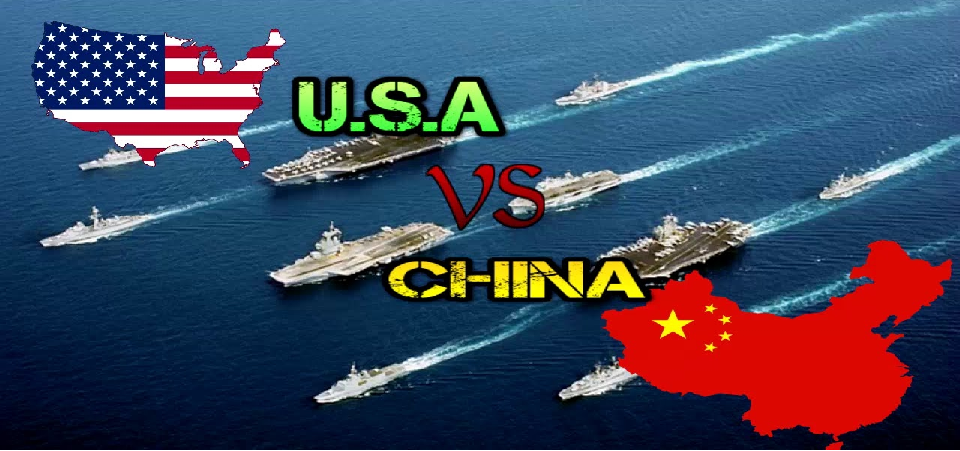
The knowledge war is here and it is between U.S. and China. These are the two most advanced technology nations in the New Knowledge (I just made that up). The New Knowledge includes areas like robotics, aviation, and high-tech manufacturing. Yes, artificial intelligence (AI) belongs to robotics, and is really the big target of this combat. The New Knowledge is brooding the New Knowledge War (I just made that up). .

According to the Hill, the United States government has announced new limitations on visas given to Chinese nationals. This new initiative is structured to counter the alleged theft of American IP (intellectual property) by China. Possibly, by limiting the length of stay of these Chinese nationals, mainly master’s and PhD graduate students, U.S. can mitigate the IP theft. The focus fields are robotics, aviation, and high-tech manufacturing. Besides, the restrictions would affect some specific U.S. companies [I assume Google, Microsoft, Intel, Qualcomm, Amazon and Apple] where they would be prevented from employing Chinese in some fields.

Officials told the AP that the instructions sent to U.S. embassies and consulates call for Chinese graduate students studying fields like robotics, aviation and high-technology manufacturing to receive visas valid only for one year.

Such areas of study were marked as priorities by China’s “Made in China” 2025 manufacturing plan, according to the AP.

Trump had said that such changes could happen in a national security strategy issued in December.

Simply, if China wants the Made in China 2025 to succeed, it has to invent the fundamental elements in China. And it cannot depend on sending its brightest students to U.S., to learn and acquire knowledge, and then return to innovate.

This is just the beginning – the New Knowledge War will shift from nations to citizens as AI and new technologies ravage opportunities even as they enable new ones. The shift will bring pains and also triumphs but those would not be evenly distributed. Nigeria needs to develop definitive roadmaps on the enabling pillars for this global redesign, urgently.

I will remain with my thesis that government must pick say $3 billion from the foreign reserves and fund SMEs in Nigeria (there is another one for VC tax incentives). The funding will be given as loans tied to BVN. Any person that does not pay can never access the financial system until the person repays. If we do this, we can create 3 million jobs within a year. Our immediate challenge is funding innovation and I am confident there are many small companies in Nigeria that would need that funding.

Now is the time, the New Knowledge War may seem to be between U.S. and China now, but this is going to be global in all forms.

Do Not Buy Users for a FREE Digital Product in Nigeria

0

If you produce a FREE digital product, AVOID growing by buying users. Ad-driven revenue generally grows slower than customer acquisition cost (CAC). Where you decide to be buying users, you would run out of money in Nigeria. The most important thing for a FREE product is to make something really exciting which people would like to use and tell others to use [free marketing]. Paid acquisition of users for a free product in Nigeria would not take you very far despite any ephemeral buzz.

If your customer lifetime value (LTV) is less than N500k, do not build a sales team. Rather, focus on blogs, SEO, ads, etc to attract users, but structure the growth to recover CAC within 6 months.

But if the LTV is about N2 million, sales team makes sense.

So, if you look critically, it only makes sense to have sales team for enterprise products (consumer product is marginally a tougher call to make) in Nigeria. That does not mean you cannot build a sales team for a consumer product. Largely, the best model is to focus on having very great products which can sell themselves.

Mamoudou Gassama – The Mali’s Spider-Man [Video]

0
Mamoudou Gassama

From CBS:

A young man from Mali is being praised as a hero after he scaled an apartment building to save a child dangling from a balcony. President Emmanuel Macron on Monday rewarded the young man’s bravery with an offer of French citizenship and a job as a firefighter.

“Bravo,” Macron said to 22-year-old Mamoudou Gassama during a meeting in a gilded room of the presidential Elysee Palace where Gassama also received a gold medal from the French state for “courage and devotion.”

Gassama climbed five stories up the apartment building, moving from balcony to balcony, and whisked a 4-year-old boy to safety on Saturday night as a crowd below screamed. His actions went viral on social media, where he was dubbed “Spider-Man.”


Founders, Competition is Not Your Problem; Execution Is.

2
Usain Bolt

“The competitor to be feared is one who never bothers about you at all, but goes on making his own business”

Henry Ford

Nigerian founders, competition is not your main enemy as you build that startup. Your main enemies are the internal elements in your company which could affect flawless execution. Do not fret morning and night about competition because ideally for a Nigerian startup, you do not have many competitors!

Most of our industries are still at infancy with the incumbents largely operating at sub-optimal levels. So, when you focus on competition, you lose the sights to think how to innovate and make great products. (You should be aware of competition, but do not think they are there, to snuff life out of your business. That is not the case.)

Failing as a Nigerian startup is not because any competitor took you down. The likely major reason is that you could not execute to fix that friction you have established that company to solve. For the solar companies that went under, they did not die because of DISCOs, since the DISCOs are still not distributing enough electricity. Those logistics startups did not collapse because of competition as our logistical systems in Nigeria are still at infancy. The farms did not collapse because we suddenly have excess produce capacities from big farms. Largely, failing as a startup, in Nigeria, has nothing to do with excessive competition: it is a product of inability to execute. (I am hoping you do not plan to start another Facebook to make a case that competition does kill!)

Fix a Friction: Frictions exist in markets and because of those frictions we have the need for companies. Those frictions are the market needs which companies are created to solve and fix. As an entrepreneur, your main job is to find frictions which are prevalent in markets and which affect many people and companies. For example, in Nigeria, we have a friction in the inadequacy of electricity. It affects many people and companies and certainly something that needs to be fixed.

So, as a founder, give yourself a break and focus on the real business: building great products and a fantastic company. Do not allow another new fund-raise by a perceived competitor to stress you. Do not allow another new city expansion by the same competitor to stress you. Do not allow another hiring of Vice President to stress you.

But worry if you are not serving your customers and improving your products. Many startups do not die of murder [competition], they die of suicide [lack of execution], notes Sam Altman of Y Combinator.

Get back to work and stop being fixated on competition. Sure, you do need to be aware of competition but it does not need to stay in your face as you pursue your mission. Most sectors in Nigeria remain at infancy. If you have a real business model, you would be fine. You may see big buildings and expensive cars driven by (incumbent) executives, but if you check well, the market has not been scratched.

Consider the insurance sector where we still have only single-digit market penetration [Vanguard has 0.4%]. There could be “competition” but if you are really innovative, you can create a new basis of competition and disrupt the market. Not doing well in the insurance sector cannot be due to competition, rather your inability to at least move the penetration to say 30% from the current single-digit. That is execution failure.

NB: Startup in this content means going to create something of value with transformational impacts in the market. It is different from small business which could be “barbing salon” [Nigerian slang for barbershop], selling corn along the roads, etc that rarely scales. While a barbing salon [small business] could have competitors on a street, a barbing entrepreneur who runs many salons across Nigeria, will not collapse because of many salons, at the moment. Rather, the entrepreneur will likely go down because of poor execution. Nigeria has not attained parity on the number of barbing salons it needs at the moment; we have more rooms to grow nationwide, but that has to be done optimally and profitably. The competitive elements remain low.

“A company five years old can still be a startup,” writes Y Combinator accelerator head Paul Graham via email. “Ten [years old] would start to be a stretch.”…

One thing we can all agree on: the key attribute of a startup is its ability to grow. As Graham explains, a startup is a company designed to scale very quickly. It is this focus on growth unconstrained by geography which differentiates startups from small businesses. A restaurant in one town is not a startup, nor is a franchise a startup.