
DD
MM
YYYY

PAGES

DD
MM
YYYY

spot_img

PAGES

Home Blog Page 7140

Building an Exponential Organisation

0

by Mehmood Khan, Chief Operating Officer at SAP Africa

The term ‘exponential organisation’ was first introduced in a 2014 book by the Singularity University founding director Salim Ismail and co-authors Michael Malone and Yuri van Geest. An exponential organisation is one governed by an assumption of abundance, where the typical constraints of linear organisations – for example, building more offices in new locations and equipping them with the requisite staff and facilities – are bypassed through clever use of technology that enables low organisational demands.

Airbnb is a typical exponential organisation: instead of establishing new locations for guest houses and hotels, building and equipping those locations, maintaining the properties, and sourcing and retaining staff, Airbnb accumulates listings around the world without incurring the capital expenditure to which most hotel groups are subject, leveraging technology to deliver a seamless and enjoyable customer experience that is often largely self-governable.

The DNA of exponential organisations

What nearly all exponential organisations have in common is a digitised supply chain that enables rapid scaling and frictionless customer experiences, often across global markets. They make use of technological innovations to compete on even footing with even the largest organisations, and then leverage an abundance mindset to move faster and more effectively than their bigger competitors.

Essentially, an exponential organisation is structured in such a way that they are able to fully realise the benefits of the digital economy. And within this, the COO plays a critical, often unseen role in ensuring the organisational building blocks are in place to enable the realisation of the exponential organisation.

In an EY study, half of the global COOs polled were closely engaged in discussing the role that operations can play in business transformation, with 57% seeing this as a fundamental part of creating organisational value. This is key to shifting the role of the COO from a largely operational one to a more strategic one.

The COO balancing act

Since the COO controls how organisational resources are allocated and prioritised, he or she must ensure that such resources are in the right place at the right time to enable the effective execution of exponential organisational strategy. However, in the same EY study, only half of COOs polled had identified opportunities to get operations involved with strategic decision-making. This creates a dilemma for the COO: their function within the organisation demands a firm focus on current demands, while their longer-term and arguably greater impact rests firmly in the future.

Technology has a critical role to play in enabling the COO to execute on broader strategy initiatives that can take a linear organisation – one focused on exploiting vertical market dominance – to an exponential one. Predictive analytics, for example, can combine sensor-based data with machine learning and AI capability to equip COOs with live insights into the current performance of the digitised supply chain. This frees up some of the COO’s time to focus on the more high-yield strategic initiatives that will ensure the organisation’s long-term competitiveness and sustainability.

A to-do list for the exponential COO

A recent IDC infographic pointed to the top five business priorities for executives right now, including reducing external supplier costs, outperforming the competition, improving security (necessitated by increased connectivity), regulatory compliance, and improved customer service. However, the priorities are going to shift greatly over the next few years, with one key priority falling straight in the ambit of the COO: improving adaptability and flexibility of the supply chain.

The fundamental role of the traditional COO is to ensure that operations quality, efficiency and customer services are improved and optimised through their interventions. In a digital economy, I would argue there is a new dimension fundamental to the effective functioning of the COO: removing friction within the organisational value chain by effecting a digital supply chain. Customer demands for personalised service and individualised products means organisations need to be highly responsive to individual needs and desires. The growing complexity of doing business also requires technological intervention to ensure COOs are not left treading water, endlessly dealing with current problems and challenges and losing sight of the longer-term strategic value that will elevate the business.

COOs can start laying the foundation of a future exponential organisation now by focusing on five key actions, namely:

1. Improved customer centricity;

2. Investment in smart automation;

3. Enabling predictive business decision-making;

4. Ensuring total visibility across all lines-of-business; and

5. Leveraging a digital innovation platform powered by IoT, blockchain, AI, machine learning and analytics, to enable secure process automation, better decision-making, and faster and more accurate responses to customer demands.
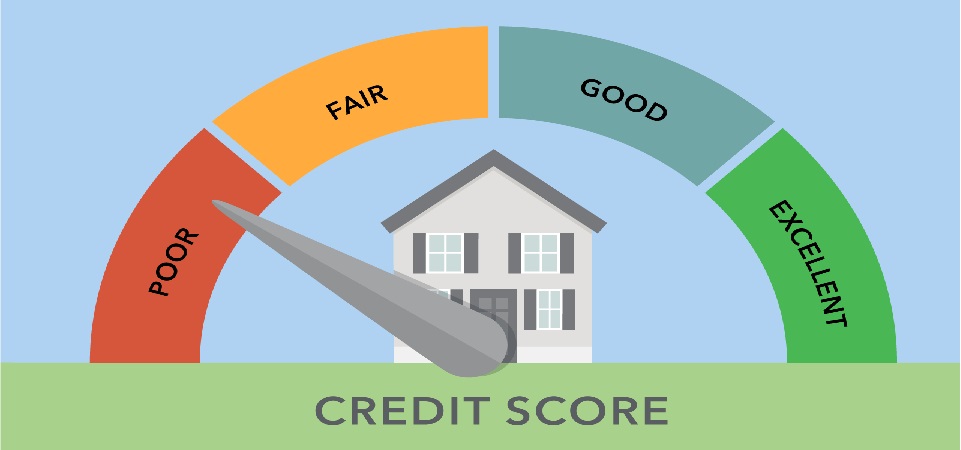

 

Building an Efficient Credit Scoring System in Nigeria

0

Nigeria runs on cash. For many years, the government has been working hard to make it credit-based. The Cashless Policy which encourages electronic transactions and the BVN (Bank Verification Number) policy which links biometrics with bank account numbers are some initiatives government has used to drive this redesign [electronic transactions have records which can be used to anchor credit-based systems]. Through Nigeria Inter-Bank Settlement System (NIBSS), the financial institution can build a good chart of any Nigerian banking customer through its BVN. When you add NIMC (National Identity Management Commission) Identity Number to it, you have a new dawn.

Yet, it is possible that the new dawn will come from fintech, not necessarily banking institutions, because the BVN is not open, with no structure at the moment to anchor any service beyond validating account ownership. The fintechs have to use alternative means to drive this new age in the economy.

The State of the Ecosystem

In a copyright-free piece in APO newsletter, Oradian made this observation which I have adapted.

More than 2.5 billion people around the world – many of them in Africa – lack formal identification that enables them to access financial and government services, according to the United Nations and the ID2020 project. What’s more, less than 10% of adults in low and middle-income countries are on file in public credit registries.

The result is that millions of people in Africa are paying punitive interest rates for credit or are frozen out of access to financial services. Microfinance institutions (MFIs) in the region charge their borrowers notoriously high interest rates, often up to 30% per year. This is partly because these lenders face a higher risk of loan defaults than mainstream banks due to a lack of borrower data to support lending decisions.

MFIs in frontier markets have traditionally needed to make lending decisions without access to the sort of customer data and documentation commercial banks take for granted: credit scores, identification documents such as passports or government ID cards, bank statements, lending history and collateral.

Fintech providers, financial inclusion companies and digital finance applications are filling this information gap with alternative credit data. Credit scoring applications collect masses of data about phone owners and use these data points to produce accurate credit scores.

This alternative credit data could help the credit officers at microfinance banks (MFBs) and MFIs who make lending decisions to make more accurate predictions about loan performance. This could, in turn, help improve collection rates and profitability for institutions and make credit more affordable for lower-risk customers.

With smartphone ownership in Africa rising as the average selling price falls, an unprecedented amount of credit data is expected to become available in the years to come.

This is certainly a huge opportunity when combined with BVN in Nigeria.


Building Effective System

While it is vital to innovate, it is also important that Nigeria makes sure that the privacy and security of citizens’ data are protected by all the players in the credit scoring business. I have noted how such a system can be built in the nation.

The alignment of the interests of the banks, credit bureaus and citizens will be catalytic in establishing a functioning credit ecosystem in Nigeria. This is not included in the current CBN’s guidelines for establishing credit bureaus in Nigeria. We cannot do it the way the Americans have done it. We need a system that provides a citizen element so that credit bureaus have clear incentives to deliver good services. You cannot be selling people’s data and yet have no incentives to serve the people and protect their data. With this proposed model, the oligopolistic system that runs in the credit bureau industry will be dismantled in the Nigerian model. The outcome will be a virtuoso credit bureau system that secures customers data as it serves its core customers, the banks.


WAEC starts registration for private candidates

0

According to Premium Times, WAEC has started registration of private candidates.

According to the statement, registration starts May 14 and ends July 6, 2018.

The statement said the registration procedure has been designed to accommodate biometric features that will be used for validation at the examination centre.

“After obtaining the registration pin, candidates should log on to www.waeconline.org,” it said.

The council also said there is provision for “walk –in” candidates and candidates with special needs.

“Walk –in candidates, who wish to write the examination after the close of entries may be accommodated provided they register less than 24 hours to the scheduled time of the paper they intend to write . The walk-in candidates fee is 25000 only,” the statement said.


FASMICRO Group Franchising and Partnership Opportunities

6

FASMICRO Group has the following franchising/partnership opportunities across Africa:


  1. Tekedia Mini-MBA Partnerships

    Tekedia Partnership Opportunities

  2. Zenvus Boundary: Zenvus Boundary maps farm (land, home, office or any landed property) boundaries and populates them via GIS on Google Map where the survey maps can be printed in our portal. And when done, register with their cooperatives which help them ratify the boundaries with governments. We use this to formalize farmlands and enable financial inclusion.We are looking for partners across Africa.
  3. Zenvus Loci: An IoT device with applications across sectors. Learn more here and here.
  4. Medcera Partners: Medcera is a web-based EMR (electronic medical record) and EHR (electronic health record) system with patient portal. It provides physicians and other medical professionals with EMR/EHR and medical practice management technology that includes charting, scheduling, e-prescribing, medical billing, lab and imaging center integrations, referral letters, training, support and a personal health record for patients. We are looking for partners across Africa as we roll-out our solutions. Partners would help in business development; indicate interest here.
  5. First Atlantic Cybersecurity Institute: Africa’s leading cybersecurity training firm, First Atlantic Cybersecurity Institute (Facyber), has opportunities for African entities to join our partner (franchise) network. It offers opportunities for entities to represent and market Facyber products and services in selected countries of interest in Africa.

For these opportunities, a one-time fee may apply. Contact tekedia@fasmicro.com and note the one of interest.

Tekedia Team

The Uncommon Preparation and Leadership: The Lesson of Burning Bush

0

He was on Horeb, and saw a burning bush: the bush was on fire but it did not burn up. So he thought, “I will go over and see this strange sight—why the bush does not burn up.”

First, his attention was needed [undistracted] for a very important message. He needed to be consumed by something uncommon. Second, his bravery was tested: he went over instead of running away when he saw the burning bush.

Then, his God called him “Moses! Moses!” and revealed a very important mission: “I am sending you to Pharaoh to bring my people the Israelites out of Egypt”.

In companies, only undistracted and attentive people are typically called to execute higher missions [Moses was attentive to have seen the burning bush] – think of new market opportunities and shifts in customer preferences. Firms typically put the selected ones through tests with uncommon KPIs and targets to see how they respond [can you stand a burning bush like Moses?]. In business, some firms may ask you to leave your country to go and save a new subsidiary in a very challenging territory.

Some leaders give up while others take the challenge and look up. Usually, in the middle of that challenge, glory comes [Moses would lead Israelites, he has been hired]. In business, the role could be a CEO, MD, etc to transform the business.

It is important to note that you must not be 100% ready to take up that challenge. I have noted that any job where you are 100% ready is one that has discounted your capabilities [to be 100% ready means you have done that job in the past and did it well. So, keeping you there means you are on paralysis, not moving upward]. But typically, great companies provide support [the Lord assured Moses that He would be with him]. Yes, your firm would be with you.

For companies, do not send leaders on missions without support. The Lord prepared Moses and gave him assurances of support all the way. He identified the mission, and gave him a roadmap to present the mission to elders of Israel.

God also said to Moses, “Say to the Israelites, ‘The Lord,[d] the God of your fathers—the God of Abraham, the God of Isaac and the God of Jacob—has sent me to you.’ […]

“Go, assemble the elders of Israel and say to them, ‘The Lord, the God of your fathers—the God of Abraham, Isaac and Jacob—appeared to me and said: I have watched over you and have seen what has been done to you in Egypt.

Just as I AM [the highest authority] empowered Moses, firms must use high authority to communicate great missions.

COMMENT FROM LINKEDIN FEED

The Scripture is what it is, the misinterpretation and misrepresentation are all about human inadequacies and deficiencies; and therefore depending on one’s depth or shallowness, a warped idea could spring up from time to time.

To the business side of it, the piece can be dissected properly by looking at the two principal entities: the firm and individuals; put in another way: employer and employees. For the firms, their own culpability largely centres on support, atleast for those firms with foresight enough to identify those individuals who don’t suffer from distractions, and with the bravery to equally withstand the pressure. It now depends on how much support the firms offer, God promised Moses support, and He delivered on that. When firms offer great support, those individuals with such capabilities will deliver.

On the part of individuals, this concerns both those in public service and private sector. We do not lack intelligent people with foresight and vision, there are many people with such qualities. But one thing I feel is lacking in a lot of people is DISCIPLINE to follow through. You may have all the qualities out there, without discipline, no important goal can be pursued or executed to its logical conclusion.


Reference: Exodus 3:1-17 New International Version (NIV)

Now Moses was tending the flock of Jethro his father-in-law, the priest of Midian, and he led the flock to the far side of the wilderness and came to Horeb, the mountain of God. There the angel of the Lord appeared to him in flames of fire from within a bush. Moses saw that though the bush was on fire it did not burn up. So Moses thought, “I will go over and see this strange sight—why the bush does not burn up.”

When the Lord saw that he had gone over to look, God called to him from within the bush, “Moses! Moses!”

And Moses said, “Here I am.”

“Do not come any closer,” God said. “Take off your sandals, for the place where you are standing is holy ground.” Then he said, “I am the God of your father,[a] the God of Abraham, the God of Isaac and the God of Jacob.” At this, Moses hid his face, because he was afraid to look at God.

The Lord said, “I have indeed seen the misery of my people in Egypt. I have heard them crying out because of their slave drivers, and I am concerned about their suffering. So I have come down to rescue them from the hand of the Egyptians and to bring them up out of that land into a good and spacious land, a land flowing with milk and honey—the home of the Canaanites, Hittites, Amorites, Perizzites, Hivites and Jebusites. And now the cry of the Israelites has reached me, and I have seen the way the Egyptians are oppressing them. 10 So now, go. I am sending you to Pharaoh to bring my people the Israelites out of Egypt.”

11 But Moses said to God, “Who am I that I should go to Pharaoh and bring the Israelites out of Egypt?”

12 And God said, “I will be with you. And this will be the sign to you that it is I who have sent you: When you have brought the people out of Egypt, you[b] will worship God on this mountain.”

13 Moses said to God, “Suppose I go to the Israelites and say to them, ‘The God of your fathers has sent me to you,’ and they ask me, ‘What is his name?’ Then what shall I tell them?”

14 God said to Moses, “I am who I am.[c] This is what you are to say to the Israelites: ‘I am has sent me to you.’”

15 God also said to Moses, “Say to the Israelites, ‘The Lord,[d] the God of your fathers—the God of Abraham, the God of Isaac and the God of Jacob—has sent me to you.’

“This is my name forever,
the name you shall call me
from generation to generation.

16 “Go, assemble the elders of Israel and say to them, ‘The Lord, the God of your fathers—the God of Abraham, Isaac and Jacob—appeared to me and said: I have watched over you and have seen what has been done to you in Egypt. 17 And I have promised to bring you up out of your misery in Egypt into the land of the Canaanites, Hittites, Amorites, Perizzites, Hivites and Jebusites—a land flowing with milk and honey.’