DD
MM
YYYY

PAGES

DD
MM
YYYY

spot_img

PAGES

Home Blog Page 6975

Beyond Exodus To Canada, Beyond Better Wages, Nigeria Can WIN

0

In 2011, I brought a team of 11 Nigerian graduates to build a mobile development business exclusively on Android. Yes, that was the time when Blackberry was on the mountaintop, in Nigeria, but living in America gave me a small edge on the potentials of Android. We ran Fasmicro Masterclass and training, bringing 100 graduates together, and at the end we would onboard the ones we desired. Along the way, we had great quarters, winning a business with Shell Nigeria.

Led by a first class graduate of Covenant University, we found success. The young man, just 22 years, and his team did stuffs. Then, everything collapsed: within 6 months, they all left. In one month, three left for IBM and Glo.

It was a shock because I had spent 12 months training them; I bought any possible book on Android development. That was my first experience on running a business where broad talent pool is scarce, anchored on the illusion that you can train and hold. Simply, it does not work, if you are honest to follow labour laws: you cannot bond labour because it is illegal to do.

So those that are commenting that Nigerian companies which are losing workers to Canada should just hire and replace with new people are plain wrong: no company stays in the business of hiring and losing manpower. Just like I killed the mobile business, when companies cannot compete on talent, they kill the business. And when nations cannot compete on talent, they die economically.

Sure – you may ask why I did not pay them well (yes, they could have left because I did not pay well). Unfortunately, retention goes beyond wages and salaries. There is no local Nigerian company that can match the pedigree IBM offers workers even if you can double (impossible of course) whatever IBM pays in Nigeria. I had explained how I chose to work in Diamond Bank, earning lesser, because, among others, it offered me a higher chance of getting American visa.

Yes, to get a U.S. visa then, work for an oil company or a bank! The foreign embassies had records of all approved bank signatories for the typical Place of Work letters you take along. Once those signatures match, you get your visa. For my first UK visa, I applied for single entry 6-month visa, but along the way, the embassy staff asked a bank driver who helped me to submit it if he could upgrade the visa to 2-year multiple. The driver paid the extra fee from his pocket knowing I would refund him with benefits.

Simply, Nigeria should not neglect the risks on this economy if we cannot retain our talented young people. As a nation, we cannot just be training and losing our brilliant minds. Yes, while we have many looking for work, that does not mean that companies should be losing manpower after investing on them. As my small mobile business shows, nothing good comes out of such: people quit and economy suffers.

All Together

It is important to note that leaving Nigeria to permanently relocate to UK, Australia, Canada and US goes beyond salaries. The standard of living, the better schools for kids and indeed the healthcare facilities all play major roles. Yes, people resign from banks in Nigeria, after winning American lottery, to relocate to U.S. to serve as cleaners (temporarily) before they find their levels.

So, any illusion that more salaries to workers either in the private or public sector will stop the tide is nothing but trivializing an important matter. Yet, if managed properly, emigration is not all bad: Nigerian diasporas are helping to fund new companies, bringing new capabilities and business networks back home. We need to find an equilibrium point for the competitiveness of our nation.

Chinese and Indian technology sectors are built by their diasporas; Nigerian diasporas have to replicate same in Nigeria. If we do that, Nigeria WINS despite the exodus.

Nigerians’ Big Exodus To Canada

LinkedIn Comment on Feed

This issue is multifaceted, and I am not sure LinkedIn character limitation offers a good space for a robust argument, it requires a full policy framework anyway.

But there are many things to consider, with love for country being at the top. We also need to segment the class of emigrants, only those with entrepreneurial mindset can actually make decent impact in their home country, certainly not those who are looking for comfortable life and just means of survival, do not bank on the latter for economic development.

Again, we cannot be shouting globalisation and free movement of labour without making deals. It is immoral/unfair for one country to train able-bodied citizens and another will reap, and somewhat we think the developing countries will ever move from ‘developing’ to ‘developed’; it’s a joke.

How about the home government getting some percentage of the earnings her citizens in the diaspora make? It’s a high octane international diplomacy. These are the sort of issues governments from this part of the world should be arguing at UN Assembly or WTO, not mundane issues that do nothing to improve people and infrastructures here.

So much to talk about, but there is a practical solution, with lots of give and take.

Structuring Your Business-Level Strategy

0

Strategy is a high-level plan of action designed to achieve a set-target.  Business level strategy is a set of integrated and consolidated set of commitments and blueprints that a firm employs to achieve a competitive advantage by putting into action, its core competencies in a specific market. It helps firm to make the best of choices to give their products/services a competitive advantage. With the intricacies and complexity surrounding the survival of a firm in the global economy, it is quite difficult to make sound decisions that will contribute to its long-term performance.

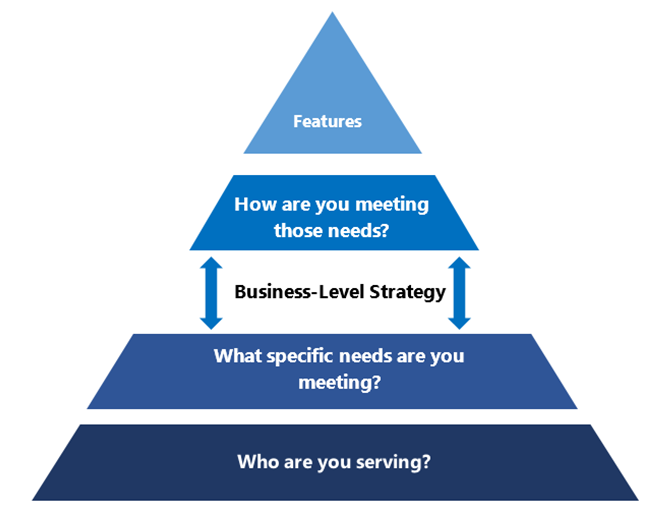
However, every firm must develop and employ at least one business-level strategy that describes how it intends to compete in the product market. Before a viable strategy can be developed, there must be a strong consideration for the selectivity and objectivity of the customers. The firm must determine who will be served, what those customers’ needs are, and how those needs will be met.

The task of selecting customers and determining which of their needs to satisfy and how the needs will be satisfied is convoluted, due to the bundle of attractive options available for the customers. A prospective and efficient competitor in the marketplace must be skilful and dexterous at spotting the critical needs of customers of different demographics and geographies and adapting the operationalism of the firm to meet those needs.

Customer Relationship with Business-Level Strategies

Strategic competitiveness that can enable a firm to achieve an above-average return can be possible when it uses its competitive advantage to satisfy a group of customers. Customers remain the consummation of any effective business-level strategy because the returns earned from the lasting relationship with the customers, are what keep an organization in existence.

The most successful companies are those who, like the meandering of water, continuously find new possible ways to satisfy the needs of the customers. In the 1990s, Dell became the largest seller of personal computers, employing a low-cost strategy, while at the same time satisfying the needs of the customers, the success of Dell, was however short-lives because of the over-emphasization on cost reduction along its supply chain. Hewlett-Packard (HP) on the other hand, took advantage of the shortcoming of Dell to capture a larger share of the market. HP did this, by not only lowering the cost through its supply chain, but also provided customers with access to varied options for product design that can satisfy the specific needs of the customers better. Dell lost the larger market share because they did not internalize actions that will prevent the imitation of their capabilities by other firms.

Satisfying customers unique needs by delivering superior values remain the only highway to increasing customers’ loyalty and retention, which will lead to greater profitability. For a firm to effectively manage customers’ relationships, there is a purposeful need for it to provide consolidated answers to the questions of Who, What and How. 

Who are you serving?

It is a very important decision for a firm to decide who exactly its target customer is. The experts from CANDDi can explain how fully understanding your target customers and their needs can help you develop a successful business-level strategy. This can be achieved by identifying the needs of customers and dividing them into groups via market segmentation, Customers with unique characteristics should be used to segment the market into specific groups. Based on those characteristics, a company can employ their internal competencies, to satisfy these needs. Basic elements for market segmentation are shown in the table below:

Consumer Market Industrial Markets
Demographic factors (age, income, sex, etc.) End-use segments (identified by SIC code)
Socioeconomic factors (social class, stage in the family life cycle) Product segments (based on technological differences or production economics)
Geographic factors (cultural, regional, and national differences) Geographic segments (defined by boundaries between countries or by regional    differences within them)
Psychological factors (lifestyle, personality traits) Common buying factor segments (cut across product market and geographic segments)
Consumption patterns (heavy, moderate, and light users) Customer size segments
Perceptual factors (benefit segmentation, perceptual mapping)

What needs are you meeting?

In addition, to deciding who to serve, a firm must also identify the customers’ need that can be satisfied with its goods and services. To achieve a sustainable growth agenda, a firm must be able to meet the needs of the customers, at the time it’s needed. Having a close interaction and efficient feedback system, can help a firm to easily identify both the current needs and the anticipated needs of their customers. The basic desire of customers is to purchase products that are perceived to provide higher value than the actual cost. This can be achieved in two forms: Low cost with acceptable features or highly differentiated features with acceptable price. In whichever way, the firm must translate the needs of the customers into features and performance capabilities of the products or service offering. 

How are you meeting those needs?

After identifying the specific needs to satisfy, the firm must also understand how to pull their core-competencies together to meet those needs. This must reflect on how firms continuously improve, innovate and adjust their product/service features to meet the dynamic needs of consumers. Organizations must use their core-competencies to satisfy the needs of the target group of customers the firm has identified to serve by using its business level strategy. A firm must decide in what manner it would create an exploitable difference with other market players. It must decide, either to perform an activity differently or perform an entirely different one.

As Michael Porter commented, “Strategic fit among many activities is fundamental not only to competitive advantage, but also to the sustainability of that advantage. It is harder for a rival to match an array of interlocked activities, than it is to merely imitate a particular sales force approach, match a process technology or replicate a set of product features, Positions built on system of activities are far more sustainable than those built on individual activities. ”

MultiChoice Freezes DStv Premium Price in South Africa, Nigerians Will Not Mind

1

It is a case that needs to be made before MultiChoice: if you freeze the price of DStv Premium in South Africa, it makes sense to do the same in Nigeria. Your argument for the price freeze is solid – you want to make sure your customers in South Africa do not experience undue financial burdens. Well done for thinking about them.

MultiChoice has announced that it will “freeze the price” of DStv Premium from 1 April 2019, ensuring customers will pay the same rate for their package.

The announcement was part of a media release which stated that MultiChoice will increase the prices of certain DStv packages from 1 April.

[…]

“From 1 April, DStv will freeze the price of DStv Premium subscription packages, which means customers will pay the same for their packages in the next year.”

But price freeze should not stop in South Africa – Nigerians need this pre-Valentine gift. Loudly, freeze the price in Nigeria, instead of increasing price in Nigeria. In Nigeria, it took the help of a court to put pedal on your price hike, but in South Africa, you gave this gift voluntarily. So, be real and freeze this thing in Nigeria. Adjusting for many factors, your products are more expensive in Nigeria than in South Africa – you need to work on that because fairness is corporate citizenship.

Court Stops DStv in Nigeria

TechCrunch Falls To Subscription

0

It is not really news that TechCrunch, a pioneer tech-focused blogging platform, is going subscription. Without subscription, TechCrunch has no future. Adjacent to the ruined empire of Yahoo via Oath/Verizon, TechCrunch was walking dead. Simply, because of Facebook and Google, no massively organized news website can survive without subscription unless you are the Guardian UK which knows how to beg for donations. Yet, I give the Guardian three years to join the full party which New York Times, WSJ, FT, WashPost, Bloomberg, and others have since toasted.

I won’t bury the lede. TechCrunch is launching a subscription product called, appropriately and deliciously, Extra Crunch.

Extra Crunch, as it says on the tin, is an additional layer of content, coverage, product and events-based offerings for our most regular and engaged readers. This will consist of articles that go more in-depth on topics in the entrepreneurship and startup universe, of course.

Of course, TechCrunch is not in the league of the entities I have just mentioned: TechCrunch does no serious news investigation which means its cost is low. Yet, that does not mean that it does not have bills to pay in the age where two companies (Google and Facebook) are soaking everyone on digital ads.

TechCrunch will be fine now, with Extra Crunch. It will lose some users but it will start making money since it has more brand equity than The Information, a polished competing tech platform which is subscription-based. I have called this the Diminishing Abundance of Internet where having lesser number of users may improve revenue.

In this videocast, I discuss what I am calling the Law of Diminishing Abundance of Internet. It is a construct that some companies become poorer even when they are growing in numbers of customers reached.That applies to industrial sectors like publishing and telecoms. The lesson here is that risk in any business model must be examined from the lens of this mirage abundance which Internet has provided in some sectors.

The Key Insight from The Announcement

In the Extra Crunch announcement, I picked this main paragraph.

Quietly, and with the gratifying support of management, we’ve been reconfiguring TechCrunch over the past few years to focus on making sure that we’re providing useful, engaging content to readers, not just advertisers. While our audience — you folks — is still one many advertisers would love to reach, that’s their job, not ours. Instead, we wanted to re-align all of our goals around what we saw as the future of sustainable journalism.

What TechCrunch is saying is that with this subscription pivot, it does not care what advertisers will like to see because the readers are paying. The implication is that TechCrunch will create a better product to ensure readers keep paying as they are more sensitive than Google AdSence, an advertising product.

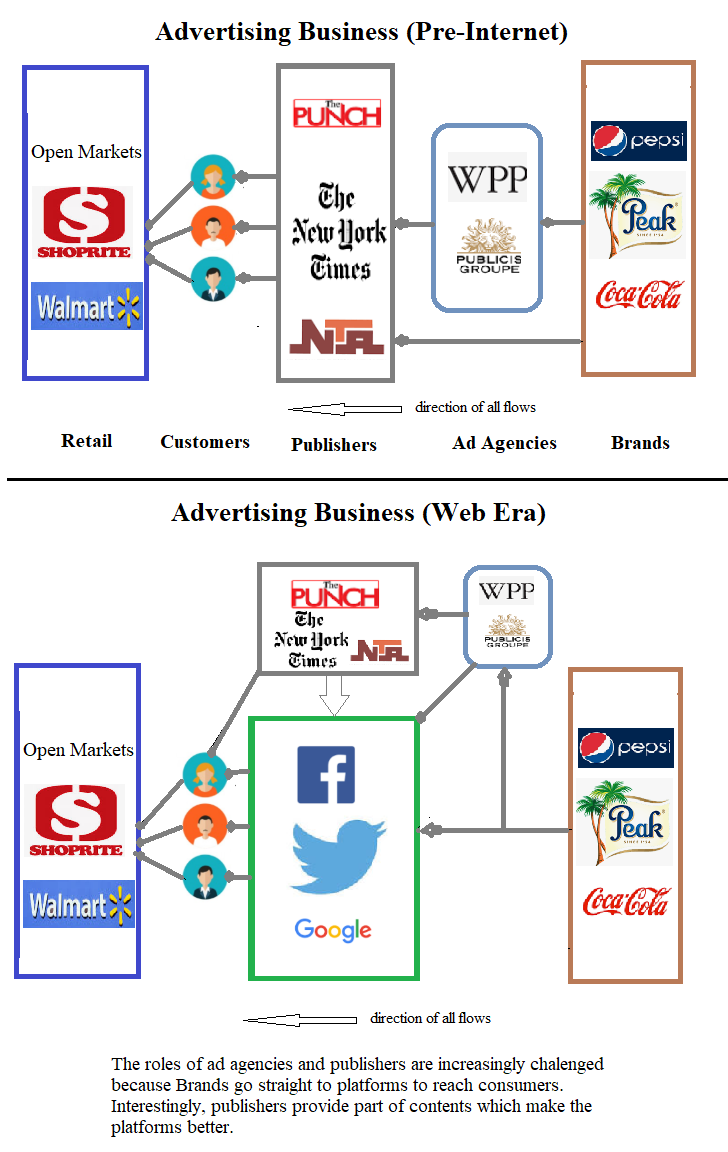
With subscription, TechCrunch will rewire its position in the plot below which explains it all (I’d explained the plot extensively here). By understanding this plot, you will get the idea why TechCrunch is going subscription.

The Challenge Before Ad Agencies


LinkedIn Graduates From Video Product College

1
View of main building with logo and signage at the headquarters of professional social networking company LinkedIn, in the Silicon Valley town of Mountain View, California, August 24, 2016. (Photo by Smith Collection/Gado/Getty Images).

This is very fascinating for people that like this platform: LinkedIn is launching LinkedIn Live, a live video product. For years, the platform where global professionals congregate has refused to focus on video. But that is now history, as LinkedIn pivots to align with the world where Facebook, TikTok , etc have made video a critical part of communication and information exchange.

LinkedIn — the social network for the working world with close to 600 million users globally — says that video is the fastest-growing format on its platform alongside original written work, shared news and other content. Now it’s taking its next step in the medium in earnest.

This week, the company is launching live video, giving people and organizations the ability to broadcast real-time video to select groups, or to the LinkedIn world at large.

Simply, in a world where people do many things at the same time, the easiest way to pass information could be videos. I do think that LinkedIn videos will have more impact in the professional domain world than YouTube. Because professionals are already on LinkedIn, contents created with business and professional ethos will do better on LinkedIn Live.

The focus area seems just right: “conferences, product announcements, Q&As and other events led by influencers and mentors, office hours from a big tech company, earnings calls, graduation and awards ceremonies and more”.  It will expand to include many other areas users will add as LinkedIn Live scales.

I do plan to use LinkedIn Live; we already share many video contents on Tekedia.