We have received many inquiries from businesses and people on the requirements of joining Zenvus Boundary partnership. Actually, it was included in the Zenvus Boundary launch announcement today.
To become a partner, these are the requirements:
Email zenvus@fasmicro.com informing our team that you would like to become one. As a partner, your focus is acquiring customers in bulk. Think of government initiatives, cooperatives, etc, covering land, farms, etc.
Team will ask you to pay a one-time partnership fee [contact for details]. We support US dollars and Nigerian Naira via bank transfer or Paypal.
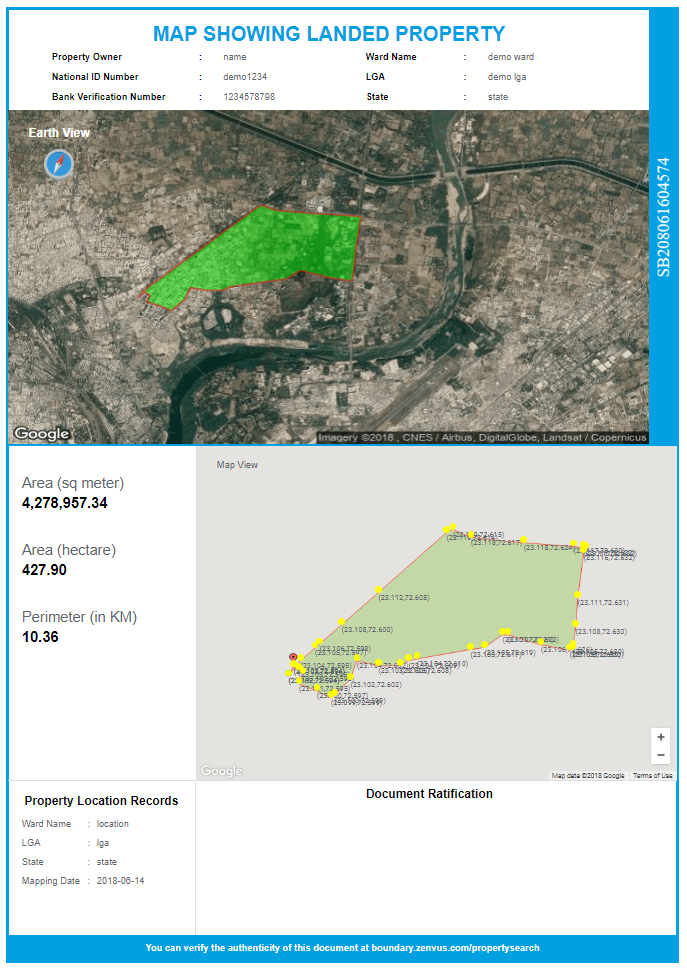
Team will create an Enterprise account and send you a code. You can survey properties all day and transfer data to our server once. You need a code tied to your account to ensure the transfer is connected to your dashboard. From the dashboard, you would print the survey reports of these your customers.
Simultaneously, team will send you an Agreement Letter. In that letter, we define the benefits. For every property surveyed with Zenvus Boundary technology, we charge $20 (N7,000) to maximum of 5 acres. So, 6 acres will attract $40.
From this fee, partners keep 70% of the gross leaving 30% for Zenvus.
Once a farmland or farm is mapped by Zenvus Boundary, it would be ready for precision agriculture powered by Zenvus sensors where applicable.
Meanwhile, download Zenvus Boundary now at Google Play.
Cost of Service
We have set the price of using this solution to map a farm, land, or house perimeter with the survey printed on Zenvus portal at $20 (N7,000 Nigerian naira) per property to maximum of 5 acres [for example, 6 acres would be captured as two farms, for $40]. You would have the opportunity to include your name, LGA, National Identity Number, BVN, etc. Most of those entries are optional.
Franchise/Agent Opportunity
We have franchising opportunities across Africa for those interested in helping farmers, landlords, etc to digitize their property perimeters and locations at bulk. Here, you could have a contract to map farms in a whole village tied to each farmer.
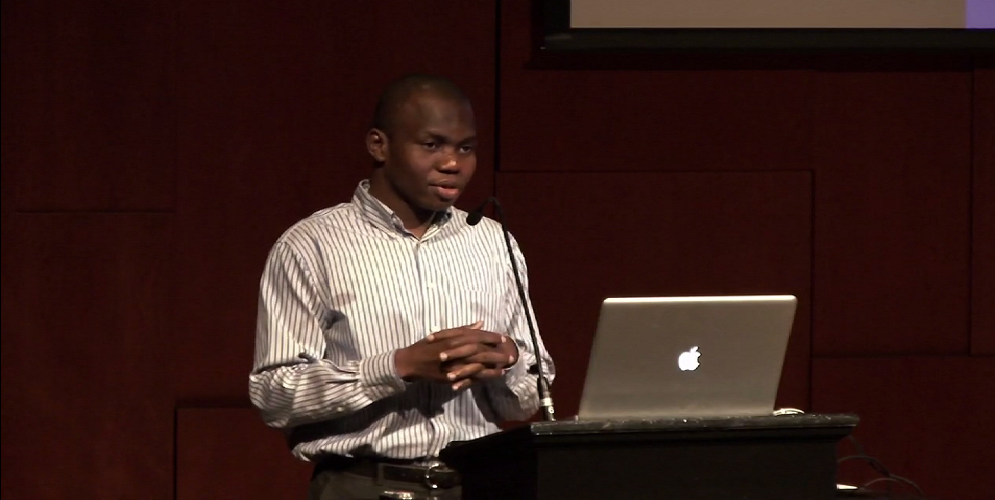
I have accepted the invitation of the Government of Alberta (Canada) to attend and speak in Inventures 2019. Inventures offers a great platform for deep conversation on technology and innovation. The event holds in Calgary on June 5-7, 2019. Alberta Innovates organizes the program.
Alberta Innovates is a provincially-funded Corporation with a mandate to deliver 21st century solutions for the most compelling challenges facing Albertans. We do this by building on our province’s research and technology development strengths in the core sectors of health, environment, energy, food and fibre and platforms such as artificial intelligence, nanotechnology, and omics. We are working with our partners to diversify Alberta’s economy, improve our environmental performance and enhance our well-being through research and innovation.
The Government of Alberta has been bringing experts from around the world for deep conversations on Innovation. That redesign is catalytic because without innovation, nothing happens. Yes, it is not just the creation of knowledge that matters but the translation of the knowledge to fix market frictions via products and services.
Great ideas without products and services are Invention. But when they are commercialized, you have Innovation. Simply: Innovation = Invention + Commercialization.
While the creation, generation and accumulation of knowledge remain critical, it is the translation of knowledge that builds modern nations. For many centuries, the world was an inventive society despite amalgam of some of the finest scientists who pioneered nearly all fields of modern physics and chemistry. Yes, ideas everywhere but not a single product or service for citizens.
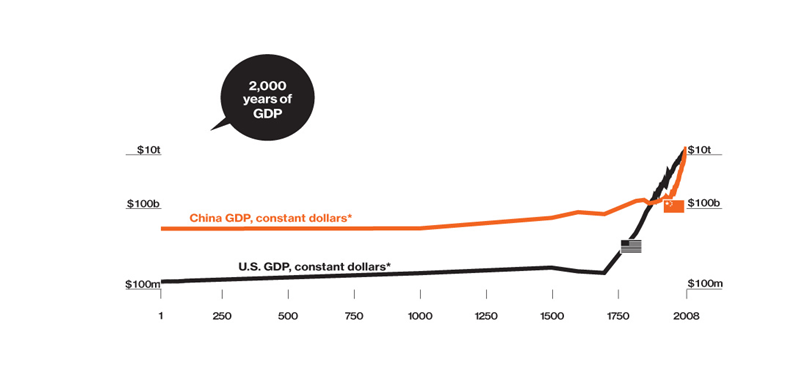
For many centuries, neither China nor USA improved productivity. Consequently, the GDPs were on stasis. But with the invention of the IP system and subsequent massive translation of knowledge, many latent opportunities were unlocked in markets. This shows that besides creating knowledge, nations must commercialize them for impact.
But when the century of innovation kicked in, GDPs of nations grew. Alberta is working to sustain that innovation element by creating a fluidic system to ensure that ideas move from labs to markets. I am hopeful Nigeria does the same also; policy matters. Yes indeed, as no nation has advanced the welfare of its citizens unless it can transition from an inventive society into an innovation society.
The world waits for no one, nations and people that will control things by 2050 are already laying the foundations. In this part of the world, we are waiting for 2045 to launch our own 2050 agenda. And this is why any thought about leapfrogging anyone may remain only a dream, because it does appear that we are always set up to play catchup.
All our national, regional or local agendas are tied to individuals, largely – politicians who may not even understand what they are saying in the first place, so when their tenures are over, brand new agendas are created by the newest guys in town, sometimes with beautiful names and acronyms.
If the federal government cannot drive any serious agenda, maybe state governments can come within a region/zone and create something big. But that’s more or less like asking for butter when no one has even agreed to provide you with the bread…
If we are not careful, in 30 years time, our democracy and governance may not go beyond building roads, railways, power projects, water, health centres; with the usual ‘it is our turn to rule’. Just grab power for the sake of power, and nothing more.
Wishing you a happy outing, with something to bring back to Africa.
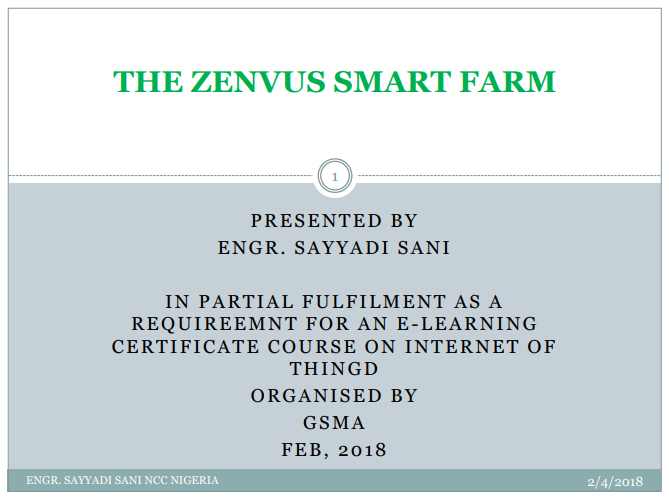
We like this one – a top engineer in the Nigerian Communications Commission (NCC) used Zenvus, our agtech business, as a case study for the award of a GSMA certificate in Barcelona Spain. You can download the slides here. We truly appreciate NCC for showcasing a Nigerian business in that platform – thanks.
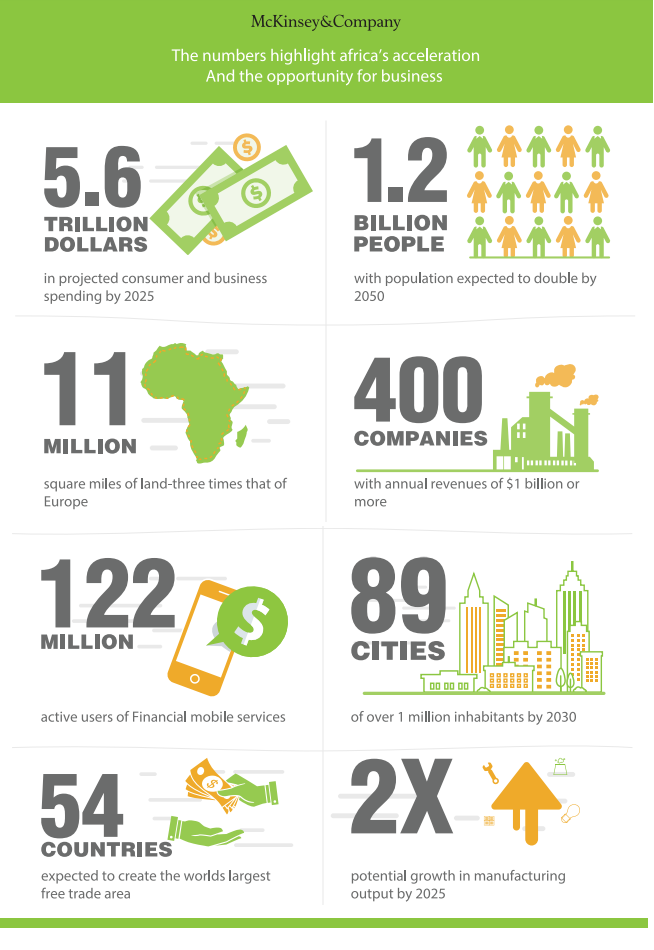
Africa has a fast-growing, rapidly urbanizing population with big unmet needs. This means there is a trillion-dollar opportunity to industrialize Africa, to meet rising domestic demand and create a bridge-head in global export markets. In addition, there has been a big push by governments and the private sector to close infrastructure gaps. There is a continued resource abundance in agriculture, mining, and oil and gas, with innovation and investment in these sectors unlocking new production on the continent. The rapid adoption of mobile and digital technologies could leapfrog Africa past many obstacles to growth.
Mckinsey believes that building a successful business in Africa requires a long-term approach and four essential practices:
Mapping an Africa strategy – setting a clear aspiration, prioritising markets, defining how to achieve scale and relevance and creating an ecosystem to thrive.
Innovating business models – truly engaging with customers, creating products and services to fulfill unmet needs, getting lean to drive down costs and price points, and harnessing technology.
Build resilience for the long term – riding out short-term volatility, diversifying portfolios, integrating up and down the value chain, understanding local context and engaging with governments.
Unleashing talent – developing skills in frontline workers, creating robust talent development processes and harnessing the power of women’s advancement
After this post, I have received emails from people with questions on “top-grade education”: “Which country do you suggest?” I will explain with a bit of history.
In our contemporary time, U.S. has the best universities and it remains the most dynamic global economy. As I have written, on Mines of Knowledge, any nation that dominates the accumulation and processing of knowledge typically “rules” the world.
From the Babylonian Empire to the American empire of today, when you win on Knowledge you win on economy and human development. Babylon (today’s Iraq) used to be an intellectual domain. When Islam was founded in the 7th century, there were many intellectuals that actually helped. Abu Ja’far al-Khwarizmi, the Father of Algebra, lived in Baghdad as was known to travel to Mecca to help fix mathematical puzzles. He postulated and built the foundations of modern Algebra. There was relative prosperity as Islam had thinkers and they actually made enormous progress. The first University in the world, created in Morocco, was renowned for its ability to create knowledge creators and thinkers. Some men went to Mecca just to meet Khwarizmi solve their business problems disguised as mathematics. He was a pioneer in the beautiful science of numbers we have come to admire and he made many merchants better through application of numbers in their businesses.
Yes, Egypt ruled when the best astrologers lived under Pharaoh. When Moses appeared before the Israelites, they marveled that he had studied under the Pharaohs.
Greece managed the world during its moment of unprecedented knowledge generation where the elite philosophers were Greeks. Hipparchus, Euclid, Pythagoras, etc dominated the Great Debate and Greeks controlled trade.
Update #1: it turns out that some of these legends could be traced to Africa. Read the comment below by Prof Gloria Emeagwali; I have copied below for ease of access.
Speaking about ancient Egypt, Homer, in the Odyssey iv. p.231 (circa 850BCE) points out that Egyptian doctors ‘are the first scientists of the world.’ Pythagoras, born around 558BCE, studied for 22 years in Egypt.The Hippocratic classification of head wounds was derived from the Edwin Smith papyrus – 2,500 years after it was first written by the ancient Africans – by Hippocrates (460 – 377BCE). Hippocrates was inspired by the books in the library of the Temple of Imhotep.
Isocrates (436-338BCE) testified on the Egyptian influence on Pythagoras. For Aristotle, Egypt was the cradle of maths. See his Metaphysics.
A great deal of Plato’s references were of Egyptian origin. See Plato’s, Timaeus. Plato also studied in Egypt in the era before the occupation of Egypt by the Macedonian, Alexander the Great. For three thousand years before that, Egypt built up its Indigenous Knowledge base.
Update 2: Please read this document (Herodotus, PDF) for deeper insights on this (Prof Emeagwali shared the document). I have extracted some parts below.
. So that if there were snow in that part of the world, there would necessarily be rain too; thirdly, the natives are black because of the hot climate. Again, hawks and swallows remain throughout the year, and cranes migrate thither in winter to escape the cold weather of Scythia.
That, at least, is how I should explain the obvious impossibility of a dove using the language of men. As to the bird being black, they merely signify by this that the woman was an Egyptian. It is certainly true that the oracles at Thebes and Dodona are similar in character. Another form of divination – by the inspection of sacrificial victims – also came from Egypt.
The Egyptians did, how ever, say that they thought the original Colchians were men from Sesostris’ army. My own idea on the subject was based first on the fact that they have black skins and woolly hair (not that that amounts to much, as other nations have the same), and secondly, and more especially, on the fact that the Colchians, the Egyptians, and the Ethiopians are the only races which from ancient times have practised circumcision.”
When General Titus et al made Jerusalem desolate circa AD 67 – 70, destroying the rebuilt Temple in 408 BC, the finest thinkers lived in Italy. Rome was the capital of the world and its emperors taxed the world!
Great Britain during the Industrial Revolution mined science, but quickly moved to Law etc abandoning the era of Faraday. Now, we are living the American era: MIT, Stanford, Hopkins, etc are the weapons. If you close them (do not please), America will fade within a generation.
Yet, “top-grade education” should not be trivialized for getting into MIT or coming to America to study. Today, you can get a top-grade learning while in Nigeria, Ghana or anywhere. There are tools available to make such possible. My purpose is not to create in our minds that unless you leave Africa that you cannot get decent education. Education is not just about the university walls: the community you live redesigns your mindset; that is the education which is nothing but the liberation of the mind.
For many centuries, neither China nor USA improved productivity. Consequently, the GDPs were on stasis. But with the invention of the IP system and subsequent massive translation of knowledge, many latent opportunities were unlocked in markets. This shows that besides creating knowledge, nations must commercialize them for impact.
As I have noted many times, I had the best secondary school education possible in Nigeria. It was in a village in Abia State, and I was very confident that I was getting better education than family members in the cities. With great teachers, from leading Nigerian universities, they prepared us.
My Biology teacher studied Microbiology in University of Ibadan; Chemistry (OAU, Biochemistry); Physics (UNN, Mechanical Engineering); Mathematics (UNN, Mathematics and ABU Zaria Mechanical Engineering); and Further Mathematics (UNN, Mathematics). And these men were super-great teachers. Yes, there are pockets of brilliance across communities in Africa; great education can happen anywhere.
So, I would not tell you that going to MIT would make you great. But I can assure that if you have the mindset to learn and apply, modern digital tools provide opportunities to get any knowledge you want. While you may miss the Harvard community-effect by not going to Harvard University physically, most of their courses are already available online for free or massively discounted. But never think that unless it is in UK, China, Japan or US, that you cannot get decent learning. Certainly, my message in that piece was not intended that it must be abroad to be top-grade.
At the end of the day, it’s about the PERSON, the individual; that remains the most important determinant in everything. When you are so good, we enquire about the schools you attended, and possibly – the people that taught you there. And if you say you taught yourself most things, we enquire about the sort of books you read, and perhaps – the sort of food you eat, and how you sleep.
Humans do these things because we all need a kind of references, something to point to, else you become superhuman, a demigod. There’s the urge/need to relate any achievement or great deed to something, so that others may attempt to replicate same; that’s the way things work.
But what makes each person super, great or ordinary comes from within, it’s a joke to believe or think it can be found in a certain classroom or a particular environment. External factors are mere enablers, the REAL thing is inside.
There have been thousands of footballers, but one Maradona, Messi, Pele, Cristiano, etc; and yet hundreds of thousands of people have been kicking and shooting the round leather game.