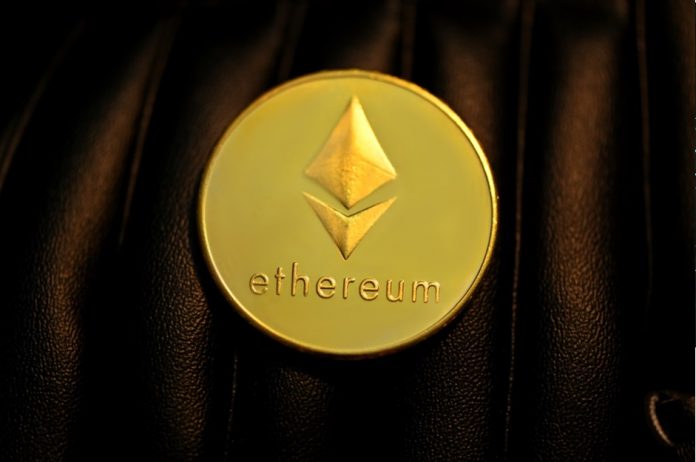
Ethereum’s onchain conviction continues to strengthen even as its market price struggles to keep pace with competing layer one narratives across the digital asset ecosystem. Ethereum’s onchain conviction remains strong despite price weakness near $2,130.
Over 39 million ETH, about 31% of supply, is staked. Exchange balances fell to 14.8 million ETH, the lowest since 2016. Corporations and long-term holders accumulate, reducing liquid supply and reflecting deep confidence amid short-term market selling.
Despite periods of relative underperformance, staking activity on Ethereum has steadily climbed, signaling that long-term participants are increasingly prioritizing yield generation and network security over short-term price appreciation. This divergence between price action and staking behavior highlights a structural shift in how capital is being allocated within crypto markets.
Staking on Ethereum operates as both an economic incentive mechanism and a security guarantee for the network’s proof-of-stake consensus model. As more ETH is locked into validator contracts, circulating supply becomes more constrained, theoretically tightening sell-side liquidity.
However, this supply dynamic does not always translate into immediate price appreciation, particularly in macro environments dominated by interest rate expectations and risk-off sentiment. Instead, staking yields act as a counterbalance, offering participants a predictable return stream denominated in ETH.
Staking locks Ethereum to secure the network and earn yield, replacing miners after the Merge. With 39 million ETH, roughly 31% of supply staked, it reduces liquid supply, strengthens consensus security, enables institutional participation, and reflects long-term holder conviction despite price volatility and short-term market pressure.
The rise of liquid staking protocols such as Lido has further accelerated participation. These systems allow users to stake ETH while maintaining liquidity through derivative tokens, effectively lowering the opportunity cost of securing the network. As a result, institutional allocators and retail holders alike are increasingly treating staking as a baseline yield strategy rather than an optional commitment.
One important driver behind this trend is the maturation of institutional participation in Ethereum staking markets. Custodial staking solutions and regulated access points have reduced operational barriers, allowing larger pools of capital to participate without managing validator infrastructure directly.
This professionalization of staking infrastructure reinforces the perception of Ethereum as a yield-bearing digital bond-like asset, particularly in portfolios seeking diversified onchain income streams. At the same time, macro liquidity cycles continue to exert strong influence over ETH valuation dynamics.
Even as staking reduces circulating supply growth, broader risk asset repricing often dominates short-term performance. This creates a tension between fundamental network strengthening and market narrative volatility, a pattern that has become increasingly common in post-staking upgrade cycles.
Market participants also point to Ethereum’s evolving role in decentralized finance and tokenization infrastructure as a reinforcing mechanism behind rising staking participation. As settlement activity, smart contract deployment, and layer two scaling solutions expand, ETH’s function as both gas asset and security collateral deepens.
This dual utility increases the incentive to hold and stake rather than trade, particularly among participants who view the network as core financial infrastructure rather than a speculative asset.
Over time, the accumulation of staked ETH may serve as a structural floor for network participation and validator engagement, reinforcing decentralization and resilience across the protocol layer regardless of price fluctuations in Ethereum itself. Staking signals long term alignment between users, validators, and protocol design incentives across time.
MoonPay Acquires Decent and Launches MoonPay Trade
MoonPay acquires Decent and launches MoonPay Trade marks a notable expansion in the company’s strategy to evolve from a crypto payments onramp provider into a broader trading and liquidity infrastructure platform within the digital asset ecosystem.
The acquisition signals a deliberate move toward vertical integration where fiat onboarding trading execution and settlement increasingly converge under a single user experience layer In parallel. MoonPay Trade introduces a unified interface designed to streamline access to multiple liquidity venues allowing users to move between fiat and crypto markets with reduced friction and improved execution efficiency.
The acquisition of Decent adds a new layer of technical capability and product depth to MoonPay’s growing ecosystem particularly in the realm of trade routing infrastructure and order execution logic. While MoonPay has historically focused on simplifying fiat to crypto onboarding through cards bank transfers and embedded checkout flows this acquisition suggests a shift toward capturing more of the transaction lifecycle.
Decent’s capabilities are expected to enhance routing efficiency reduce slippage and improve access to fragmented liquidity across centralized and decentralized venues.
This integration also positions MoonPay more directly against exchange incumbents and neobrokers competing for retail and institutional flow. MoonPay Trade itself represents an attempt to unify trading functionality with onboarding infrastructure into a cohesive product stack. Users are expected to benefit from aggregated pricing smarter order routing and potentially lower effective spreads compared to traditional exchange interfaces.
The launch reflects a broader industry trend where payment processors are increasingly absorbing brokerage like functionality blurring the lines between fintech wallets exchanges and liquidity aggregators. For users this convergence may reduce onboarding complexity while improving capital efficiency across portfolios especially in volatile market conditions.
Strategically the move reflects a maturing digital asset infrastructure landscape where differentiation increasingly depends on execution quality liquidity access and user experience rather than simple asset availability.
As regulatory clarity improves in major jurisdictions platforms like MoonPay are incentivized to expand vertically into trading and market making adjacent services. The combination of Decent and MoonPay Trade may therefore be interpreted as a step toward building a full stack financial gateway for digital assets bridging fiat rails and crypto markets in a more seamless and composable way.
In the broader context of crypto market infrastructure evolution this acquisition also underscores the growing importance of embedded finance models where user journeys begin outside traditional exchanges and increasingly originate within wallets fintech apps and neobanking platforms. By consolidating onboarding and trading under one umbrella MoonPay reduces dependency on external intermediaries while capturing more value per user interaction.
At the same time Decent brings specialized infrastructure that can optimize execution paths and enhance cross venue liquidity discovery which is increasingly critical in fragmented global crypto markets. Looking forward MoonPay Trade could serve as a foundational layer for hybrid trading experiences blending centralized efficiency with decentralized access potentially reshaping how retail and institutional participants engage with digital assets.
The deal reflects a competitive landscape where payments companies exchanges and fintech platforms are converging into vertically integrated ecosystems capable of handling onboarding trading settlement and custody within a single stack. This convergence may define the next phase of crypto infrastructure maturation as user expectations shift toward seamless global liquidity access without friction and unified financial interfaces across asset classes at scale for global users overall impact.