DD
MM
YYYY

PAGES

DD
MM
YYYY

spot_img

PAGES

Home Blog Page 6044

Did The “Older Generation” Fail Nigeria?

0

Did we, the “older generation”, fail the youths?

If you are above the age of 25, this question also applies to you. I know that in Nigeria, especially in our villages, people are regarded as “youths” until they are about the age of 40 or even 45. But right now, Nigerian “youths”, whom we would have ordinarily referred to as “young people” have made it known that once you leave secondary school and shortly after you graduate from higher institution, you are a “youth”. Any other person above that age bracket belongs to the “older generation”. So when you want to say, “The older generation has failed us”, remember you are one of us.

Back to the focal question, do you think we have failed the “youths”?

If you have noticed, since the #ENDSARS protest began, youths have been accusing us of failing them. They said Nigeria is as bad as it is because of us. They said we are too weak to speak for them. They said that there is no development in the country because we are too comfortable with mediocrity. They said we don’t know what we wanted or that we are too afraid of speaking up. They said we prefer staying in the dark instead of the light. They said that while the world is moving digital, we remained in analogue. They accused us of not being computer literate. Should I continue?

Well, the question has not been answered. But let’s look at a short encounter I had with one of my contacts.

Some days ago, one young man in his early twenties sent up his “the older generation has failed us” post on his WhatsApp status. I would have ignored it but he added another angle to it that made me decide to point him straight. He wrote that the “older generation” is a failure and that when they, “the youth” and the “working generation” decided to liberate the country, we, “the older generation” sabotaged their efforts. He further wrote that since the “older generation” knew they were too weak to make positive changes, and were too afraid to come out and join the protest, they should have steered clear so that they, “the chosen ones” would make Nigeria “work again”. What effrontery, you would say.
Well, I crawled into his DM, like they say, and asked him, “My dear, how many protests did you join during the military regime? How many bullets did you receive for your country to send out dictatorship? How many ‘online protests’ did you perform in those days that people ‘disappeared’ for challenging government’s policy? What can you say about the transition of Nigeria from military regime to democracy? Did you join the 2012 protest on fuel subsidy removal that shut down Nigeria for almost two weeks? Have you even heard of the Aba Women’s Riot that happened as far back as 1929?”

Well, let’s just say he replied with “my dad told me” and “my mom said” stories. But then, he never had the guts to post nonsense again.

You see, I don’t really blame the “youths” for saying what they do because the “older generation” brought the internet into the country and won freedom of speech for them. I don’t really blame them because the “older generation” believe in “children” being free to express themselves and hence trained these young ones to be expressive (they wouldn’t have talked nonsense against an elder if it was during our time). I don’t really blame them because History was removed from school and most of our historical pasts were either collecting dusts in old newspaper pages or they have been lost forever. I actually don’t blame them because no one taught them the truth.

I don’t need to go into the roles the “older generation” played in the #ENDSARS protest because that will be a whole story on its own. But I wish the “youths” will be honest enough to say that the “older generation” told them to cash in their chips when it was obvious that things were turning ugly but they ignored the advice and claimed that we are “weak”. What they didn’t know is that what an old man sits under a shade to see, a young man will climb a tree and still not see it.

Now to answer the focal question of this essay, nobody failed anybody. Nigeria might not be moving at the pace we all wanted but it is moving. The youths are too young to observe the changes taking place but they are enjoying it. People fought to bring the country to where it is. Lives were sacrificed for that. Properties were lost for that. Some lost their identities because of it. But then, we, the “older generation” have seen the best way to move the country forward and have been working towards that. It might seem subtle, but it is powerful.

So, next time a “youth” says that we have failed them, please, advise him to look for a History book and shut up.
Fake News And Nigeria’s Current Predicament

3

For reasons best known to them, peddlers of fake news utilise periods of tension to swing into action. Some of these people are known to perform this mean act for personal gains, but a lot have no obvious reasons. Some spread fake news to douse tensions, others do to escalate it. Some bearers of fake news are known while others are ghosts. But no matter the angle it is viewed from, fake news is harmful.

The present public unrest that is eating deep into society is a by-product of fake news. Of course this assertion has been hotly debated at different corners but every party agrees that the tension was escalated by the way unverifiable news flew about that Tuesday night and the following day. It was as if the country was sitting on a keg of powder and waiting to explode at any moment. Immediately they heard that hundreds of youths were shot dead by the government through the Nigeria Army, all hell went lose. People lost it. Reasoning was ditched as emotion took hold of the body. According to a Twitter user, the country was thrown into mass hysteria, hence no one was thinking straight.

Ok, I know that this essay may not be considered objective by you, but you might want to agree with me that many of the “dead” people mentioned by social media influencers, including celebrities, have “resurrected” and come out to discredit the news. You might agree with me that people edited photos, including the one from a drama, and posted them as evidence of the massacre. You must have seen the photo of the bullets allegedly used by the army to commit the crime, which was later pulled down when people started pointing out that the bullets were blanks. But then, the news that actually escalated the tension and led to the riot that shook different parts of the country was the one that mentioned the massive number of youths that were allegedly killed by the Nigeria Army at the Lekki Toll Gate.

Without verifying the information they received, these youths announced that about seventy to a hundred youths were killed and that their bodies were taken away by the army. Since the government has already been accused of unleashing the thugs that harassed the peaceful protesters and for the disturbances in other parts of Lagos and some South-Western states, nobody sat back to ask objective questions concerning the released information. People rose and began to destroy things without considering the consequences. They started with public properties and then veered off to private ones before finally starting uncontrollable vandalism and looting. All these happened because people had access to social media and they used it without reservation.Now, don’t get me wrong, I did not say that the shooting did not happen, or that people did not die. Though the details are still under investigation, I believe it was blown out of proportion that night. All that is happening across the country, including the massive looting, killings and destruction, wouldn’t have happened if the news were released as it occurred. But, there is no need crying over spilled milk.

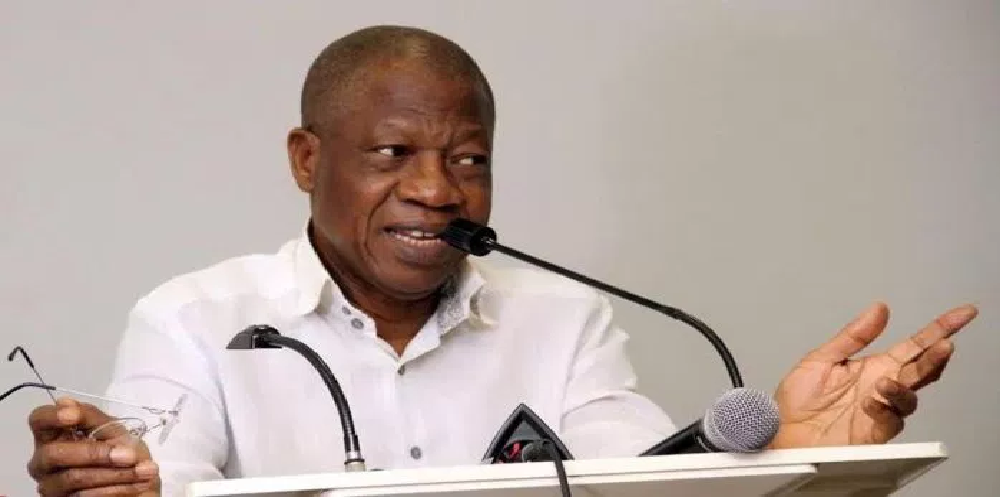
Lai Mohammed, Nigeria’s minister of information

Another disadvantage of peddling fake news is that it makes the bearers lose their face. It questions the credibility of the person that disseminated it. It puts a question mark on every information passed by the person. For instance, immediately the “dead” people began to “wake-up”, the credibility of every information released by the youths concerning people dying at the Tuesday night incident became questionable. People started asking for evidence. People started scrutinising the videos uploaded in Soro Soke, the digital platform created by the protesters to make their voices heard. It was actually the discovery of so many fake news concerning the Tuesday Lekki Toll Gate incident that divided the voices that would have fought for justice for the victims of that night. This is one of the reasons people should always stick to facts, irrespective of how unattractive they may seem – retaining their integrity.

Fake news never pays. It destroys more than it mends. It is mostly malicious. No person of integrity peddles false information, especially the one that will lead to the destruction of lives and properties. Today, Nigeria is bleeding, not just because of the excesses of her soldiers that didn’t know when to restrain themselves, but also because of peddlers of fake news that awakened the demon of destruction and stealing that had been hibernating in some citizens.

Tekedia Mini-MBA Edition 2 Ends Thursday, Career Week (Nov 2-7), Certificate Request

5

Tomorrow (Thursday) at 7pm – 8.30pm WAT is our grand finale for Tekedia Mini-MBA Edition 2 (check Board for Zoom link). And next week is All Editions Career Week – the Board link is here. Thirteen executives would be presenting on a theme – Nurturing Innovators – within our program focus of Innovation, Growth & Execution. Do not miss it.

Tekedia Mini-MBA Career Week has been scheduled for Nov 2-7 2020. This career week is not designed for finding jobs. Rather, it is structured to TRANSFORM workers, founders & entrepreneurs into business leaders and champions of innovation in their companies. Yet, if you have no job, by the time you are done with the series, you will have a path to one! The sub-theme is Nurturing Innovators. It is packaged under the Tekedia Mini-MBA theme of Innovation, Execution & Growth

All past and current Tekedia Mini-MBA members, including those who have registered for Edition 4 (Feb 8 – May 3, 2021) attend free. We have 13 courses, videos, cases, etc on how we can plan our careers during this time of disruption.

Meanwhile, Edition 2 members, please write Admin and request for your certificate. We will begin batching distribution from Oct 29th. If you were in Edition 1 and yet to receive yours, let us know also.

Tekedia Mini-MBA is an innovation management multi-week program, optimized for business execution and growth, with digital operational overlay. It runs 100% online. The theme is Innovation, Growth & Digital Execution – Techniques for Building Category-King Companies. All contents are self-paced, recorded and archived which means participants do not have to be at any scheduled time to consume contents. Register for the next edition here.

Nigeria’s CcHUB, “Dangote of Digital”, Acquires Kenya’s EdTech Company – eLimu

3

Nigeria’s Co-creation Hub (CcHUB) has announced its acquisition of eLimu, a leading EdTech firm and digital educational content provider in East Africa. This is part of the evolution of ccHub which continues to change its playbook, from a technology square to a consulting firm, and now a builder of digital empires. It has great digital properties in Kenya and Rwanda. This is the “Dangote of Digital” in the making, from your beautiful Nigeria.

From CcHub press release announcing the acquisition.

The goal of the acquisition is to transform eLimu into the Digital Education Platform arm of the company. eLimu will continue to focus on leveraging cutting edge technology to create interactive and engaging learning content customised to the African context which will be initiated using the existing apps. The acquisition will enable it to scale these apps beyond Kenya.

With an existing audience of approximately 500,000 teachers and learners (and COVID-19 accelerating the pace of growth of eLearning), eLimu is one of many players in the EdTech industry that has seen growth at unprecedented rates. This acquisition presents a significant opportunity for digitizing the learning experience and increased investment in innovation. 

eLimu (e-Limu.org) is one of the most talked-about EdTech firms in Africa and the leading digital educational content provider in East Africa. eLimu’s revision and literacy platforms make learning fun and engaging for curious children both at school and at home. By combining engaging content with proven pedagogies, eLimu has seen learning outcomes improve dramatically for over 500,000 learners to date.

The literacy apps for 6 and 7-year-olds include dozens of stories written by Kenyan teachers, illustrated by artists across East Africa, and read by voice actors and celebrities, such as Caroline Mutoko. Each story includes letter tracing, spelling and sentence making exercises. Together they form a scientifically-proven pedagogy called Reading to Learn, which has shown to improve progress in reading and writing 4x faster than traditional methods. The platform has been deployed in English, Swahili, Somali, and Lugbarati. An independent study in Dadaab refugee camp showed progress in reading fluency 3 times faster than the control group.

Update: someone from Kenya noted that e-Limu may be a sick company. We do not know. We leave that to the community to figure out. We just reported based on the press release shared by CcHub.

Prof, this your report is totally untrue. eLimu hasn’t paid staff in months. They were looking for an out. They were already collaborating with CcHub on a project so CcHub knew the situation and had already started poaching their staff. This ‘acquisition’ happened for next to nothing. They already let go of all staff and asked them to reapply. Dangote of Digital is an extremely untrue way to describe what just happened.

What Getting UI VC Selection Right Means to University Education in Nigeria

0
University of Ibadan, a federal university

For more than three months, the stakeholders in the University of Ibadan and the general public have had the cause of understanding who is likely to become the new Vice Chancellor of the country’s oldest University. The position becomes vacant because the current Vice Chancellor, Professor Idowu Olayinka will cease to be the Chief Executive Officer of the University in November, 2020.

From application stage to the public debate, issues have emerged and addressed by the concerned stakeholders.  With the less than a few weeks to the announcement of a new Vice Chancellor, a local campus news organisation reports that 6 out of 18 candidates have been shortlisted for final screening.

“The UI VC race reached its climax as 6 aspirants have been shortlisted to proceed to the final stage of the screening. The 18 aspirants for the position of the highest office in the University was pruned down to 6 at the screening conducted yesterday, Tuesday.

The shortlisted candidates include: Prof. Femi Mimiko; lecturer at the department of Political Science, OAU, Prof. Kayode Adebowale; DVC (Admin), and former DVC (Academics), Prof. Abideen Aderinto. The other three are Prof. Olusegun Ademowo of the College of Medicine, Prof. Olatunde Farombi; a professor of Biochemistry and Molecular Toxicology and Prof. Babatunde Salako; former Provost of the College of Medicine, UI,” organisation says few hours ago.

Our analyst had earlier conducted a series of analyses on the selection processes and concluded that the University needs a strong leader who will advance the current gains and bring more achievements for every stakeholder.

As the screening commences today, our analyst notes that the University must screen and select the best three candidates for the Presidency. This is imperative considering pre-screen allegations and counter allegations from some stakeholders. It is also important that the University sets the right pace for others in terms of choosing a new Vice Chancellor based on merit and capability to deliver the needed change to the University community and Nigerian higher education in general.