DD
MM
YYYY

PAGES

DD
MM
YYYY

spot_img

PAGES

Home Blog Page 7053

In Consumer Web Business, Focus On Controlling Demand, NOT Supply

2

I discussed the mechanism of Internet business this week in a company retreat. It was more of economics than technology. A client is redesigning business systems and needed deeper insights on the fundamental constructs on what drives growth in digital firms, especially Internet ones. The whole elemental pillars and anchors which Adam Smith postulated, via the lens of industrial-age economies of the past, cannot necessarily work at optimum in modern digital economies. Yes, the factors of production and comparative advantages of nations remain but their impacts are largely marginal – knowledge has since emerged as the most impactful factor in modern economies. A man with knowledge is a FACTOR.

In the past, business was about controlling supply to move prices. Manufacturers had control of supply but they had limited direct control on the consumers [you can control how many newspapers you produce but you have no definite control on how many people would buy]. So, winning markets was really about managing and controlling distribution as most businesses were bounded and constrained by geography, creating advantages which were largely localized [the largest newspaper in a region controlled the top news of the day].

What is Price Elasticity? If a small change in price is accompanied by a large change in quantity demanded, the product is said to be elastic (or responsive to price changes). On the other hand, a product is deemed inelastic if a large change in price is accompanied by a small amount of change in quantity demanded

Price Elasticity

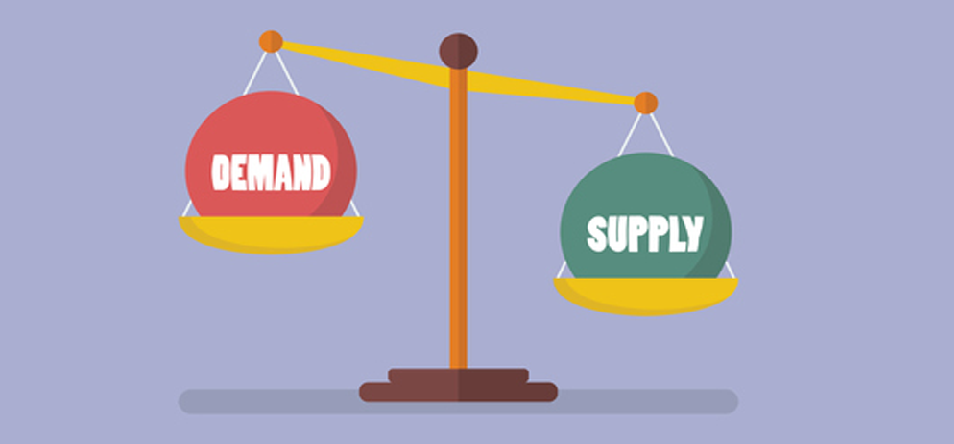
Consider an electricity utility in your neighborhood. The electricity company has absolute control on distribution, making it possible for it to control many aspects of the engagements with consumers. The local newspaper managed distribution, not just on the physical newspaper, but also the contents in the newspaper. Where you have great contents and the editors did not like the ideas, the contents die because the distribution of contents was controlled by the gatekeepers of media. If the few newspapers in town rejected the contents, there was no alternative path to get them to Demand (the readers). So, under that regime, the great power in commerce lied on supply because that was the only thing conglomerates and huge companies could control, assuming a free society.

No industry was excluded in this construct: educational systems controlled supply of available spaces in programs, turning down many qualified applicants. Cement companies, oil companies and banks controlled supplies of services and products, using that control to improve margins.

The Internet Age of Demand-Control Strategy

But today, the game has shifted from control of supply to control of demand for web-anchored consumer firms. And only companies with capabilities to control demand are going to win big. As shown in the table below, most of the greatest internet companies are simply controlling demand and that means controlling how supplies reach users and consumers.
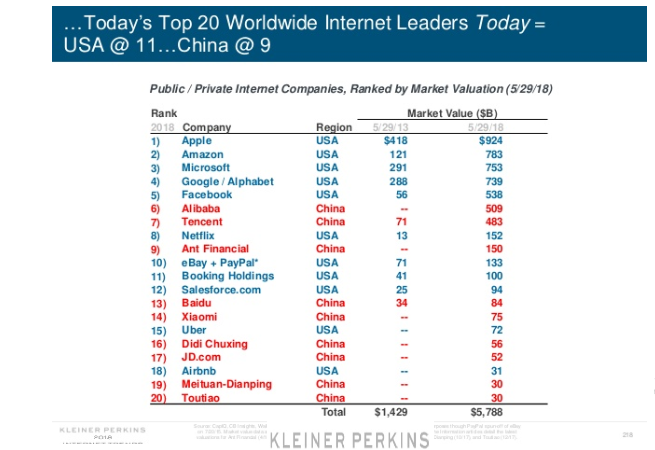
2018 Internet Trends â?? Top 20 Global Internet Firms; US 11, China 9

A newspaper in the online space cannot have the old dominant impact it had which was possible because it controlled local distribution, creating scarcity of the product. A movie chain with theaters cannot have its old impact because unlike the physical theatres, the digital ones are unbounded and unconstrained. In other words, you cannot control supply because the web has made supply largely infinite. Because supplies of digital products are largely infinite, the game shifted from being driven by supply to one dictated by demand. There is an infinite copy of a digital movie unlike a disc version. So, when that supply is infinite, distribution loses the edge since anyone can have it. That infinite state happens because in the digital space, marginal cost goes to near-zero.

Simply, if the top five (print) Nigerian newspapers stop publishing online, not many will notice. But if they had done a similar thing, say twenty years ago, there would be serious upheavals. Then, they controlled the flow of information and were very powerful. Today, posting things online is largely unbounded, from Facebook to online blogs to digital native newspapers.

It comes down to aggregation: if the suppliers of local news are many, the challenge moves from the scarcity of the news to sorting out the supplier that adds value, since no person can technically visit all the individual websites before arriving at the most valuable one. Welcome Google which now becomes a gatekeeper, helping to make sense of the whole thing by guiding users to the right contents once they search. This is an evolution, shifting power from the old suppliers to a new set of entities which control access to demand.

Yes, the old companies which used to control distribution lose power [Google decides what content it shows users based on its algorithm]. Magically within the relationships, aggregators like Google and Facebook which make the unbounded supply manageable become the kingmakers. In the process, Google becomes more important to users than the newspapers (the suppliers of news) since Google helps to discover the papers. Because advertisers were all interested in access to demand (the users), the papers are cut-off (yes, disintermediated) as advertisers now spend more money advertising in Google.

All Together

If you plan to run an internet business, think about how you can control demand. You have already lost the power and capacity to control supply. Yes, anyone can use a credit card, irrespective of geography to buy anything online. The quantity you bring will not have material impact in the total pool in the market.

Nonetheless, you still need to find ways to create a separation. That could be by creating perception demand or simply by building massive data ecosystems which will give you access to be the digital kingmaker in a specialized sector since the ICT utilities like Google and Facebook, as I noted in a recent Harvard Business Review piece, have control of the broad internet.
30 Farming Business Ideas And Three Reasons Why I Am A Farmer

0

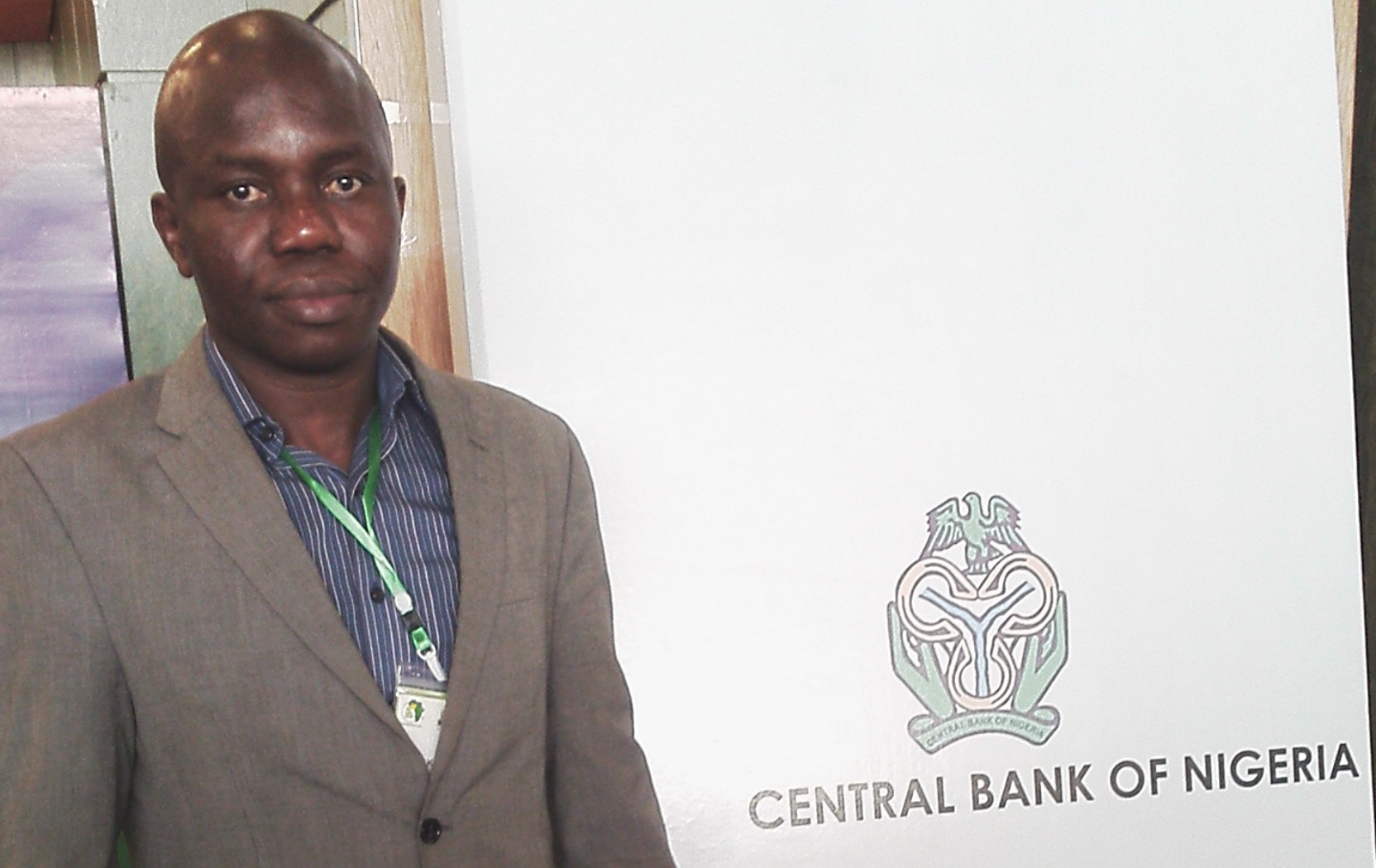
Few days ago, I received an invitation to attend a Central Bank of Nigeria (CBN) event. When I got to the event, I was asked to check a list. Under profession, I crossed what they had there for me, and wrote “Farmer”.

A lady said “We did not have you here as a farmer?” I responded “I understand, but I am a farmer.” In our farming business, we have done everything to avoid the temptation of thinking that technology is more important than the agriculture we are working to improve. (There are many opportunities in the broad agricultural sector; I have presented 30 farming business ideas below. If you are a subscriber, the text version is here. In the subscription area, we have some mechanisms on the executions).

Yes, if our technology becomes the goal, instead of the improved farming productivity, we have failed in our missions. For us to serve farmers, technology must disappear, and agriculture must rise. Even though our technology must not just run agriculture but transform it, my goal is that having the spirit of a “farmer” will ensure we do not become unfocused, building technology solutions without any relevance to agricultural frictions.

Amid the resounding growth, African agriculture faces many challenges. The absence of standardized product grades, proof of ownership for commodities, and proper storage facilities limits agricultural potential. Access to markets and finance also pose significant barriers. We see these challenges as tremendous opportunities and intend to invest in Africa’s smallholder farmers over the long term to overcome them together

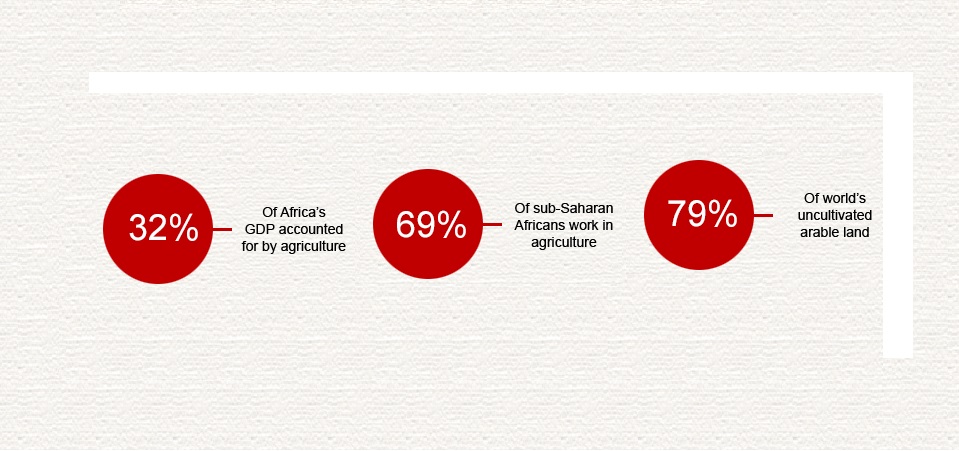
For all we do, these three stats remind us that provided we stay as Farmers, the vision will live on.

Broadly, in your business, is technology becoming the business or are you making sure it is kept in its position which is to run, improve and accelerate strategic corporate objectives?


GTBank is Losing Grounds on Technology

0
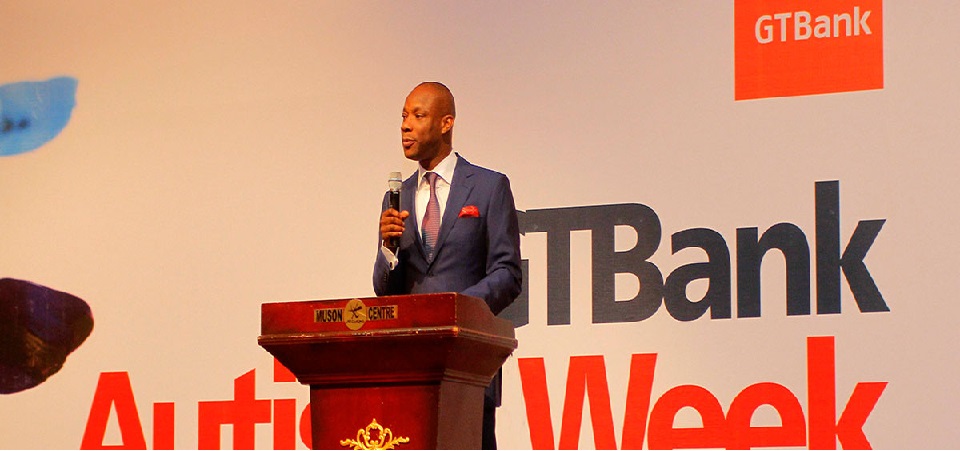
The CEO of GTBank

Agusto & Co has ranked StanbicIBTC as the “Best Digital Bank in Nigeria”.  UBA, Access and First Bank followed, not necessarily in order [Update: I have some concerns on this report]. The biggest revelation is GTBank which came fifth. Of course, GTBank is losing what made it the most beloved, accelerating its cap along the way. It needs to get itself together fast with the regular system down issues.

Akinola, who said the survey took five months and ended in August, listed the 10 banks, which the research focused on to include Access, Diamond, Ecobank, Fidelity, First Bank, GTB, Stanbic, UBA, Union and Zenith.

The four banks, which were however rated best include Stanbic IBTC, UBA, Access and First Bank. Out of these four, Stanbic IBTC scored the highest point, emerging the ‘Best Digital Bank in Nigeria.’ GTB ranked fifth in the survey, while Ecobank was placed 10th.

Akinola noted that the ‘5 Star’ rating assigned to StanbicIBTC Bank reflected ease of use, perceived security and very good troubleshooting & IT resolution on its different digital platforms.

According to her, from respondents’ views, StanbicIBTC has the most ease in navigating through primary platforms used such as mobile app, or web.

When you visit a digital bank and its products are creating more complaints, it gets into paralysis. It is a killer as you now “serve” customers without charging fees since you are fixing complains! Digital scales your troubles, pushing you to now have crowded bank halls purely to fix frictions which poor digital service created.

More than 98% of digital startups we work with in my practice have accounts with StanbicIBTC. That tells you how StanbicIBTC is winning as GTBank struggles with what I called Inversibility Construct: reversing physical experience in the digital space. It did it immensely, in the past (as I have noted many times), but lately the technology has not been operating smoothly.

Update

These are some comments from LinkedIn on this piece.

  1. All Nigerian banks (Union Bank inclusive) are trying to catch up with the digital transformation, albeit there is not so much of a difference in the digital services each of them offers, but for the sake of position, I give it to Stanbic IBTC .

GTB used to be prime movers in delivering digital banking services, but ever since they became a marketplace with no defined trajectory, and dull in responding to customer complaints, they lost their place.

2. I have only GTBank account and I do everything online. I will not have basis for comparison with other banks. But GTBank is losing it gradually. Not surprised though, as they have 1001 services online. It’s gone beyond banking to more of a platform. Though that is supposed to be an advantage if we’ll harnessed

[This is the quote referred here: To “create a platform and partner anybody who has a service to offer. So that if as a customer, one comes into our ecosystem, you can do just anything. You could do your banking business, buy your tickets, insurance, travel; if you wanted a 10-day pay day loan, you can do it. So, really we want you to come into our ecosystem, maybe five times a day to do different things other than banking.” GTBank CEO]

The Modern Farmers – Farm Robots

1

In this piece, we share an article, on the evolution of digital farming, and why the future of farming is going to be anchored on robots. Within decades, farmers will be digital robots. According to the ancient Sumerians, the god Enil gave mankind the hoe. Ever since, we’ve been trying to spend less time and effort […]

This post is only available to members.

The Double Play Strategy

5

I explained in the duality element that digital products which thrive are typically both products and platforms. It would be hopeless to build modern digital products without having a moat through platforms. Interestingly, the greatest digital ICT utilities have double plays in their business models: if Amazon decimates many brick-and-mortar stores, it would welcome many online to sell them cloud services. Alibaba welcomes you to its marketplace platforms, and you certainly have signed up for its (partly affiliated) payment processing solutions (Alipay) which command commissions.

Double Play is playing out right now: Samsung is predicting record profits as its chip business grows.

The South Korean electronics giant is forecasting operating profits of around 17.5 trillion won ($15.5bn; £11.9 bn), up 20.4% from a year ago. The guidance is above analyst estimates for the period, boosted by its thriving chip business.

The firm expects consolidated sales will reach around 65 trillion won in the three months to September, up 4.8% on last year. Shares were steady following the guidance update.

The South Korean firm has seen earnings surge in recent years largely due to demand for memory chips in mobile devices, but falling prices for some electronic components could hit further earnings growth.

Chips account for nearly 80% of its operating profit, according to Reuters.

Do you know the company that is making Samsung greater? Apple. Yes, that arch-rival is also the company that is feeding into the profitability of Samsung. As I explained in the One Oasis Strategy, there are just few firms in the world that can meet the quality and scale Apple needs. One of those firms is also the main competitor in Apple’s core business of mobile devices. The rivalry between iPhone vs. Samsung Galaxy is just for the newspapers: many things hold them together. The mobile devices are born from the same semiconductor factories.

For Samsung, provided Apple continues to place orders for chips, it would be fine irrespective of what happens in its mobile phone business where Samsung has been lagging: “Samsung posted lower-than-expected sales of its flagship Galaxy 9 smartphones”. But having the Galaxy series ensures that Samsung does not have to secure external orders before innovating in the chip business.

Yes, provided the chip business has an internal customer (the mobile device unit, the oasis in my strategy), Samsung will continue to commit resources as the oasis has removed most of the risks in investing billions of dollars to build new factories in the chip business. Yes, the mobile device unit (the oasis) makes the chip business better by being a “reliable customer”, irrespective of whatever happens externally. That is the heart of the one oasis and the center of Double Play Strategy in business.

Update

Very brilliant comment on LinkedIn on this piece.

I do not even see Samsung mobile unit as a rival to Apple’s iPhone, it’s a media thing anyway, the former should be more worried about Huawei, and not Apple.

Samsung has virtually perfected the art of chip making, so Apple will always come around, when looking for high quality chips at scale. And Samsung can afford to use its Galaxy series as a ‘testing ground’ for chip making, with all the confidence in the world.

Both Samsung and Apple have a business model that works so well, and innovation means different things to both. That’s why it sounds ridiculous when some people argue that Apple ‘does not innovate’, seeing innovation only from engineering lenses of course . But innovation is endless, and in Apple’s case, it does simple things in extraordinary ways that turn customers to fans. There’s more to Apple’s iPhone than Samsung chips inside, that’s where its mystery and seeming invincibility is located.

At the end of the day, both Samsung and Apple smile to the banks, and live happily ever after.

Note Nov 12 2022: .I coined the term from watching baseball. Double play, a pitcher’s best friend, occurs in baseball when two players in offense are ruled out within the same play. Think of using one stone to kill two birds. I translated that analogy to business strategy in Harvard. Many startup founders in Lagos will tell you about their double play. Of course, many have upgraded to multiple play.